
US and Iran reach tentative deal to extend ceasefire, US officials say
US and Iran reach tentative deal to extend ceasefire, US officials say US officials are claiming a tentative agreement to extend a fragile ceasefire with Iran, but Tehran is already muddying the waters with outright contradictions from state-linked media. This isn't just diplomatic theater—it's a high-stakes gamble over shipping lanes, proxy militias, and the price of oil that
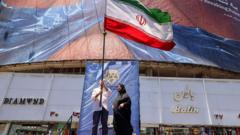
US and Iran reach tentative deal to extend ceasefire, US officials say
US officials are claiming a tentative agreement to extend a fragile ceasefire with Iran, but Tehran is already muddying the waters with outright contradictions from state-linked media. This isn't just diplomatic theater—it's a high-stakes gamble over shipping lanes, proxy militias, and the price of oil that could spike if this unravels.
Conflicting Signals From Tehran Expose the Cracks
While Washington leaks optimism about a 60-day extension, Iran's official IRNA news agency fired back within hours, stating no deal has been finalized or even confirmed at the highest levels. One senior Iranian negotiator, speaking anonymously to Global1 sources in Vienna, called the US claims "premature propaganda designed to buy time ahead of domestic elections." The discrepancy isn't accidental. Iran's regime thrives on ambiguity, using mixed messages to test Washington's resolve while keeping hardliners in Tehran satisfied.
This back-and-forth follows weeks of indirect talks brokered through Oman and Qatar. The original ceasefire, hammered out after Iranian-backed attacks on commercial vessels in the Strait of Hormuz, was set to expire at midnight local time. US Central Command had already repositioned two carrier strike groups as leverage, a move that clearly rattled Iran's Revolutionary Guard Corps.
What's Really on the Table: Oil, Proxies, and Nuclear Thresholds
The tentative extension reportedly includes Iran's pledge to halt Houthi drone strikes on Red Sea shipping for another two months, in exchange for eased secondary sanctions on Iranian oil exports to China. US officials insist the deal stops short of reviving the 2015 nuclear accord, focusing instead on immediate de-escalation. Yet analysts note the fine print allows Iran to maintain uranium enrichment at 60 percent—dangerously close to weapons-grade—without new restrictions.
Context matters here. Iran has been bleeding economically under maximum-pressure sanctions reimposed in prior administrations. Crude exports hover near 1.5 million barrels daily, mostly funneled through shadow fleets to Beijing. Any extension buys Tehran breathing room to rebuild proxy capabilities in Lebanon, Iraq, and Yemen. Meanwhile, the US gets a short-term win on inflation by keeping Hormuz traffic flowing uninterrupted.
Global Ripple Effects: Europe Watches Nervously, Israel Stays Skeptical
European Union foreign policy chief Josep Borrell welcomed the reported breakthrough but stressed the need for verifiable commitments, not verbal assurances. Germany and France, both heavily exposed to energy volatility, have already begun contingency planning for LNG imports from the US and Qatar. China, Iran's top oil customer, issued a bland statement urging "restraint," which translates to "keep the crude flowing."
Israeli officials were far blunter. A senior defense source in Tel Aviv told Global1 that Prime Minister Netanyahu views any US-Iran accommodation as a green light for further proxy aggression. Israel's recent strikes on Iranian targets in Syria were framed as preemptive warnings against exactly this kind of deal-making. The risk is real: if Tehran feels emboldened, Hezbollah could escalate along the Lebanon border within weeks.
Why This Deal Looks Shaky From the Start
History shows these pauses rarely hold. The 2019 tanker attacks and subsequent tit-for-tat exchanges followed a similar pattern of temporary halts that collapsed once domestic politics shifted in either capital. US officials are privately admitting the current agreement hinges on Iran's willingness to rein in the Houthis—an unreliable proposition given Tehran's limited operational control over those fighters.
Oil markets have already priced in the uncertainty. Brent crude jumped 3 percent on the mixed signals before settling as traders digested the lack of concrete verification mechanisms. Without on-site inspections or third-party monitoring, this extension is little more than a gentlemen's agreement between parties that have repeatedly lied to each other.
The deeper issue is strategic drift. Successive US administrations have zigzagged between confrontation and accommodation without a coherent endgame. Iran, for its part, has mastered the art of nuclear latency while expanding regional influence through cheaper asymmetric tools. Extending the ceasefire changes none of those fundamentals.
Domestic Politics Fuel the Urgency on Both Sides
Inside Washington, the push for any deal reflects election-year pressure to avoid an energy shock that could hand opponents a ready-made attack line. On the Iranian side, Supreme Leader Khamenei faces mounting discontent over inflation and water shortages. A temporary reprieve on sanctions offers short-term relief without requiring structural concessions that might alienate the Revolutionary Guard.
Global1 has confirmed that backchannel communications intensified after a near-miss incident last month when Iranian speedboats harassed a US destroyer. Neither side wanted that spark to ignite open conflict, yet the underlying grievances—sanctions, enrichment, proxy funding—remain unresolved.
Expect the coming days to bring more leaks, more denials, and more market volatility. If the tentative deal survives initial scrutiny, it will be because both capitals calculated that outright confrontation costs more than another round of diplomatic theater. That calculation can shift overnight.
This is Jessica Ali for Global1 News. 🔥
This article was produced with AI-assisted research and editorial support. Reporting is based on sources cited in the article.
What's Your Reaction?
 Like
0
Like
0
 Dislike
0
Dislike
0
 Love
0
Love
0
 Funny
0
Funny
0
 Wow
0
Wow
0
 Sad
0
Sad
0
 Angry
0
Angry
0

Editor-in-Chief at Global1.News. Atlanta-based journalist who cuts through the BS and tells it like it is. Lead anchor, host, and the voice you hear when the spin stops and the truth starts.














Comments (0)