
Ukrainian Drone Strikes Cripple Crimea Logistics and Fuel Supplies
Ukrainian forces launched one of the largest drone barrages in recent months against annexed Crimea, killing four civilians and wounding 28 others while suspending fuel sales across the peninsula. The strikes also extended into Russia's Krasnodar region, killing one person on a ferry and damaging an oil terminal, underscoring Kyiv's expanding reach against Moscow's logistics ne
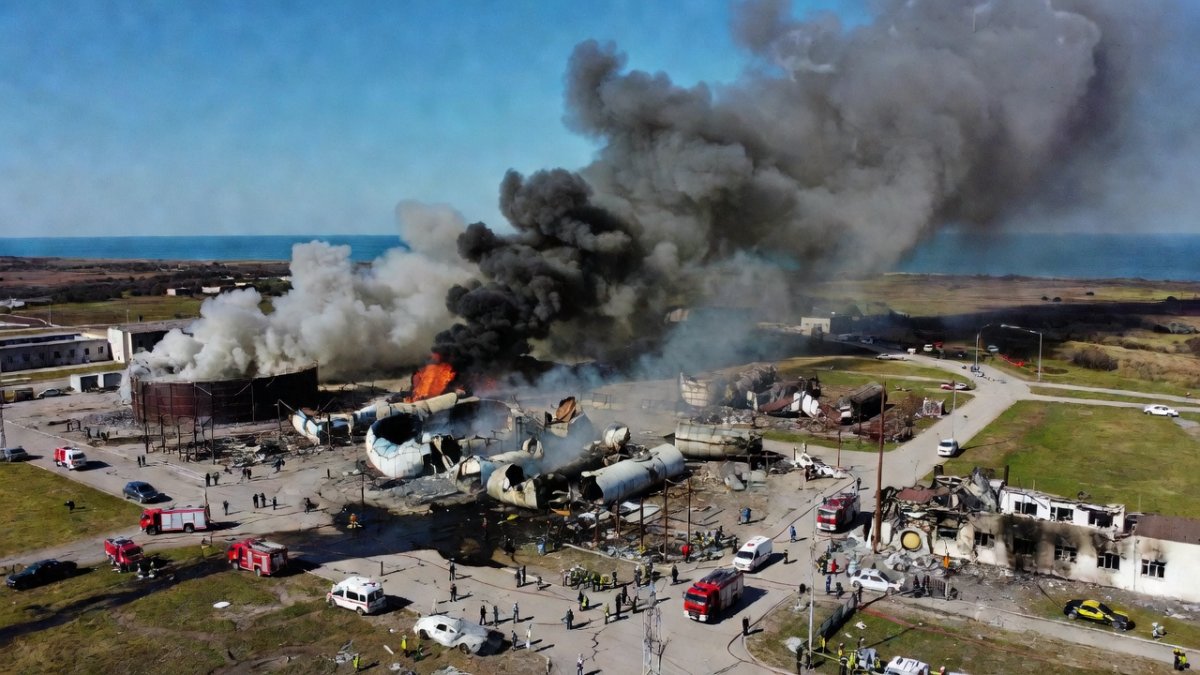
Ukrainian forces launched one of the largest drone barrages in recent months against annexed Crimea, killing four civilians and wounding 28 others while suspending fuel sales across the peninsula. The strikes also extended into Russia's Krasnodar region, killing one person on a ferry and damaging an oil terminal, underscoring Kyiv's expanding reach against Moscow's logistics networks. These attacks come as both sides remain locked in a frozen diplomatic stalemate with fighting at a standstill along the front lines.
Ukrainian Strikes Cripple Crimea Logistics and Russian Fuel Supplies
Simferopol, Crimea – Sunday — Four people were killed and fuel sales were suspended in annexed Crimea, the Moscow-backed authorities there said on Sunday, after a massive Ukrainian barrage hit the Black Sea peninsula. Ukraine said it targeted military and energy facilities in Crimea — Moscow's key logistics base for its four-year military offensive — in one of the biggest attacks on the peninsula in recent months. "As a result of the enemy's drone attack on the Kerch Peninsula, unfortunately, there are casualties among the civilian population," said Russia-backed Crimea Governor Sergey Aksyonov, referring to the part of Crimea that borders Russia. "According to the latest information, four people were killed, 28 were wounded," he added. "Today, June 21, starting from 09:00 am, fuel sales at Crimean petrol stations have been suspended," said Aksyonov in a separate statement, adding that fuel would only be sold to state enterprises. The mass raid also killed one person on a ferry and hit an oil terminal in Russia's southern Krasnodar region bordering Crimea, the authorities there said. Part of Crimea, which was annexed by Russia in 2014, was left without power after the attacks, local utilities company Krymenergo said. Separately, overnight Russian strikes in eastern Ukraine killed three people.
The Assault on the Kerch Peninsula
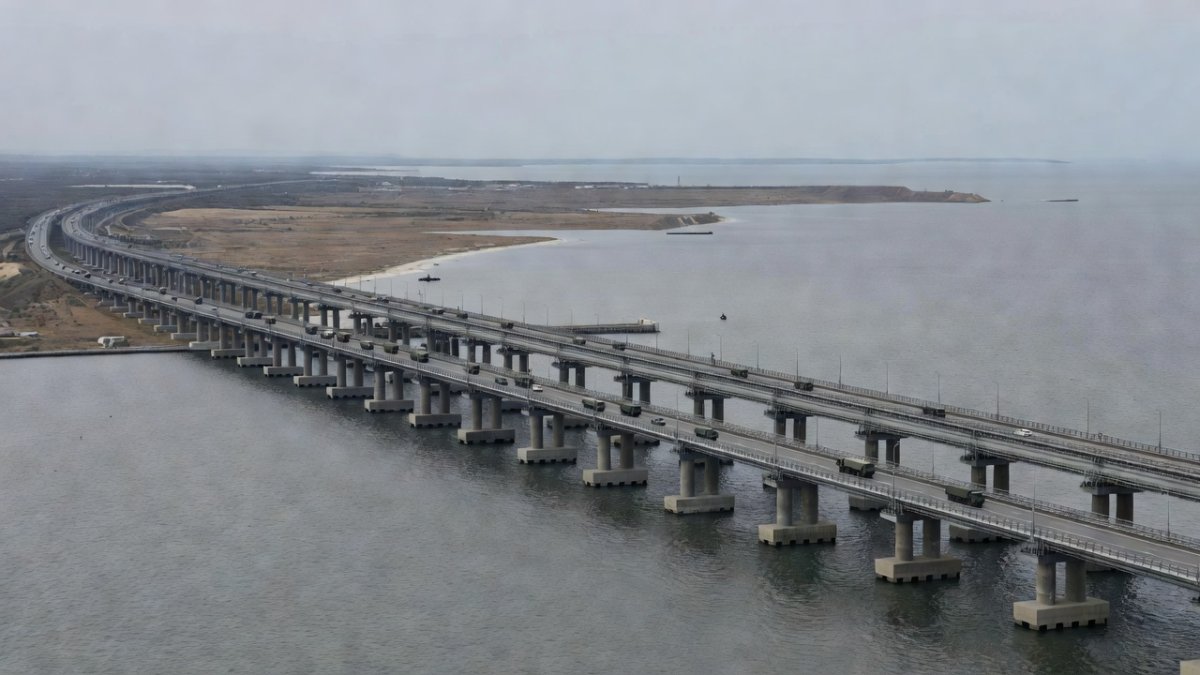
The attack focused heavily on the Kerch Peninsula, the narrow strip of land linking Crimea directly to Russia via the Kerch Bridge. Russia-backed Crimea Governor Sergey Aksyonov confirmed four civilian deaths and 28 wounded in the drone assault, describing the strikes as targeting populated areas near key infrastructure. Fuel sales at all Crimean petrol stations were halted from 09:00 am on Sunday, with supplies restricted exclusively to state enterprises to preserve dwindling reserves. Local utility Krymenergo reported widespread power outages across parts of the peninsula following hits on energy nodes. These disruptions immediately affected civilian movement and military resupply operations that rely on the peninsula as a forward hub. Aksyonov emphasized that the casualties occurred among the civilian population, underscoring the spillover effects of strikes near logistics corridors. Ukrainian officials framed the operation as precision targeting of military assets, though the governor's statements highlighted the human toll. The scale of the barrage, involving dozens of drones, marked one of the most intense assaults on Crimea in recent months. Power losses compounded the fuel suspension, creating immediate pressure on daily operations for both residents and Russian forces stationed there. Analysts note that the Kerch Peninsula serves as a critical gateway, making any sustained disruption a direct challenge to Moscow's ability to maintain steady troop rotations and equipment flows into southern Ukraine.
Cross-Border Impacts: Krasnodar and the Ferry Strike
The strikes crossed into Russia's Krasnodar region, where one person was killed aboard a ferry and an oil terminal sustained damage. This extension of operations beyond Crimea's borders illustrates Ukraine's growing capacity to reach supporting infrastructure in adjacent Russian territory. Authorities in Krasnodar confirmed the ferry incident alongside the terminal strike, linking both events to the same coordinated drone wave that hit Crimea. The ferry, operating in the narrow waters separating the two regions, represented a direct link in the maritime supply chain feeding Crimean forces. Damage to the oil terminal added pressure on regional fuel distribution already strained by broader Ukrainian campaigns. Such cross-border reach forces Russian commanders to divert air defense assets away from frontline positions to protect rear-area assets. The incident on the ferry killed one individual and highlighted vulnerabilities in civilian-adjacent transport routes used for military logistics. Ukrainian forces appear to have exploited gaps in coverage between Crimean and mainland Russian defenses. This pattern of hitting both peninsula targets and supporting facilities in Krasnodar suggests a deliberate effort to isolate Crimea logistically from the Russian mainland.
Ukraine's Strategic Calculus: Long-Range Sanctions
Ukrainian President Volodymyr Zelensky described the operation as part of "long-range sanctions" aimed at the occupiers' military logistics, oil industry, and air defense systems. He stated that Ukrainian forces struck the Crimean Bridge, radar installations, and air defense positions in addition to energy sites. Zelensky emphasized that all actions constituted a just response to Russia's brutal attacks against Ukrainian people. Kyiv has upgraded its long-range drone capabilities, enabling strikes at will along the land corridor through occupied southeastern Ukraine that Russia uses to supply Crimea. This corridor remains vital for sustaining Russian troops and equipment flows into the peninsula. The strikes on radar and air defense further degrade Moscow's ability to detect and intercept incoming drones. Zelensky's framing positions these attacks as calibrated economic and military pressure rather than indiscriminate retaliation. Ukraine denies targeting civilians while acknowledging the focus on energy and logistics nodes. The improved drone range now allows sustained pressure on supply routes that were previously considered secure behind the front lines.
Russian Energy Sector Under Pressure
Earlier this week, Ukrainian drones struck a large refinery in Moscow twice, adding to cumulative damage across Russia's refining network. Some petrol stations inside Russia introduced fuel rationing this month amid the disruptions. Fuel exports have been banned since April in an attempt to stabilize domestic supplies. Energy Intelligence reported that about one third of Russian oil refining capacity had gone offline because of Ukrainian strikes. These losses directly reduce revenues Moscow relies upon to fund its military operations. The combination of export bans and domestic rationing reflects the growing strain on Russia's energy infrastructure from repeated deep strikes. Ukrainian officials state the campaign specifically targets oil revenues that sustain the war effort. The Moscow refinery hits demonstrate Kyiv's ability to reach even heavily defended targets near the capital. With one third of refining capacity affected, the cumulative effect threatens long-term sustainability of Russian fuel supplies for both civilian and military use.
Diplomatic Stalemate and Front-Line Reality
Talks on ending Europe's biggest conflict since World War II remain frozen, while fighting on the front line is effectively at a standstill. Neither side has shown willingness to resume negotiations under current conditions. Overnight Russian strikes in eastern Ukraine killed three people, illustrating the persistent low-intensity exchanges that continue despite the overall stasis. Both Moscow and Kyiv appear focused on attritional measures rather than decisive breakthroughs. The absence of diplomatic movement leaves military pressure, including long-range strikes, as the primary tool for influencing the battlefield. Ukrainian operations in Crimea and Russia serve to impose costs while conventional ground advances remain limited. Russian forces continue to rely on Crimea as a logistics hub even as attacks mount against its connections. The stalemate suggests both sides are preparing for a prolonged confrontation rather than an imminent resolution.
Analysis and Implications
The strikes reinforce Crimea's vulnerability as Russia's primary logistics hub for southern operations, exposing the limits of its defensive perimeter. Sustained pressure on fuel supplies and power infrastructure could gradually erode Moscow's capacity to maintain large force concentrations on the peninsula. Analysts suggest the expanding drone campaign may force Russia to allocate additional air defense resources away from the front, creating opportunities elsewhere. The land corridor through occupied territory now faces credible threats, complicating resupply efforts that were once considered reliable. For Ukraine, these operations demonstrate an ability to impose asymmetric costs on Russian energy revenues and military mobility without requiring major territorial gains. The combination of civilian impacts reported by Aksyonov and strategic targeting described by Zelensky highlights the dual nature of the conflict's escalation. Over time, cumulative damage to refining capacity and logistics nodes could influence Russia's broader war sustainability. The current trajectory points toward continued long-range exchanges as both sides consolidate positions ahead of any future shifts in momentum.
By Irina Volkov, Staff Writer
This article was produced with AI-assisted research and editorial support. Reporting is based on sources cited in the article.
What's Your Reaction?
 Like
0
Like
0
 Dislike
0
Dislike
0
 Love
0
Love
0
 Funny
0
Funny
0
 Wow
0
Wow
0
 Sad
0
Sad
0
 Angry
0
Angry
0

Russia/Eastern Europe Correspondent at Global1.News. Covering Russian politics, energy, security, and the shifting dynamics of the post-Soviet space. Provides clear-eyed analysis on one of the world's most opaque regions.













Comments (0)