
DSI Raids Koh Samui and Koh Phangan Over Foreign Nominee Networks
The Department of Special Investigation has launched a major crackdown on suspected foreign nominee networks controlling prime real estate and tourism assets across Koh Samui and Koh Phangan, exposing deep vulnerabilities in Thailand’s foreign ownership rules at a time when island economies are rebounding strongly from pandemic losses. The coordinated raids highlight growing of
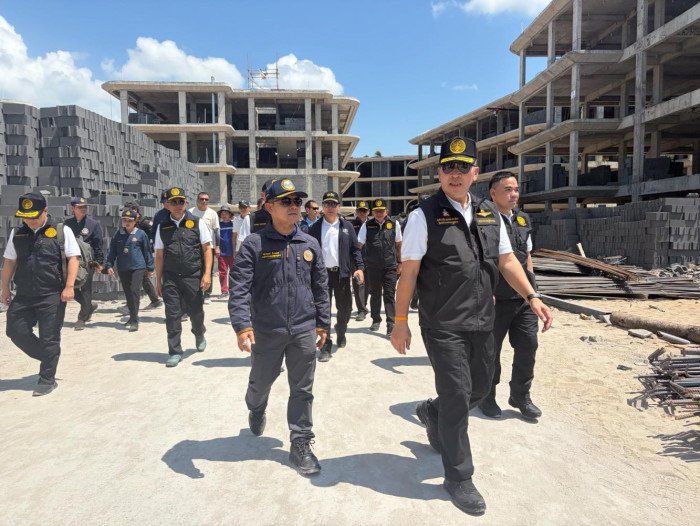
The Department of Special Investigation has launched a major crackdown on suspected foreign nominee networks controlling prime real estate and tourism assets across Koh Samui and Koh Phangan, exposing deep vulnerabilities in Thailand’s foreign ownership rules at a time when island economies are rebounding strongly from pandemic losses. The coordinated raids highlight growing official concern that hidden foreign control is distorting local markets and sidelining Thai residents from their own coastal resources.
DSI Raids Koh Samui and Koh Phangan Over Foreign Nominee Networks
Bangkok, Thailand – — In a sweeping operation on Friday, the Department of Special Investigation (DSI) raided five locations across Koh Samui and Koh Phangan in Surat Thani province, targeting elaborate nominee structures that allow foreign investors to circumvent Thailand’s strict limits on land and tourism business ownership. Working with the Department of Business Development and the Surat Thani Provincial Office, investigators focused on 34 companies suspected of using Thai proxies to conceal foreign control in sectors reserved for majority Thai ownership under the Foreign Business Act. The action underscores Bangkok’s renewed determination to enforce rules that have existed since the 1999 Foreign Business Act, which was itself a successor to earlier restrictions dating back to the 1970s aimed at protecting national economic sovereignty.
The Raids on Koh Samui and Koh Phangan
The DSI executed simultaneous searches at five sites, including a prominent address in Bo Phut on Koh Samui that served as the registered office for more than 100 companies. Officers seized corporate filings, shareholder agreements and accounting ledgers while interviewing Thai nominees who admitted receiving monthly stipends of 15,000–25,000 baht to hold shares on behalf of undisclosed foreign principals. These tactics mirror patterns previously documented in Phuket and Pattaya, where similar nominee schemes were dismantled in 2022 and 2023.
Authorities emphasised that the raids were intelligence-driven, triggered by discrepancies between declared Thai shareholdings and actual management decisions made by foreign nationals. The operations reflect Thailand’s broader policy of balancing foreign direct investment with cultural and economic safeguards that have preserved Thai family land ownership in southern provinces for generations. Surat Thani officials noted that unchecked foreign control risks eroding the social fabric that has long defined island communities.
Evidence Uncovered During the Operations
At the luxury villa project in Bo Phut, investigators recovered documents showing 15 contiguous land plots totalling 98 rai valued at 1.57 billion baht, with Chinese investors directing day-to-day construction and marketing decisions despite nominal Thai majority ownership. Five interconnected firms handled development, sales, and property management, creating a vertically integrated structure that effectively transferred control of high-value coastal assets. A separate law office on Koh Samui linked to 150 companies yielded records indicating combined asset holdings of approximately 795 million baht, many tied to wellness and hospitality projects.
Additional targets involved Israeli-linked hotel and rental operations whose licensing documents listed Thai directors who later told DSI officers they had never attended board meetings. Financial trails revealed funds routed through Singaporean and Hong Kong intermediaries, a common technique also observed in recent Indonesian enforcement actions against nominee structures in Bali. These detailed records allow authorities to map how nominee arrangements redirect tourism revenue and land appreciation away from local economies.
Scale of the Nominee Problem in Surat Thani Province
As of May 2026, Koh Samui and Koh Phangan together accounted for 11,426 foreign-invested companies, representing 68 percent of all registered businesses on the two islands. The Department of Business Development had already flagged 34 entities for suspected nominee violations prior to the raids. This concentration far exceeds levels seen in comparable ASEAN destinations such as Vietnam’s Phu Quoc or the Philippines’ Palawan, where foreign ownership caps are similarly strict but enforcement has historically been less systematic.
Unchecked nominee networks can shift control of prime coastal land away from Thai communities, reducing opportunities for local agriculture and small-scale tourism ventures. Surat Thani province functions as the economic gateway to southern Thailand, and preserving balanced ownership is viewed as essential for long-term social stability. Regional comparisons show that Malaysia’s 2024 tightening of nominee rules in Langkawi produced a measurable uptick in local business registrations within six months, suggesting similar outcomes may follow Thailand’s current campaign.
Impact on Thailand’s Property Market
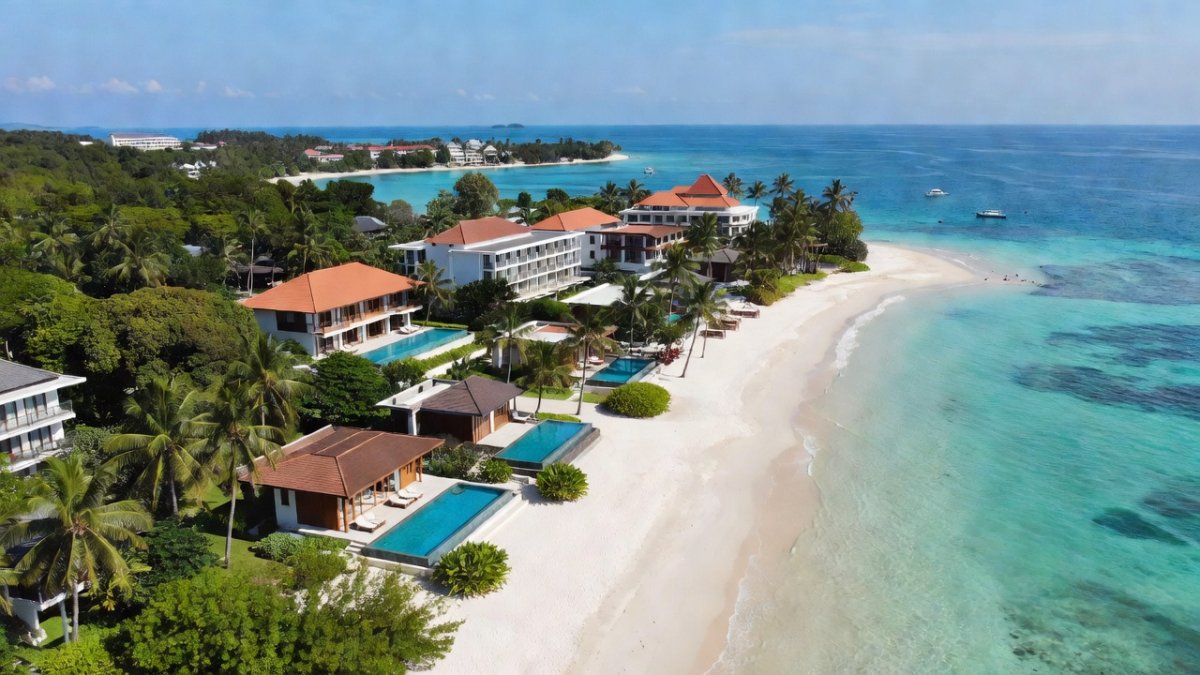
The 1.57 billion baht land portfolio uncovered in Bo Phut represents a significant slice of Koh Samui’s developable coastline, where average plot prices have risen 18 percent year-on-year according to the Real Estate Information Center. Property transactions connected to the raided firms now face extended due-diligence reviews by the Department of Business Development, potentially delaying transfers and cooling speculative demand. Thai landowners who traditionally pass property through family lines have expressed concern that hidden foreign control inflates prices beyond local reach.
Clearer enforcement is expected to stabilise the market by discouraging artificial demand created through nominee vehicles. Neighbouring ASEAN economies are monitoring these cases closely, as transparent property frameworks influence cross-border capital flows into tourism real estate. Consistent application of the Foreign Business Act across provinces strengthens Thailand’s overall investment climate while protecting genuine long-term foreign partners who comply with the rules.
Effects on Tourism in the Region
Koh Samui and Koh Phangan together welcomed more than 4.8 million visitors in 2025, generating an estimated 187 billion baht in tourism revenue for Surat Thani province. Several businesses under investigation operate hotels, wellness centres and villa rentals through nominee structures that may violate licensing conditions requiring majority Thai control in certain service categories. Foreign expertise can enhance service quality, yet the Foreign Business Act reserves key activities to protect cultural authenticity and ensure tourism income circulates locally.
Disruptions from enforcement actions could temporarily affect visitor confidence from China and Israel, two key source markets for the islands. However, sustained compliance is expected to reinforce Thailand’s reputation as a destination where regulatory integrity supports sustainable growth. ASEAN tourism corridors benefit when flagship Thai islands maintain transparent ownership, preventing the market distortions observed in parts of Cambodia’s coastal developments.
Local Community Impact in Southern Thailand
Residents in Bo Phut and adjacent villages have relied for decades on coastal land for coconut farming, fishing and small guesthouses. The discovery of 98 rai tied to nominee companies has prompted community meetings where elders voiced fears that large-scale foreign-directed projects will restrict beach access and raise living costs. The Surat Thani Provincial Office has begun collecting formal statements from affected families to include in ongoing DSI reports.
Thai cultural values stress collective stewardship of natural resources. When nominee arrangements transfer effective control of land, local households often lose traditional livelihoods. Ministry of Justice officials have stated that restoring balanced ownership through legal channels will help maintain the close-knit social structure that continues to attract visitors seeking authentic island experiences.
Thailand’s Legal Framework on Foreign Ownership
The Foreign Business Act B.E. 2542 (1999) limits foreign shareholding in land-related and tourism businesses to 49 percent in most categories, with penalties of up to three years’ imprisonment and fines between 100,000 and 1 million baht for nominee violations. Successive amendments in 2008 and 2019 strengthened disclosure requirements, yet enforcement gaps persisted until the DSI received expanded authority in 2023. The current Surat Thani operations demonstrate the ministry’s commitment to closing these loopholes.
The Department of Business Development’s digital registration database now enables faster identification of suspicious patterns. Justice Minister Pol Lt Gen Rutthapon Naowarat has ordered expanded probes across both islands. This approach aligns with ASEAN initiatives to harmonise investment rules while respecting each member state’s sovereign right to protect strategic sectors such as land and tourism services.
Next Steps in the Investigation
The DSI intends to examine additional companies on Koh Samui and Koh Phangan, focusing on beneficial ownership, management control and licensing compliance. The Royal Thai Police are expected to assist with any follow-up enforcement. Authorities will scrutinise the 150 companies connected to the Koh Samui law office and the 34 entities previously flagged by the Department of Business Development.
Possible outcomes include asset freezes, director disqualifications and criminal prosecutions under the Foreign Business Act. Successful resolution of these cases will demonstrate Thailand’s commitment to fair business practices, supporting both ASEAN tourism partners and local communities that depend on sustainable island economies for generations to come.
By Ann Srisawat, Staff WriterThis article was produced with AI-assisted research and editorial support. Reporting is based on sources cited in the article.
What's Your Reaction?
 Like
0
Like
0
 Dislike
0
Dislike
0
 Love
0
Love
0
 Funny
0
Funny
0
 Wow
0
Wow
0
 Sad
0
Sad
0
 Angry
0
Angry
0

Southeast Asia Correspondent at Global1.News. Based in Bangkok, covering Thai and Southeast Asian politics, economy, technology, and culture. Deep regional perspective on one of the world's most dynamic regions.















Comments (0)