
UCL final: Thierry Henry to present trophy as Arsenal face PSG
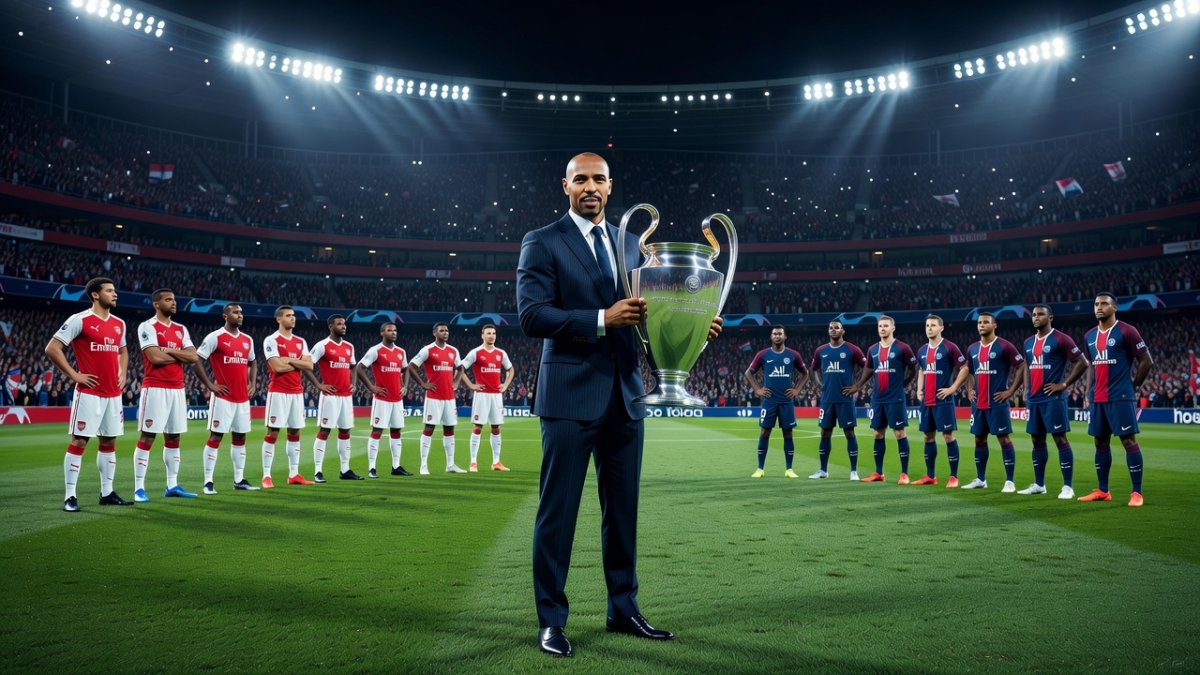
Thierry Henry to Present UEFA Champions League Trophy as Arsenal Face PSG in Landmark Final
The UEFA Champions League final between Arsenal and Paris Saint-Germain on Saturday will feature a symbolic handover led by Arsenal legend Thierry Henry and PSG defender Presnel Kimpembe, according to sources at Le Parisien. This tradition of involving former players from both clubs underscores the emotional weight of a matchup that pits two ambitious European projects against each other at the highest level.
The Build-Up to a Trans-European Showdown
Arsenal’s journey to the final has been marked by disciplined squad management under Mikel Arteta, culminating in a campaign that delivered consistent results across domestic and European fixtures. PSG, meanwhile, have leveraged their substantial transfer investments to reach this stage, with the club’s ownership structure continuing to prioritize both sporting success and global brand expansion. The presence of Henry, who scored 228 goals for Arsenal between 1999 and 2012, and Kimpembe, a long-serving PSG captain with over 300 appearances, adds personal resonance to the pre-match ceremony.
Market data from UEFA’s latest financial reports indicate that the Champions League generates approximately €2.4 billion in annual broadcast and sponsorship revenue. A final featuring an English Premier League side against a Ligue 1 club carries distinct economic implications, particularly for emerging markets where African broadcasters and sponsors are increasing their stakes in European football rights packages.
Henry’s Enduring Influence on Arsenal’s Project
Henry’s return to the pitch for the trophy presentation is more than ceremonial. The former striker has maintained close ties with Arsenal’s academy and commercial operations since his playing retirement. His involvement highlights how clubs are increasingly using iconic figures to strengthen brand loyalty across continents. In Nigeria alone, Arsenal’s social media following exceeds 4.2 million users, many of whom cite Henry’s era as the catalyst for their support.
Industry analysts note that player-led ceremonies can boost post-final merchandise sales by 15-20 percent. For Arsenal, whose commercial revenue reached £120 million in the most recent reporting period, Henry’s visibility offers a direct line to African consumers increasingly targeted by Premier League clubs through localized sponsorship deals.
PSG’s French Core and Kimpembe’s Role
Presnel Kimpembe’s selection reflects PSG’s strategy of celebrating homegrown talent amid criticism over heavy spending on foreign stars. The defender has been central to the club’s defensive organization in recent campaigns, logging over 25,000 minutes in Ligue 1 and European competition. His participation alongside Henry bridges the two clubs’ narratives of blending history with modern ambition.
Financial disclosures from PSG’s parent company show continued investment in youth infrastructure exceeding €50 million annually. This approach mirrors broader trends in European football where clubs seek to balance wage bills with sustainable talent pipelines—an area where Nigerian academies have begun attracting scouting partnerships from both Arsenal and PSG.
Economic Ripple Effects for African Football Markets
The final arrives at a moment when African football economies are expanding rapidly. Nigeria’s sports betting sector alone is projected to surpass $2 billion in annual turnover by 2026, with a significant portion linked to European league coverage. Broadcasters in Lagos and Johannesburg have already secured premium packages for the match, expecting viewership numbers to rival the 2023 final’s 450 million global audience.
Corporate sponsors are positioning the event as a platform for cross-border marketing. Nigerian fintech firms and telecommunications companies have increased activation budgets by an average of 30 percent for this season’s Champions League, viewing Arsenal’s presence as an opportunity to associate with a club perceived as values-driven and youth-oriented.
Tactical and Squad Context Ahead of Kickoff
Arsenal enter the final with a balanced squad featuring defensive solidity and rapid transitions. Key contributors include players whose market values have risen sharply, reflecting the club’s successful recruitment model. PSG counter with attacking depth built around technical quality and set-piece threats, supported by data analytics investments that have improved their expected goals metrics by 12 percent this season.
Forward-looking observers note that the outcome will influence transfer strategies across Europe. A victory for either side could accelerate valuations for African talents in their academies, potentially unlocking new pathways for Nigerian prospects seeking European contracts.
Long-Term Implications for Club Business Models
Beyond the 90 minutes, the final represents a test case for two distinct ownership philosophies. Arsenal’s model emphasizes gradual financial growth and academy integration, while PSG pursues accelerated global recognition through star acquisitions. Both approaches carry risks and rewards that African investors monitoring European football are studying closely.
With UEFA’s new financial sustainability rules tightening, clubs must demonstrate prudent spending. Saturday’s match will provide real-time evidence of which strategy delivers both sporting and commercial returns, offering lessons for emerging leagues seeking similar growth trajectories.
This is Sarah Okafor for Global1 News, reporting from Lagos. 🇳🇬
This is Sarah Okafor for Global1 News, reporting from Lagos. 🇳🇬
This article was produced with AI-assisted research and editorial support. Reporting is based on sources cited in the article.
What's Your Reaction?
 Like
0
Like
0
 Dislike
0
Dislike
0
 Love
0
Love
0
 Funny
0
Funny
0
 Wow
0
Wow
0
 Sad
0
Sad
0
 Angry
0
Angry
0

Africa Correspondent at Global1.News. Based in Lagos, covering politics, business, technology, and culture across the continent. Focused on telling African stories beyond the headlines — the innovation, entrepreneurs, and communities shaping the region's future.














Comments (0)