
Turkish FM Advises Restraint in US-Iran Conflict
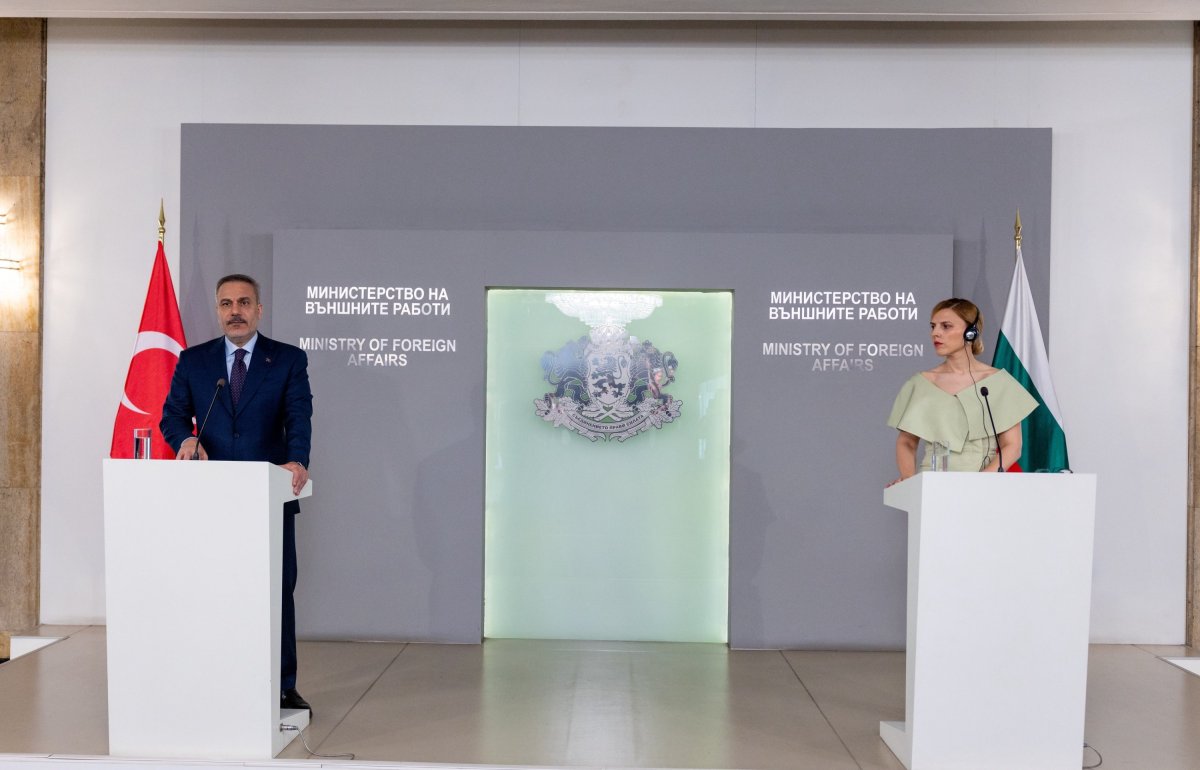
Turkish FM Advises Restraint in US-Iran Conflict Turkish Diplomatic Intervention in US-Iran Tensions Turkish Foreign Minister Hakan Fidan used a joint appearance in Sofia to urge the United States and Iran to end the latest round of mutual attacks. Speaking alongside his Bulgarian counterpart, Fidan expressed concern over the escalation that followed the April cease-fire and re
Turkish Diplomatic Intervention in US-Iran Tensions
Turkish Foreign Minister Hakan Fidan used a joint appearance in Sofia to urge the United States and Iran to end the latest round of mutual attacks. Speaking alongside his Bulgarian counterpart, Fidan expressed concern over the escalation that followed the April cease-fire and recommended both sides return to the negotiating table to complete a lasting agreement already near completion.
Fidan’s remarks positioned Turkey as a voice for de-escalation at a moment when direct communication between Washington and Tehran appears limited. He noted that renewed fighting benefits no party and risks dragging the region back into wider confrontation.
The Unraveling April Cease-Fire and Fresh Exchanges
The April cease-fire, which took effect on 8 April, has faced repeated violations according to statements from U.S. President Donald Trump. Recent days have seen U.S. strikes on Iranian military intelligence facilities, communications systems, and air defense positions, followed by Iranian responses targeting locations in Bahrain and Kuwait.
U.S. Central Command described its actions as necessary to neutralize threats to forces and shipping. Iranian state media reported explosions near Minab, Sirik, Qeshm Island, Bandar Abbas, and areas close to Tehran. These exchanges mark the second consecutive night of strikes, raising questions about the durability of the April arrangement.
Gulf States’ Immediate Security Concerns
Kuwait’s temporary closure of civilian airspace and activation of air defenses illustrate the direct spillover into neighboring Gulf countries. Bahrain also featured among reported Iranian targets, underscoring how even limited exchanges can affect states that host U.S. military facilities.
These developments place additional pressure on Gulf governments already navigating Sunni-Shia geopolitical competition and the need to protect critical infrastructure. The involvement of Bahrain and Kuwait demonstrates that any sustained confrontation quickly implicates multiple regional actors beyond the primary antagonists.
Energy Market Exposure and Strait of Hormuz Risks
Strikes near Bandar Abbas and Qeshm Island occur in proximity to key maritime chokepoints. Although the source material does not detail specific disruptions to tanker traffic, the geography alone signals potential effects on oil and gas flows through the Strait of Hormuz.
Markets typically price in even modest risks of supply interruption. Continued escalation could influence OPEC+ dynamics and the economic diversification plans of Gulf states, including Saudi Arabia’s Vision 2030, by introducing volatility that complicates investment and revenue projections.
Turkey’s Broader Regional Mediation Role
Fidan’s intervention aligns with Turkey’s interest in preventing wider instability that could affect its own security and economic interests. Ankara maintains channels with multiple parties and has previously sought to facilitate dialogue in other Middle East disputes.
By publicly advocating a return to negotiations, Turkey signals its willingness to play a constructive role without aligning fully with either Washington or Tehran. This approach also supports Turkey’s strategic partnership with Bulgaria and the wider Southeast European Cooperation Process framework, where stability in the Middle East indirectly influences European energy and migration routes.
Implications for Middle East Stability and Great-Power Competition
Renewed U.S.-Iran exchanges test the limits of the April cease-fire and expose the difficulty of sustaining de-escalation when core grievances remain unresolved. Each round of strikes risks miscalculation that could draw in additional actors, including Israel and Iranian regional networks.
Great-power competition adds another layer, as Russia and China watch for opportunities to expand influence should U.S. attention remain fixed on the Gulf. For regional states, the priority remains containing the conflict to avoid further damage to shipping, energy infrastructure, and domestic stability.
Fidan’s call for both sides to finalize the near-complete text on lasting peace reflects a pragmatic assessment that continued fighting serves neither American nor Iranian interests and threatens wider regional equilibrium.
By Malik Hassan, Staff WriterThis article was produced with AI-assisted research and editorial support. Reporting is based on sources cited in the article.
What's Your Reaction?
 Like
0
Like
0
 Dislike
0
Dislike
0
 Love
0
Love
0
 Funny
0
Funny
0
 Wow
0
Wow
0
 Sad
0
Sad
0
 Angry
0
Angry
0

Middle East Correspondent at Global1.News. Based in Beirut, covering politics, conflict, energy, and society across the Middle East. Brings context and depth to a region often reduced to headlines.














Comments (0)