
Sinaloa Cartel Co-Founder 'El Mayo' Zambada Pleads Guilty, Faces Life and $15 Billion Forfeiture
He ran the most murderous drug trafficking empire the world has ever seen. He flooded American streets with enough fentanyl to kill tens of thousands. He evaded capture for more than three decades — surviving while his co-founder Joaquín "El Chapo" Guzmán rotted in a Supermax cell. And now, Ismael "El Mayo" Zambada García, the 75-year-old co-founder of the Sinaloa Cartel, has f
He ran the most murderous drug trafficking empire the world has ever seen. He flooded American streets with enough fentanyl to kill tens of thousands. He evaded capture for more than three decades — surviving while his co-founder Joaquín "El Chapo" Guzmán rotted in a Supermax cell. And now, Ismael "El Mayo" Zambada García, the 75-year-old co-founder of the Sinaloa Cartel, has finally admitted what everyone already knew: he's guilty.
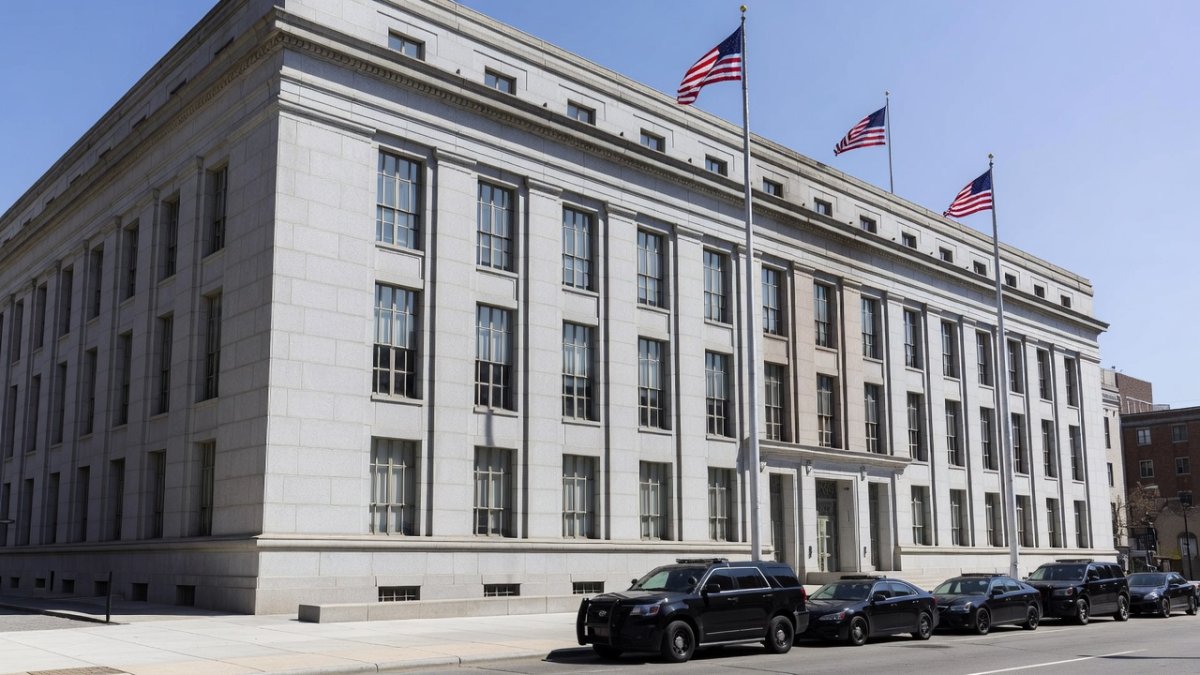
On July 6, 2026, in a Brooklyn federal courtroom, Zambada pleaded guilty to running a continuing criminal enterprise — the Sinaloa Cartel — and to Racketeer Influenced and Corrupt Organizations (RICO) charges. He's facing mandatory life in prison. And in a jaw-dropping admission of just how much blood money this man accumulated, the plea agreement includes a $15 billion forfeiture judgment. Let that number sink in. Fifteen. Billion. Dollars.
Folks, this isn't just another cartel boss getting booked. This is the end of an era — and the beginning of a whole new set of questions about how he got here, who helped him, and whether the U.S. government played dirty to make it happen.
The Empire He Built
Ismael Zambada García wasn't some mid-level trafficker. Alongside El Chapo, he co-founded and led the Sinaloa Cartel — described by U.S. prosecutors as "one of the most violent and powerful drug trafficking organizations in the world." Under their leadership, the cartel became a transnational juggernaut, moving cocaine, heroin, methamphetamine, and fentanyl across the U.S. border with industrial efficiency.
While El Chapo got the Hollywood treatment — the tunnel escapes, the Netflix series, the romance-nel narratives — El Mayo operated in the shadows. He was the steady hand. The business mind. The one who kept the shipments flowing while Guzmán made headlines. For over 30 years, he was on the DEA's most-wanted list. And for over 30 years, he stayed free.
That ended on July 25, 2024, when Zambada was arrested after landing at a small airfield outside El Paso, Texas, aboard a Beechcraft King Air aircraft. But here's where the story gets murky — and frankly, a little outrageous.
A Kidnapping, Not an Arrest
Here's what we now know: El Mayo didn't slip up. He was set up. Joaquín Guzmán López — the son of El Chapo himself — admitted in federal court in Chicago that he kidnapped Zambada and flew him to the United States against his will. The younger Guzmán López, who was arrested alongside Zambada, orchestrated the entire operation: luring the aging cartel leader onto a plane under false pretenses and delivering him straight into U.S. federal custody.
The son of El Chapo, flipping on his father's partner. That's the kind of betrayal that gets you killed in the cartel world — unless you're already sitting in a U.S. jail cell, cutting deals with prosecutors.
But wait — it gets weirder. Much weirder.
The FBI Plane Question
Multiple reports, including from The New York Times and The Guardian, have revealed that the Beechcraft King Air used to transport Zambada to the U.S. had been loaned by the FBI to the War Eagles Air Museum in Santa Teresa, New Mexico. Mexico has now launched a formal investigation into whether the U.S. government lied about its role in what Mexican officials call a forcible abduction of a Mexican citizen from Mexican territory.
Let me be blunt: That's a sovereignty violation. If the FBI knowingly facilitated a kidnapping on Mexican soil, that's not "arresting a drug lord" — that's an extrajudicial rendition. And Mexico's government is demanding answers. The Mexican Ministry of Foreign Affairs has filed a five-year extradition request, arguing that Zambada is a fugitive from Mexican justice and should be returned to face trial there first.
I'm not defending El Mayo. The man orchestrated mass murder and addiction on an industrial scale. But the rule of law either means something, or it doesn't. And if U.S. agencies are running covert snatch-and-grab operations in allied countries, that sets a dangerous precedent — no matter how many lives the target has destroyed.
Fifteen Billion Reasons This Matters
The $15 billion forfeiture in the plea agreement isn't just a number — it's a statement. That's more than the GDP of some small countries. It represents the scale of the Sinaloa Cartel's criminal enterprise and, if the U.S. can actually collect it, would be one of the largest asset forfeitures in American history.
Where does that money go? In theory, to victim compensation, addiction treatment programs, and law enforcement operations. In practice, civil forfeiture in the U.S. has been criticized for years as a system where police departments seize assets and then figure out if they're connected to a crime. But $15 billion from El Mayo? That money is dirty. The question is whether the government can actually find it.
Zambada has spent decades laundering cartel profits through legitimate businesses, shell companies, and international accounts. Much of it is likely hidden beyond reach. But the forfeiture judgment means that even if the money is found years from now, the U.S. can seize it — and El Mayo can never touch it again.
The Fentanyl Connection
Here's what really keeps me up at night: the Sinaloa Cartel under Zambada's leadership was a primary driver of the fentanyl crisis that has killed over 100,000 Americans annually in recent years. Fentanyl is now the leading cause of death for Americans aged 18 to 45. That's not hyperbole — that's the CDC data.
El Mayo didn't personally inject anyone. But the labs he operated, the precursor chemicals he imported from China, the smuggling routes he controlled, the local distributors he supplied — they were the pipeline. His guilty plea is a legal resolution, not a moral one. There's no sentence long enough to undo the damage. But a life sentence without parole? That's the closest thing to accountability the system can deliver.
DEA Administrator Terrance Cole put it starkly: "Ismael 'El Mayo' Zambada led one of the world's deadliest cartels, pumping fentanyl, cocaine, heroin, and meth into our communities. His guilty plea proves no cartel boss is beyond the reach of justice."

What Happens Next
Judge Brian Cogan — the same judge who presided over El Chapo's trial — is now overseeing Zambada's case. On July 13, 2026, the U.S. Attorney's Office formally requested a life sentence. Zambada's legal team has already accepted that outcome. Their main ask? Don't put him in a maximum-security Supermax facility. They've cited his age (75) and unspecified health issues in a letter to the court.
Let me be real with you: that argument isn't going to fly with Judge Cogan. El Chapo is in ADX Florence — the federal Supermax — and he was younger when sentenced. There's zero chance El Mayo gets a cushy medical facility while the victims of his cartel's fentanyl are buried in cemeteries across America. The sentencing hearing will determine the exact location, but the destination is clear: he will die in a U.S. federal prison.
Meanwhile, Mexico's extradition request sits in diplomatic limbo. The U.S. can't extradite a man who's already pleaded guilty and is awaiting a life sentence — at least not until after sentencing. And even then, Mexico would have to argue that its claims take priority over a U.S. federal sentence. That's a long shot.
The Bigger Picture
El Mayo's guilty plea closes a chapter in the war on drugs, but let's not pretend the book is finished. The Sinaloa Cartel didn't collapse when El Chapo was sentenced. It won't collapse now. The organization has already fractured into factions: Los Chapitos (El Chapo's sons) control one wing, while El Mayo's own son — Vicente Zambada Niebla, himself a former cartel operative turned U.S. witness — has been cooperating with the government for years.
The void left by Zambada will be filled. That's how cartels work. The demand for fentanyl, cocaine, and meth in the United States ensures that someone will step up to supply it. Locking up one man — even the co-founder — doesn't dismantle an industry. It creates a vacancy.
But here's what this moment does accomplish: it proves accountability is possible. If you're a cartel leader sitting in a compound in Culiacán, thinking you're untouchable because you've been at it for 35 years, the sight of El Mayo — the legend, the ghost, the man who survived everything — standing in a Brooklyn courtroom with his hands cuffed should terrify you. Because if they got him, they can get you too.
The Takeaway
This is a victory for the Justice Department, the DEA, and the FBI. It's a significant blow to one of the most violent criminal enterprises in human history. But it's also a story that raises uncomfortable questions about how far the U.S. government will go to get its man — and whether the rules still apply when the target is bad enough.
Mexico is investigating. The diplomatic fallout is real. And the $15 billion forfeiture, while historic, won't bring back the tens of thousands of lives lost to fentanyl poisoning over the past decade.
One thing is certain: Ismael "El Mayo" Zambada García will never see freedom again. For the families who have lost loved ones to the opioid epidemic, that's a measure of justice. For the rule of law — in both the United States and Mexico — the questions are just beginning.
Stay informed. Stay vigilant. And demand accountability from both sides of the border. Share this story — because the cartels thrive in the shadows, and sunlight is the best disinfectant.
By Jessica Ali, Staff Writer — Global 1 News
This article was produced with AI-assisted research and editorial support. Reporting is based on sources cited in the article.
What's Your Reaction?
 Like
0
Like
0
 Dislike
0
Dislike
0
 Love
0
Love
0
 Funny
0
Funny
0
 Wow
0
Wow
0
 Sad
0
Sad
0
 Angry
0
Angry
0

Editor-in-Chief at Global1.News. Atlanta-based journalist who cuts through the BS and tells it like it is. Lead anchor, host, and the voice you hear when the spin stops and the truth starts.










Comments (0)