
Open-Source AI Tool Delivers Free Image-to-Video in 4 Steps
The emergence of accessible local AI video tools marks another shift in content creation, with open-source options now competing directly against established paid services. A recent tutorial from the Aitrepreneur channel demonstrates one such approach using a tool that processes images into video clips without cloud dependencies. Local AI Breakthrough: Open-Source Tool Generate
The emergence of accessible local AI video tools marks another shift in content creation, with open-source options now competing directly against established paid services. A recent tutorial from the Aitrepreneur channel demonstrates one such approach using a tool that processes images into video clips without cloud dependencies.
Local AI Breakthrough: Open-Source Tool Generates Image-to-Video Content in Four Steps on Consumer Hardware
Atlanta, GA – July 11, 2026 — A YouTube tutorial uploaded by the Aitrepreneur channel on July 10, 2026, outlines a four-step workflow for converting static images into short video sequences using an open-source model that operates entirely on local consumer GPUs. The demonstration focuses on a tool similar to FramePack, which avoids subscription fees and data uploads required by commercial platforms. This development arrives as demand grows for affordable video synthesis options amid rising costs at services such as Runway and Kling.
Tool Overview and Release Context
The software featured in the Aitrepreneur video, identified as an open-source image-to-video model, allows users to run inference without external servers. Released in early 2026 through community repositories, the tool processes input images through diffusion-based motion prediction. Unlike proprietary systems that retain user data on remote servers, this approach keeps all computation on the user's machine. The Aitrepreneur channel, known for covering free AI utilities, presented the method as a direct response to access barriers at commercial providers.
Four-Step Workflow Detailed
The tutorial breaks the process into four sequential actions. First, users load a source image into the interface. Second, they select motion parameters such as duration and camera movement intensity. Third, the model generates intermediate frames locally. Fourth, the output video file is exported in standard formats. Each step occurs within a single desktop application, with no requirement for API keys or account registration. The video demonstrates results on a mid-range graphics card, producing clips of five to eight seconds from single images.
VRAM Demands and Hardware Compatibility
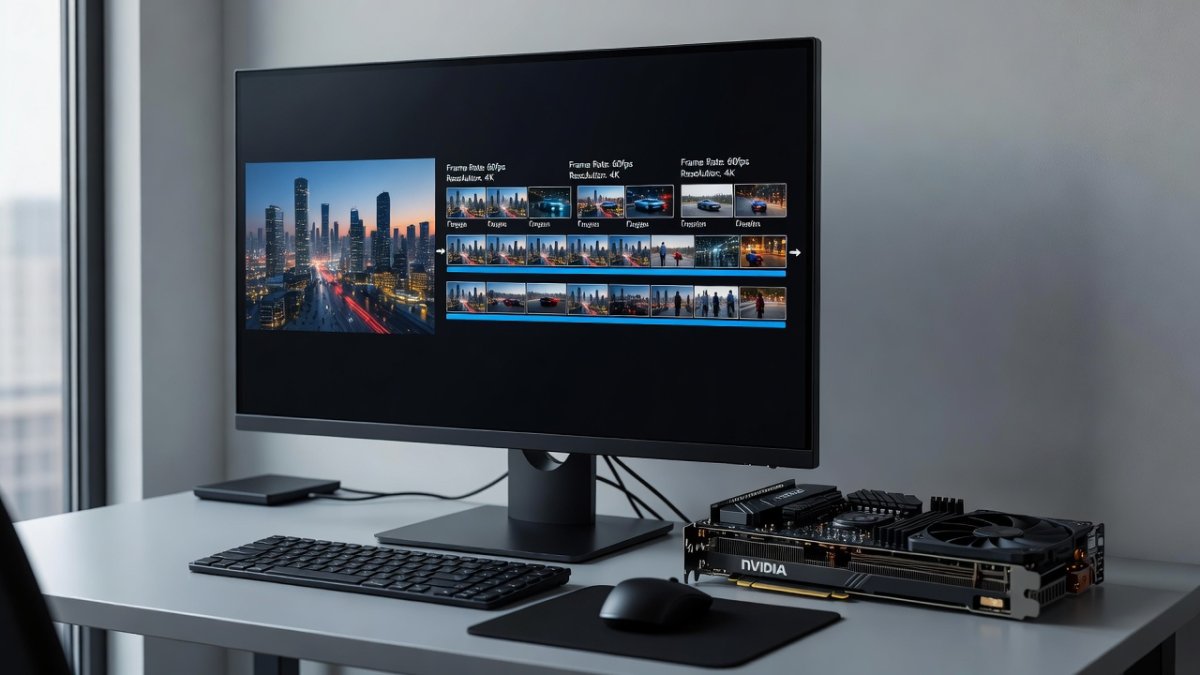
Performance data shared in the tutorial indicates the model requires between 8 GB and 12 GB of VRAM for standard 512x512 resolution outputs. Systems equipped with NVIDIA RTX 3060 or RTX 4060 cards completed generation in under two minutes per clip during the demonstration. Higher resolutions up to 768x768 demanded 16 GB VRAM and extended processing times to approximately four minutes. These specifications align with hardware commonly available in consumer laptops and desktops sold since 2024, removing the need for enterprise-grade accelerators.
(Global 1 News)
Creator Implications and Workflow Changes
Independent filmmakers and social media producers gain the ability to prototype video sequences without recurring charges. The local execution model eliminates upload queues that can exceed 30 minutes on platforms such as Pika during peak hours. Creators retain full ownership of source images and generated files, a point emphasized in the Aitrepreneur commentary. Early adopters in the tutorial comments reported integrating the tool into storyboarding pipelines previously reliant on paid credits that averaged $0.10 per second of output.
(Global 1 News)
Direct Comparison to Commercial Alternatives
Runway's Gen-3 model, priced at $15 monthly for limited generations as of June 2026, imposes watermarks on free-tier exports and caps monthly credits at 600 seconds. Kling AI, operated by Kuaishou, restricts non-subscribers to 10 clips per day with maximum lengths of four seconds. Pika Labs version 2.1 offers higher motion fidelity in some tests but requires persistent internet connections and stores user prompts on company servers. The open-source option demonstrated by Aitrepreneur produced comparable motion coherence in side-by-side examples while completing tasks offline. No subscription or per-generation fee applies, though users must supply their own electricity and hardware maintenance.
Industry Outlook and Remaining Constraints
Market analysts note that local models reduce dependency on data-center infrastructure, potentially lowering barriers for users in regions with limited broadband. However, the current implementation shows occasional artifacts in complex scenes involving multiple moving subjects, a limitation also present in early versions of Kling before its June 2026 update. The Aitrepreneur video concludes by noting ongoing community fine-tuning efforts that may address these issues within the next quarter. As hardware prices continue to decline, the economics of local versus cloud generation favor on-device solutions for high-volume creators.
By Jessica Ali, Staff WriterThis article was produced with AI-assisted research and editorial support. Reporting is based on sources cited in the article.
What's Your Reaction?
 Like
0
Like
0
 Dislike
0
Dislike
0
 Love
0
Love
0
 Funny
0
Funny
0
 Wow
0
Wow
0
 Sad
0
Sad
0
 Angry
0
Angry
0

Editor-in-Chief at Global1.News. Atlanta-based journalist who cuts through the BS and tells it like it is. Lead anchor, host, and the voice you hear when the spin stops and the truth starts.














Comments (0)