
Trump Signals Potential Engine Sale for Turkey's KAAN Jet
Keywords: Trump Erdogan NATO summit, Turkey F-35 engines KAAN, S-400 dispute, Turkish defense industry, Middle East NATO relations In the intricate web of NATO-Türkiye relations, recent signals from Washington point to a potential recalibration that could reshape defense postures not only within the alliance but across the volatile Middle Eastern theater. U.S. President Donald
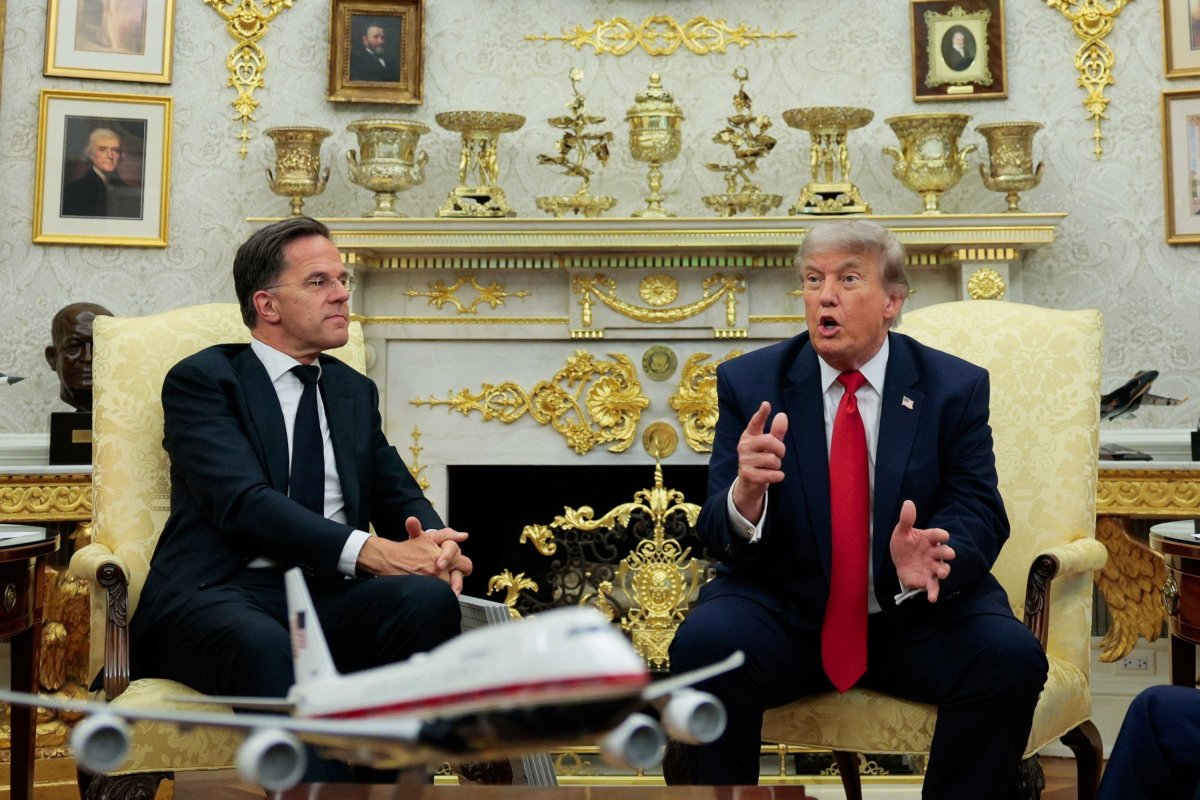
In the intricate web of NATO-Türkiye relations, recent signals from Washington point to a potential recalibration that could reshape defense postures not only within the alliance but across the volatile Middle Eastern theater. U.S. President Donald Trump's comments, delivered during a meeting with NATO Secretary-General Mark Rutte, underscore Ankara's enduring strategic weight at a time when regional powers from Tehran to Tel Aviv navigate shifting alliances amid ongoing conflicts in Syria, Gaza, and the Red Sea. This development arrives as Türkiye prepares to host NATO leaders in Ankara on July 7-8, highlighting how alliance commitments intersect with indigenous military ambitions and longstanding grievances over exclusion from advanced platforms.
NATO Summit in Ankara: Setting the Stage for Renewed Dialogue
The choice of Ankara as host for the upcoming NATO gathering amplifies Türkiye's pivotal role within the alliance, particularly as Middle Eastern flashpoints demand coordinated responses to threats ranging from Iranian proxy networks to instability along energy corridors. President Trump explicitly tied his attendance to respect for President Erdoğan, noting that he likely would not have participated had the event been hosted elsewhere. This personal dimension reflects broader alliance dynamics where bilateral ties between Washington and Ankara often determine the pace of collective decision-making on issues like counterterrorism and maritime security in the Eastern Mediterranean. Mark Rutte emphasized Türkiye's substantial defense industrial base during the White House discussions, framing it as a critical asset for NATO's southern flank. Such recognition carries weight in a region where Turkish capabilities influence everything from Black Sea operations to support for partners in Libya and the Horn of Africa. The summit's timing coincides with heightened regional tensions, making any gestures toward resolving defense disputes a potential stabilizer for alliance cohesion amid competing interests from Gulf states and Eastern Mediterranean actors.
Historical Context of the S-400 Dispute and F-35 Exclusion
The roots of current tensions trace directly to 2019, when Ankara's acquisition of Russian S-400 air defense systems led to its removal from the F-35 program, a decision Erdoğan has consistently described as unjust. This episode exposed fault lines in NATO interoperability, as the S-400 raised concerns about compatibility with alliance systems while simultaneously signaling Türkiye's willingness to diversify suppliers amid frustrations over technology transfer restrictions. In the Middle East context, the fallout affected Ankara's ability to project power in contested airspace, influencing calculations in Syria where Turkish operations against Kurdish groups and regime forces require robust air assets. The exclusion also reverberated through regional defense markets, prompting Gulf states to accelerate their own procurements and Israel to reassess qualitative military edges. Trump's recent remarks suggest an administration prepared to revisit these constraints, potentially by overriding congressional objections to facilitate engine sales. This shift could mend fences strained by the S-400 episode without fully resolving underlying questions of alliance trust, especially as Iran continues to exploit perceived NATO divisions through asymmetric strategies in Iraq and Yemen.
Turkish Indigenous Defense Ambitions and the KAAN Program
Ankara's drive toward self-reliance in military aviation centers on the KAAN stealth fighter, launched in 2016 as a successor to aging F-16 fleets scheduled for phase-out in the 2030s. The program requires General Electric engines to achieve operational viability, a dependency that underscores both the strengths and vulnerabilities of Türkiye's broader defense industrialization push encompassing drones, missiles, and naval vessels. With NATO's second-largest army, Türkiye has leveraged domestic production to assert greater autonomy in Middle Eastern operations, from drone strikes supporting Azerbaijan in the Caucasus to naval presence in the Mediterranean that challenges Greek and Egyptian positions. Rutte's acknowledgment of this industrial scale highlights how such capabilities bolster alliance resilience against hybrid threats emanating from the Levant and North Africa. Yet the engine bottleneck illustrates limits to full independence, tying Turkish strategic goals to U.S. export controls. In regional terms, successful KAAN development could alter balances vis-à-vis Iranian air defenses and Israeli technological superiority, potentially encouraging new arms dynamics among Arab states wary of Turkish influence in post-conflict reconstructions across Syria and Iraq.
Trump's Calculated Overture and Erdoğan's Strategic Leverage
President Trump's statement that he would "probably do something" to make Türkiye happy, coupled with praise for its military strength and NATO membership, signals a pragmatic approach rooted in personal rapport with Erdoğan. He stressed that "he's a strong member of NATO" despite occasional perceptions to the contrary, framing the relationship as an asset rather than a liability. This overture occurs against the backdrop of the Ankara summit, where discussions on defense sales could advance despite lingering congressional resistance. For Erdoğan, such signals validate long-standing arguments that Türkiye's contributions to alliance missions warrant reciprocal access to advanced technology. In Middle Eastern dynamics, this potential thaw aligns with Ankara's efforts to mediate or influence outcomes in Gaza and Syria, where Turkish positions often diverge from those of other NATO members. The emphasis on mutual respect could facilitate deals that strengthen Turkish deterrence without alienating partners in the Gulf, who monitor U.S.-Turkish defense ties for signs of shifting priorities away from traditional Arab-Israeli alignments.
Strategic Calculations Driving Both Sides
From Washington's perspective, reintegrating Türkiye more fully into high-end defense cooperation serves multiple objectives, including countering Russian influence in the Black Sea and ensuring reliable NATO contributions to Middle East contingencies. The administration's willingness to push engine sales despite past frictions reflects calculations that a capable Turkish military enhances collective responses to Iranian expansionism and Red Sea disruptions. Ankara, meanwhile, seeks engines not merely for KAAN but as validation of its NATO status and a means to accelerate indigenous programs that reduce external dependencies. Second-order effects could include strengthened Turkish leverage in energy politics, where pipelines and maritime routes intersect with defense postures affecting European security and Gulf export stability. Regional actors such as Egypt and Saudi Arabia may interpret any deal as a signal to diversify their own partnerships, potentially complicating U.S. efforts to maintain unified fronts against shared threats. These calculations unfold amid evolving great-power competition, where Chinese and Russian overtures to Middle Eastern states gain traction when Western alliance frictions surface.
Regional Ripple Effects Across the Middle East
Any movement on Turkish engine access would reverberate through Middle Eastern security architectures, influencing everything from air operations over Syria to naval balances in the Persian Gulf. A bolstered KAAN program might embolden Ankara's support for certain factions in Libya and Somalia while prompting Israel to accelerate countermeasures against potential Turkish aerial reach. Iranian strategists could view renewed U.S.-Turkish defense ties as a constraint on proxy activities, yet also an opportunity to deepen alternative partnerships with Russia. Gulf monarchies, already navigating their own F-35 acquisitions, might accelerate indigenous programs or seek similar technology offsets, reshaping arms flows across the region. The interplay with NATO's southern flank further ties these developments to Eastern Mediterranean disputes, where Turkish-Greek tensions intersect with energy exploration and migration routes originating from conflict zones. Ultimately, the outcome will test whether alliance pragmatism can accommodate national ambitions without fracturing collective deterrence in an era of multipolar regional rivalries.
Outlook for Defense Cooperation and Alliance Cohesion
Looking ahead, the interplay between Trump's indicated flexibility, Erdoğan's emphasis on fairness, and Rutte's recognition of Turkish capabilities suggests a window for incremental progress on engine transfers ahead of the July summit. Success would hinge on navigating domestic U.S. politics while addressing Turkish concerns over past exclusions. In the wider Middle East, such cooperation could foster more integrated responses to transnational threats, from terrorism financing networks to maritime interdiction challenges. However, unresolved questions around technology safeguards and regional power projections may sustain underlying frictions. As Ankara advances its defense ecosystem and Washington recalibrates engagement, the resulting equilibrium will shape not only bilateral ties but the broader strategic landscape where NATO commitments meet the realities of Middle Eastern geopolitics. This evolution underscores the enduring centrality of Türkiye within alliance structures and the high stakes attached to defense decisions that extend far beyond procurement.
By Malik Hassan, Staff WriterThis article was produced with AI-assisted research and editorial support. Reporting is based on sources cited in the article.
What's Your Reaction?
 Like
0
Like
0
 Dislike
0
Dislike
0
 Love
0
Love
0
 Funny
0
Funny
0
 Wow
0
Wow
0
 Sad
0
Sad
0
 Angry
0
Angry
0

Middle East Correspondent at Global1.News. Based in Beirut, covering politics, conflict, energy, and society across the Middle East. Brings context and depth to a region often reduced to headlines.












Comments (0)