
China's Ethnic Unity Law: Beijing's Extraterritorial Reach and the New Frontier in Human Rights Diplomacy
The Ethnic Unity Law that took effect on July 1, 2026, represents one of the most significant expansions of China's legal architecture in recent years — not merely for its domestic implications but for the explicit extraterritorial reach embedded in Article 63.
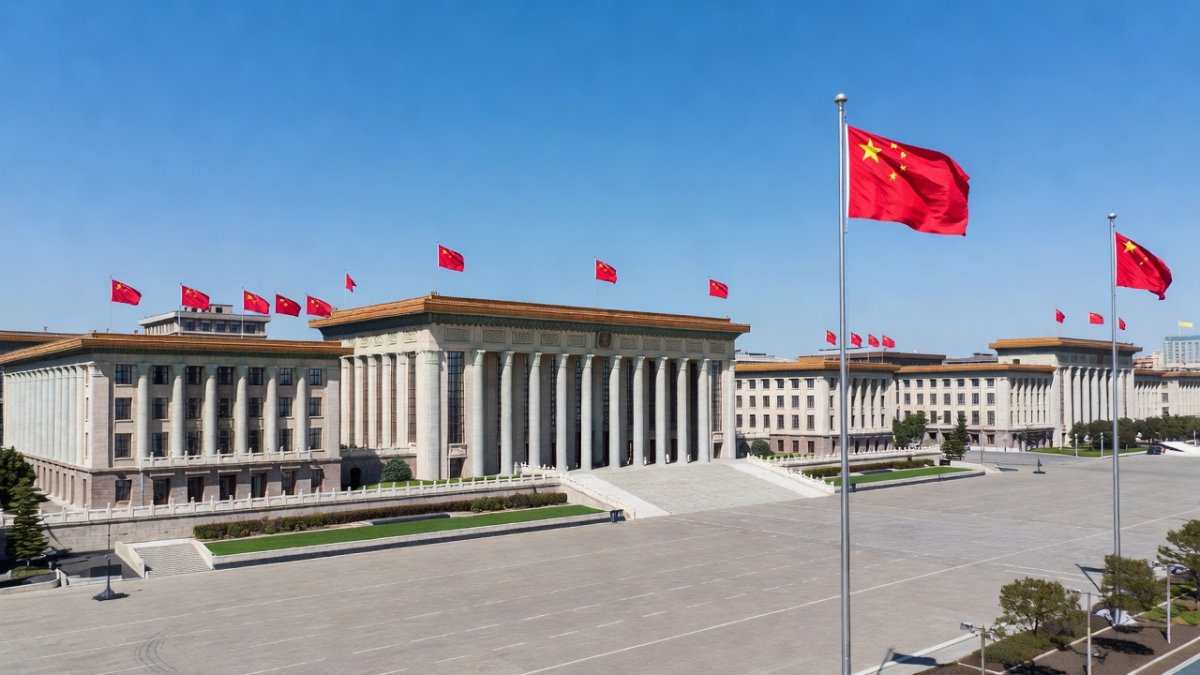
The Ethnic Unity Law that took effect on July 1, 2026, represents one of the most significant expansions of China's legal architecture in recent years — not merely for its domestic implications but for the explicit extraterritorial reach embedded in Article 63. By authorising measures against organisations and individuals outside China deemed to "undermine ethnic unity or create ethnic division," Beijing has signalled that its tolerance for overseas criticism of policies in Tibet, Xinjiang, and Inner Mongolia now carries formal legal consequences. This development arrives at a moment when China is simultaneously pursuing an open-door diplomatic charm offensive — loosening visa restrictions for nationals of 77 countries and hosting heads of state from Washington to Westminster — exposing a carefully calibrated dual-track strategy of openness and control that has far-reaching implications for international law, EU-China relations, and the future of transnational human rights advocacy.
Extending Legal Reach Across National Boundaries
The Ethnic Unity Law, which took effect on July 1, 2026, introduces explicit provisions for addressing actions by organisations and individuals located outside China. Article 63 specifically authorises measures against those deemed to undermine ethnic unity or foster division among the country's 56 recognised groups. This development builds on existing practices of monitoring overseas critics, yet it supplies a formal statutory basis that Chinese authorities can invoke in diplomatic and legal exchanges.
Article 63 of the Ethnic Unity Law extends Chinese jurisdiction in ways that mirror and amplify extraterritorial mechanisms already embedded in the 2021 PRC Sanctions Law and the 2020 Biosecurity Law. Whereas the Sanctions Law empowers countermeasures against foreign entities interfering in China’s internal affairs, and the Biosecurity Law criminalises the export of genetic resources without approval, Article 63 specifically targets speech and association deemed to undermine ethnic unity, regardless of the actor’s nationality or location. This represents a form of “universal jurisdiction in reverse,” asserting Chinese authority over non-citizens abroad rather than shielding Chinese nationals from foreign courts. Comparative analysis reveals parallels with the US Foreign Corrupt Practices Act, which extraterritorially penalises bribery by foreign firms, and the EU’s 2018 Blocking Statute, designed to neutralise US secondary sanctions; yet Beijing’s approach inverts these models by projecting domestic political orthodoxy outward rather than defending market access or sovereignty against external coercion.
The strategic implications are significant. By codifying overseas enforcement, Beijing signals that diaspora communities, foreign academics, and even tourists can be held accountable upon return or through proxy pressure on relatives. This creates a legal architecture that complements existing surveillance practices, such as the monitoring of WeChat groups and student associations, while avoiding the diplomatic costs of overt extraterritorial arrests. Historical precedent from the 2019 Hong Kong national security law demonstrates how such provisions rapidly induce self-censorship among overseas populations, suggesting Article 63 will similarly recalibrate risk calculations for anyone engaging with sensitive ethnic issues from abroad.
The Politburo’s Central National Security Commission has emerged as the principal coordinating body for overseas legal enforcement, integrating the new law into Xi Jinping’s “comprehensive national security” doctrine first articulated at the 2014 National Security Conference. This doctrine, later codified in the 2015 National Security Law, treats ethnic unity as a core component of regime security rather than a peripheral cultural matter. The legislation functions as a preemptive deterrent ahead of the 2027 20th Party Congress, aiming to neutralise potential diaspora mobilisation that could amplify international criticism of Beijing’s policies in Xinjiang, Tibet, and Inner Mongolia. Data from the Overseas Chinese Affairs Office indicate roughly 10 million ethnic minority diaspora members globally, a population whose political activation could complicate the Dual Circulation strategy’s emphasis on internal cohesion and reduced external vulnerabilities.
Strategic Objectives Behind the Legislation
Beijing frames the measure as a means to promote social harmony and a shared national identity. In the context of the Dual Circulation strategy and the 14th Five-Year Plan, internal cohesion is viewed as essential for sustaining economic resilience and political stability. Officials from the Ministry of Foreign Affairs and the National Development and Reform Commission have consistently linked domestic unity to the ability to project influence abroad without distraction from separatist narratives.
Comparative examination with earlier campaigns reveals the law’s role in closing perceived gaps between domestic control and international influence operations. Named officials within the Commission have referenced the need to “extend the front line of stability maintenance” beyond borders, linking the measure directly to the 14th Five-Year Plan’s security objectives. The result is a layered deterrent that combines legal ambiguity with the credible threat of detention upon re-entry, thereby shaping behaviour among overseas students, business communities, and activists without requiring constant physical presence of Chinese security forces.
European Responses and Treaty Considerations
Members of the European Parliament have already circulated warnings urging member states to review extradition agreements with China. Such recommendations reflect concern that the new law could be applied to peaceful advocacy conducted within EU jurisdictions. Several parliamentarians, drawing on the precedent of coordinated action following the 2020 Hong Kong National Security Law, have pressed the European Commission to reassess bilateral judicial cooperation frameworks. Their interventions highlight how Article 63’s extraterritorial wording could expose EU residents to prosecution for statements made on European soil, prompting calls for formal legal safeguards and parliamentary hearings.
These initiatives parallel the EU’s 2021 Magnitsky-style sanctions regime targeting Xinjiang officials, which established a precedent for linking human-rights concerns directly to restrictive measures. The existing EU-China Human Rights Dialogue, long criticized for its limited tangible outcomes, now faces renewed scrutiny as member states question whether continued engagement legitimizes expansive Chinese legal claims. The 2020 Hong Kong law’s extraterritorial provisions previously triggered EU export controls on dual-use technologies; similar technology-transfer restrictions are now being examined to prevent European firms from inadvertently facilitating enforcement of the Ethnic Unity Law abroad.
Effects on Minority Communities and Regional Policies
Critics, including representatives from Amnesty International, note that advocacy for cultural or linguistic rights in Tibet, Xinjiang, and Inner Mongolia could fall under the law’s broad language. The case of Zhang Yadi illustrates how authorities may interpret overseas statements as threats to unity. The United Front Work Department’s long-standing mandate to neutralize separatist narratives provides institutional continuity, enabling overseas enforcement mechanisms that extend domestic security practices into diaspora communities. This continuity raises the prospect that routine cultural events or academic conferences in Europe could be reframed as violations of Chinese law.
The 2021 Xinjiang cotton controversy and the subsequent global supply-chain audits demonstrated how extraterritorial legal instruments can reshape corporate behavior worldwide. Uyghur and Tibetan diaspora organizations have already expressed alarm that Article 63’s language mirrors both the 2015 Counter-Terrorism Law and the 2020 Hong Kong National Security Law’s extraterritorial scope, potentially criminalizing remote participation in advocacy campaigns. Such convergence suggests a deliberate legislative strategy aimed at deterring transnational solidarity networks that have historically challenged Beijing’s regional policies.
The Zhang Yadi Precedent and Chilling Effects on Diaspora
The July 2025 arrest of Zhang Yadi (Tara), a 23-year-old student detained in Shangri-La, Yunnan, after posting about Tibet while studying in the UK and France, illustrates the operational reach of Article 63. Charged under “inciting secession” provisions, Zhang’s case marks one of the first documented instances of extraterritorial speech leading to domestic prosecution for a non-ethnic-minority overseas student. Her detention occurred shortly after returning for a family visit, demonstrating how re-entry serves as the enforcement trigger. This precedent expands the scope of liability beyond traditional diaspora networks to include transient student populations, raising acute questions about who qualifies as a target under the statute’s vague language of “undermining ethnic unity.”
The chilling effect on the estimated 10 million Chinese diaspora is already measurable. Comparisons to the 2023 detention of Ilham Tohti’s relatives abroad reveal a pattern of familial and associative targeting that amplifies risk for anyone with online visibility on ethnic issues. Academic exchange programs have reported a sharp decline in applications from Tibetan and Uyghur studies scholars, while diaspora media outlets have instituted internal review processes for sensitive content. Legal ambiguity compounds the problem: the law does not define thresholds for “incitement,” leaving students, journalists, and activists to self-censor preemptively. This dynamic threatens to erode the openness of overseas Chinese academic communities and further isolates diaspora voices from global discourse on minority rights.
Balancing Openness and Regulatory Control
China has simultaneously expanded visa exemptions to nationals of 77 countries and hosted high-level visits, including those involving US President Donald Trump and UK Prime Minister Sir Keir Starmer. This dual-track posture seeks to attract investment and tourism while reinforcing boundaries on political discourse. The approach aligns with broader foreign-policy doctrine that prioritises economic engagement without conceding ground on sovereignty questions.
Calculations in EU-China Relations
European capitals must weigh trade and investment benefits against the risk that judicial cooperation could expose citizens to extraterritorial claims. With annual EU-China trade volumes reaching approximately 700 billion euros and China’s FDI stock in Europe estimated at 35–40 billion euros, governments confront tangible economic stakes. The 2023 EU Economic Security Strategy explicitly identifies legal and normative risks as central to de-risking efforts, yet implementation remains uneven across member states.
Germany’s 2024 China Strategy, which advocates de-risking without full decoupling, offers a template for calibrated engagement that other capitals are studying. France’s handling of the 2019 Sino-French extradition treaty illustrates how existing bilateral instruments can be amended or suspended when human-rights concerns intensify. These precedents suggest that coordinated EU-level review of judicial cooperation agreements may emerge as the most viable path to protect citizens while preserving essential commercial channels.
Implications for Global Human Rights Diplomacy
The legislation arrives as Beijing seeks to shape international norms around sovereignty and non-interference. China’s upcoming appearance before the UN Human Rights Council’s Universal Periodic Review in 2024 will test whether the new law alters diplomatic dynamics or invites additional scrutiny of extraterritorial reach. The contrasting approaches of the Biden and Trump administrations—multilateral coalition-building versus unilateral sanctions—have left a fragmented diplomatic landscape that Beijing can exploit.
A growing coalition of democracies, reflected in the 2024 Ottawa Declaration, now routinely attaches human-rights conditions to trade frameworks. This trend may render future Chinese bids for Olympic hosting or other mega-events more contentious, as potential host-city governments weigh legal exposure under Article 63. The law thus functions not only as a domestic control instrument but also as a tool for contesting the liberal international order’s human-rights architecture.
Consequences for ASEAN and the Global South
Countries in ASEAN and across the Global South face parallel pressures. Many maintain economic ties with China that they are reluctant to jeopardise, yet they also host exile communities and civil-society organisations that could become targets of formal complaints under the new framework. The resulting diplomatic space is likely to be managed through quiet bilateral channels rather than public confrontation, preserving room for development cooperation while limiting overt support for dissident voices.
By Prof. Marcus Chen, Staff WriterThis article was produced with AI-assisted research and editorial support. Reporting is based on sources cited in the article.
What's Your Reaction?
 Like
0
Like
0
 Dislike
0
Dislike
0
 Love
0
Love
0
 Funny
0
Funny
0
 Wow
0
Wow
0
 Sad
0
Sad
0
 Angry
0
Angry
0

World Politics Analyst at Global1.News. Based in Beijing, covering US-China relations, global trade, and geopolitical strategy. Brings deep analytical perspective to the power dynamics shaping international affairs.














Comments (0)