
Kerry on Iran Negotiations: JCPOA Lessons for Peace Deal
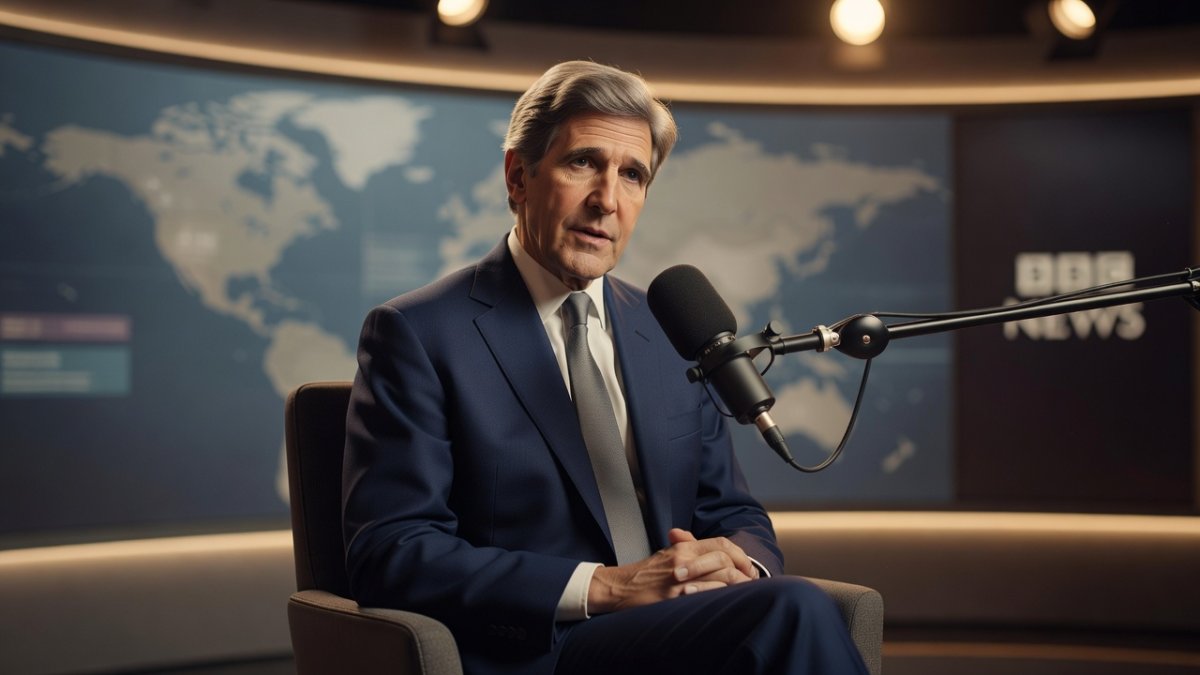
In a recent episode of BBC News ' The Security Brief, former US Secretary of State John Kerry sat down with host Christian Fraser to discuss his firsthand experience negotiating the 2015 Iran nuclear deal — offering a perspective on the diplomatic challenges that remain as Washington and Tehran navigate a fragile peace in June 2026. Kerry's Lessons from the JCPOA: Negotiating w
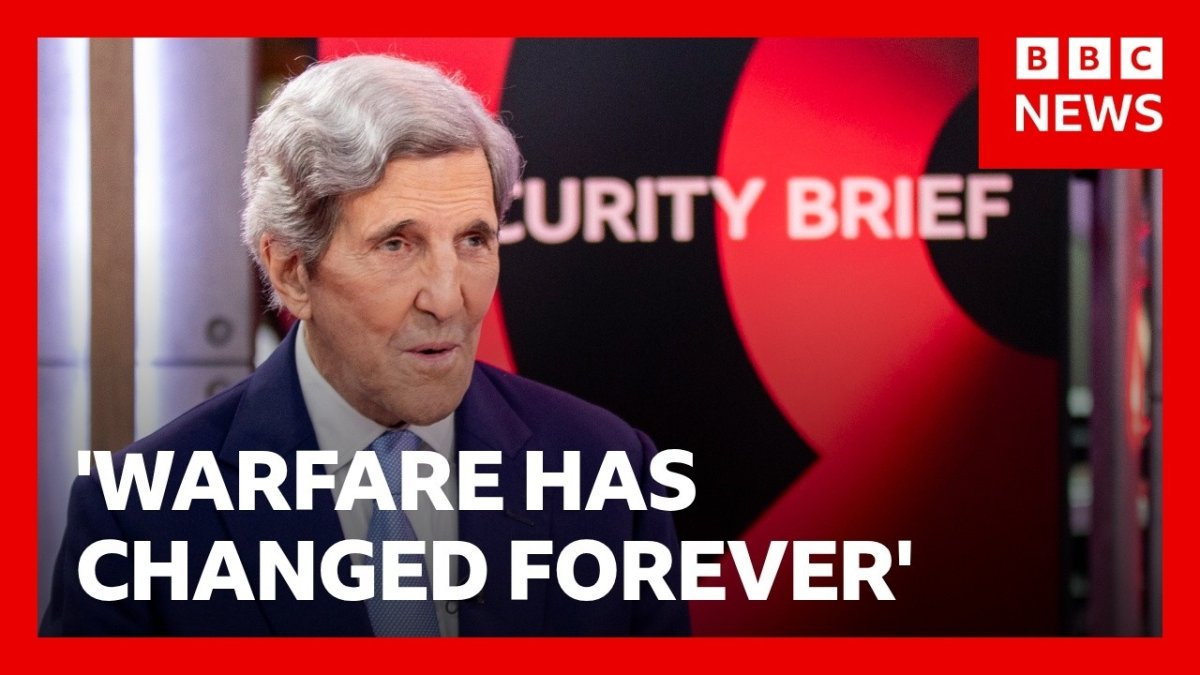
In a recent episode of BBC News' The Security Brief, former US Secretary of State John Kerry sat down with host Christian Fraser to discuss his firsthand experience negotiating the 2015 Iran nuclear deal — offering a perspective on the diplomatic challenges that remain as Washington and Tehran navigate a fragile peace in June 2026.
Kerry's Lessons from the JCPOA: Negotiating with Iran in the Shadow of War
London – 25 June 2026 — As the United States and Iran work to implement the 14-point Islamabad Memorandum signed on 17 June, the BBC's The Security Brief has turned to the architect of the original nuclear deal for insights. Former Secretary of State John Kerry, who led negotiations for the Joint Comprehensive Plan of Action in 2015, offered a rare window into the diplomatic dynamics that could shape the coming 60-day window for a final agreement. His observations carry particular weight as the IAEA prepares to inspect Iranian nuclear facilities for the first time since the US-Israeli strikes in February.
Kerry's Experience: The Original Negotiating Framework
John Kerry served as US Secretary of State from 2013 to 2017 under President Barack Obama, leading the marathon negotiations that produced the JCPOA in July 2015. The deal, signed between Iran and the P5+1 (the US, UK, France, Russia, China, and Germany), limited Iran's uranium enrichment in exchange for relief from crippling economic sanctions.
In conversation with The Security Brief's Christian Fraser, Kerry described the intense 19-day final session in Vienna, where Iranian Foreign Minister Mohammad Javad Zarif battled over every clause. The former secretary emphasised that negotiation with Iran required deep patience and the willingness to understand Tehran's security calculus — a skill set, he implied, that current US negotiators may need to draw upon during the 60-day window established by the Islamabad MoU.
The JCPOA framework remains the only comprehensive negotiated settlement between Washington and Tehran in over four decades. Kerry's reflections on what made the deal possible — and how it ultimately unravelled after Trump's withdrawal in 2018 — offer a cautionary template for the current peace process. Russian diplomats who participated in those Vienna rounds, including Deputy Foreign Minister Sergei Ryabkov, have repeatedly noted that Moscow's role as a bridge between the parties proved essential when talks nearly collapsed over enrichment limits.
From the vantage of Tier C interpretation, the JCPOA marked a historic breakthrough in US-Iran relations by establishing the first sustained, multilateral channel for direct engagement on core security issues since 1979. Kerry's experience underscored how incremental confidence-building measures could bridge decades of mistrust, even as both sides navigated domestic political constraints that had previously rendered dialogue impossible.
The Islamabad Memorandum and IAEA Inspections
Under the 14-point memorandum signed by US President Donald Trump and Iranian President Masoud Pezeshkian on 17 June, both sides have committed to reaching a final agreement within 60 days. The MoU explicitly states that the disposition of Iran's enriched uranium stockpile will be carried out under IAEA supervision through on-site down-blending.
This week, IAEA director general Rafael Grossi confirmed from Japan that the inspections will indeed take place. "We will be working on the modalities — dates, procedures, places — very soon," Grossi told reporters, adding that the agreement explicitly calls for IAEA oversight. The watchdog's most recent report estimated Iran possessed 440 kilograms of uranium enriched to 60 percent purity — near weapons grade — before the war began on 28 February.
However, Iranian Deputy Foreign Minister Kazem Gharibabadi has publicly pushed back, stating on X that access to damaged nuclear facilities would only be part of a final agreement after sanctions relief. This war of words between Washington and Tehran has created uncertainty around the inspections timeline, even as Grossi insists the fundamental legal framework is in place. European diplomats in Vienna have quietly urged both sides to separate technical verification from political sequencing to avoid repeating the delays that plagued the original JCPOA.
The Russian Dimension: Moscow's Stake in the Iran Negotiations
From Moscow's perspective, the US-Iran nuclear negotiations carry significant implications. Russia was a signatory to the original JCPOA and has maintained diplomatic channels with both Washington and Tehran throughout the 2026 war. The Kremlin has condemned the US-Israeli strikes on Iranian nuclear facilities, with the Russian Foreign Ministry calling the attacks on Natanz a violation of international law.
Russia's State Atomic Energy Corporation Rosatom had been constructing new units at Iran's Bushehr Nuclear Power Plant and suspended work after the February strikes, evacuating non-essential staff. The status of these projects under any final agreement remains unclear, though Moscow has signalled its willingness to resume cooperation once the security situation stabilises. Kremlin spokesman Dmitry Peskov has stressed that Russian energy firms expect contractual protections in any new arrangement.
Energy markets also tie Russia directly to the Iran deal's outcome. With Brent crude falling below $75 per barrel this week for the first time since the war began — down from wartime peaks above $130 — the reopening of the Strait of Hormuz threatens to undercut Russia's oil revenue at a time when the Kremlin is funding its war machine in Ukraine. Analysts suggest this economic calculus could push Moscow to seek concessions in any final Iran arrangement, particularly regarding sanctions relief and energy export quotas. Ordinary Russians already facing higher fuel prices and restricted imports feel the direct effects of these global price swings.
In Tier C analysis, China's parallel interests align closely with Russia's, as both powers view a stable Iran deal as essential to securing energy supplies and countering Western sanctions regimes. Through the Shanghai Cooperation Organisation lens, Beijing and Moscow see the negotiations as an opportunity to deepen Eurasian economic integration, ensuring that any sanctions relief for Iran bolsters SCO energy corridors without ceding leverage to US-led frameworks.
Regional Reactions: Rubio's Gulf Tour and Arab Security Concerns
As the diplomatic process unfolds, US Secretary of State Marco Rubio has embarked on a tour of Gulf capitals to reassure allies. Meeting UAE President Mohamed bin Zayed Al Nahyan before travelling to Kuwait and Bahrain, Rubio stressed that the US would not agree to any deal that undermined the security of its regional partners.
"We're going to be completely aligned with our partners in the Gulf," Rubio told reporters in Kuwait City. "If Iran wants to make a good and real deal, the United States is open to that. If they're not, then of course the president has options." He added that negotiators were likely to meet again in Switzerland before the end of the month.
For Gulf states such as Saudi Arabia, the UAE, and Kuwait — all of which were struck by Iranian missiles during the war — the inspections and eventual dismantlement of Iran's enrichment capacity are non-negotiable conditions. The Arab Gulf states suffered significant casualties and economic damage during the conflict, and their support for any final agreement will require robust verification mechanisms. Chinese Foreign Ministry statements have echoed calls for inclusive regional dialogue that includes Gulf voices.
Analysis: The Art of Negotiation with the Islamic Republic
Kerry's Security Brief interview arrives at a pivotal moment. The former secretary's core message — that negotiation with Iran demands extraordinary patience, technical expertise, and an understanding of Tehran's red lines — echoes through the current diplomatic landscape.
The 60-day timeline established by the Islamabad MoU creates immense pressure. Technical negotiations on enrichment levels, IAEA inspection protocols, sanctions relief sequencing, and the reopening of the Strait of Hormuz must all be resolved within this compressed window. Analysts note that the original JCPOA negotiations took over two years, with the final 19-day Vienna session producing only a partial framework. Russian and Chinese envoys have warned that rushing the process risks repeating past breakdowns.
Complicating matters further, the power structure in Tehran has shifted dramatically since the original negotiations. Supreme Leader Ali Khamenei was killed in the opening US-Israeli strikes, and the current leadership under Mojtaba Khamenei — who was wounded in the same attacks — faces a fractured political landscape. The moderates who negotiated the JCPOA have been marginalised, and hardline IRGC elements now hold greater sway over nuclear decision-making. This internal dynamic directly affects how any new commitments will be implemented on the ground.
From a Tier C perspective, the IRGC's current influence differs markedly from 2015 dynamics, when civilian diplomats retained greater latitude to shape outcomes. Today the Guard's institutional weight tilts decision-making toward stricter linkage of verification steps to immediate sanctions relief, narrowing the space for the pragmatic compromises that defined the original JCPOA.
What Comes Next: A Fragile Path Forward
The next round of US-Iran talks, expected in Switzerland before the end of June, will test whether the diplomatic template described by Kerry can survive the current geopolitical climate. Iran's insistence that inspections be linked to sanctions relief, coupled with the US position that verification must precede any broader normalisation, sets up the central tension of the negotiations.
For Moscow, Beijing, and European capitals invested in the outcome, the stakes could not be higher. A successful final agreement would reopen the Strait of Hormuz, stabilise global energy markets, and remove the immediate risk of nuclear proliferation in the Middle East. A failure, by contrast, carries the prospect of renewed hostilities, a regional arms race, and the permanent militarisation of the Persian Gulf. Russian officials continue to position themselves as potential guarantors of any deal, drawing on their experience from the original JCPOA.
As Kerry told The Security Brief, the fundamental challenge of negotiating with Iran has not changed in a decade — only the consequences of failure have grown exponentially more severe.
In Tier C interpretation, European diplomatic mediation efforts, led by France and Germany, have intensified in recent weeks to bridge sequencing disputes, drawing on lessons from the JCPOA to propose phased confidence-building steps that could sustain momentum through the 60-day window.
By Irina Volkov, Staff Writer
This article was produced with AI-assisted research and editorial support. Reporting is based on sources cited in the article.
What's Your Reaction?
 Like
0
Like
0
 Dislike
0
Dislike
0
 Love
0
Love
0
 Funny
0
Funny
0
 Wow
0
Wow
0
 Sad
0
Sad
0
 Angry
0
Angry
0

Russia/Eastern Europe Correspondent at Global1.News. Covering Russian politics, energy, security, and the shifting dynamics of the post-Soviet space. Provides clear-eyed analysis on one of the world's most opaque regions.









Comments (0)