
Venezuela Earthquake Health Crisis: 1.3M Need Urgent Aid
The June 24 twin earthquakes tore through Venezuela's coastal heartland, leaving mothers clutching children amid rubble while hospitals struggled to treat crush injuries under flickering phone lights. As aftershocks rattled La Guaira state and Caracas, the human cost mounted into a full-blown public health emergency that exposed every fracture in the nation's already fragile sy
The June 24 twin earthquakes tore through Venezuela's coastal heartland, leaving mothers clutching children amid rubble while hospitals struggled to treat crush injuries under flickering phone lights. As aftershocks rattled La Guaira state and Caracas, the human cost mounted into a full-blown public health emergency that exposed every fracture in the nation's already fragile system. For the 17,854 now homeless and the 16,740 injured, the earthquake was not a single moment of terror — it was the beginning of a daily struggle for clean water, medical care, and basic survival in a nation whose healthcare system had already been stretched past its breaking point by years of economic collapse.
Venezuela Twin Earthquakes Trigger Catastrophic Health Crisis as UN Warns 1.3 Million Require Life-Saving Aid
CARACAS, Venezuela – July 9, 2026 — Twin earthquakes of 7.2 and 7.5 magnitude struck on June 24, 2026, with an epicenter roughly 100 miles west of Caracas at shallow depth, unleashing more than 1,000 aftershocks and registering as the strongest seismic events in Venezuela in over a century. La Guaira state, particularly Caraballeda, bore the brunt alongside Caracas and Miranda state, where 190 buildings collapsed and 3,811 people died according to official tallies reported by AFP, Infobae and TASS. Over 16,740 were injured, 17,854 left homeless, and more than 6,400 rescued alive from the debris. 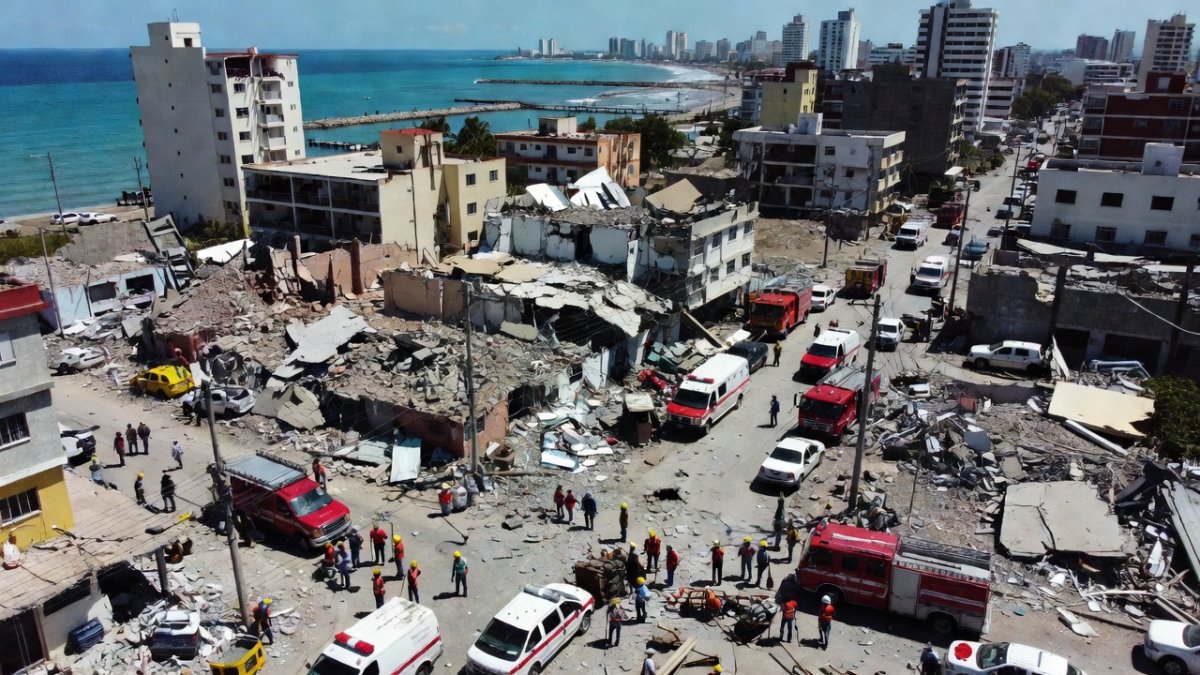
The Devastating Twin Quakes and Immediate Health Toll
The shallow quakes sent violent shockwaves through densely populated coastal zones, toppling homes and health infrastructure within seconds. Official counts confirmed 3,811 deaths by July 9, with 16,740 injured and 17,854 displaced into makeshift camps. Over 6,400 survivors were pulled from rubble by international teams, yet 190 buildings lay in ruins. At least three health facilities suffered critical structural damage, forcing San José Hospital in La Guaira to suspend all services. Every assessed clinic across La Guaira, Caracas and Miranda required immediate external support. Hospitals faced relentless trauma inflows including crush injuries, emergency amputations and rapidly worsening wound infections from contaminated debris. In overcrowded camps, women delivered babies by the glow of cell-phone flashlights because delivery rooms had been destroyed. These immediate medical emergencies revealed how quickly a natural disaster can overwhelm an already strained system, turning routine injuries into life-threatening crises within hours.
Overwhelmed Hospitals and Infectious Disease Threats
Professor Peter Hotez specifically warned of cholera outbreaks as water systems fractured and sanitation collapsed. Waterborne pathogens including cholera, typhoid and hepatitis A spread rapidly through contaminated supplies, while vector-borne threats such as dengue and malaria surged because thousands slept outdoors without protection. Vaccine-preventable diseases like measles posed additional dangers inside crowded shelters where vaccination gaps already existed. Wound infections from debris multiplied daily, and pre-existing malnutrition left populations especially vulnerable to rapid deterioration. All health facilities demanded urgent external supplies of antibiotics, rehydration salts and vaccines. The convergence of trauma care needs with these infectious risks created a compounding public health emergency that threatened to claim far more lives than the initial shaking. Without swift intervention, secondary outbreaks could eclipse the earthquake's direct death toll within weeks.
UN Humanitarian Chief Tom Fletcher's Assessment on the Ground
UN Under-Secretary-General Tom Fletcher traveled to La Guaira and Caracas in early July, meeting Vice President Delcy Rodríguez and touring devastated neighborhoods where families still waited beside ruined homes two weeks after the quakes. He declared that 1.3 million people now require urgent life-saving aid and recovery support. At the devastated coastal town of Caraballeda, he spoke with mothers who had not yet found their children's bodies, describing scenes that no humanitarian training can fully prepare anyone to witness. The UN launched an appeal for nearly $300 million while coordinating more than 50 urban search-and-rescue teams from over 30 countries. Fletcher delivered a video message from Caracas to a global ministerial conference on earthquakes, emphasizing that the scale of medical and sanitation needs demands sustained global attention, not just a brief surge of donations. His presence underscored international recognition that Venezuela's crisis demanded coordinated global action beyond immediate rescue operations. Fletcher's assessment highlighted how the earthquakes had stripped away remaining layers of resilience, leaving communities dependent on external medical teams and supplies for survival in the coming months.
International Medical Aid and Field Hospitals Respond
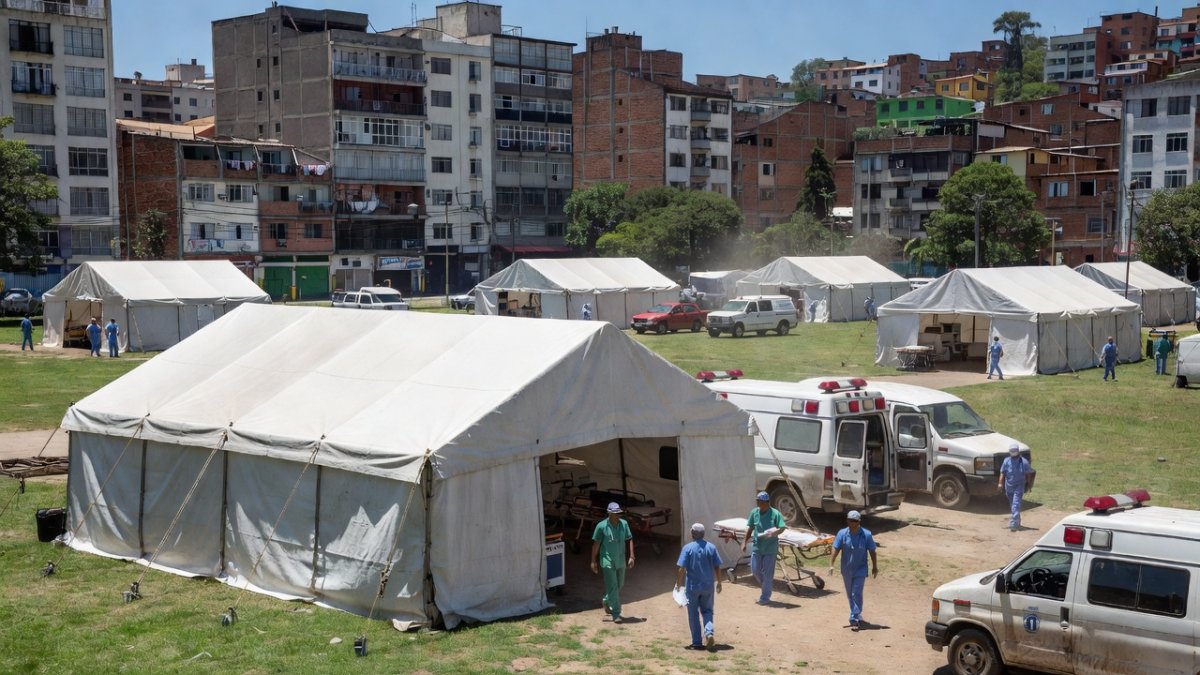
Samaritan's Purse established an emergency field hospital in La Guaira featuring two operating rooms, 56 beds, a critical care unit, pharmacy and laboratory — a mobile surgical center that became the primary trauma care provider for an entire coastal region whose own hospitals had collapsed. Spain's AECID deployed the START field hospital at Francisco de Miranda Park in Caracas, treating hundreds of patients daily for fractures, infections, and chronic conditions that had gone unmanaged since the quakes. Venezuelan and Colombian Red Cross teams conducted joint medical operations across affected states, while PAHO/WHO provided technical support to damaged facilities struggling to maintain even basic sterilization capacity. Haiti dispatched 31 health professionals — a remarkable show of solidarity from a nation that knows seismic disaster intimately. The United States committed over $386 million plus an air bridge from Miami supported by the USS Fort Lauderdale, sending pallets of surgical supplies, antibiotics, and rehydration solutions. World Central Kitchen distributed meals across Caracas and contributed $1 million through its Longer Tables Fund. Even a McDonald's restaurant near collapsed housing in La Guaira became a de facto triage and reunification center, its dining area transformed into a makeshift ward where medics treated crush injuries and reunited families with their pets. These rapid deployments illustrated Latin America's interconnected response capacity yet also revealed how deeply local systems had been depleted before the quakes struck.
Pre-existing Vulnerabilities Amplify the Crisis
Venezuela's healthcare system had already been devastated by years of economic crisis marked by chronic shortages of medicines, clean water and reliable electricity. Before the earthquakes, roughly 8 million Venezuelans required humanitarian assistance. Malnutrition rates and vaccination gaps, combined with weak vector control, created fertile ground for post-disaster disease spread. The quakes simply accelerated existing trajectories of suffering. Survivors searching rubble for missing family members faced compounded psychological trauma, with mothers still waiting beside ruined homes two weeks later and children exhibiting severe distress from loss and displacement. These pre-existing conditions transformed what might have been a manageable disaster into a prolonged humanitarian catastrophe requiring sustained international engagement across health, nutrition and mental health domains.
The Bottom Line — What Comes Next
The earthquakes exposed how quickly layered vulnerabilities can produce cascading health failures across an entire region. Sustained funding for the $300 million UN appeal, continued operation of field hospitals, and aggressive disease surveillance remain essential to prevent secondary mortality from outpacing the initial 3,811 deaths. Mental health services must scale rapidly alongside physical care, while long-term reconstruction of health infrastructure cannot be delayed. For Venezuela's neighbors — Colombia, Brazil, and the Caribbean nations that sent rescue teams — the crisis is a warning: seismic risk combined with degraded health systems is a regional threat that knows no borders. Venezuela's tragedy serves as a stark reminder that Latin American nations share both seismic risks and the responsibility to build resilient health systems before the next disaster strikes. Without decisive action, the 1.3 million people now needing aid will face prolonged suffering that reverberates far beyond Venezuela's borders.
By Elena Vasquez, Staff WriterThis article was produced with AI-assisted research and editorial support. Reporting is based on sources cited in the article.
What's Your Reaction?
 Like
0
Like
0
 Dislike
0
Dislike
0
 Love
0
Love
0
 Funny
0
Funny
0
 Wow
0
Wow
0
 Sad
0
Sad
0
 Angry
0
Angry
0

Latin America Correspondent at Global1.News. Based in Mexico City, covering politics, economics, energy, and culture across the region. Brings an on-the-ground perspective to stories spanning from the Rio Grande to Patagonia.











Comments (0)