
Typhoon Maysak Exposes China's Dual Challenge of Extreme Weather and Disaster Resilience
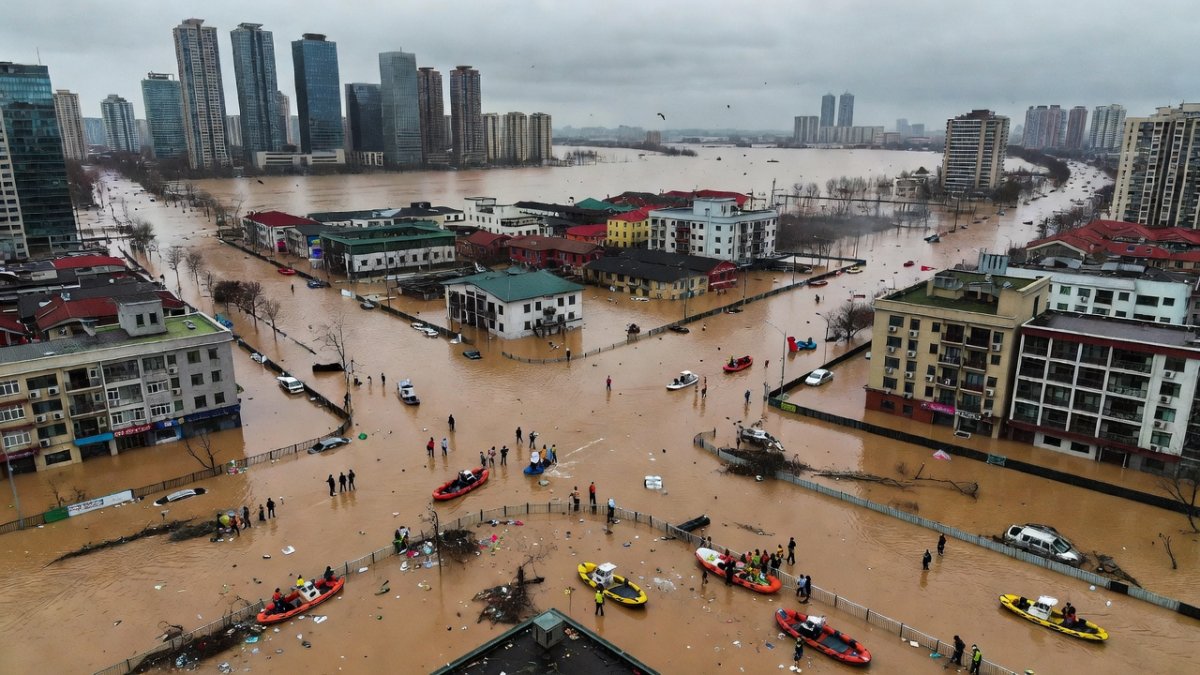
Typhoon Maysak Exposes China's Dual Challenge of Extreme Weather and Disaster Resilience Swift Human Displacement Across Guangxi The arrival of Typhoon Maysak in southern China's Guangxi province produced immediate and severe consequences for local populations. At least 17 people died and hundreds sustained injuries, while officials reported that more than 90,000 individuals we
Swift Human Displacement Across Guangxi
The arrival of Typhoon Maysak in southern China's Guangxi province produced immediate and severe consequences for local populations. At least 17 people died and hundreds sustained injuries, while officials reported that more than 90,000 individuals were affected and 60,000 required evacuation. Residents in Nanning and surrounding villages found themselves stranded on rooftops as the Yongjiang river burst its banks, leaving little time for preparation.
Local accounts underscore the sudden nature of the flooding. One resident identified by the surname Zhou described how villagers fled without food supplies because the water rose too rapidly. Another, identified by the surname Huang, noted that rescue teams lacked sufficient personnel and adequately sized lifeboats, preventing them from reaching all those in need. These details illustrate the acute pressure placed on both communities and emergency services during the initial hours of the crisis.
Rare Tornadoes Extend the Meteorological Impact
Although Maysak made landfall in Guangxi, its effects reached hundreds of kilometres northward into Hubei province, where rare tornadoes struck the cities of Ezhou and Huanggang. The region had not recorded a tornado since 2021, making the event notable for its infrequency. State media described the typhoon's sudden onset and intense, short-duration winds as distinctive features of this storm.
Reports from Huanggang included accounts of a man pulled from a high-rise apartment and falling 12 storeys, as well as students injured by flying glass. These incidents highlight how secondary weather phenomena can amplify damage far from the primary landfall zone. The combination of river flooding and tornado activity created a compound disaster that tested local infrastructure in ways not commonly experienced in central China.
Central Government Mobilisation and Relief Operations
President Xi Jinping directed an "all out" rescue and relief effort in response to the unfolding events. Authorities raised the emergency flood control response to its highest level, signalling the seriousness with which the situation was viewed at the national level. Tens of thousands of people were moved to safety, though the scale of evacuations revealed constraints in equipment and staffing.
The government's approach reflects established priorities in disaster management, yet the rapid escalation of conditions exposed gaps between planning assumptions and real-time demands. Officials coordinated evacuations while contending with escaped snakes from local farms entering floodwaters, adding further complications to rescue logistics. Such operational details demonstrate the multifaceted challenges that accompany major weather events in densely populated agricultural regions.
Climate Patterns and Threats to Agricultural Stability
Extreme weather events of this kind increasingly affect China's agriculture sector, where consistent production underpins national food security objectives. Maysak, identified as the first typhoon to make landfall in China during the 2026 season, arrived amid broader patterns of intensified storms linked to shifting climate conditions. The short but powerful winds and subsequent flooding can damage crops, disrupt supply chains, and strain rural economies already navigating seasonal variability.
Strategic planning documents such as the 14th Five-Year Plan emphasise resilience measures, yet repeated exposure to compound hazards like flooding combined with tornadoes underscores the need for continued adaptation. Agricultural output remains central to domestic stability, and disruptions of this magnitude carry implications for price stability and regional supply networks across southern and central provinces.
Strategic Implications for National Resilience Planning
China's response to Maysak aligns with longstanding efforts to strengthen internal capacity under the Dual Circulation strategy, which seeks to balance external engagement with robust domestic systems. Effective disaster response supports technological self-sufficiency goals by protecting critical infrastructure and human capital necessary for sustained economic performance. The involvement of high-level directives illustrates how weather events intersect with broader governance priorities.
Second-order effects extend beyond immediate relief. Neighbouring regions within ASEAN may observe China's handling of such incidents as indicators of regional preparedness models, while the Global South watches for lessons applicable to similar climate vulnerabilities. The approaching Super Typhoon Bavi, expected along the eastern coast later in the week, will provide a further test of whether current protocols scale effectively under successive threats.
Longer-Term Considerations for Policy Adaptation
The student in Huanggang who reflected that the disaster only became real once conditions stabilised captured a common experience in sudden-onset events. This perspective points to the psychological and social dimensions that accompany physical damage, requiring sustained attention in recovery phases. Historical patterns of typhoon activity in the western Pacific suggest that future seasons may present comparable or greater challenges.
Policy responses will likely incorporate refined early-warning systems and expanded local response capacity. By integrating meteorological data with agricultural planning, authorities can better safeguard output targets while maintaining social stability. The Maysak episode thus serves as a concrete case study in how climate-driven hazards interact with China's strategic objectives of technological advancement and regional influence.
By Prof. Marcus Chen, Staff WriterThis article was produced with AI-assisted research and editorial support. Reporting is based on sources cited in the article.
What's Your Reaction?
 Like
0
Like
0
 Dislike
0
Dislike
0
 Love
0
Love
0
 Funny
0
Funny
0
 Wow
0
Wow
0
 Sad
0
Sad
0
 Angry
0
Angry
0

World Politics Analyst at Global1.News. Based in Beijing, covering US-China relations, global trade, and geopolitical strategy. Brings deep analytical perspective to the power dynamics shaping international affairs.













Comments (0)