
Springboks Crush England 45-21 in Nations Championship
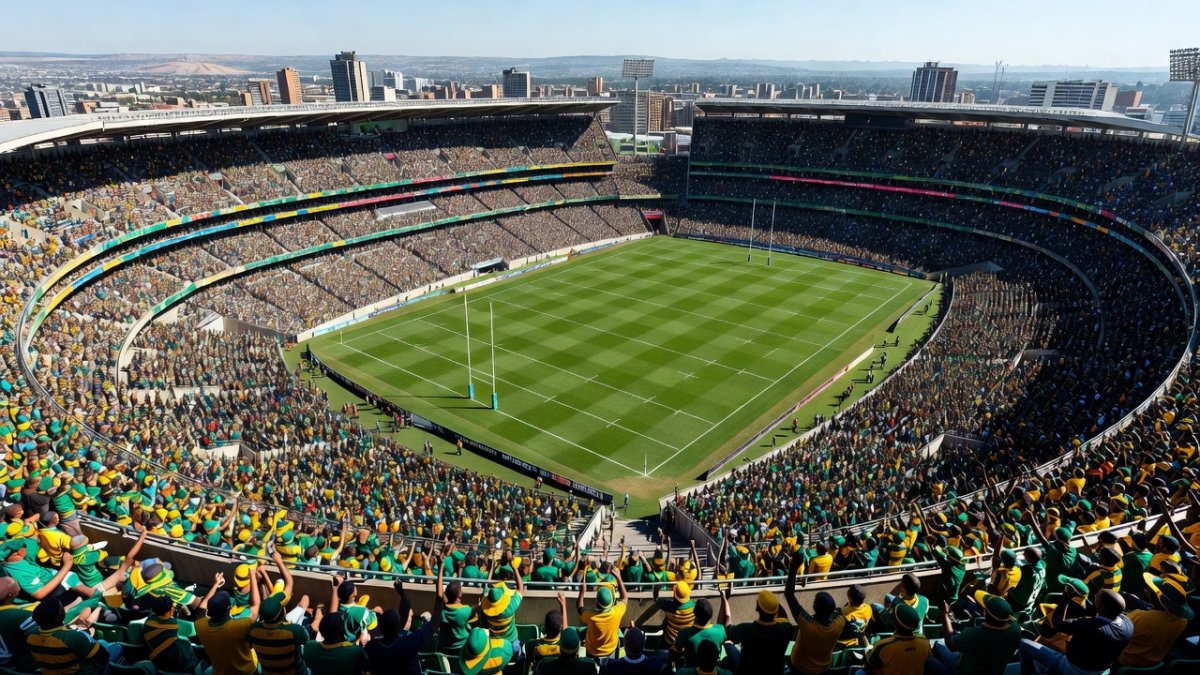
The atmosphere at Ellis Park – the crowd, the occasion, Nations Championship debut The roar that greeted the Springboks at Ellis Park on 4 July 2026 felt like the old days reborn. 52,790 voices packed the stands under a clear Johannesburg winter sky, flags waving in every stand as the new Nations Championship kicked off. This was no ordinary Test. It was the competition’s South
The atmosphere at Ellis Park – the crowd, the occasion, Nations Championship debut
The roar that greeted the Springboks at Ellis Park on 4 July 2026 felt like the old days reborn. 52,790 voices packed the stands under a clear Johannesburg winter sky, flags waving in every stand as the new Nations Championship kicked off. This was no ordinary Test. It was the competition’s South African debut, and the crowd knew it. Chants of “Bokke! Bokke!” rolled down from the upper tiers long before kick-off, mixing with the familiar beat of vuvuzelas and the smell of boerewors from the braai areas outside.
Ellis Park has hosted many famous days, yet this one carried extra weight. Fans arrived early, many wearing the green and gold of the 2023 World Cup winners, others in the fresh 2026 replica jerseys. The pre-match atmosphere crackled with anticipation for a rematch against England, still smarting from recent series losses. When the teams emerged, the volume spiked again. The occasion felt bigger than a single round-one fixture; it felt like a statement that South African rugby remains the heartbeat of the southern hemisphere calendar.
Local flavour was everywhere. Supporters from the Cape, Durban and the Highveld had travelled to Johannesburg, turning the stadium into a microcosm of the country’s rugby passion. The energy never dipped, even when England scored. Every Springbok break drew gasps and cheers that echoed across the pitch. By full-time the stands were still singing, proof that Ellis Park remains one of the most intimidating venues in world rugby when the Boks are flying.
How the injury setbacks tested SA’s depth – PSDT captaincy, uncapped players stepping up
Hours before kick-off the Springbok camp absorbed two major blows. Siya Kolisi’s hamstring ruled him out, while Eben Etzebeth failed his concussion protocols. In any other era those absences might have caused panic. Instead, Rassie Erasmus and the coaching staff simply adjusted. Pieter-Steph du Toit shifted to lock and accepted the captaincy armband, a role he has shouldered before with quiet authority. The move allowed the back row to remain mobile while still offering lineout leadership.
Two uncapped players started: Paul de Villiers and Cameron Hanekom at flank. Both had impressed in the United Rugby Championship and Currie Cup, yet nothing prepares a player for a first Test against England at Ellis Park. They answered every question. De Villiers carried hard and tackled above his weight, while Hanekom’s work-rate at the breakdown earned repeated praise from the captain. Ben-Jason Dixon, also on the bench for the first time in this squad, entered late and scored the final try, underlining the conveyor belt of talent SARU’s structures continue to produce.
These selections spoke volumes about South African depth. The domestic game, from school level through provincial franchises, keeps supplying athletes ready to step into green and gold. The 45-21 result proved the system works even when star names are missing. Du Toit’s leadership, combined with the fearless debuts, turned potential crisis into a statement of squad strength that will serve the Boks well through the rest of the Nations Championship.
First-half tactical analysis – the 17-0 blitz, England’s fightback, the sin-bin turning point
The opening twelve minutes belonged entirely to South Africa. Thomas du Toit finished first after Damian Willemse’s sharp line break, then Cheslin Kolbe crossed following Ox Nché’s powerful carry. At 12-0 the Ellis Park crowd sensed a rout. Kurt-Lee Arendse added a third try in the corner after a perfectly executed lineout move, stretching the lead to 17-0. England looked rattled, their defensive line speed slow and their kicking game imprecise.
England responded when Arendse was sin-binned for a deliberate knock-on. Jamie George’s try was correctly disallowed for offside at the ruck, but Ellis Genge’s quick-tap score narrowed the gap to 17-7. The ten-minute period without Arendse tested South African discipline. They held firm, though, and the half-time hooter arrived with George Martin touching down from a 50/22 lineout to make it 17-14. England had clawed back momentum, yet the damage from the early blitz remained visible in their body language.
Tactically, South Africa’s wide-wide attack stretched England’s narrow defence. Willemse’s distribution and the front-row carries created mismatches that the visitors could not solve. The sin-bin proved the only real turning point; once Arendse returned, the Boks regained control of territory and tempo heading into the sheds.
Second-half dominance – bonus-point try, yellow cards breaking England, bench impact
Grant Williams’ bonus-point try after a twenty-phase attack early in the second half killed any lingering English hope. The sequence showcased patient phase play and clinical finishing that England simply could not match. Kolbe converted to make it 24-14, and the floodgates opened. Jesse Kriel’s try soon followed, stretching the lead to 31-14 and forcing England into desperate territory.
Yellow cards to Tommy Freeman and Guy Pepper handed South Africa numerical advantages they exploited ruthlessly. Malcolm Marx burrowed over from close range, then Dixon finished a late surge to complete the 45-21 scoreline. Kolbe finished with five conversions from seven attempts, his radar rarely missing under the lights.
The bench made a decisive impact. Gerhard Steenekamp replaced the injured Ox Nché early and stabilised the scrum. Dixon’s introduction added fresh legs and direct carrying that England’s tiring defence could not handle. South Africa’s ability to maintain intensity for eighty minutes, even after losing two starters pre-match, highlighted the conditioning and squad rotation that has become a hallmark of this era.
Kolbe’s 50th cap and what it means for SA rugby – his journey, quotes, inspiration
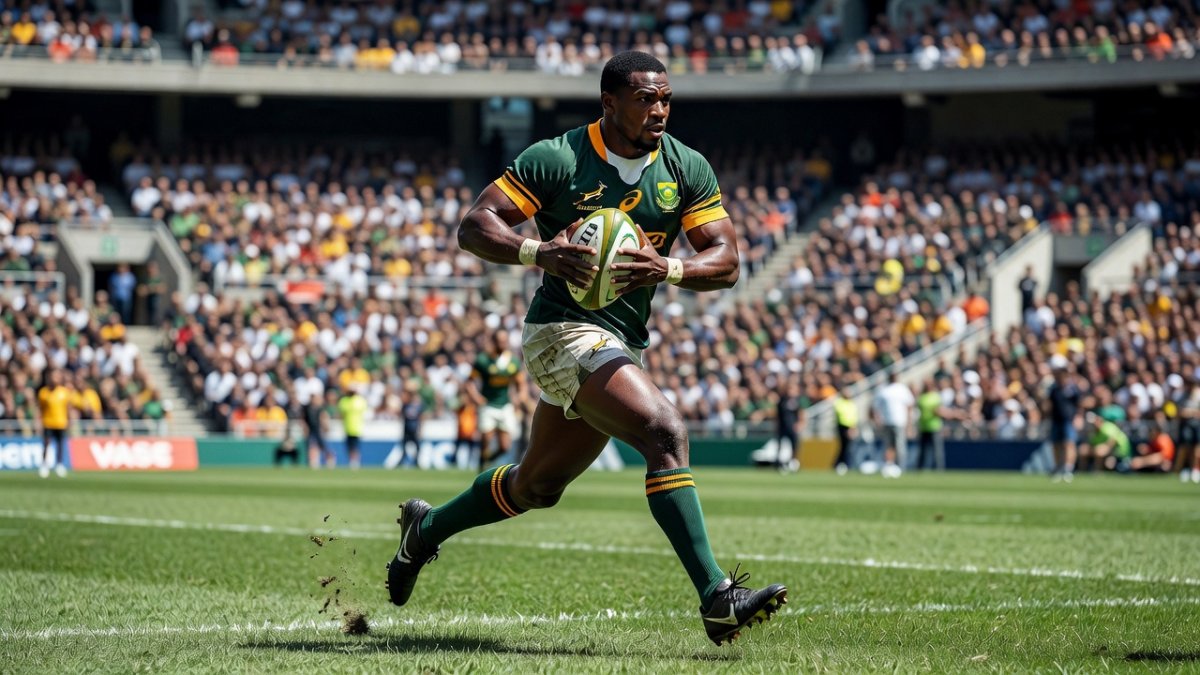
Cheslin Kolbe reached his 50th Test in the most fitting way possible, scoring one of the early tries that set the tone. The diminutive wing has never allowed size to limit his impact. His journey from Cape Town schoolboy to World Cup winner and now 50-cap Springbok embodies the sacrifices required at the highest level. After the match he reflected: “It has not been an easy road, but I would not want it any other way. To be part of this team and wear the green and gold in 50 Tests has been super special.”
Kolbe spoke openly about the challenges of being a smaller player among giants. “It was not easy being a small guy among giants. It took a lot of sacrifice and hard work. I always remember my dad reminding me to put in the extra effort.” Those words resonated across South African rugby communities where kids of all shapes and sizes dream of pulling on the jersey. His success proves that skill, speed and relentless work ethic can overcome any physical stereotype.
As a role model, Kolbe joins the lineage of players like Eben Etzebeth who reached 50, 100 and beyond. His presence inspires the next generation watching from township fields and school grounds, reinforcing that the Springbok jersey remains accessible to those willing to pay the price in sweat and dedication.
Transfer window / Next match preview – Scotland at Loftus, what this result means for the tournament
Attention now turns to Loftus Versfeld, where the Springboks host Scotland in round two. The 45-21 victory over England provides both confidence and a clear benchmark. Scotland will arrive with a fast, ambitious attack that punished England earlier in the year, yet they will face a South African side buoyed by a record margin and growing cohesion.
The result sends an early message to the rest of the Nations Championship. Argentina await England in the corresponding fixture, and the points gap created at Ellis Park could prove decisive if South Africa maintain their home form. With Kolisi and Etzebeth expected to return, the squad depth already demonstrated will only strengthen.
Loftus, with its thinner air and passionate Pretoria crowd, offers another stern examination. The Boks will look to replicate the wide attacking patterns that dismantled England while tightening discipline after the sin-bin lapse. A win there would put them in pole position before the mid-year break.
Broader SA rugby context – transformation, depth, domestic structures producing talent
This performance underlined how far South African rugby has come in building genuine depth across all communities. The uncapped starters and bench impact players emerged from a domestic pathway that stretches from school Craven Week through provincial academies to the United Rugby Championship. SARU’s continued focus on transformation has widened the talent pool without compromising standards, as evidenced by the fearless debuts of de Villiers and Hanekom.
Grassroots programmes in every province continue to feed the system. Clubs in Soweto, Khayelitsha and rural KwaZulu-Natal produce athletes who now see a realistic route to the Springboks. The 45-21 scoreline was not merely a result; it was proof that the structures put in place over the past decade are delivering players ready for the biggest stage, even when established stars are sidelined.
With the Nations Championship still in its infancy, South Africa's early statement at Ellis Park positions the Boks as genuine title contenders. The combination of experienced leaders like du Toit and Kolbe with hungry newcomers ensures the green and gold will remain competitive for years to come. The future looks bright from the Highveld.
By Dante Williams, Staff Writer
This article was produced with AI-assisted research and editorial support. Reporting is based on sources cited in the article.
What's Your Reaction?
 Like
0
Like
0
 Dislike
0
Dislike
0
 Love
0
Love
0
 Funny
0
Funny
0
 Wow
0
Wow
0
 Sad
0
Sad
0
 Angry
0
Angry
0

Breaking News and Investigations Correspondent at Global1.News. Based in London, covering global breaking news, security, and investigative stories. Known for digging deeper and connecting the dots across continents.














Comments (0)