
World Cup QFs: Africa's Last Stand & Bafana's Legacy
Bafana Bafana's Historic Knockout Breakthrough South Africa achieved a landmark moment by advancing to the knockout stages of the FIFA World Cup for the first time since hosting the tournament in 2010. The team secured this breakthrough through a combination of disciplined defending and opportunistic attacking play that caught several observers by surprise. Thapelo Maseko score
Bafana Bafana's Historic Knockout Breakthrough
South Africa achieved a landmark moment by advancing to the knockout stages of the FIFA World Cup for the first time since hosting the tournament in 2010. The team secured this breakthrough through a combination of disciplined defending and opportunistic attacking play that caught several observers by surprise. Thapelo Maseko scored the decisive 63rd-minute winner against South Korea, a strike that sent waves of celebration through townships across the country. This result capped a remarkable group stage campaign that saw Bafana Bafana return to the global stage after a 16-year absence from the knockout rounds.
The journey began with a challenging 0-2 defeat to Mexico at the Azteca Stadium, where altitude and the passionate home crowd tested the South African squad early. They responded with a resilient 1-1 draw against Czechia, demonstrating improved tactical awareness under coach Hugo Broos. The pivotal 1-0 victory over South Korea then propelled them into second place in Group A, securing advancement on goal difference. These results highlighted the squad's ability to adapt quickly to high-stakes international competition.
Despite the momentum, Bafana Bafana fell 0-1 to Canada in the round of 32, with Jonathan Osorio's stoppage-time goal proving decisive. The narrow margin underscored how close the team came to further progress. Hugo Broos's emphasis on structured training and youth integration played a central role in building this competitive edge. His methods transformed a side that had struggled in qualifiers into one capable of competing with established nations.
This run carries profound implications for South African football development and the governance of SAFA. It has reignited interest in the DStv Premiership and inspired investment in grassroots programs. Young talents now see clearer pathways to international recognition. The achievement also pressures administrators to address infrastructure gaps that have long hindered sustained progress at the elite level.
Morocco Carries African Hopes Into Quarterfinal Rematch
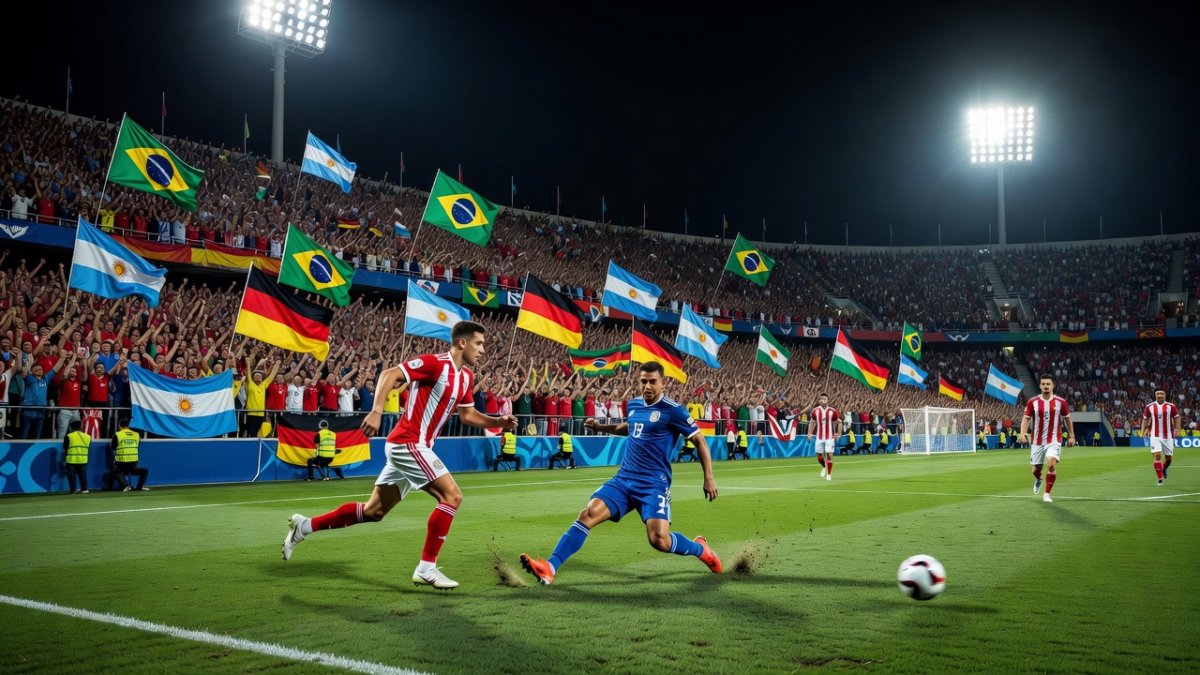
Morocco secured a convincing 3-0 victory over Canada, powered by Azzedine Ounahi's brace that showcased the team's attacking depth. This result marked their second consecutive appearance in the World Cup quarterfinals, cementing their status as Africa's premier footballing force. Coach Walid Ouahbi, who replaced Regragui in March 2026, implemented a more fluid pressing system that overwhelmed opponents. The Atlas Lions now prepare for a highly anticipated rematch against France.
Early in the Canada match, Saibari suffered an injury after just 21 minutes, forcing a tactical adjustment. Bayern Munich-bound striker Rahimi entered as his replacement and contributed significantly to maintaining Morocco's dominance. Only four players from the 2022 starting lineup against France remain in the current XI, reflecting the natural evolution of the squad over four years. This blend of experience and emerging talent has kept Morocco competitive at the highest level.
The upcoming clash with France revives memories of the 2022 semifinal where Morocco held 60 percent possession yet lost 2-0. Ouahbi's side will aim to convert that control into goals this time around. African football pride rests heavily on their shoulders following Egypt's elimination. Supporters across the continent, including many in South Africa, have rallied behind the Atlas Lions as the last remaining African representatives.
Morocco's sustained success stems from consistent investment in domestic leagues and European-based player development. Their quarterfinal run provides a blueprint for other African nations seeking to close the gap with traditional powers. The team's disciplined organization and counter-attacking threat continue to earn respect from global analysts. This campaign reinforces Morocco's role as a standard-bearer for the continent's ambitions.
Egypt's Controversial Exit Highlights Familiar African Grievances
Egypt led Argentina 2-0 with only 11 minutes remaining before ultimately falling 3-2 in a dramatic encounter. Coach Hossam Hassan publicly accused match officials of favoring the South American side through a series of questionable decisions. VAR interventions came under intense scrutiny, particularly those that altered the flow of the game in Argentina's favor. The result left Egyptian fans frustrated and reignited debates about officiating standards in major tournaments.
Lionel Messi had a penalty saved by goalkeeper Shobeir but converted the rebound to spark Argentina's comeback. Egypt's key dribbler Haissem Hassan exited early due to injury, depriving the team of a vital creative outlet in the closing stages. Argentina fielded a side with an average age of 30 years and 173 days, making them the second-oldest team in the competition. This experience proved decisive in mounting the late comeback.
The match echoed longstanding grievances faced by African teams when confronting South American giants. South African supporters recall similar frustrations dating back to the 2010 World Cup and subsequent qualifiers. These patterns suggest systemic challenges in how referees interpret physical play from African sides. Addressing these issues requires greater transparency in VAR protocols and broader representation among international officials.
Closing the competitive gap demands targeted reforms in African football governance and youth academies. Egypt's near-miss demonstrates that the talent exists, yet structural support remains inconsistent. Future cycles must prioritize referee training programs and equitable scheduling to level the playing field. Only through such measures can African teams convert promising positions into lasting victories.
Quarterfinal Lineup: Storylines Across All Four Ties
The quarterfinal schedule opens with France against Morocco on Thursday in Boston. France enters as defending champions with Kylian Mbappe leading their attack, while Morocco seeks to avenge the 2022 semifinal defeat. Tactical battles between France's width and Morocco's compact midfield will define the contest. Analysts expect high pressing from both sides given their recent form.
Spain faces Belgium on Friday in Los Angeles, pitting two technically gifted sides against each other. Spain arrives with a record six consecutive clean sheets, showcasing defensive solidity rarely seen from La Roja. Belgium's improbable run included a dramatic comeback from 2-0 down against Senegal. The matchup promises intricate passing duels and set-piece intrigue.
Norway meets England on Saturday in Miami, featuring a marquee forward confrontation between Erling Haaland and Harry Kane. Norway's direct style contrasts with England's possession-based approach developed under their current manager. Miami's humid conditions could influence substitutions and tempo management. Both teams have shown clinical finishing throughout the tournament.
Argentina closes the quarterfinals against Switzerland on Sunday in Kansas City. Lionel Messi continues his pursuit of a second World Cup title while managing his workload at age 38. Switzerland's organized defense has frustrated stronger opponents in earlier rounds. The altitude and open spaces of Kansas City may favor Argentina's creative midfielders in transition.
Golden Boot Battle Heats Up as Superstars Collide
Lionel Messi leads the Golden Boot race with eight goals, bringing his career World Cup tally to 21. Kylian Mbappe sits one behind on seven, while Erling Haaland also has seven goals from just 54 international caps, including a remarkable streak of 14 consecutive scoring games. Harry Kane trails with six but remains dangerous in every match. The race adds individual stakes to the team battles ahead.
Haaland and Kane will square off directly in the Norway-England quarterfinal, both seeking their third Premier League Golden Boot equivalent on the global stage. Their contrasting styles, Haaland's explosive runs versus Kane's link-up play, will test opposing defenses. Messi's 34th career penalty miss against Egypt highlighted the fine margins even for the greatest players. Such moments can shift momentum in knockout football.
The Golden Boot winner often emerges from the team that advances deepest, creating a direct link between individual and collective success. Mbappe's pace continues to stretch defenses, while Messi's vision unlocks opportunities for teammates. Haaland's physical presence forces defenders into difficult decisions. Kane's leadership and finishing consistency keep England competitive in every fixture.
Historical data shows that Golden Boot recipients frequently come from champion sides, adding pressure on these stars. The quarterfinal stage intensifies this competition as matches become more tactical. South African fans will monitor these duels closely for lessons applicable to their own emerging forwards. The outcome could influence how future generations approach goal-scoring efficiency.
European Dominance and the Road Ahead
Only Argentina and Morocco remain as non-European representatives in the quarterfinals, underscoring UEFA's continued strength at the World Cup. Spain's defensive record of six straight clean sheets stands as a modern tournament benchmark. Belgium mounted an improbable run that included trailing Senegal 2-0 with four minutes left before winning 3-2 after extra time. These results illustrate the depth across European football.
Cristiano Ronaldo's final World Cup appearance ended with a 1-0 defeat to Spain, sealed by Merino's stoppage-time goal. Portugal's exit highlighted the fine margins that separate progression from elimination at this level. The United States produced a notable 4-1 victory over Belgium despite a red card to Balogun that was controversially overturned by FIFA intervention. Such decisions continue to spark debate about video review consistency.
European teams benefit from superior league structures, scouting networks, and financial resources that allow sustained development. African and South American sides often face resource constraints that limit preparation time. Morocco's success offers a counterexample through targeted investment and diaspora talent integration. Closing this gap requires coordinated continental strategies beyond individual national efforts.
The road ahead for non-European teams involves emulating Morocco's model of blending local academies with European experience. South Africa can draw inspiration from Bafana Bafana's run to accelerate similar reforms. Continued exposure in major tournaments builds the necessary resilience and tactical maturity. Long-term progress depends on stable governance and increased match opportunities against top opposition.
What Bafana Bafana's Run Means for SA Football's Future
Bafana Bafana's achievement opens new development pathways from the DStv Premiership into international football. Players such as Thapelo Maseko, Aubrey Modiba, and Ronwen Williams have emerged as role models for aspiring talents across the country. Their performances demonstrate that consistent domestic competition can prepare athletes for global stages. SAFA must now capitalize on this visibility to attract greater sponsorship and infrastructure funding.
The transformation agenda within SAFA gains renewed urgency following this historic run. Grassroots football investment becomes essential to identify and nurture the next generation of Masekos and Modibas. Regional academies require standardized coaching curricula aligned with modern tactical demands. Without these foundations, the current momentum risks dissipating before the next major cycle.
South Africa's potential 2030 World Cup bid could leverage this performance to strengthen its case among FIFA voters. Lessons from Morocco's sustained success, including their focus on youth retention and European integration, offer valuable templates. Domestic leagues must improve competitive balance and broadcast reach to mirror these gains. Broader societal support for football development will determine whether this breakthrough represents an isolated peak or the start of sustained excellence.
Coaching education programs and referee development must advance in parallel with player pathways. Hugo Broos's influence shows the value of experienced leadership in implementing long-term plans. South African football now stands at a crossroads where strategic decisions will shape the next decade. The nation has the talent and passion; execution remains the critical variable.
What to Watch For as the Quarterfinals Unfold
Key matchups in the quarterfinals will revolve around individual duels such as Mbappe against Morocco's compact defense and Haaland's physical battle with English center-backs. South African fans should observe how Morocco maintains possession under pressure and transitions quickly on the counter. Tactical adjustments by coaches like Ouahbi and the French manager will provide insights into high-level game management.
Viewers can expect increased physicality and set-piece emphasis as the stakes rise. Messi's ability to influence games through subtle positioning remains a focal point, especially against organized Swiss defenses. England's wide play against Norway's compact shape offers another layer of intrigue. These elements combine to create compelling narratives beyond simple scorelines.
Predictions favor France and Argentina to advance, though Morocco and Belgium carry genuine upset potential based on recent form. South African supporters will track African representation closely while drawing parallels to Bafana Bafana's own journey. The quarterfinals promise drama that could reshape perceptions of global football hierarchies. Continued analysis of these matches will inform future strategies for developing nations.
By Dante Williams, Staff WriterThis article was produced with AI-assisted research and editorial support. Reporting is based on sources cited in the article.
What's Your Reaction?
 Like
0
Like
0
 Dislike
0
Dislike
0
 Love
0
Love
0
 Funny
0
Funny
0
 Wow
0
Wow
0
 Sad
0
Sad
0
 Angry
0
Angry
0

Breaking News and Investigations Correspondent at Global1.News. Based in London, covering global breaking news, security, and investigative stories. Known for digging deeper and connecting the dots across continents.










Comments (0)