
Gaza Records Highest Monthly Death Toll in Six Months
Record Monthly Death Toll Reported in Gaza Israeli forces killed at least 119 Palestinians in the Gaza Strip during May 2026, marking the highest monthly death toll recorded this year, according to the Palestinian Ministry of Health. The ministry stated that at least 19 children and 10 women were among those killed. These figures come seven months into a US-mediated ceasefire t
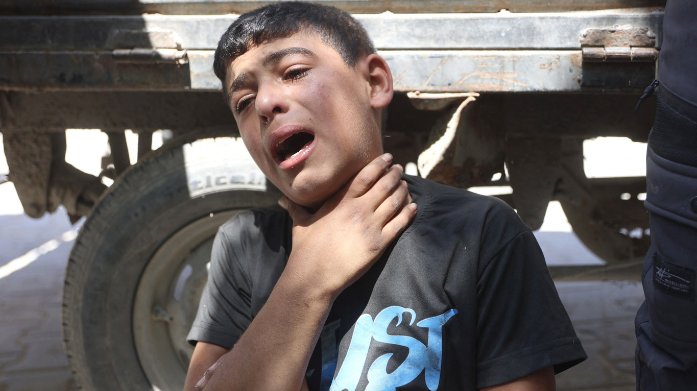
Record Monthly Death Toll Reported in Gaza
Israeli forces killed at least 119 Palestinians in the Gaza Strip during May 2026, marking the highest monthly death toll recorded this year, according to the Palestinian Ministry of Health. The ministry stated that at least 19 children and 10 women were among those killed. These figures come seven months into a US-mediated ceasefire that began in October 2025, intended to halt a conflict that has devastated the enclave since October 2023.
Pattern of Ceasefire Violations Documented
Local media reported 11 new Israeli violations of the ceasefire agreement in the past 24 hours alone. These included heavy gunfire from Israeli military vehicles targeting eastern Khan Younis in southern Gaza on Wednesday morning and attacks on eastern areas of the Jabalia refugee camp in the northern Gaza Strip. Since October, Israel has committed more than 3,000 violations across Gaza, according to Gaza's Government Media Office. The violations have ranged from shelling and air strikes to direct targeting of civilians, destruction of entire residential areas, and continued incursions into populated neighbourhoods.
More than 933 people have been killed and a further 2,868 wounded since October, the Government Media Office reported. At least 82 people have been abducted by Israeli forces during the same period. The overall death toll since October 2023 stands at 72,942, with thousands more reported missing beneath the rubble.
Human Impact on Civilians in Gaza
The rising toll has affected daily life across Gaza, where families continue to face the consequences of intensified bombardment. Residents in areas such as Khan Younis and Jabalia have described repeated disruptions from military activity near their homes. The Palestinian Ministry of Health figures highlight that children and women form a significant portion of those killed in May, underscoring the direct effects on households already strained by months of restricted movement and limited services.
Local accounts point to the destruction of residential neighbourhoods as a recurring feature of the reported violations. These incidents have compounded challenges in accessing basic needs, with the ceasefire's incomplete implementation leaving many communities exposed to ongoing risks.
Israeli Military Position and Hamas Responses
The Israeli military has stated that its operations target militant infrastructure and positions. It has accused Hamas of using civilian areas for military purposes. Israeli officials have denied intentionally targeting civilians in these actions.
Hamas spokesperson Abu Obeida condemned the daily killing of people and resistance fighters. Hamas spokesperson Hazem Qassem rejected allegations that the movement was unwilling to relinquish control of Gaza. Qassem attributed the blockage of a technocratic committee from entering Gaza to Israel and Nickolay Mladenov, director-general of the American Board of Peace.
International and Legal Context
The ceasefire agreement reached in October 2025 under US mediation was designed to bring an end to active hostilities that began in October 2023. Progress toward a second phase has been hampered by continued Israeli attacks, according to reports from the period. Israel has restricted aid flow, launched attacks across Gaza, and continued to seize additional territory since the ceasefire took effect.
These developments occur against a backdrop of repeated calls for adherence to the agreement's terms. The scale of reported violations, documented by the Government Media Office, has drawn attention to questions of compliance and accountability in the months following the initial truce.
Implications for the Ceasefire's Future
Continued violations have slowed advancement on subsequent phases of the agreement. The pattern of shelling, incursions, and territorial actions has created persistent obstacles to stabilising the situation on the ground. Figures from the Palestinian Ministry of Health and the Government Media Office indicate that the monthly death toll reached its highest point this year in May, reflecting the cumulative impact of these incidents.
Without resolution of the reported breaches, the framework established in October 2023 faces ongoing strain. Local media tracking of daily violations suggests that the conditions for broader implementation remain uncertain.
Broader Meaning for Palestinians
The documented events connect to longer-standing patterns of displacement and conflict that have shaped life in Gaza for generations. The loss of life recorded by the Palestinian Ministry of Health, alongside the destruction noted by the Government Media Office, illustrates how policy decisions translate into immediate effects on families and communities. Palestinian voices, including those from Hamas spokespeople, frame these developments as part of a sustained effort to maintain pressure on the population.
At the same time, the Israeli military's stated focus on militant targets and its accusations regarding civilian areas highlight the competing narratives surrounding each incident. The overall toll of 72,942 since October 2023, with thousands still missing, points to the enduring human consequences that extend beyond any single month of reported activity. These realities continue to define the lived experience of Palestinians navigating the aftermath of the ceasefire's partial implementation.
By Fatima Al-Rashid, Staff WriterThis article was produced with AI-assisted research and editorial support. Reporting is based on sources cited in the article.
What's Your Reaction?
 Like
0
Like
0
 Dislike
0
Dislike
0
 Love
0
Love
0
 Funny
0
Funny
0
 Wow
0
Wow
0
 Sad
0
Sad
0
 Angry
0
Angry
0

Gulf/MENA Correspondent at Global1.News. Based in Doha, covering Gulf politics, energy markets, diplomacy, and development across the Middle East and North Africa. Tracks the economic transformation of the Gulf states.













Comments (0)