
Judge Denies Video Release in Abbotsford Double Murder Case
Judge Denies Release of Video Evidence in Abbotsford Double Murder Case Background of the Abbotsford Double Murder The case centres on the 2022 deaths of Arnold De Jong, aged 77, and Joanne De Jong, aged 76, in Abbotsford, B.C. Three men, Abhijeet Singh, Gurkaran Singh and Khushveer Toor, were found guilty of first-degree murder in May. The court heard that Arnold De Jong died
Judge Denies Release of Video Evidence in Abbotsford Double Murder Case
Background of the Abbotsford Double Murder
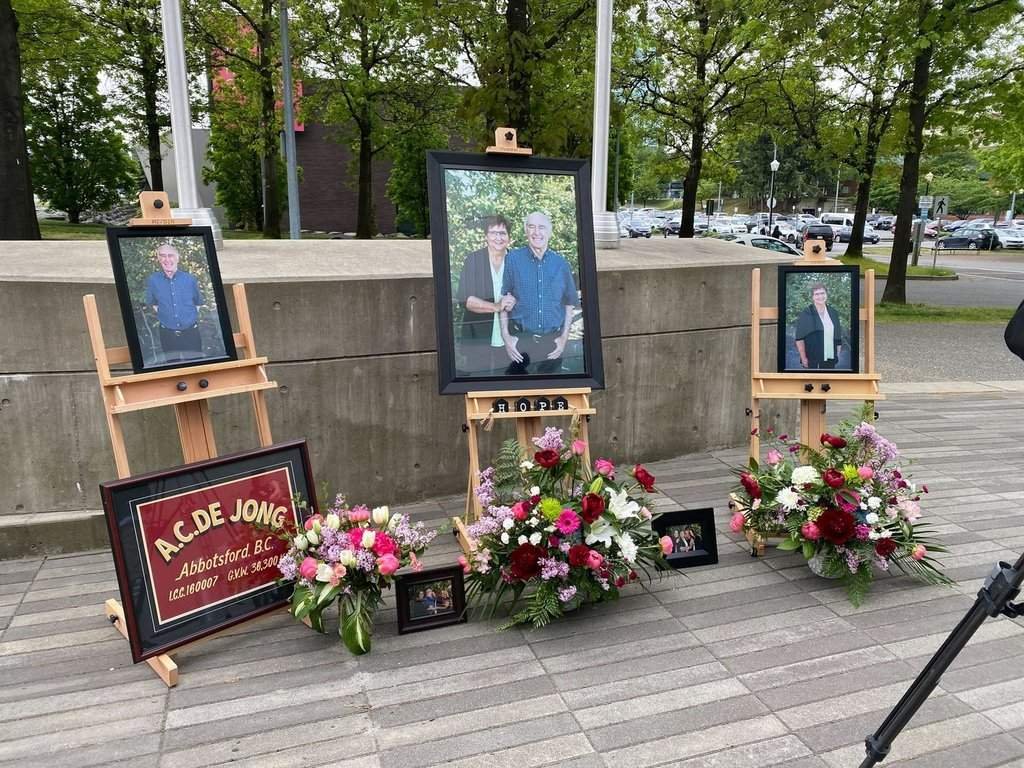
The case centres on the 2022 deaths of Arnold De Jong, aged 77, and Joanne De Jong, aged 76, in Abbotsford, B.C. Three men, Abhijeet Singh, Gurkaran Singh and Khushveer Toor, were found guilty of first-degree murder in May. The court heard that Arnold De Jong died by asphyxiation after his entire head and face were wrapped in duct tape. Joanne De Jong was bludgeoned and had her throat slashed.
These details emerged during proceedings at the Supreme Court of British Columbia. The convictions reflect the serious nature of the crimes committed against the elderly couple in their home. Canadian courts continue to handle such matters with careful attention to evidence and procedure, consistent with longstanding traditions of fairness in the justice system.
The Video Evidence and Media Request
Global News applied for the release of a specific video shown twice in court. The footage captured Gurkaran Singh handling a bat while Khushveer Toor drove. It appeared to show Singh smiling as they travelled down the street, in a manner described as taking a selfie video. The same green wooden baseball bat was later found in the trunk of the vehicle.
Supreme Court Justice Brenda Brown denied the request for full public access to the video. She did grant Global News supervised access to view the material. This decision prevents publication of the video itself while allowing limited journalistic review under court oversight. Such rulings balance transparency with the need to maintain court integrity.
Family Perspectives on the Ruling
Sandra Barthel, daughter of the de Jongs, expressed strong views on the outcome. She stated that the whole world should see the video. Barthel also noted that the decision protects the criminals and their dignity, while questioning where the dignity of her parents lies. Her sister, Heather Hoogland, described the footage as showing the bat being used as a trophy after it was brought into their parents' home.
The family must now wait another two months to learn the sentences for the three convicted men. These reactions highlight the emotional weight carried by victims' relatives in Canadian murder trials. Families often seek greater public awareness of evidence to honour the memory of loved ones and to underscore the impact of violent crime on communities.
Legal Reasoning Behind the Denial
During the Crown's closing arguments, the prosecutor described the video as showing the smile of a murderer. Justice Brenda Brown refused release partly to protect the integrity of the court and the commentary tied to the footage. Donna Turko KC, lawyer for Khushveer Toor, explained that the judge's decision safeguards the overall process associated with the evidence.
In the Canadian legal framework, judges weigh public interest against potential harm from unrestricted dissemination of certain materials. This approach aligns with practices across provinces, where courts manage sensitive exhibits to ensure trials remain focused on facts rather than sensational elements. The supervised viewing granted to Global News represents a measured compromise in this instance.
Broader Implications for Canadian Justice and Media Access
Media outlets in Canada frequently seek access to evidence to inform the public about serious crimes. This case in Abbotsford illustrates ongoing tensions between open justice principles and judicial discretion. British Columbia courts have handled similar requests in other high-profile matters, often granting partial access while restricting full release of graphic or inflammatory content.
The ruling connects to wider discussions about victim dignity in the justice system. Canadian values emphasise fairness and respect for all parties, including families affected by violent incidents. Public safety concerns in communities like Abbotsford also factor into how evidence is managed, as authorities aim to prevent any glorification of criminal behaviour.
Provincial and federal levels continue to examine ways to support victims through clearer guidelines on evidence handling. While no immediate legislative changes are detailed here, the case adds to conversations about balancing transparency with the need to avoid further distress for survivors. The two-month wait for sentencing underscores the deliberate pace of Canadian criminal proceedings, which prioritises thorough review over speed.
Overall, the decision by Justice Brenda Brown reflects careful consideration of court processes in British Columbia. It demonstrates how individual cases contribute to evolving standards around media access and public information in murder trials. Families such as the de Jongs' continue to advocate for recognition of victims amid these legal constraints.
Additional context from similar B.C. cases shows that judges often cite protection of trial integrity when limiting video releases. This practice helps maintain focus on the evidence presented rather than external interpretations. For readers in Canada, the Abbotsford matter serves as a reminder of the human cost of violent crime and the role of courts in upholding dignity for victims while ensuring due process for the accused.
The convictions of Abhijeet Singh, Gurkaran Singh and Khushveer Toor stand as a clear outcome from the trial. The restricted video, which featured the bat linked to the scene, remains unavailable for public viewing following the ruling. This limitation has prompted family members to voice concerns about whose interests receive priority in such decisions.
Canadian journalism plays a vital role in reporting on these events without overstepping court orders. Global News pursued the application in line with its commitment to informing the public. The supervised access provided offers some opportunity for accurate reporting while respecting the boundaries set by Supreme Court Justice Brenda Brown.
In conclusion, the case highlights persistent questions about evidence release in Canadian courts. It connects to national priorities around public safety, victim support and the responsible handling of disturbing materials. The family of Arnold and Joanne De Jong awaits sentencing with the hope that justice will ultimately honour their parents' memory.
Tags: Abbotsford, British Columbia, double murder, video evidence, Supreme Court of British Columbia, first-degree murder, victim families, media access, Justice Brenda Brown
By Alex Thompson, Staff Writer
This article was produced with AI-assisted research and editorial support. Reporting is based on sources cited in the article.
What's Your Reaction?
 Like
0
Like
0
 Dislike
0
Dislike
0
 Love
0
Love
0
 Funny
0
Funny
0
 Wow
0
Wow
0
 Sad
0
Sad
0
 Angry
0
Angry
0

Canada Correspondent at Global1.News. Based in Toronto, covering Canadian politics, energy, trade, and US-Canada relations. Provides the Canadian perspective on North American and global affairs.












Comments (0)