
US-Iran Ceasefire Collapse Endangers Lebanon and Palestinian Refugees
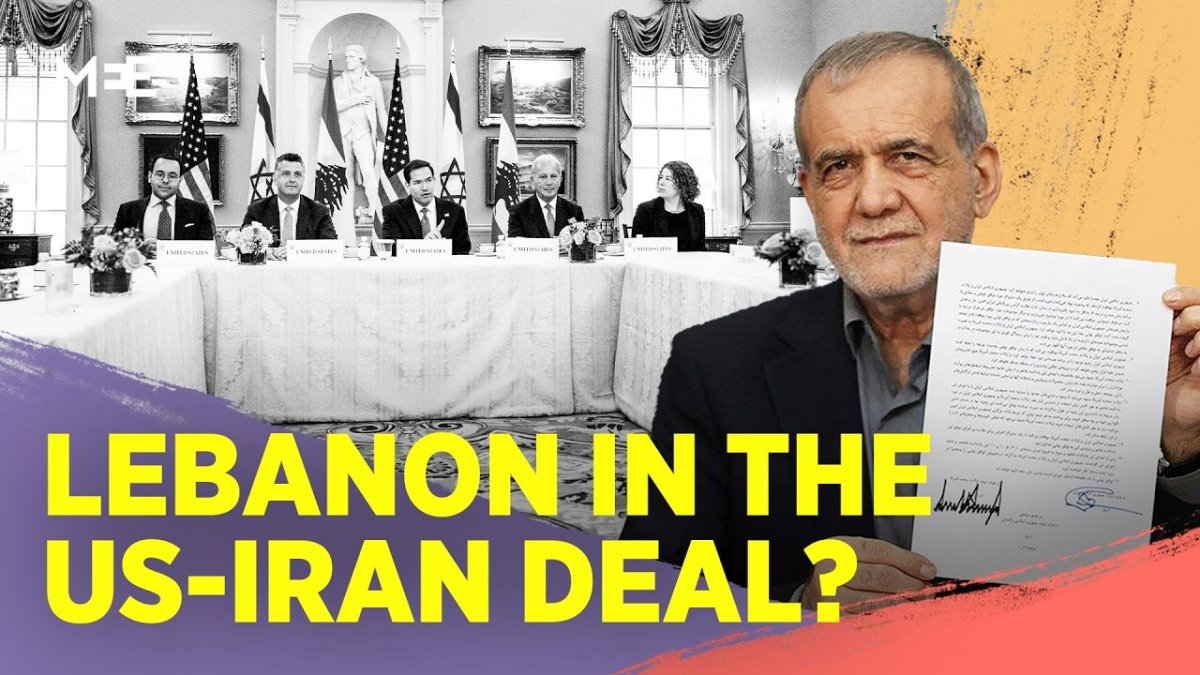
The Collapse of the US-Iran Ceasefire As a recent Middle East Eye video analysis detailed the fragile threads holding regional de-escalation together, the Islamabad Memorandum's collapse on July 8, 2026, marked a decisive rupture. President Trump declared the ceasefire over during a White House address, citing Iranian non-compliance with Hormuz Strait protocols and alleged prox
The Collapse of the US-Iran Ceasefire
As a recent Middle East Eye video analysis detailed the fragile threads holding regional de-escalation together, the Islamabad Memorandum's collapse on July 8, 2026, marked a decisive rupture. President Trump declared the ceasefire over during a White House address, citing Iranian non-compliance with Hormuz Strait protocols and alleged proxy activations. Within hours, US forces conducted precision strikes on Iranian-linked positions in eastern Syria and maritime targets near the Strait of Hormuz, escalating tensions that had simmered since the February 28, 2026, outbreak of direct US-Iran clashes. That initial war phase involved Iranian missile barrages on US naval assets and retaliatory American airstrikes across western Iran, displacing thousands and threatening global oil flows. Diplomatic efforts intensified through Pakistani channels, culminating in the June 17 signing of the Islamabad Memorandum at Versailles under the mediation of Pakistan PM Shehbaz Sharif. The 14-point framework aimed to freeze hostilities for 60 days of negotiations, yet by early July, mutual accusations of violations—particularly over Lebanese frontlines—eroded trust. Trump's July 8 announcement effectively nullified the deal, triggering renewed US naval deployments and Iranian vows of asymmetric response. This timeline underscores how quickly fragile ceasefires unravel when core strategic interests collide, leaving Lebanon and Palestine exposed to spillover violence that human rights monitors warn could claim civilian lives on an unprecedented scale.
What the Islamabad Memorandum Included
The Islamabad Memorandum represented an ambitious 14-point architecture designed to de-escalate the US-Iran confrontation while addressing interconnected regional flashpoints. Central to the agreement was the phased reopening of the Strait of Hormuz under international monitoring, with Iran committing to safe passage for commercial shipping in exchange for eased sanctions on oil exports. A strict 60-day negotiation window was established for broader talks on nuclear limits and proxy restraints, mediated directly by Pakistan's Prime Minister Shehbaz Sharif, whose shuttle diplomacy between Washington and Tehran proved instrumental. Lebanon provisions formed a critical pillar, calling for Hezbollah to maintain defensive postures along the border while Israel refrained from offensive operations, with mechanisms for gradual Israeli withdrawal from disputed areas. The document also outlined confidence-building measures such as prisoner exchanges, humanitarian access corridors, and economic reconstruction aid for war-affected zones. Signed amid ceremony at Versailles on June 17, 2026, the memorandum sought to link the Iran track with parallel Lebanon-Israel understandings, recognizing that isolated deals would fail. Pakistan's role as honest broker highlighted shifting diplomatic centers away from traditional Western capitals. Yet the agreement's collapse exposed its vulnerabilities, particularly the lack of enforcement teeth when one party perceived violations in proxy behavior. For Lebanon and Palestine, these details offered a narrow window of stability that now appears permanently closed, amplifying risks of renewed conflict and humanitarian distress across borders.
Hezbollah and the Separate Lebanon-Israel Track
Hezbollah's firm rejection of any separate Lebanon-Israel track proved a decisive factor in the Islamabad Memorandum's unraveling. The group insisted that its defensive posture remained inseparable from broader Iranian strategic calculations, refusing to decouple from the US-Iran framework despite Israeli pressure for bilateral arrangements. Nabih Berri, Speaker of the Lebanese Parliament, advanced the Litani proposal as a potential bridge, advocating Israeli withdrawal south of the Litani River in exchange for Hezbollah's scaled-back presence and international guarantees. This idea gained traction during the 60-day negotiation window but collapsed alongside the main deal when US strikes resumed. The Israel-Hezbollah ceasefire had been explicitly tethered to the Islamabad Memorandum's success, with provisions for monitored demilitarized zones and reconstruction funding. Following the July 8 breakdown, Israeli forces intensified operations near the border, while Hezbollah mobilized additional units, raising fears of full-scale war. The collapse leaves Lebanon without the protective umbrella of the agreement, exposing civilians to crossfire and displacement. Hezbollah's stance reflects deep skepticism toward Israeli commitments, rooted in decades of occupation and failed past accords. For regional stability, this rejection underscores how proxy dynamics complicate direct diplomacy, with Lebanon bearing the brunt as a battleground. Renewed escalation now threatens to engulf southern villages, disrupt agriculture, and strain Lebanon's fragile economy already burdened by prior conflicts.
Impact on Palestinian Refugees in Lebanon
More than 450,000 Palestinian refugees residing in Lebanon face heightened vulnerability following the Islamabad Memorandum's collapse, as renewed escalation risks compounding decades of marginalization. Concentrated in UNRWA-administered camps such as Sabra, Shatila, and Ain al-Hilweh, these communities endure severe restrictions on employment, property ownership, and movement that predate the current crisis. The deal's Lebanon provisions had included tentative language on easing some residency barriers and facilitating humanitarian aid corridors, yet its failure removes even this slim prospect. Displacement risks have surged with Israeli strikes near the southern border and potential Hezbollah responses, potentially forcing thousands from already overcrowded camps into urban centers ill-equipped to absorb them. Humanitarian concerns center on access to clean water, medical supplies, and education, all strained by Lebanon's economic collapse and now threatened by conflict spillover. Palestinian refugees, many holding multi-generational ties to historic Palestine, view the deal's demise as another instance where regional agreements overlook their plight. International observers warn that renewed fighting could trigger secondary displacement into Syria or beyond, exacerbating the refugee crisis. Local NGOs report rising anxiety among camp residents, with families stockpiling essentials amid fears of siege-like conditions. The collapse thus not only revives immediate security threats but deepens structural inequalities that have long denied Palestinian refugees basic rights in Lebanon.
Iran's Support for Palestinian Resistance and Regional Fallout
Iran's longstanding backing of Palestinian resistance groups, including Hamas and Palestinian Islamic Jihad, positions the Islamabad Memorandum's collapse as a pivotal shift with direct implications for Gaza and the West Bank. Tehran has consistently framed its regional posture as solidarity against occupation, channeling resources and training that sustain armed factions amid Israeli operations. The Hezbollah-Palestine link, forged through shared ideological and logistical networks, means that any escalation along Lebanon's border reverberates into Palestinian territories, potentially triggering coordinated responses or Israeli preemptive actions. The deal's failure removes a temporary restraint on Iranian support, allowing renewed flows of materiel and rhetorical encouragement that could intensify confrontations in Gaza's besieged enclaves and West Bank flashpoints. Regionally, power dynamics tilt toward greater fragmentation, with Gulf states recalibrating alliances and Turkey asserting independent mediation roles. For Palestine, this fallout manifests in heightened blockade enforcement and settlement expansion, as Israel exploits the vacuum left by collapsed diplomacy. Human rights advocates highlight how such proxy entanglements perpetuate cycles of violence that disproportionately harm civilians. The collapse thus amplifies Iran's influence over Palestinian trajectories while underscoring the interconnectedness of Lebanese stability and Palestinian self-determination, leaving both populations navigating an increasingly volatile landscape without diplomatic guardrails.
Human Rights and Civilian Protection Concerns
International law obligations for civilian protection have emerged as urgent priorities amid the Islamabad Memorandum's collapse, yet enforcement gaps leave Lebanon and Palestine exposed. Core principles under the Geneva Conventions demand distinction between combatants and non-combatants, yet historical patterns in the region show repeated violations during escalations. UN monitoring mechanisms, including potential deployment of observers along the Blue Line, were envisioned within the memorandum but now lack political backing. Humanitarian corridors for aid delivery to besieged areas remain critical needs, particularly for Palestinian refugees and Lebanese border communities facing supply disruptions. What comes next hinges on whether international actors can pressure parties toward de-escalation or risk complicity in foreseeable civilian harm. Reports from field organizations document patterns of arbitrary detention, home demolitions, and medical access denials that contravene human rights standards. The collapse exacerbates these concerns by removing any framework for accountability, allowing unchecked military operations. For Lebanon, this translates to potential mass internal displacement and infrastructure damage, while Palestine confronts intensified restrictions and collective punishment measures. Sustained advocacy for independent investigations and safe zones represents the minimal path forward to mitigate suffering, though prospects appear dim without renewed multilateral engagement.
The Road Ahead for Lebanon and Palestine
Without the Islamabad Memorandum framework, Lebanon and Palestine confront an outlook defined by heightened escalation risks and limited diplomatic off-ramps. Local communities in southern Lebanon brace for potential ground incursions, while Palestinian refugees navigate camp overcrowding amid fears of renewed regional war. Diplomatic paths may shift toward alternative mediators such as China or regional bodies, though trust deficits remain formidable. Escalation scenarios include sustained border exchanges that could draw in additional actors, disrupting trade routes and food security across the Levant. What local communities face includes psychological trauma from constant alerts, economic paralysis in tourism and agriculture sectors, and eroded access to essential services. Palestinian populations in Lebanon and the occupied territories share parallel anxieties over lost momentum toward justice and self-determination. Grassroots resilience persists through civil society networks providing mutual aid, yet these efforts cannot substitute for political solutions. The road ahead demands renewed focus on inclusive negotiations that center civilian protection and refugee rights, lest cycles of conflict entrench further suffering. International pressure for ceasefires and accountability offers the clearest avenue to avert catastrophe, though political will appears fragmented in the post-memorandum vacuum.
By Fatima Al-Rashid, Staff Writer.This article was produced with AI-assisted research and editorial support. Reporting is based on sources cited in the article.
What's Your Reaction?
 Like
0
Like
0
 Dislike
0
Dislike
0
 Love
0
Love
0
 Funny
0
Funny
0
 Wow
0
Wow
0
 Sad
0
Sad
0
 Angry
0
Angry
0

Gulf/MENA Correspondent at Global1.News. Based in Doha, covering Gulf politics, energy markets, diplomacy, and development across the Middle East and North Africa. Tracks the economic transformation of the Gulf states.











Comments (0)