
Trump backs Pashinyan ahead of tense Armenia election in June
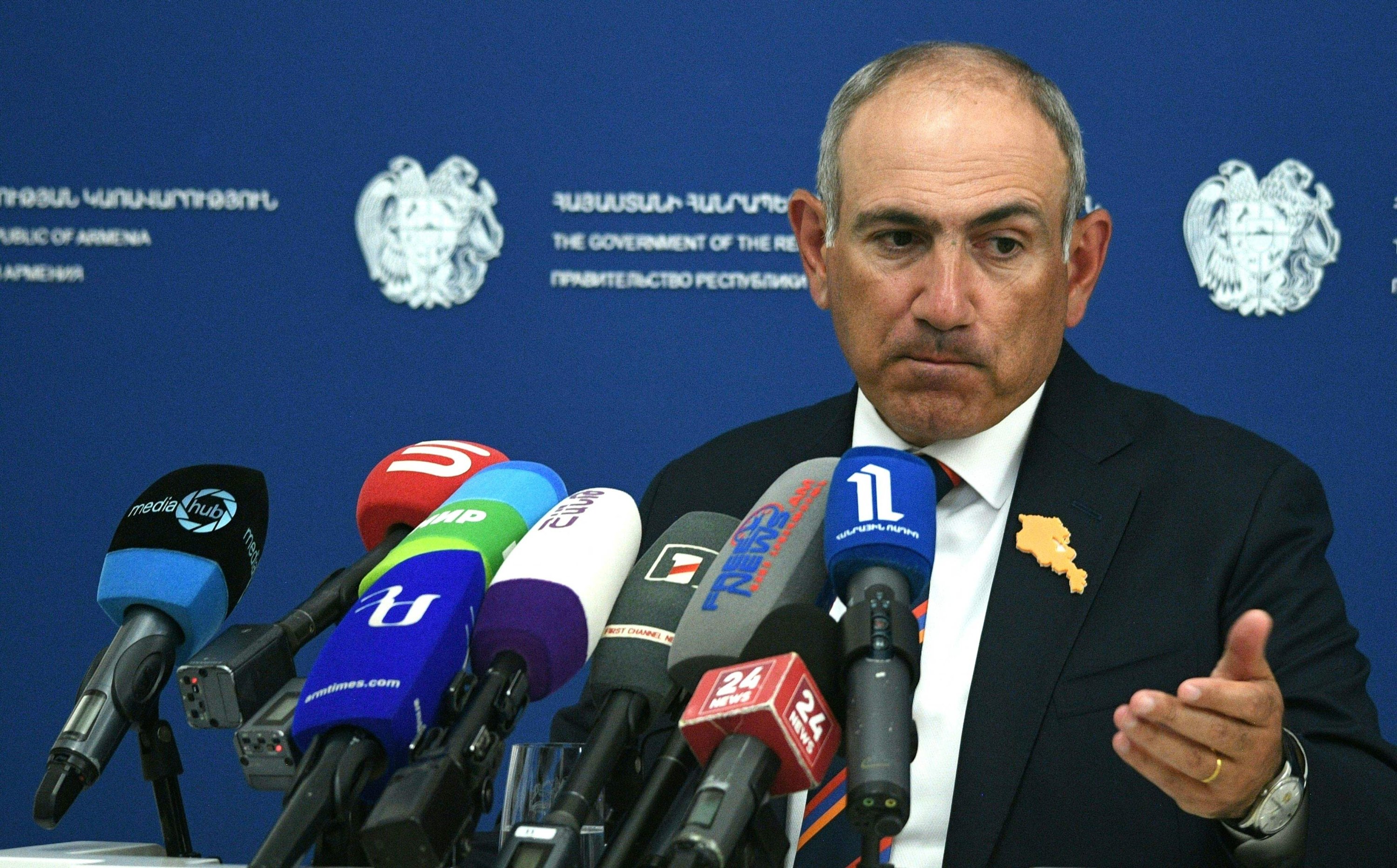
Trump Throws Full Weight Behind Pashinyan as Armenia Heads into June Snap Elections
Washington’s Unexpected Endorsement Reshapes Caucasus Calculus
In a statement delivered from the White House on Wednesday, U.S. President Donald Trump declared his “complete and total support” for Armenian Prime Minister Nikol Pashinyan ahead of the tense parliamentary elections scheduled for June 20. The announcement marks a notable departure from prior U.S. caution toward Yerevan and arrives at a moment when Pashinyan’s government faces both domestic fatigue and external pressure from Moscow and Ankara. Polls conducted by the Armenian Sociological Association in early May show Pashinyan’s Civil Contract party leading with 34 percent, yet trailing a combined opposition bloc that could force a fragmented parliament.
Trump’s endorsement was framed in terms of democratic continuity and regional stability rather than ideological alignment. “Prime Minister Pashinyan has shown courage in steering Armenia through difficult times,” the president said. “The United States stands with those who choose reform over stagnation.” The remarks were coordinated with a modest increase in U.S. assistance, including an additional $25 million in economic support funds directed toward anti-corruption institutions.
From Velvet Revolution to Post-War Reckoning
Pashinyan rose to power in 2018 after weeks of street protests that forced the resignation of longtime leader Serzh Sargsyan. His initial mandate rested on promises to dismantle oligarchic control and reduce dependence on Russia. Yet the 2020 Second Nagorno-Karabakh War, which ended with Armenian forces ceding significant territory to Azerbaijan under a Russian-brokered ceasefire, severely damaged his popularity. More than 3,600 Armenian soldiers died in the six-week conflict, according to official Yerevan figures.
Since then, Pashinyan has pursued a delicate balancing act: maintaining Armenia’s membership in the Russian-led Collective Security Treaty Organization while quietly expanding ties with the European Union and the United States. EU grants to Armenia reached €132 million in 2024, focused on judicial reform and border management. At the same time, Russian military bases remain in Gyumri, and Moscow continues to supply the bulk of Armenia’s natural gas.
Regional Ripple Effects Reach Beirut and Tehran
From Beirut, the implications of a strengthened Pashinyan government are viewed through the prism of energy corridors and Iranian security calculations. Armenia shares a 44-kilometer border with Iran, serving as a potential overland link for Tehran to circumvent sanctions. Any shift in Yerevan’s foreign policy orientation directly affects the viability of proposed pipelines that could one day connect Iranian gas fields to European markets via Georgia and the Black Sea.
Turkish officials have already signaled unease. Ankara’s foreign ministry spokesperson described Trump’s statement as “premature interference” in Armenian domestic affairs, noting that improved Armenia-Turkey relations remain contingent on Pashinyan’s willingness to drop genocide recognition campaigns. Trade between Turkey and Armenia stands at roughly $300 million annually, almost entirely routed through Georgia, and Turkish analysts estimate that normalized rail links could triple that figure within three years.
Domestic Opposition and the Russian Factor
Inside Armenia, the opposition has seized on the Trump endorsement as evidence that Pashinyan is drifting too far from traditional security partners. Former president Robert Kocharyan, whose Armenia Alliance bloc polls around 22 percent, told supporters in Gyumri last week that “Washington’s embrace comes with conditions that will ultimately weaken our defenses.” Russian state media has amplified these concerns, running segments questioning whether U.S. aid packages include clauses limiting Russian arms purchases.
Independent polling by the Caucasus Barometer project shows that 61 percent of Armenians still view Russia as the country’s most important partner, compared with only 19 percent naming the United States. This sentiment creates a narrow path for Pashinyan: he must demonstrate that American backing delivers tangible economic gains without appearing to abandon the security umbrella Moscow provides.
Expert Perspectives on Long-Term Stability
Dr. Anahit Shirinyan, a Yerevan-based analyst at the International Center for Defense Studies, argues that Trump’s support could accelerate Armenia’s diversification efforts if paired with concrete investment. “The real test will be whether U.S. companies follow the rhetoric with projects in renewable energy and IT,” she said in an interview. Current U.S. foreign direct investment in Armenia totals less than $180 million, concentrated in software services.
Regional observers in Beirut note parallels with Lebanon’s own experience of navigating great-power competition. “When external patrons pick sides in small states, local actors lose room to maneuver,” observed former Lebanese diplomat Nasser Nasrallah. “Armenia’s June vote will reveal whether Pashinyan can convert external goodwill into domestic legitimacy.”
Economic Data and Voter Priorities
Armenia’s economy contracted 7.2 percent in 2020 but rebounded with 5.8 percent growth in 2024, driven largely by remittances and re-exports to Russia. Inflation remains stubborn at 8.4 percent, hitting urban households hardest. A recent survey by the Armenian Public Opinion Research Center found that 47 percent of likely voters rank economic recovery as their top concern, followed by security guarantees at 31 percent.
Should Pashinyan secure a working majority, analysts expect renewed focus on the EU’s Comprehensive and Enhanced Partnership Agreement, including deeper regulatory alignment on customs and digital trade. Conversely, a weakened result could embolden Moscow to press for greater integration within the Eurasian Economic Union, potentially sidelining Western-funded projects.
The coming weeks will test whether Trump’s public backing translates into electoral advantage or instead fuels nationalist backlash. For now, the statement has injected new volatility into a region already strained by frozen conflicts and shifting alliances.
This is Malik Hassan for Global1 News, reporting from Beirut. 🇱🇧
This article was produced with AI-assisted research and editorial support. Reporting is based on sources cited in the article.
What's Your Reaction?
 Like
0
Like
0
 Dislike
0
Dislike
0
 Love
0
Love
0
 Funny
0
Funny
0
 Wow
0
Wow
0
 Sad
0
Sad
0
 Angry
0
Angry
0

Middle East Correspondent at Global1.News. Based in Beirut, covering politics, conflict, energy, and society across the Middle East. Brings context and depth to a region often reduced to headlines.










Comments (0)