
The Yazidi Doctor Who Brought Life Back to 1,200 Survivors of Islamic State Captivity
Shireen’s Ordeal and Path to Care Shireen was studying for a high school examination at her home in the northern Iraqi town of Sinjar on 3 August 2014 when Islamic State group militants broke into her house and kidnapped her. At nineteen she was taken from her family and sold as a sex slave to an Islamic State militant in Tal Afar. Three months later she was sold again, this ti
Shireen’s Ordeal and Path to Care
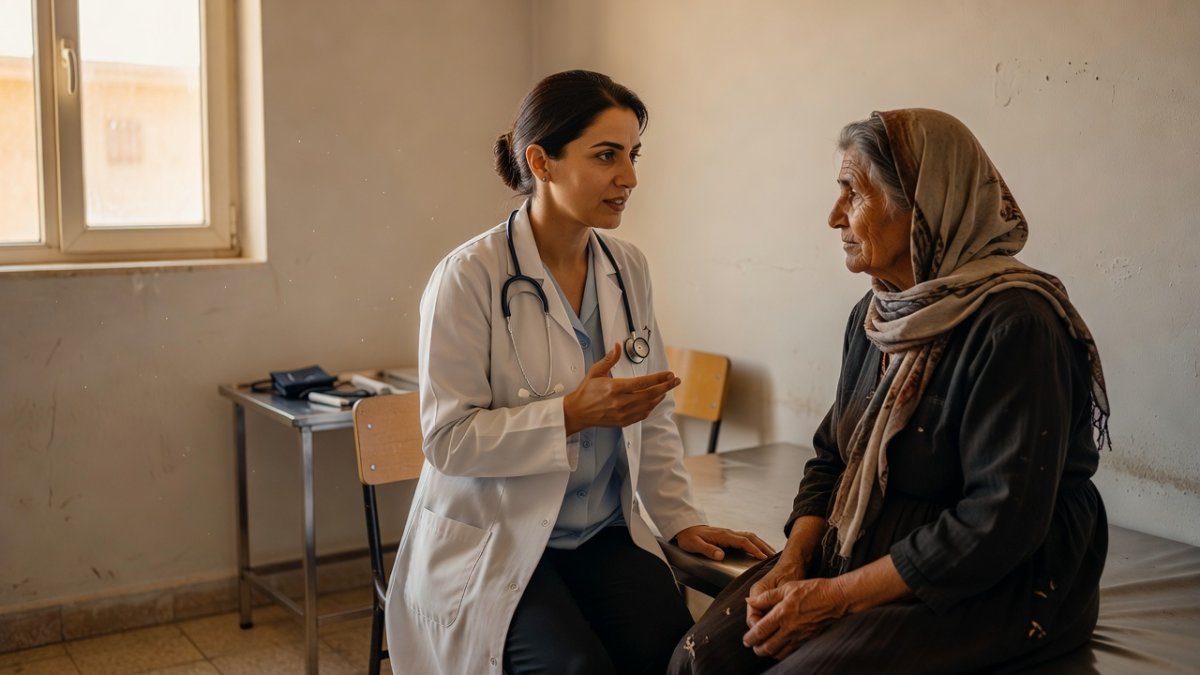
Shireen was studying for a high school examination at her home in the northern Iraqi town of Sinjar on 3 August 2014 when Islamic State group militants broke into her house and kidnapped her. At nineteen she was taken from her family and sold as a sex slave to an Islamic State militant in Tal Afar. Three months later she was sold again, this time to a man named Abu Omar in Mosul. She remained confined for more than two years.
During her captivity Shireen heard words that underscored the contradiction between claimed affection and repeated violence. “He said I love you, but when you love someone, you don’t rape her. It destroyed my life,” she later recalled. The experience left lasting damage that required specialised medical attention once she was free.
In 2016 Iraqi forces liberated Mosul and Shireen was released. She then visited Dr Nagham Nawzat, a Yazidi gynaecologist based in Duhok. The consultation marked the beginning of structured support for the physical and psychological consequences of her captivity. Shireen’s account illustrates the individual human cost behind larger patterns of abduction and forced sexual exploitation documented across Sinjar and surrounding areas.
Her decision to seek care at the Duhok facility reflects the limited options available to survivors immediately after release. The centre provided an environment where women could address injuries and trauma without immediate return to communities still adjusting to the scale of loss. Shireen’s story remains one of many that underscore the necessity of sustained medical access for those who endured prolonged captivity.
Scale of the Genocide Against the Yazidi Community
In 2014 Islamic State forces seized nearly a third of Iraq. At least 12,000 Yazidis were killed or kidnapped as part of what the United Nations has described as an ongoing genocide against the religious minority. The coordinated attacks on Sinjar and nearby towns resulted in mass killings, abductions, and the systematic separation of families.
The United Nations designation of genocide highlights the intent to destroy the Yazidi community through killings, sexual enslavement, and forced displacement. Official figures record that thousands of women and girls were taken and later sold or transferred among militants across multiple locations including Tal Afar and Mosul.
By July 2018 the Kurdistan Regional Government’s Kidnapped Affairs department in Duhok reported that 2,023 Yazidi women had been liberated from Islamic State territories. These numbers represent only those who reached official registration processes and do not capture every individual still missing or unaccounted for.
The genocide’s impact extended beyond immediate deaths and abductions to long-term disruption of community structures. Survivors who returned faced the challenge of rebuilding lives while evidence of systematic violence continued to surface through medical examinations and personal testimonies collected at specialised centres.
Dr Nagham Nawzat’s Background and Medical Training
Dr Nagham Nawzat was born in Mosul in 1976 to a Yazidi family. She completed her medical education at Mosul’s Medical College and graduated with a degree in gynaecology in 2002. Her training equipped her to address reproductive health needs that later became central to her work with survivors of sexual violence.
At the age of forty-two she continued to practice as a gynaecologist while expanding her role to include psychological support. Her Yazidi background provided cultural understanding that facilitated trust with women who had experienced captivity under Islamic State militants.
The combination of clinical gynaecological expertise and community connection allowed Dr Nawzat to respond to both physical injuries and the broader effects of gender-based violence. Her education in Mosul placed her in a position to serve patients from the same region where many abductions originated.
Throughout her career she maintained a focus on the specific health consequences faced by women returning from prolonged captivity. This preparation proved essential when she began receiving patients at the Duhok facility in 2015.
Work at the Duhok Survivors’ Centre
In 2015 Dr Nagham Nawzat joined the Duhok Survivors’ Centre, a facility funded by the United Nations Population Fund. The centre remains the only facility in Iraq that specialises in gender-based violence. It provides medical examinations, psychological support, and follow-up care for women who survived abduction and sexual enslavement.
Dr Nawzat has provided support to an estimated 1,200 Yazidi women at the centre. Her daily work includes treating physical injuries sustained during captivity and addressing the mental health effects that persist after liberation. The centre’s specialised mandate allows it to concentrate resources on this single category of trauma.
Patients arrive after registration through official channels such as the Kurdistan Regional Government’s Kidnapped Affairs department. The structured environment offers privacy and continuity of care that many survivors cannot access elsewhere in Iraq.
The centre’s role has grown in response to the steady arrival of liberated women. Dr Nawzat’s presence ensures that gynaecological expertise remains integrated with psychological services, creating a comprehensive approach within the single dedicated facility.
International Recognition for Dr Nawzat’s Efforts
In March 2016 Dr Nagham Nawzat received the International Women of Courage Award from then-US Secretary of State John Kerry. The award recognised her provision of psychological support to traumatised Yazidi survivors and her work combating gender-based violence.
The recognition highlighted the centre’s function as the sole specialised facility in Iraq and the scale of need among the 1,200 women treated by Dr Nawzat. It also drew attention to the broader pattern of abductions that left thousands of women requiring sustained medical attention.
Acceptance of the award occurred while the number of liberated women continued to rise. Official records from July 2018 showed 2,023 women registered as freed, indicating that demand for the centre’s services remained high after the 2016 honour.
The award served to document the clinical and supportive work being carried out in Duhok at a time when international attention focused on the ongoing genocide designation by the United Nations. It affirmed the importance of specialised care within the larger recovery process.
The Yazidi Community’s Ongoing Struggle
The Yazidi community continues to face displacement and the challenge of recovery years after the 2014 attacks. Many survivors remain separated from family members, and the destruction of homes in Sinjar has slowed returns. The United Nations classification of the violence as an ongoing genocide underscores that threats have not fully ended.
Liberated women such as Shireen must navigate medical care, community reintegration, and the absence of missing relatives simultaneously. The 2,023 women registered by July 2018 represent only a portion of those affected, leaving many families without resolution.
Access to the Duhok Survivors’ Centre provides one avenue for addressing health needs, yet the centre’s singular status in Iraq limits geographic reach. Women living farther from Duhok encounter additional barriers to consistent treatment.
Recovery efforts therefore depend on sustained funding for the United Nations Population Fund-supported facility and on continued documentation of cases. The community’s ability to rebuild remains tied to both medical services and the slow process of locating those still missing.
Sexual Violence as a Weapon of War in the Region
The systematic use of sexual violence by Islamic State militants formed a central element of the campaign against the Yazidi population. Women and girls were abducted, sold, and transferred between locations including Tal Afar and Mosul, creating a network of exploitation that the United Nations has linked to genocidal intent.
Dr Nawzat’s clinical work at the Duhok centre directly addresses the physical and psychological consequences of this tactic. The centre’s specialisation in gender-based violence allows it to treat injuries and trauma resulting from prolonged captivity that would otherwise receive fragmented care.
Official liberation figures, such as the 2,023 women recorded by July 2018, illustrate the scale at which sexual enslavement was practiced. Each case required medical attention upon release, confirming the deliberate targeting of women as part of the broader military strategy.
The regional pattern of using sexual violence to terrorise and displace minority communities has left lasting institutional gaps. The Duhok facility’s status as the only specialised centre in Iraq demonstrates how few resources exist to counter the health effects of this form of warfare.
Remaining Needs for Justice, Accountability, and Mental Health Resources
Despite the liberation of 2,023 women by July 2018 and the treatment of approximately 1,200 survivors at the Duhok centre, substantial gaps persist in justice and accountability. The United Nations continues to describe the violence as an ongoing genocide, indicating that legal processes have not yet delivered comprehensive redress.
Mental health resources remain concentrated in a single facility funded by the United Nations Population Fund. Expansion of similar specialised services beyond Duhok would allow more survivors to receive consistent care without long-distance travel.
Dr Nawzat’s receipt of the 2016 Women of Courage Award drew international attention to the need for sustained support, yet the number of women still requiring treatment continues to exceed available capacity. Additional trained personnel and funding are required to maintain and extend services.
Accountability mechanisms must address both the perpetrators of abductions and the structural absence of adequate health infrastructure. Without expanded mental health resources and continued documentation of cases, the recovery of the Yazidi community will remain incomplete.
By Fatima Al-Rashid, Staff WriterThis article was produced with AI-assisted research and editorial support. Reporting is based on sources cited in the article.
What's Your Reaction?
 Like
0
Like
0
 Dislike
0
Dislike
0
 Love
0
Love
0
 Funny
0
Funny
0
 Wow
0
Wow
0
 Sad
0
Sad
0
 Angry
0
Angry
0
Gulf/MENA Correspondent at Global1.News. Based in Doha, covering Gulf politics, energy markets, diplomacy, and development across the Middle East and North Africa. Tracks the economic transformation of the Gulf states.












Comments (0)