
The man who defeated nobody: Netanyahu’s theatre of ruin
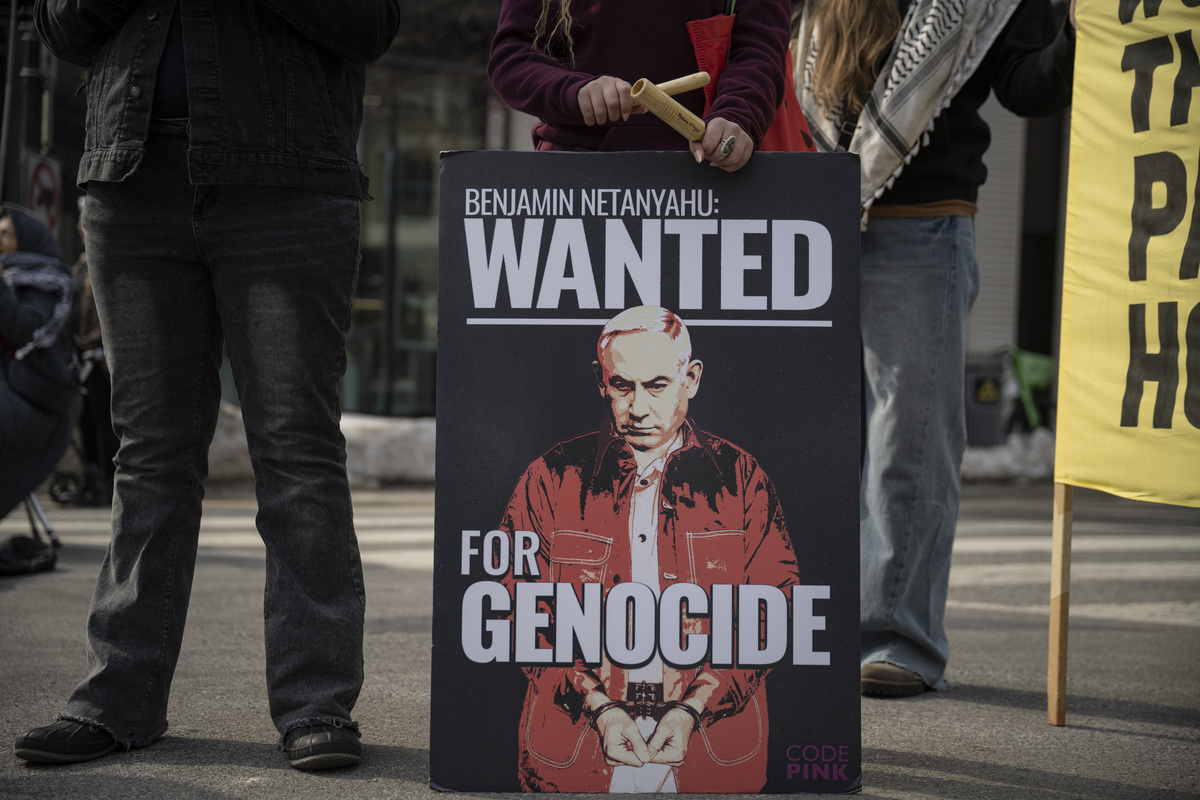
The Man Who Defeated Nobody: Netanyahu’s Theatre of Ruin
In the shadowed alleys of Ramallah, where olive trees stand as silent witnesses to generations of displacement, Benjamin Netanyahu’s latest declarations of victory ring hollow. The Israeli prime minister has not defeated Hamas, Hezbollah, or any of the regional adversaries he has targeted through months of airstrikes, targeted killings, pager explosions, and ground operations. Instead, his leadership has produced a landscape of ruin—measured in tens of thousands of Palestinian lives lost, entire neighborhoods reduced to rubble, and a cycle of violence that shows no sign of abating.
Gaza: From Retaliation to Endless Attrition
Following the October 7, 2023 attacks that killed approximately 1,200 Israelis and took 251 hostages, Netanyahu launched a military campaign in Gaza framed as total victory. Yet more than a year later, Hamas continues to launch rockets and maintain operational capacity in parts of the enclave. The Israeli military’s own assessments, leaked through Israeli media outlets, indicate that the group’s leadership structure has been degraded but not eliminated. Over 43,000 Palestinians have been killed according to Gaza’s Health Ministry, with the true toll likely higher when accounting for those buried under collapsed buildings and indirect deaths from disease and starvation.
Netanyahu’s forces conducted ground incursions into northern Gaza, claiming to dismantle tunnel networks. However, reconstruction efforts by militants and the persistent firing of anti-tank missiles at Israeli armor reveal that no decisive defeat has occurred. Hostage negotiations remain stalled, with only a fraction returned, many through deals that Netanyahu’s coalition partners have criticized as insufficient. The prime minister’s rhetoric of “eradicating Hamas” has instead produced a humanitarian catastrophe documented by UN agencies: 1.9 million people displaced and acute malnutrition affecting one in five children.
Lebanon and the Pager Operation: Temporary Shock, Persistent Resistance
Netanyahu’s escalation into Lebanon, including the September 2024 pager and walkie-talkie explosions that killed dozens of Hezbollah operatives, was portrayed as a masterstroke. The subsequent assassination of Hezbollah leader Hassan Nasrallah in an airstrike on Beirut’s southern suburbs was celebrated in Israeli briefings as a strategic decapitation. Yet Hezbollah has continued cross-border fire, displacing over 60,000 Israelis from northern communities while Israeli ground operations near the border have yielded limited territorial gains at high cost.
Analysts at the International Crisis Group note that Hezbollah’s command hierarchy has shown resilience, with mid-level commanders stepping into leadership roles. The group’s rocket arsenal, estimated at over 150,000 projectiles before the conflict, remains largely intact despite Israeli claims of degradation. Netanyahu has achieved neither the return of displaced northern residents nor the establishment of a buffer zone free from militant activity.
Syria, Iran, and the Illusion of Regional Supremacy
Israeli strikes on Iranian-linked targets in Syria and direct exchanges with Iran in April and October 2024 were presented as proof of unchallenged air superiority. Damascus and Tehran have suffered material losses, including the deaths of senior Revolutionary Guard officers. Still, Iran’s nuclear program has not been rolled back, and its network of proxies across the region continues to operate. Netanyahu’s government has failed to translate these kinetic actions into diplomatic isolation of Iran or a reduction in threats to Israeli security.
Regional experts, including those at the Arab Center for Research and Policy Studies in Doha, observe that these operations have instead accelerated arms flows to non-state actors and hardened anti-Israel sentiment across Arab public opinion. No lasting strategic objective—such as regime change in Tehran or the neutralization of proxy threats—has been secured.
The Domestic Theatre and Coalition Pressures
Inside Israel, Netanyahu’s survival depends on a fragile coalition that includes far-right ministers advocating settlement expansion in the West Bank. His repeated assertions of historic triumph serve a domestic audience weary of prolonged conflict and economic strain. Defense spending has surged past 4.5 percent of GDP, contributing to inflation and labor shortages as reservists remain mobilized. Polls from the Israel Democracy Institute show declining public confidence in the prime minister’s handling of security, with majorities favoring early elections.
This pattern of declaring victory without corresponding outcomes echoes earlier phases of Netanyahu’s career, from the 2006 Lebanon war through multiple Gaza operations. Each time, the absence of sustainable peace has been masked by imagery of flag-waving and targeted eliminations.
Human Cost and the Palestinian Perspective
From my vantage in Ramallah, the consequences are immediate and personal. Families in Gaza who once hosted journalists now search rubble for relatives. In the West Bank, settler violence has risen sharply, with UN monitors recording over 1,200 incidents since October 2023, resulting in Palestinian deaths and property destruction. Netanyahu’s policies have not quelled resistance; they have expanded the geography of conflict.
Human rights organizations, including B’Tselem and Physicians for Human Rights–Israel, document patterns of collective punishment that violate international humanitarian law. These actions, justified under the banner of defeating enemies, have instead entrenched cycles of trauma across generations.
The absence of any measurable victory leaves the region more volatile. Diplomatic initiatives involving Saudi Arabia and other Gulf states remain frozen. Reconstruction in Gaza, if it occurs, will require resources far beyond what Israel’s current posture can facilitate.
Netanyahu’s theatre of ruin thus serves no one’s long-term security. It sustains an illusion of strength while the underlying grievances—occupation, blockade, and denial of self-determination—remain unaddressed. For Palestinians and Israelis alike, the price of this performance continues to mount in lives, futures, and the possibility of coexistence.
This is Fatima Al-Rashid for Global1 News, reporting from Ramallah. 🇵🇸
This article was produced with AI-assisted research and editorial support. Reporting is based on sources cited in the article.
What's Your Reaction?
 Like
0
Like
0
 Dislike
0
Dislike
0
 Love
0
Love
0
 Funny
0
Funny
0
 Wow
0
Wow
0
 Sad
0
Sad
0
 Angry
0
Angry
0

Gulf/MENA Correspondent at Global1.News. Based in Doha, covering Gulf politics, energy markets, diplomacy, and development across the Middle East and North Africa. Tracks the economic transformation of the Gulf states.










Comments (0)