
The First Trip to Earth's Stratosphere Was a Disaster
You know something? In the spring of 1931, two scientists climbed into a tiny aluminum sphere and trusted it to carry them higher than any human had ever gone. Their flight into the stratosphere became one of the most chaotic and inspiring chapters in the history of exploration. The First Trip to Earth's Stratosphere: A Disaster That Advanced Science Geneva, Switzerland — May 2
You know something? In the spring of 1931, two scientists climbed into a tiny aluminum sphere and trusted it to carry them higher than any human had ever gone. Their flight into the stratosphere became one of the most chaotic and inspiring chapters in the history of exploration.
The First Trip to Earth's Stratosphere: A Disaster That Advanced Science
Geneva, Switzerland — May 27, 1931
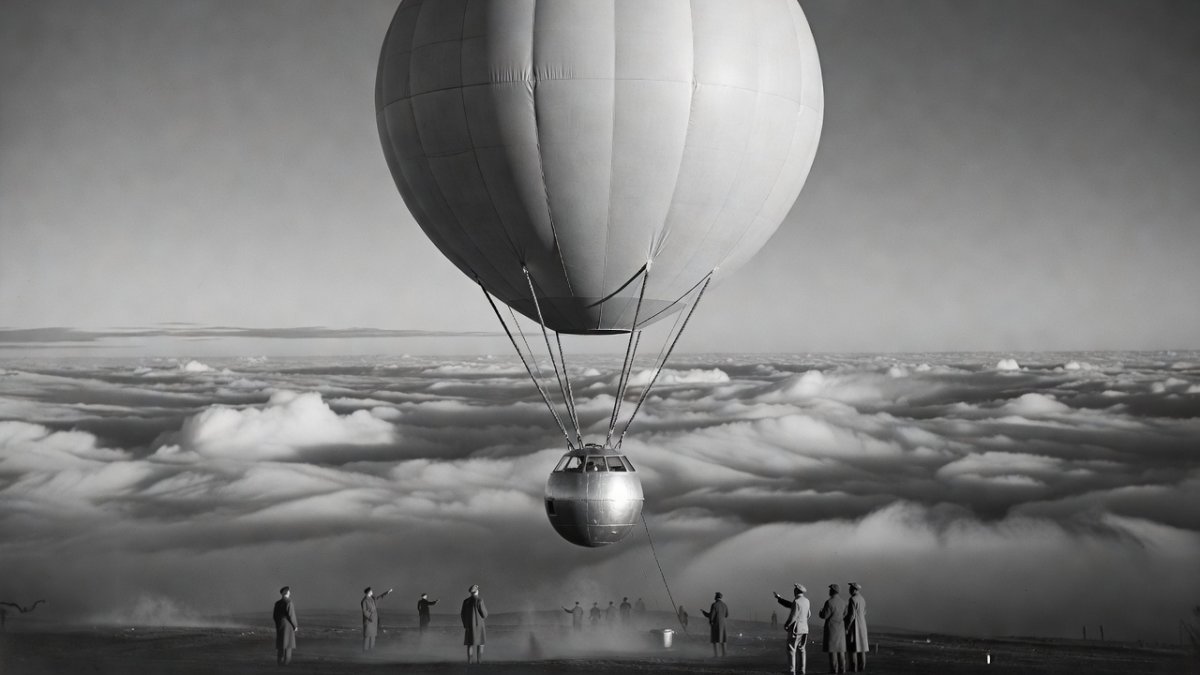
The Bold Experiment: Building the Stratospheric Balloon
Professor Auguste Piccard and his assistant Dr. Paul Kipfer were not typical adventurers. Piccard, a Swiss-Belgian physicist, had spent years designing a pressurized cabin that could protect humans from the thin air and extreme cold of the upper atmosphere. The gondola was a sealed aluminum sphere roughly seven feet across, equipped with oxygen tanks, chemical scrubbers to remove carbon dioxide, and small portholes for observation. Attached above it was a massive hydrogen balloon that would carry the craft to record heights.
The launch site was a field near Augsburg, Germany. The team faced immediate problems: the balloon envelope tore during inflation, and the hydrogen supply proved insufficient. After frantic repairs and a delayed start, the craft finally lifted off in the late morning. Within minutes the gondola had climbed past 50,000 feet, entering the stratosphere where atmospheric pressure drops to less than one-tenth of sea level. Inside the sphere the two men worked in shirtsleeves, the cabin maintaining a comfortable pressure while the world outside turned a deep violet and temperatures plunged below minus 60 degrees Fahrenheit.
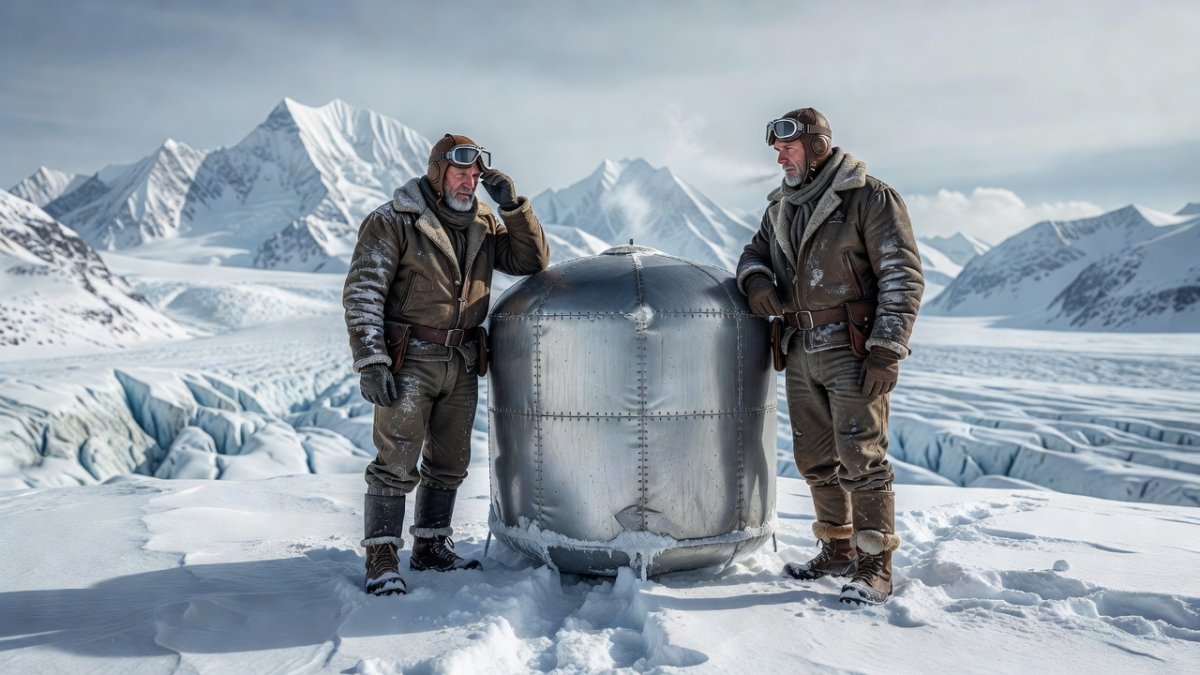
A Terrifying Flight: Communication Lost and Glaciers Below
Almost immediately things went wrong. The valve meant to release excess hydrogen jammed, so the balloon continued rising uncontrollably. Radio contact with the ground failed when the antenna iced over. Piccard and Kipfer watched their altimeter climb past 51,000 feet, then 55,000, until they reached an estimated 51,775 feet—an unofficial world record at the time. Yet they had no way to tell anyone they were still alive.
Worse, the balloon began drifting southeast on high-altitude winds. Below them stretched the jagged peaks of the Alps. Without the ability to vent gas, they could not descend on command. The men rationed their limited oxygen and food while calculating whether the sphere would clear the mountains or smash into a glacier. Every creak of the aluminum shell reminded them how thin the margin between survival and catastrophe had become.
Presumed Dead: The Search and Dramatic Landing
Back on the ground, observers watched the balloon vanish into the clouds and heard nothing on the radio. Newspapers quickly declared the explorers lost. Rescue teams scoured the Alps for wreckage, and Piccard’s family prepared for the worst. The flight had lasted barely twelve hours, yet the world had already written its ending.
Against all odds, the balloon finally descended when cooling hydrogen contracted enough to bring the craft down. It landed on a glacier near the Austrian-Italian border. Piccard and Kipfer stepped out unharmed, walked to a nearby village, and telephoned their astonished colleagues. The men presumed dead for nearly a day had not only survived but returned with the first direct measurements from the stratosphere.
Scientific Impact: Cosmic Rays and Lasting Records
The flight’s real payoff came from the instruments Piccard carried. At extreme altitude the team recorded intense radiation that increased with height, helping confirm that cosmic rays originate from outside Earth’s atmosphere rather than from radioactive minerals on the ground. Their data contributed to the growing field of particle physics and paved the way for later high-altitude research.
Piccard’s pressurized cabin design also proved the basic engineering principles later used in aircraft, submarines, and spacecraft. The altitude record stood until the following year, when Piccard flew again with a new assistant and pushed even higher. The 1931 mission demonstrated that humans could live and work safely above most of the atmosphere if given the right protection.
What This Means Today
Modern spaceflight still relies on the same core idea Piccard tested: a sealed environment that shields occupants from vacuum, cold, and radiation. Every spacesuit and crew capsule traces its lineage to that aluminum sphere. The willingness of two scientists to climb into an unproven machine, accept total radio silence, and drift over unknown terrain embodies the calculated risk that continues to drive exploration today.
Their story reminds us that scientific progress rarely follows a straight line. Setbacks, near-misses, and public doubt are often part of the journey. Piccard and Kipfer returned not only with data but with proof that bold engineering and human courage can open entirely new frontiers.
This is Allan Ali for Global1 News.
This article was produced with AI-assisted research and editorial support. Reporting is based on sources cited in the article.
What's Your Reaction?
 Like
0
Like
0
 Dislike
0
Dislike
0
 Love
0
Love
0
 Funny
0
Funny
0
 Wow
0
Wow
0
 Sad
0
Sad
0
 Angry
0
Angry
0

Publisher of Global1.News. Automation architect, systems builder, and the guy making sure the truth gets published.















Comments (0)