
Thailand and Malaysia Resolve Fisheries Trade Dispute, Reopen Markets
Thailand and Malaysia Resolve Fisheries Dispute in Putrajaya Thai Prime Minister Anutin Charnvirakul and Malaysian Prime Minister Anwar Ibrahim in Putrajaya on Thursday (AP) Thailand and Malaysia have agreed to resolve a fisheries trade dispute that disrupted seafood exports between the two countries, with both governments aiming to reopen affected markets within one week. The
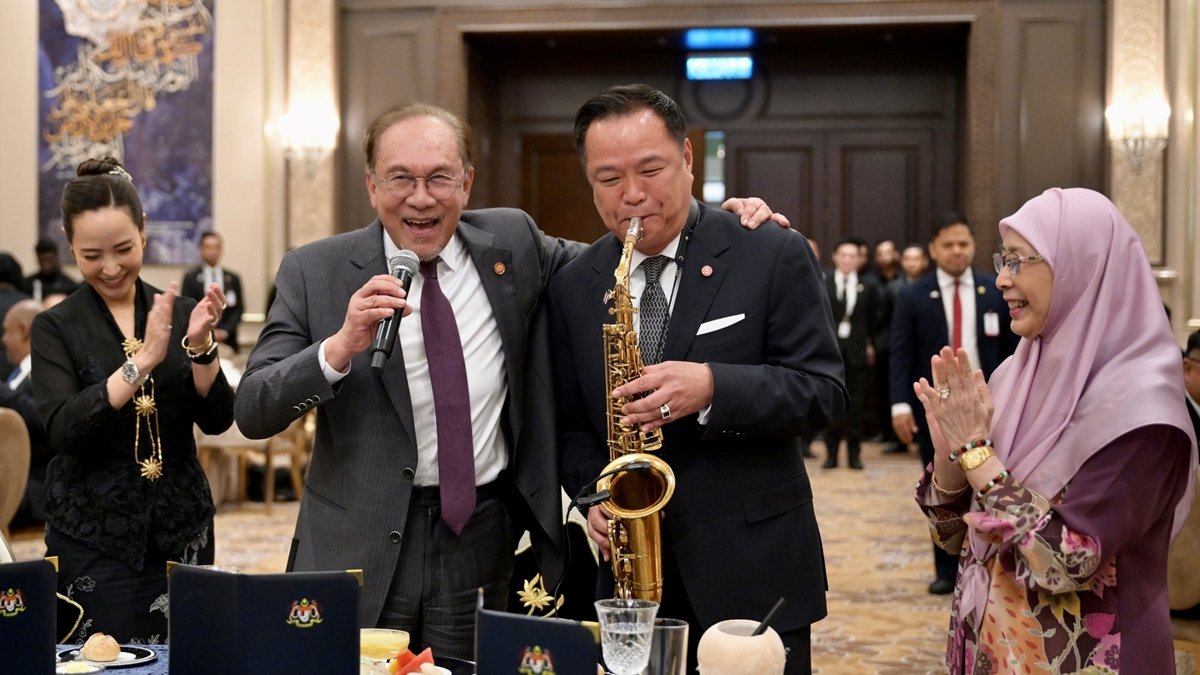
Thailand and Malaysia Resolve Fisheries Dispute in Putrajaya
Thai Prime Minister Anutin Charnvirakul and Malaysian Prime Minister Anwar Ibrahim in Putrajaya on Thursday (AP)
Thailand and Malaysia have agreed to resolve a fisheries trade dispute that disrupted seafood exports between the two countries, with both governments aiming to reopen affected markets within one week. The breakthrough came after talks between Thai Prime Minister Anutin Charnvirakul and his Malaysian counterpart Anwar Ibrahim in Putrajaya on Thursday, during Anutin's two-day official visit aimed at strengthening bilateral ties.
"We have resolved this outstanding issue of fisheries," Anwar told reporters after the meeting, confirming that both sides agreed the measures should be implemented within one week. Agriculture ministers from both countries have reached a mutual understanding and will expedite the reopening of agricultural and fisheries markets to ease the impact on farmers and seafood producers.
The agreement came after months of quiet diplomacy at the ministerial level, with Thailand's Minister of Agriculture and Cooperatives and Malaysia's Minister of Agriculture and Food Industries holding multiple rounds of technical talks to resolve the food safety concerns that had triggered the reciprocal restrictions. The breakthrough in Putrajaya elevated these technical discussions to the political level, enabling a comprehensive resolution that covers both the sea bass and shrimp trade restrictions simultaneously.
Sea Bass and Shrimp Trade Restrictions Lifted
The dispute flared earlier this year after Thailand suspended imports of Malaysian sea bass over concerns about chemical residues. Malaysia later imposed temporary restrictions on certain varieties of Thai shrimp, citing food safety controls. According to the Thai government, the new agreement addresses both sets of restrictions, restoring normal trade flows for the affected products.
For Thai fishing communities in provinces like Songkhla, the restrictions had created uncertainty for shrimp exporters who rely on the Malaysian market as one of their largest buyers. The one-week implementation timeline provides quick relief for producers who faced sudden shipment halts and storage challenges during the peak fishing season. The resolution also benefits Malaysian sea bass exporters who lost access to Thai processing facilities that supply hotels and restaurants in Bangkok and other urban centers.
Special Border Economic Zone Accelerated
The two leaders also agreed to deepen economic cooperation by accelerating plans for a special border economic zone and improving cross-border trade and transport links. The zone is intended to integrate supply chains in food security, energy and high-tech industries while promoting investment, tourism and job creation in border areas.
The border economic zone concept has been under discussion between Bangkok and Kuala Lumpur for several years, with both sides viewing it as a mechanism to stimulate economic development in Thailand's southern provinces and Malaysia's northern states. Thursday's agreement provides political momentum to move from planning into implementation, with both governments committing to concrete timelines for the zone's establishment.
Under the accelerated plan, the special economic zone is expected to include simplified customs procedures, tax incentives for manufacturing businesses and dedicated infrastructure for cross-border logistics. Thai officials have identified potential locations near the Sadao checkpoint in Songkhla and the Sungai Kolok crossing in Narathiwat as candidate sites for the zone's initial development phase.
New Sadao-Bukit Kayu Hitam Checkpoint Inaugurated
On Friday, Anutin and Anwar are scheduled to jointly inaugurate the new Sadao border checkpoint in Thailand's Songkhla province and Malaysia's Bukit Kayu Hitam crossing, the busiest land trade gateway between the two countries. The upgraded checkpoint is expected to significantly reduce waiting times for commercial trucks and passenger vehicles crossing the border.
Sadao-Bukit Kayu Hitam handles a substantial volume of the estimated 30 billion USD in annual bilateral trade between Thailand and Malaysia. The new facility features expanded inspection lanes, modern customs processing systems and improved facilities for drivers and travelers. Local businesses in Songkhla province have reported that bottlenecks at the old checkpoint frequently caused delays of several hours for perishable goods, particularly seafood and agricultural products.
Rail, Ferry and Bridge Connectivity Projects
Both governments pledged to advance several connectivity projects, including the resumption of the Satun-Kuala Perlis ferry service, integration of ticketing systems for rail services between Bangkok, Hat Yai and Butterworth, the restoration of the Sungai Kolok-Rantau Panjang railway, and construction of a new cross-border bridge.
The Satun-Kuala Perlis ferry service, which suspended operations during the COVID-19 pandemic, serves as a vital link for tourists and goods moving between Thailand's southern coast and Malaysia's island of Langkawi and the mainland at Perlis. Its resumption is expected to boost tourism arrivals in Satun province, where local communities rely on visitor spending from Malaysian day-trippers and international tourists transiting between the two countries.
The rail ticketing integration between Bangkok, Hat Yai and Butterworth will allow passengers to purchase seamless tickets for cross-border journeys on Thailand's State Railway and Malaysia's Keretapi Tanah Melayu networks. The restoration of the Sungai Kolok-Rantau Panjang railway, which has suffered from infrastructure deterioration and periodic security incidents, will reconnect communities in Narathiwat province with Malaysia's rail network. The new cross-border bridge will provide an additional road crossing to ease congestion at existing checkpoints.
Bilateral Trade Target of 30 Billion USD and Agricultural MOU
Thailand and Malaysia reaffirmed their commitment to boosting bilateral trade, with a shared target of reaching 30 billion USD in trade in the near future. The two prime ministers witnessed the exchange of a memorandum of understanding on agricultural cooperation covering crops, livestock, fisheries, research, technology transfer, human resource development and food security.
The 30 billion USD target represents a significant increase from current bilateral trade levels, which the Thai Commerce Ministry has previously reported at approximately 25 billion USD annually. The agricultural MOU provides a framework for Thai and Malaysian institutions to collaborate on research into higher-yield crop varieties, disease-resistant livestock breeds and sustainable fishing practices. Technology transfer provisions will allow Thai farmers to access Malaysian expertise in palm oil and rubber cultivation, while Malaysian producers gain from Thai advances in rice breeding and aquaculture.
Regional Diplomacy and the Myanmar Situation
On regional issues, Anwar praised Thailand's role in addressing the crisis in Myanmar, saying both countries believe lasting progress will require constructive engagement by all stakeholders. Thailand, which shares a long border with Myanmar, has continued humanitarian assistance while supporting regional efforts to restore peace.
Thailand's approach to the Myanmar crisis has emphasized humanitarian access and dialogue, positioning Bangkok as a key channel for international aid reaching conflict-affected communities along the border. The Thai-Myanmar border areas in Tak and Mae Hong Son provinces have received displaced populations fleeing violence, and Thailand has facilitated cross-border medical evacuations and food distributions. Anwar's endorsement of Thailand's role strengthens Bangkok's diplomatic standing within ASEAN as the bloc seeks coordinated approaches to the protracted crisis.
Southern Security and Golok River Cooperation
Addressing security concerns closer to home, Anutin said ending violence in Thailand's southern border provinces remained one of his government's highest priorities, stressing that economic development and peace-building must go hand in hand. The two countries agreed to expand cooperation against transnational crime, drug trafficking, human trafficking and border security, while establishing a joint mechanism to manage the Golok River and improve flood warning systems.
The southern border provinces of Pattani, Yala, Narathiwat and parts of Songkhla have experienced periodic insurgent violence for decades. Anutin's statement linking peace-building with economic development reflects a strategy that pairs security operations with infrastructure investment and job creation programs to address root causes of unrest. The joint cooperation on transnational crime targets drug trafficking networks that operate across the Thai-Malaysian border, particularly methamphetamine shipments that have surged in recent years.
The Golok River, which forms part of the natural border between Thailand's Narathiwat province and Malaysia's Kelantan state, has been subject to periodic flooding that damages homes and agricultural land on both sides. The new joint mechanism will coordinate flood monitoring, share hydrological data and implement early warning systems to give communities time to prepare for rising water levels. Both governments have also discussed dredging and bank reinforcement projects to manage the river's flow and prevent erosion that has claimed farmland in recent monsoon seasons.
Broader Implications for Southeast Asia
The range of agreements reached during Anutin's two-day visit reflects the depth of the Thailand-Malaysia relationship, which encompasses trade, security, infrastructure and regional diplomacy. For the broader ASEAN community, the resolution of the fisheries dispute demonstrates that bilateral trade frictions can be managed through direct dialogue at the highest political levels without escalating into protracted trade wars that harm producers and consumers across the region.
The infrastructure commitments - the ferry service, rail integration, railway restoration and new bridge - represent concrete steps toward the ASEAN Economic Community's vision of seamless regional connectivity. As Thailand and Malaysia move forward with implementation over the coming months, the outcomes of this week's talks in Putrajaya will be measured by how quickly fishermen, farmers, traders and travelers across both countries feel the benefits in their daily lives.
By Ann Srisawat, Staff WriterThis article was produced with AI-assisted research and editorial support. Reporting is based on sources cited in the article.
What's Your Reaction?
 Like
0
Like
0
 Dislike
0
Dislike
0
 Love
0
Love
0
 Funny
0
Funny
0
 Wow
0
Wow
0
 Sad
0
Sad
0
 Angry
0
Angry
0

Southeast Asia Correspondent at Global1.News. Based in Bangkok, covering Thai and Southeast Asian politics, economy, technology, and culture. Deep regional perspective on one of the world's most dynamic regions.













Comments (0)