
Haigh Accuses Starmer Government of Sexist Briefings
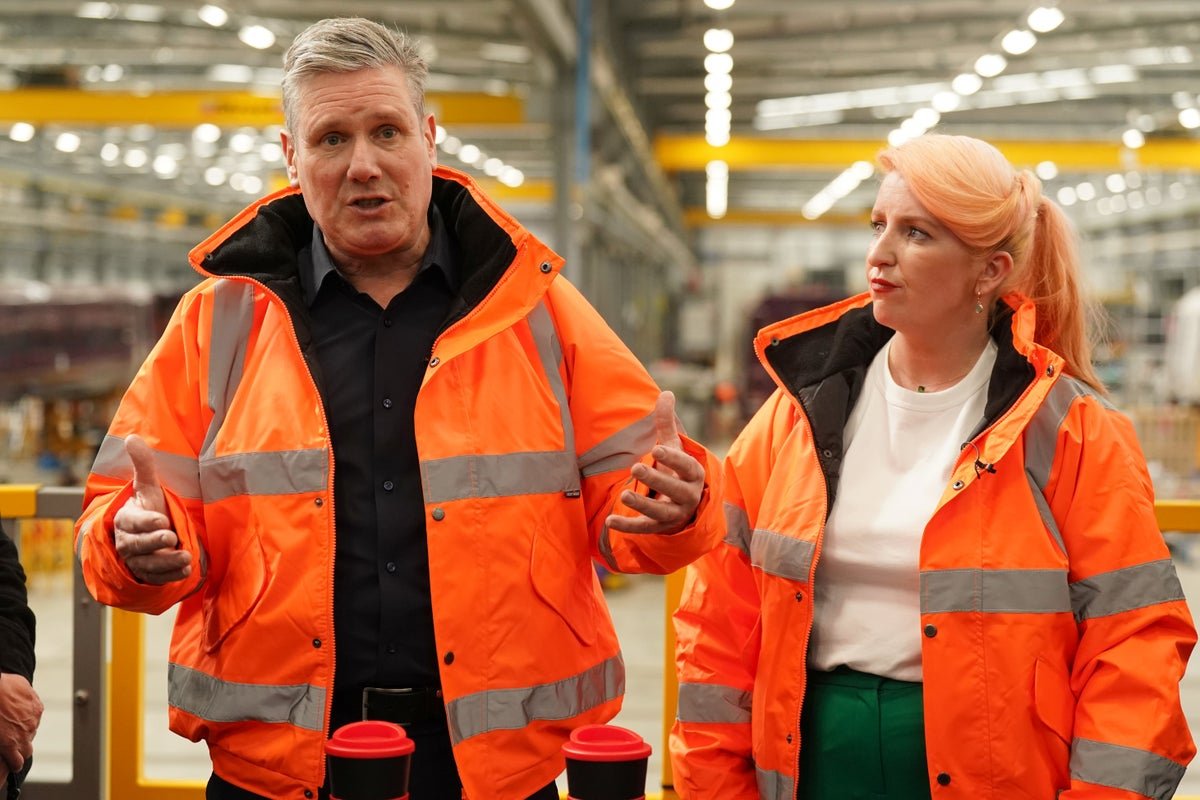
The Shadow of Misogyny in Starmer's Inner Circle Louise Haigh's intervention has laid bare a toxic undercurrent within Sir Keir Starmer's administration that many had long suspected but few dared to name so directly. In her interview with the BBC's Political Thinking podcast, the former transport secretary described a deliberate pattern of sexist briefings orchestrated by a sma
The Shadow of Misogyny in Starmer's Inner Circle
Louise Haigh's intervention has laid bare a toxic undercurrent within Sir Keir Starmer's administration that many had long suspected but few dared to name so directly. In her interview with the BBC's Political Thinking podcast, the former transport secretary described a deliberate pattern of sexist briefings orchestrated by a small group of men determined to undermine senior female colleagues. Her words carry particular weight because they come from someone who once sat at the cabinet table and witnessed the machinery of power up close. Haigh did not mince her words when she rejected suggestions that such behaviour was merely the product of overactive imaginations or routine political friction.
The accusations centre on the treatment of Angela Rayner, Bridget Phillipson and Lisa Nandy, all of whom Haigh says have endured vicious and gendered attacks in the press that bore the hallmarks of coordinated leaking from within government. She pointed to the repeated drip of stories that questioned their competence or character in ways that male ministers rarely faced. This was not isolated gossip, she insisted, but the work of a cabal that viewed strong women as threats rather than assets. The timing of her remarks, just days before Andy Burnham's expected ascent, has intensified speculation that these tensions could soon reshape the Labour leadership landscape entirely.
Haigh's willingness to speak out reflects a growing frustration among those who believe Starmer's operation has prioritised control over collegiality. Her account suggests that the culture inside No 10 has allowed personal animosities to fester and then be weaponised through friendly journalists. For a government that campaigned on restoring standards in public life, such claims represent a damaging blow to its credibility.
During the BBC Political Thinking podcast, Haigh offered several pointed quotes that sharpened the focus on No 10's inner workings. She stated that the briefings against female colleagues were "not the work of rogue journalists chasing clicks, but a deliberate strategy from within," adding that the language used in the leaks often carried "a distinctly gendered edge that male ministers simply do not encounter." These remarks came after host Nick Robinson pressed her on whether the pattern could be dismissed as standard Whitehall turf wars. Haigh replied that the consistency across multiple departments pointed instead to "a small group of men who see competent women as obstacles rather than colleagues."
Her comments also drew on Labour's own history, noting how the party had once prided itself on advancing women through the ranks yet now risked repeating the mistakes of earlier eras when internal briefing campaigns undermined figures such as Harriet Harman and Diane Abbott. Within Whitehall, such dynamics are amplified by the proximity of special advisers to the prime minister's private office, where access to the No 10 grid allows stories to be placed with favoured correspondents before ministers themselves are informed. Westminster observers recognise that these tactics echo the briefing wars of the Brown years, but with the added complication that today's victims sit on the government benches rather than the opposition.
Haigh's Own Ordeal and the Absence of Basic Courtesy
Haigh's departure from the cabinet in 2024 remains one of the most abrupt and poorly handled exits in recent political memory. She had disclosed her 2013 fraud conviction to Starmer years earlier while Labour was still in opposition, and he had promoted her repeatedly afterwards. Yet when the story resurfaced, Downing Street initially prepared a supportive statement only for Morgan McSweeney to intervene and demand her resignation instead. Haigh described being left in limbo, told that "additional information" had emerged but never informed what that information actually was. The lack of transparency left her unable to defend herself properly.
Most striking was Starmer's refusal to speak with her directly. She revealed that she had to push hard even for a single conversation, and that none occurred after her resignation. Having herself sacked people during her career, Haigh argued that basic decency requires leaders to handle such matters with honesty rather than evasion. The episode left her feeling that her character was being deliberately tarnished to justify the decision. This personal slight has clearly hardened her resolve to expose what she sees as systemic failings in how the government treats its own.
The episode also raises questions about accountability at the highest level. When a prime minister cannot bring himself to speak to a departing colleague, it suggests either profound discomfort or a deliberate strategy of distancing. Neither interpretation reflects well on Starmer's leadership style.
The mechanics of the resignation unfolded over a single weekend in November 2024. Haigh received a call from McSweeney on the Friday evening instructing her to stand down before the Sunday papers, with the initial supportive statement drafted by the press office abruptly withdrawn. She was given no opportunity to review the "additional information" cited, nor any chance to consult her own legal advisers before the announcement was forced through. In the BBC interview she recalled the surreal experience of watching her own departure being briefed to journalists while she remained technically a serving minister, unable to issue any statement of her own. The absence of even a brief phone call from Starmer after the event broke with long-standing Westminster convention, under which prime ministers at least offer departing cabinet colleagues a final conversation, however terse.
McSweeney's Denial and the Reality of the Boys' Club
When confronted with McSweeney's claim that no boys' club existed inside No 10, Haigh dismissed the assertion as fanciful. She noted that Phillipson and Nandy had both suffered the same pattern of unpleasant and sexist briefing that she herself endured. The denial, she suggested, revealed more about the insularity of the operation than about the actual behaviour occurring within it. Haigh's account paints McSweeney as a central figure in managing these internal conflicts, often acting as the enforcer when difficult decisions needed to be executed without Starmer's direct involvement.
The contrast between public messaging and private conduct has become a recurring theme. While the government projects an image of unity and modernisation, the experiences of several senior women tell a different story. Haigh's testimony indicates that briefings were not random acts of journalistic enterprise but calculated efforts to shape narratives against perceived rivals. The fact that multiple women reported similar treatment strengthens the case that this was structural rather than personal.
Observers note that such dynamics rarely remain contained. Once a culture of leaking and character assassination takes hold, it tends to expand, eventually damaging the government's overall reputation for competence and fairness.
McSweeney's role as the prime minister's chief of staff places him at the centre of every personnel decision and narrative strategy. His background in the 2019 leadership campaign and subsequent work at the think-tank Labour Together gave him a reputation for ruthless message discipline, yet Haigh's account suggests this discipline extends to shielding the leader from uncomfortable conversations. When McSweeney publicly denied the existence of any "boys' club," Haigh countered on the podcast that the very fact three cabinet ministers had experienced identical briefing patterns made the denial "not credible." She described him as the gatekeeper who decides which stories reach the grid and which ministers receive advance warning, a position that allows him to shape outcomes while maintaining plausible distance from the prime minister himself.
The Disgraceful Treatment of Sue Gray
Haigh reserved particular scorn for the way Sue Gray was handled after serving as Starmer's first chief of staff. She described the sustained campaign of vicious briefing against Gray as absolutely disgraceful, something that could be observed simply by opening the newspapers on most days. Gray's departure was accompanied by a torrent of negative stories that appeared designed to undermine her standing and justify her removal. Haigh saw this as part of the same pattern that later affected other women in the government.
The treatment of Gray matters because she occupied one of the most powerful unelected positions in British politics. If even the chief of staff could be subjected to such public humiliation, it sent a clear signal to other women about the risks of crossing the inner circle. Haigh's comments suggest that these tactics were deployed not as a last resort but as a routine instrument of control. The cumulative effect has been to create an environment where loyalty is prized above competence and dissent is punished through media exposure.
This approach carries long-term costs. Talented women may think twice before accepting senior roles if they believe their reputations could be destroyed at the first sign of disagreement. Starmer's administration risks losing precisely the diverse talent it claims to value.
Gray's experience was especially stark because she arrived in No 10 with an established reputation for impartiality forged during her time as a senior civil servant investigating Partygate. The briefings that followed her appointment focused on her salary, her supposed influence over appointments, and even her family connections, stories that Haigh said bore the same hallmarks as those later aimed at elected ministers. The fact that Gray was ultimately replaced by McSweeney himself reinforced the perception that the operation preferred a known loyalist over an independent figure who might challenge internal practices. Haigh noted on the podcast that the speed with which Gray's reputation was dismantled demonstrated how quickly the machinery could turn against anyone, elected or unelected, once they fell out of favour.
Burnham's Long-Prepared Challenge
Haigh disclosed that Andy Burnham has been planning his own path to the premiership for at least a year. As a key ally of the Manchester mayor, her comments carry the weight of insider knowledge. She presented Burnham as someone who has methodically prepared for national leadership rather than reacting to events. This revelation adds a strategic dimension to her criticisms of the current government, implying that an alternative is already taking shape.
The contrast between Burnham's methodical approach and Starmer's handling of internal dissent could not be sharper. Where Starmer appears reluctant to confront difficult conversations, Burnham is portrayed as someone willing to plan ahead and build alliances. Haigh's intervention may therefore serve a dual purpose: exposing failings in the present administration while signalling that a different style of leadership is available. The coming weeks will reveal whether these tensions produce open conflict or remain contained within the party.
Whatever the outcome, Haigh has ensured that questions about the treatment of women inside Labour will not be easily dismissed. Her testimony has shifted the terms of debate from vague rumours to specific allegations that demand a response.
Burnham's preparations have included regular meetings with trade union leaders, detailed policy work on English devolution, and the cultivation of relationships across the parliamentary party that extend well beyond his North West base. Haigh's revelation that these efforts have been underway for over a year suggests the Manchester mayor is positioning himself for a leadership contest that could be triggered either by electoral setback or by internal revolt. For Labour's future, the contrast between Burnham's outward-facing, alliance-building style and the centralised control associated with McSweeney could prove decisive in any future ballot of members, where questions of culture and fairness now sit alongside traditional policy divides.
The Wider Implications for Labour's Credibility
Haigh's accusations strike at the heart of Labour's claim to represent modern, inclusive politics. A party that positions itself as the defender of equality cannot afford to be seen tolerating a culture of sexist briefing and evasive leadership. The fact that these claims come from a former cabinet minister who was once promoted repeatedly by Starmer makes them impossible to dismiss as the grumblings of a perennial malcontent. They reflect deep disillusionment from someone who had every reason to remain loyal.
The government now faces a choice. It can continue to deny the existence of a problem or it can confront the evidence that several senior women have been subjected to coordinated attacks. The latter course would require genuine cultural change rather than further statements of intent. Haigh's account suggests that statements alone will no longer suffice. The damage to trust, both inside the party and among voters who expected better, is already significant.
As Burnham prepares his move, the internal reckoning Haigh has forced may determine whether Labour can retain the moral authority it needs to govern effectively. The coming months will test whether Starmer's administration can adapt or whether these fractures will widen beyond repair.
Electoral implications are already visible in private polling that shows declining trust among women voters on questions of fairness and representation. Labour's 2024 majority was built in part on record support from female voters disillusioned with Conservative scandals; any perception that similar patterns of behaviour exist inside the current government risks eroding that advantage. Within the wider party, the episode has prompted renewed calls for an independent review of briefing practices and for clearer protocols governing how resignations are handled. Whether Starmer chooses to address these demands or continues to rely on denial will shape not only his own longevity but Labour's ability to present itself as a credible alternative on issues of equality and integrity at the next election.
By Erica Thornton, Staff WriterThis article was produced with AI-assisted research and editorial support. Reporting is based on sources cited in the article.
What's Your Reaction?
 Like
0
Like
0
 Dislike
0
Dislike
0
 Love
0
Love
0
 Funny
0
Funny
0
 Wow
0
Wow
0
 Sad
0
Sad
0
 Angry
0
Angry
0

US Politics and Policy Correspondent at Global1.News. Based in Washington DC, covering American politics, policy, elections, and the courts. Knows how the system works and tells you what it actually means.













Comments (0)