
Super El Nino 2026: Impact on India Monsoon & Weather 2027
Super El Niño 2026: Scientists Warn of Global Weather Disruption Through 2027 — What It Means for India Probability Assessment and Record Sea-Surface Temperatures The World Meteorological Organization has placed the probability of an El Niño developing and persisting through late 2026 at 80-90 percent, while the NOAA Climate Prediction Center assigns an 82 percent chance for th
Super El Niño 2026: Scientists Warn of Global Weather Disruption Through 2027 — What It Means for India
Probability Assessment and Record Sea-Surface Temperatures
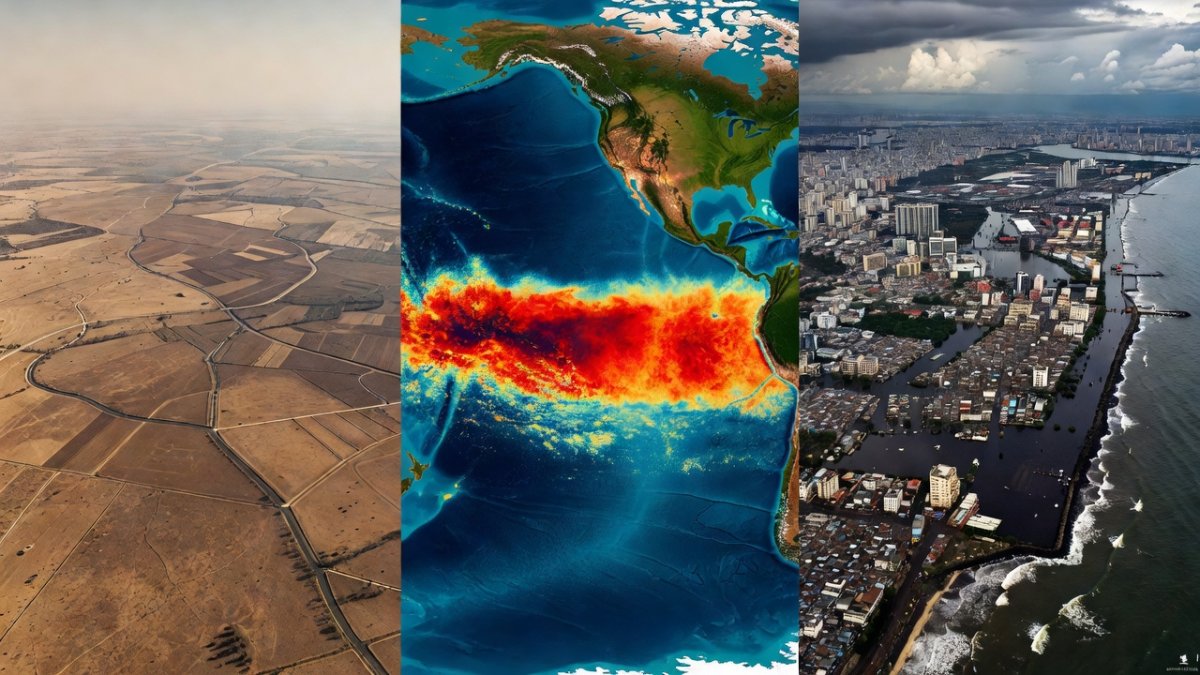
The World Meteorological Organization has placed the probability of an El Niño developing and persisting through late 2026 at 80-90 percent, while the NOAA Climate Prediction Center assigns an 82 percent chance for the May-July 2026 window and a 96 percent likelihood that the event will continue through the Northern Hemisphere winter of 2026-27. April 2026 sea-surface temperatures already ranked as the second-highest for that month in the observational record, occurring against a background of global warming at approximately 1.4°C above pre-industrial levels. These figures indicate that the developing event could rival the strongest El Niños recorded since the 1870s, with lagging effects projected to make 2027 the hottest year on record in many regions.
Indian institutions must integrate these probabilities into planning cycles immediately. The India Meteorological Department has already incorporated the WMO and NOAA data into its seasonal outlook, while NITI Aayog is modeling downstream effects on food systems and energy demand. Because the current global temperature baseline is 1.4°C higher than pre-industrial norms, even a moderately strong El Niño now produces impacts previously associated only with extreme events.
Monsoon Deficiency and Kharif Crop Risks
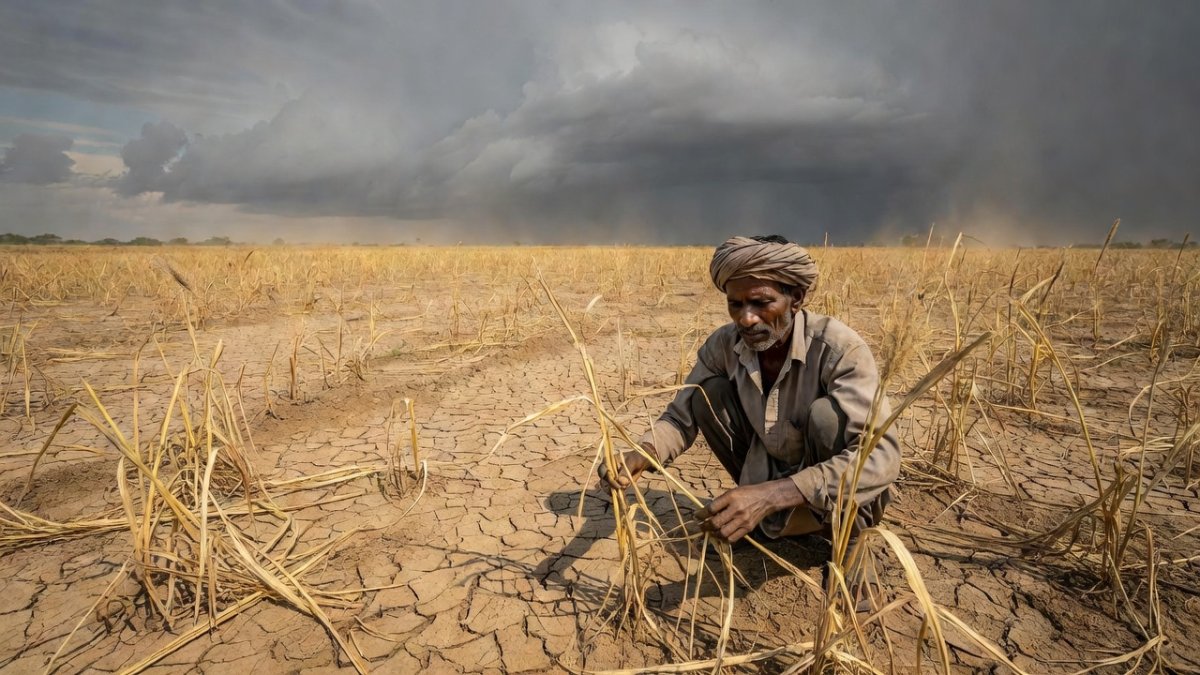
The IMD forecast indicates that the 2026 monsoon will likely reach only 90 percent of the long-period average, carrying a 60 percent probability of a deficient season. This outlook directly threatens kharif crops including pulses, oilseeds, vegetables, and coarse cereals across rain-fed districts. The Ministry of Agriculture has begun contingency planning for acreage shifts and seed distribution, yet the combination of a 10 percent rainfall shortfall and elevated temperatures raises the prospect of widespread yield reductions.
Historical analogues show that El Niño years with similar probabilities have reduced pulse production by 15-20 percent in central and western India. With global food-security concerns already heightened by the projected 2027 temperature peak, any shortfall in Indian pulses and oilseeds will tighten domestic availability and increase import dependence. The Ministry of Agriculture is therefore coordinating with state governments to expand micro-irrigation coverage and drought-tolerant varieties before the June sowing window.
Regional Contrasts: Northern Drought and Southern Flood Exposure
Punjab, Haryana, and Delhi face elevated drought risk under the current El Niño configuration, while Chennai confronts the possibility of severe flooding from intensified northeast monsoon episodes later in 2026. These spatially divergent impacts require differentiated state-level responses coordinated by NITI Aayog. In the northern plains, reservoir levels and groundwater recharge will require close monitoring through the rabi season, directly affecting wheat and mustard cultivation that supports national food-grain stocks.
Chennai's vulnerability stems from the same large-scale circulation anomalies that suppress rainfall over northwest India. Urban local bodies have been advised to clear stormwater drains and strengthen early-warning systems, given that past strong El Niño events produced extreme rainfall events exceeding 200 mm in 24 hours over coastal Tamil Nadu. Health infrastructure in both drought- and flood-prone zones must prepare for heat-related illnesses and water-borne disease surges, respectively.
Inflation Trajectory and Reserve Bank Policy Space
The Reserve Bank of India's CPI projection for FY 2026-27 stands at 5.1 percent, yet the CareEdge report "El Niño 2026 – Is India Ready?", released 15 June 2026, highlights a material risk that food-price pressures could push headline inflation above the 6 percent upper tolerance band. A 10 percent monsoon deficit historically adds 80-120 basis points to vegetable and pulse inflation within two quarters. With global supply chains already stressed by heatwaves elsewhere, imported inflation in edible oils could compound domestic shortfalls.
RBI policymakers therefore face a narrower window for rate cuts. NITI Aayog has recommended that the government maintain strategic food-grain buffers at 105 percent of buffer norms rather than the usual 100 percent, thereby reducing the probability of discretionary imports that would widen the current-account deficit. Fiscal planning for FY 2027-28 must also account for potential increases in the Mahatma Gandhi National Rural Employment Guarantee Act outlays in drought-affected districts.
Health System Preparedness and Broader Economic Slowdown Risks
Global humanitarian assessments linked to a super El Niño include intensified heatwaves and threats to food security that will reach India through both direct meteorological pathways and trade channels. With 2027 forecast to become the hottest year on record due to lagging El Niño effects, the Ministry of Health and Family Welfare is updating heat-action plans for 134 cities, incorporating the additional 1.4°C baseline warming. Hospital admissions for heatstroke and cardiovascular complications are expected to rise 25-30 percent above 2024 baselines in northern states.
Economic modeling by CareEdge indicates that a severe El Niño could shave 0.4-0.7 percentage points from India's GDP growth in FY 2026-27 through agricultural losses and higher cooling-energy demand. NITI Aayog has therefore urged accelerated deployment of solar-powered cold-storage chains to protect perishable kharif produce. These measures simultaneously address immediate food-security concerns and longer-term climate resilience targets.
Policy Coordination Through 2027
Given the 96 percent probability that El Niño conditions will persist through the 2026-27 winter, Indian institutions must maintain elevated vigilance through at least mid-2027. The IMD will issue fortnightly ENSO updates, while the Ministry of Agriculture has established a national El Niño monitoring cell that reports to NITI Aayog every 15 days. RBI inflation forecasts will be revised quarterly to incorporate evolving rainfall data.
By aligning contingency budgets, seed reserves, and health advisories with the verified probabilities released by WMO and NOAA, India can convert the current high-certainty outlook into actionable risk reduction. The CareEdge report underscores that early, data-driven preparation remains the most cost-effective response to an event that could rank among the strongest since systematic records began in the 1870s.
By Dr. Raj Patel, Staff Writer
This article was produced with AI-assisted research and editorial support. Reporting is based on sources cited in the article.
What's Your Reaction?
 Like
0
Like
0
 Dislike
0
Dislike
0
 Love
0
Love
0
 Funny
0
Funny
0
 Wow
0
Wow
0
 Sad
0
Sad
0
 Angry
0
Angry
0

India/South Asia Correspondent at Global1.News. Analytical voice with a background in science and health journalism. Based in New Delhi, covering Indian politics, education, healthcare, technology, and policy. Breaks down complex data into clear, actionable reporting.












Comments (0)