
Starbucks Korea Tank Day: Historical Memory Politics
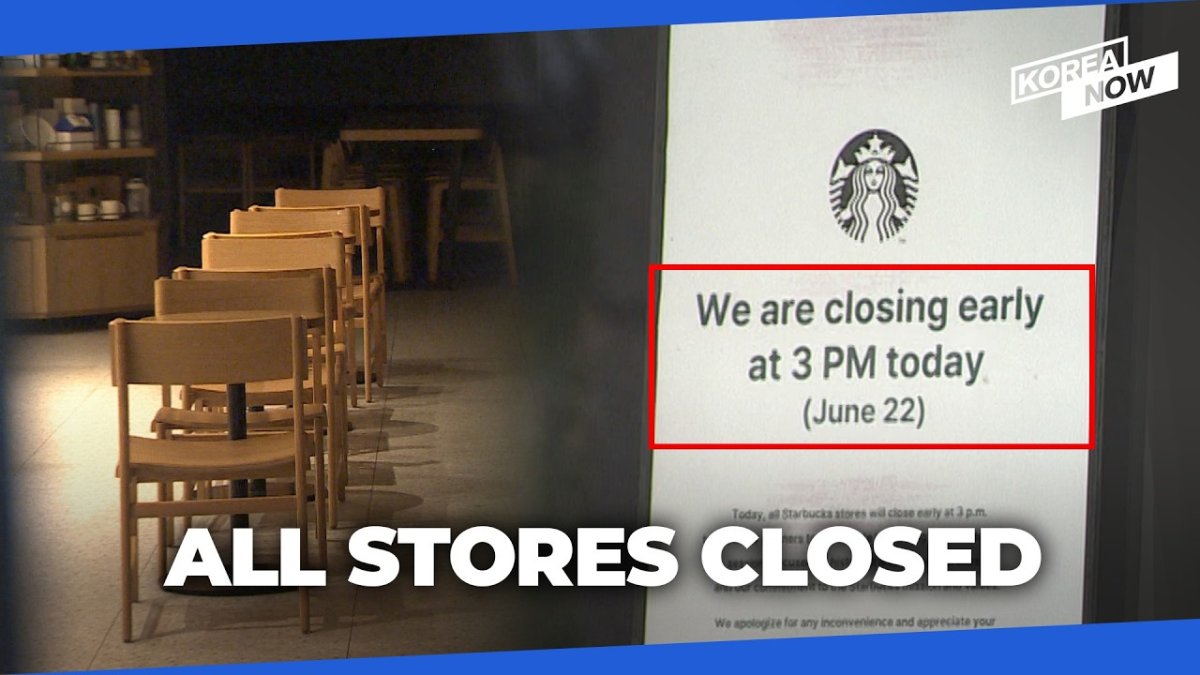
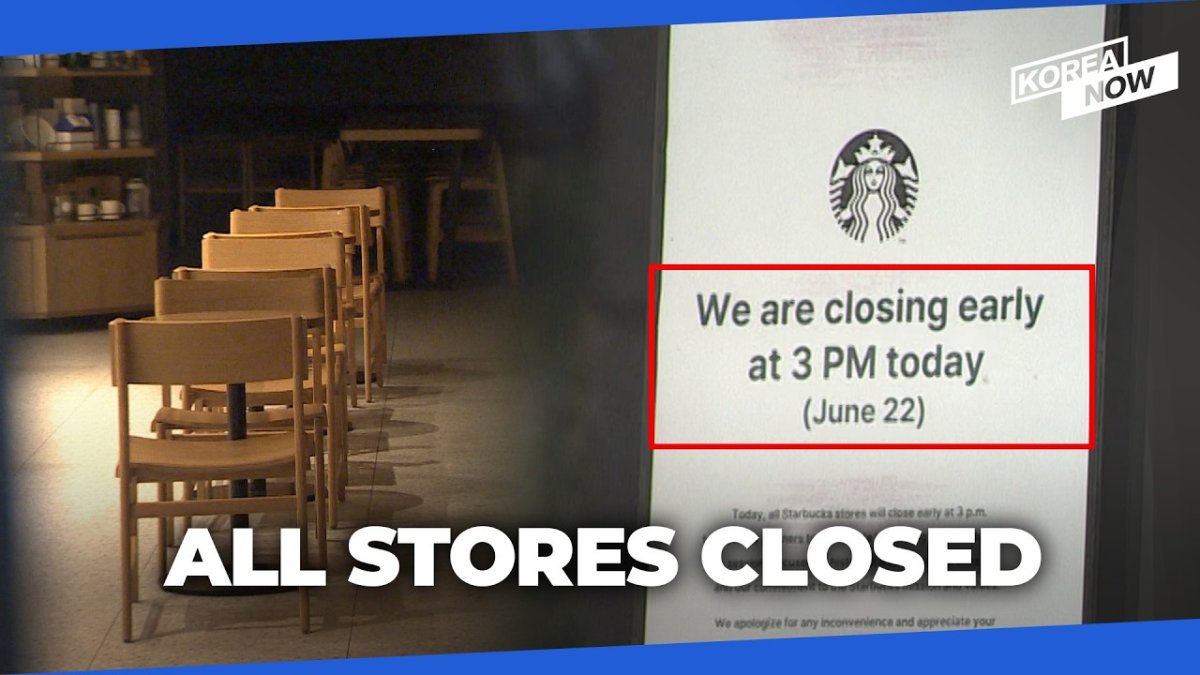
On June 22, 2026, Starbucks Korea, a subsidiary of the Shinsegae Group, shuttered its entire network of 2,160 stores across the country at 3 p.m. for mandatory historical awareness training involving all 23,000 employees. This unprecedented closure, the first weekday shutdown since the chain's entry into the Korean market in 1999, resulted in an estimated loss of 2.1 billion wo
On June 22, 2026, Starbucks Korea, a subsidiary of the Shinsegae Group, shuttered its entire network of 2,160 stores across the country at 3 p.m. for mandatory historical awareness training involving all 23,000 employees. This unprecedented closure, the first weekday shutdown since the chain's entry into the Korean market in 1999, resulted in an estimated loss of 2.1 billion won, equivalent to $1.4 million in foregone sales. The measure came in response to the "Tank Day" promotion launched on May 18, 2026, which coincided with the 46th anniversary of the Gwangju Democratic Uprising — a tank-shaped tumbler promotion bearing the slogan "thwack on the tank" that evoked the military suppression of pro-democracy protests in 1980.
Starbucks Korea's 'Tank Day' Controversy — A Case Study in Historical Memory Politics
Seoul, South Korea – June 24, 2026 — The rapid escalation from a seemingly innocuous marketing campaign to a nationwide corporate reckoning reveals the persistent power of historical memory in South Korea's public sphere. What began as a promotional item tied to the anniversary of the Gwangju Democratic Uprising quickly ignited accusations of trivializing state violence, prompting boycotts, leadership changes, and an extraordinary operational halt. This episode underscores how commercial entities remain entangled in the unfinished work of historical reconciliation decades after the country's transition from authoritarian rule.
The Gwangju Uprising as Foundational Memory
The Gwangju Democratic Uprising of May 18, 1980, stands as a cornerstone in South Korea's narrative of democratization. Citizens in the southwestern city rose against the military regime of Chun Doo-hwan, only to face brutal suppression involving tanks and troops that left hundreds dead. Successive governments have institutionalized remembrance through annual ceremonies and educational mandates, yet private-sector engagement with this history has often remained superficial or commercially opportunistic. The Starbucks promotion exposed this gap when its tank imagery and slogan directly referenced the very instruments of repression used against protesters.
Scholars have long noted that Gwangju functions not merely as an event but as a moral benchmark against which contemporary actions are measured. Progressive civil society organizations, including victims' groups, maintain vigilant oversight of any perceived dilution of this legacy. Their swift rejection of Starbucks' initial apology reflected decades of accumulated distrust toward institutions that appear to commodify trauma for profit.
Conservative commentators, by contrast, framed the backlash as disproportionate, arguing that the promotion lacked malicious intent and that historical sensitivity had become a tool for political score-settling. This divide illustrates how Gwangju memory continues to serve as a proxy battlefield in Korea's polarized political landscape.
Corporate Miscalculation and Market Repercussions
Starbucks Korea's decision to launch the tank-shaped tumbler on the precise anniversary date demonstrated a profound misreading of public sentiment. The slogan "thwack on the tank" was intended as playful branding but instead evoked the mechanical force deployed against civilians in 1980. Within hours, social media platforms filled with outrage, rapidly coalescing into organized boycott calls from Gwangju-based victims' associations and progressive networks.
The commercial fallout proved swift. Rival chains, notably Shindongbang, reported immediate gains as consumers documented their rejection of Starbucks products through videos of smashed cups shared online. Stock movements reflected shifting market preferences, underscoring how historical controversies can translate into economic consequences for listed companies.
Analysts observed that the response exceeded typical corporate crisis patterns in Korea. The involvement of the group chairman in a public apology and the dismissal of the Starbucks Korea CEO signaled recognition that historical insensitivity now constitutes a material governance risk rather than a mere public relations issue.
Political Dimensions and Presidential Displeasure
Reports indicated that President Yoon Suk Yeol privately expressed displeasure at the campaign, viewing it as an unnecessary provocation that complicated his administration's efforts to balance progressive and conservative constituencies. The controversy thus acquired additional political significance, with progressive groups leveraging the episode to critique perceived conservative tolerance for historical revisionism.
Conservative voices countered that the intensity of the reaction reflected an over-politicization of everyday commerce. They argued that mandatory corporate training on modern history represented an encroachment of activist demands into private enterprise. This tension highlights the continuing difficulty of achieving consensus on how state violence should be remembered in a society still navigating the legacies of military rule.
Chaebol Governance and Historical Sensitivity
Shinsegae Group's handling of the crisis exemplifies evolving risk management practices among Korea's major conglomerates. Family-controlled chaebols have historically prioritized operational efficiency and market expansion, yet recent episodes demonstrate growing attention to reputational hazards tied to historical memory. The unprecedented decision to close all stores for employee training illustrates how such concerns now influence core business decisions.
This shift mirrors earlier corporate responses to labor disputes and environmental controversies, where rapid leadership changes served to contain damage. In the Starbucks case, the dismissal of CEO Son Jeong-hyeon and the chairman's personal apology followed established crisis protocols but applied them to a new category of risk: cultural insensitivity toward democratization-era events.
Academic observers note that chaebol families increasingly treat historical reconciliation as a strategic imperative. Failure to do so can generate sustained consumer resistance and regulatory scrutiny, particularly under administrations attentive to progressive demands for accountability.
Implications for Korea's Historical Reconciliation Project
The Tank Day controversy exposes uneven progress in South Korea's efforts to integrate private-sector actors into the project of historical reconciliation. While state institutions have established formal commemorative frameworks, corporations continue to operate with varying degrees of awareness regarding the symbolic weight of events such as Gwangju. The Starbucks episode suggests that commercial entities may require more systematic guidance to avoid inadvertent offenses.
Longer-term consequences may include heightened corporate investment in historical education programs and more rigorous pre-launch reviews of marketing materials. Such adaptations could gradually normalize sensitivity to democratization history within business culture.
Looking Ahead
The events of May and June 2026 reaffirm that Korea's transition from authoritarianism remains an active process rather than a completed chapter. Corporate missteps continue to activate collective memory, demonstrating that the boundaries between commerce, politics, and historical justice remain porous and contested. As more global brands operate within Korea's highly sensitized public sphere, the Tank Day episode may become a case study in how not to navigate the intersection of commerce and collective trauma.
For Shinsegae Group, the path forward involves sustained engagement with victims' organizations and civil society. Whether the June 22 training represents a genuine institutional shift or a performative gesture will become clear only as subsequent marketing campaigns face public scrutiny. The 2.1 billion won price tag of this single day's closure, however, ensures that Korean business leaders will calculate historical sensitivity differently going forward.
By Prof. David Park, Staff Writer
This article was produced with AI-assisted research and editorial support. Reporting is based on sources cited in the article.
What's Your Reaction?
 Like
0
Like
0
 Dislike
0
Dislike
0
 Love
0
Love
0
 Funny
0
Funny
0
 Wow
0
Wow
0
 Sad
0
Sad
0
 Angry
0
Angry
0

East Asia/Technology Correspondent at Global1.News. Seoul-based voice covering Korean politics, technology, business, and culture. Analyzes how technology and geopolitics intersect across East Asia.












Comments (0)