
Twins Marry Twins: Joyous Nigerian Joint Wedding in Ibadan
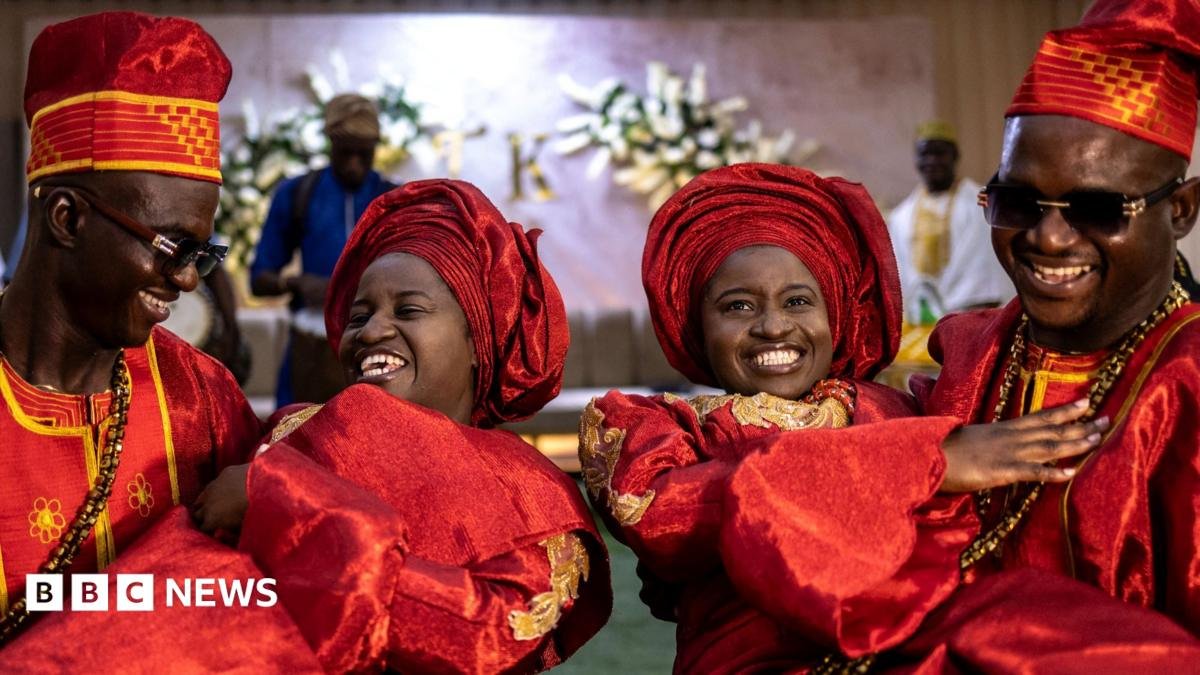
A Rare Double Wedding Ceremony in Ibadan When guests gathered at a church in the south-west Nigerian city of Ibadan at the weekend, they knew they were witnessing something rare. A pair of twin brothers, Taiwo and Kehinde Oguntoye, were marrying twin sisters Taiwo and Kehinde Adediran in a joyous joint ceremony. The scene was filled with celebration as families and friends came
A Rare Double Wedding Ceremony in Ibadan
When guests gathered at a church in the south-west Nigerian city of Ibadan at the weekend, they knew they were witnessing something rare. A pair of twin brothers, Taiwo and Kehinde Oguntoye, were marrying twin sisters Taiwo and Kehinde Adediran in a joyous joint ceremony. The scene was filled with celebration as families and friends came together to mark the occasion. The Yoruba people, who predominate in south-west Nigeria, are known for having an unusually high number of twin births, but it is not every day two sets of twins tie the knot. The coordinated nature of the event added to its distinct character, with everyone present recognizing the exceptional alignment of circumstances that brought the two pairs together. The atmosphere reflected deep communal joy, as the couples exchanged vows in a setting that highlighted both personal commitment and collective participation. Observers noted the symmetry in the proceedings, from the matching elements in the ceremony to the shared family milestones being celebrated simultaneously. This union stood out not only for its visual harmony but also for the way it captured attention across the community, turning an ordinary weekend gathering into a memorable cultural moment. The rarity of such a pairing underscored the special place the event held in local memory, drawing people who wanted to be part of an occurrence that felt both personal and historically notable within the region.
The Deep Significance of Twins in Yoruba Culture
Twins are considered a blessing in Yoruba culture and their names are predestined. The older child is called Taiwo, meaning the one that tests the world, while the younger is called Kehinde, meaning the one that came after. This naming tradition reflects a worldview in which twins arrive with distinct yet complementary roles that shape family identity and community expectations. The brothers are fraternal twins, while the sisters are identical twins, adding layers to how their individual traits interact within the new family units. Taiwo Oguntoye told BBC Yoruba on his wedding day that the marriage feels like it was arranged by God. He noted that the couples have always dreamed of marrying twins and expressed hope for twins in their first and second children. Such statements reveal how deeply the cultural reverence for twins influences personal aspirations. The high incidence of twin births among the Yoruba amplifies the sense that these arrivals carry special significance, often viewed as signs of favor and continuity. Families celebrate twins with rituals and attention that reinforce their status as harbingers of good fortune. In this context, the Oguntoye-Adediran wedding extends that blessing across generations, linking two families through shared twin heritage and creating a narrative that resonates with longstanding beliefs about destiny and kinship.
The Cultural Reverence for Twins Across the Region
The wedding in Ibadan illustrates how twin births carry weight that extends beyond individual families into wider communal recognition. The Yoruba emphasis on twins as blessings aligns with patterns seen in neighboring areas where multiple births are similarly honored and integrated into social life. The story of the Oguntoye and Adediran couples demonstrates the continuity of these values, as the event drew attention precisely because it combined two sets of twins in marriage. This rarity highlights the enduring respect for twinship as a marker of vitality and promise within the cultural fabric of south-west Nigeria. The predestined names and the expressed desire for future twin children show how tradition shapes expectations across time. By bringing together fraternal and identical twins in one ceremony, the occasion reinforced the idea that such unions strengthen ties between families and preserve collective memory. The presence of other twin pairs at the event further emphasized the interconnected nature of these traditions, suggesting that the reverence for twins fosters networks of recognition and support. In this way, the marriage serves as a living example of how cultural practices around twins remain active and meaningful, linking personal stories to broader regional understandings of fortune and identity.
The University of Ibadan Love Story
The Oguntoye-Adediran love story began a decade ago, when all four were studying at the University of Ibadan. A lecturer told the Oguntoyes that she knew a set of twin sisters they should meet, which piqued the brothers' interest. Taiwo Oguntoye noted that it is not that they had not met other twin sisters before, as they did date some, but sometimes things just did not work out. The Adedirans initially resisted an introduction and did not answer the lecturer's phone calls. Then, eventually, a meeting was set up. Taiwo Oguntoye, now in his early 40s, remembers that they eventually visited them, had a talk but they were not interested in a relationship then. Instead, the foursome became friends. Life took them in different directions, however. The sisters, who had been studying for master's degrees in Ibadan, moved abroad for further studies, while the brothers travelled and worked in several countries, including the United States and South Africa. Years passed before the brothers reached out again. The initial period of friendship laid a foundation that later allowed romance to develop once circumstances aligned once more. This gradual progression from introduction through separation to renewed contact illustrates how timing and shared history can shape lasting connections.
Reconnection and Warm Family Embrace
Years passed before the brothers reached out again. Over time, despite some initial scepticism, their connections became undeniable. The couples' families were thrilled by the relationships. Taiwo Oguntoye recalls bonding with his in-laws instantly. Everyone was so happy to see us, it felt like we had known them all our lives, he said. We were treated like sons in our own father's house. Proud relatives showed up in style to the wedding, where the couples co-ordinated their outfits. The Oguntoye Twins are active in culture and tourism initiatives, which added another dimension to the family response as relatives recognized the couples' shared commitment to preserving traditions. The warmth extended across both sides, creating an environment where the new unions felt natural and supported. This acceptance helped ease any earlier doubts and allowed the relationships to flourish openly. The sense of instant familiarity described by Taiwo Oguntoye points to the deep compatibility that transcended the years apart. Family involvement played a central role in affirming the matches, turning what began as individual connections into collective celebrations that honored both personal choice and cultural continuity.
The Coordinated Wedding Celebration
The wedding itself featured coordinated outfits and multiple twin guests present. Several other pairs of twins were in attendance, perhaps unsurprising as the grooms are well known locally for promoting twin culture. Known as the Oguntoye Twins, the brothers are active in culture and tourism initiatives. The Oguntoyes have some physical differences, being fraternal twins, but their wives are identical. Our wives look so alike that even their family members sometimes confuse them. We do not mix them up, we know our own wives very well, Kehinde Oguntoye said. The brothers say they share similar personalities to their wives, describing themselves as ambiverts, sometimes quiet, sometimes outgoing, depending on the situation. The presence of other twins at the ceremony reinforced the cultural threads running through the event. Coordinated attire symbolized the harmony between the two couples, while the gathering of multiple twin pairs created a visual representation of the community that values such births. The brothers' work in promoting twin culture ensured that the celebration also served as an opportunity to highlight these traditions publicly. This blend of personal milestone and cultural advocacy made the wedding a focal point for both families and the wider circle of acquaintances who share an appreciation for twin heritage.
Future Plans and Cultural Preservation
Although they are very close, the married couples will live apart, Taiwo Oguntoye said. We have our unique plan about that, over time people will get to know about that. For now, the newlyweds are enjoying a new chapter of their love story, which began with a near-perfect meeting, but was paused for years, before eventually blooming into two of the area's most talked-about unions. This arrangement reflects a thoughtful approach to maintaining individual paths while honoring the bonds formed. The brothers' ongoing efforts in cultural tourism and twin promotion suggest that their union will continue to serve as an example of how tradition can adapt to modern circumstances. By preserving the stories and practices associated with twins, the couples contribute to keeping Yoruba customs vibrant. The wedding marks not an ending but a continuation of the narrative that began at the university and survived years of separation. In this sense, the event underscores the resilience of cultural values, showing how personal lives can embody and extend longstanding beliefs about blessing, destiny, and kinship. The unique plan for living arrangements further illustrates the couples' intention to balance closeness with independence, ensuring that their story remains one of thoughtful evolution within a rich cultural framework.
By Amara Diop, Staff WriterThis article was produced with AI-assisted research and editorial support. Reporting is based on sources cited in the article.
What's Your Reaction?
 Like
0
Like
0
 Dislike
0
Dislike
0
 Love
0
Love
0
 Funny
0
Funny
0
 Wow
0
Wow
0
 Sad
0
Sad
0
 Angry
0
Angry
0

West Africa/Sahel Correspondent at Global1.News. Dakar-based journalist covering politics, security, climate, and development across Francophone and Anglophone West Africa. Tells the stories of a region undergoing profound transformation.














Comments (0)