
UK Heatwave June 2026: Met Office Red Warning Triggers National Alerts
The United Kingdom is facing an unprecedented meteorological assault this week, with the Met Office issuing its highest-level Red Extreme Heat Warning for southern England and Wales. Temperatures are forecast to soar to 39-40°C on 24-25 June 2026, threatening to eclipse the June record set in 1976. This second heatwave, driven by a persistent heat dome over western Europe, foll
UK Faces Record Heat as Met Office Red Warning Triggers National Alerts
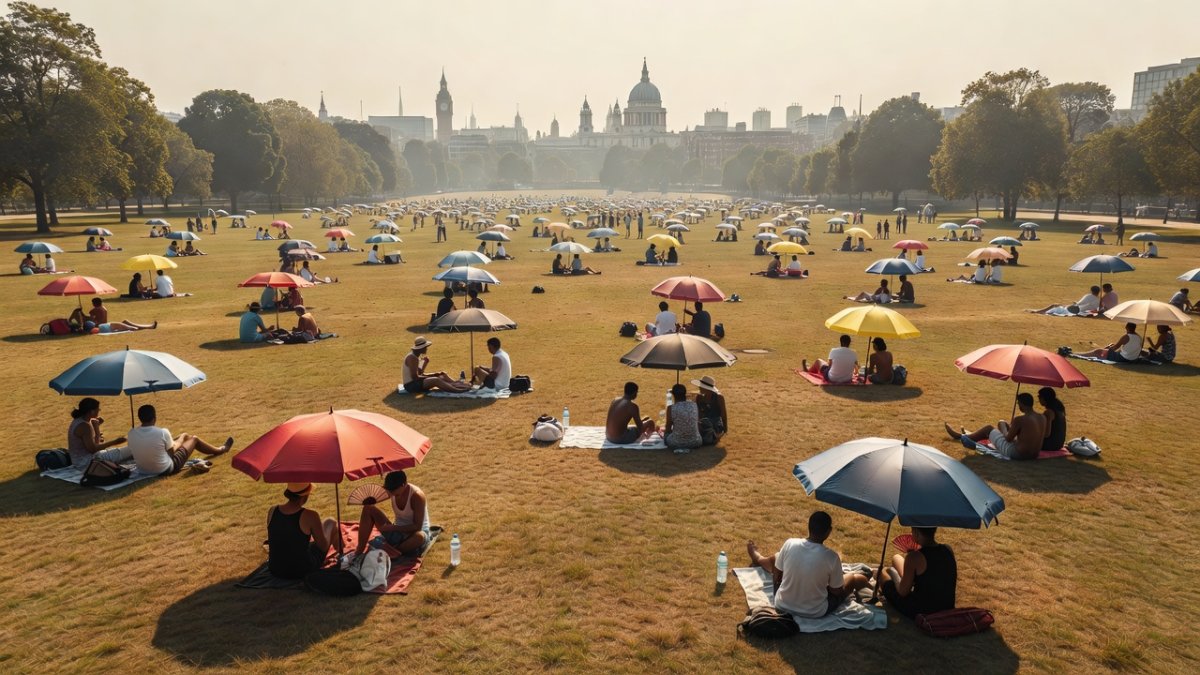
London, UK – 24 June 2026 — The Met Office has placed southern England and Wales under its rare Red Extreme Heat Warning for 24-25 June, the highest alert level, as forecasters predict temperatures could reach 39-40°C and potentially break the June record of 35.6°C set in 1976. The warning covers a broad swathe from London to Swansea, while an Amber warning extends across the remainder of England and Wales. Overnight thunderstorms on 23-24 June brought 30,000 lightning strikes and flash flooding to parts of London and the southwest, adding to the chaos before the main heat arrives.
The Heat Dome and Record-Breaking Forecasts
The current extreme is the product of a stubborn heat dome parked over western Europe, trapping hot air and preventing the usual Atlantic cooling that moderates British summers. Forecasters at the Met Office, working from their Exeter headquarters, have warned that 24 June could see the mercury climb beyond anything recorded in the UK during June since systematic measurements began. This follows the first heatwave that started on 22 June, but officials stress the second episode will be markedly more severe, with overnight minima remaining dangerously high.
Climate scientists have been quick to link the timing and intensity to broader warming trends. The earlier onset of such events disrupts the usual seasonal patterns that UK agriculture and infrastructure have long relied upon. With the Amber warning covering the rest of England and Wales, even areas outside the Red zone face significant disruption, from hosepipe bans already imposed across southern and central England to heightened monitoring of river levels by the Environment Agency.
Public Health England has coordinated with local resilience forums to prepare messaging for vulnerable groups. The combination of extreme daytime heat and limited overnight relief creates conditions where heat-related illness can escalate rapidly, particularly in urban heat islands where concrete and tarmac retain warmth long after sunset.
Transport Networks Buckle Under Pressure
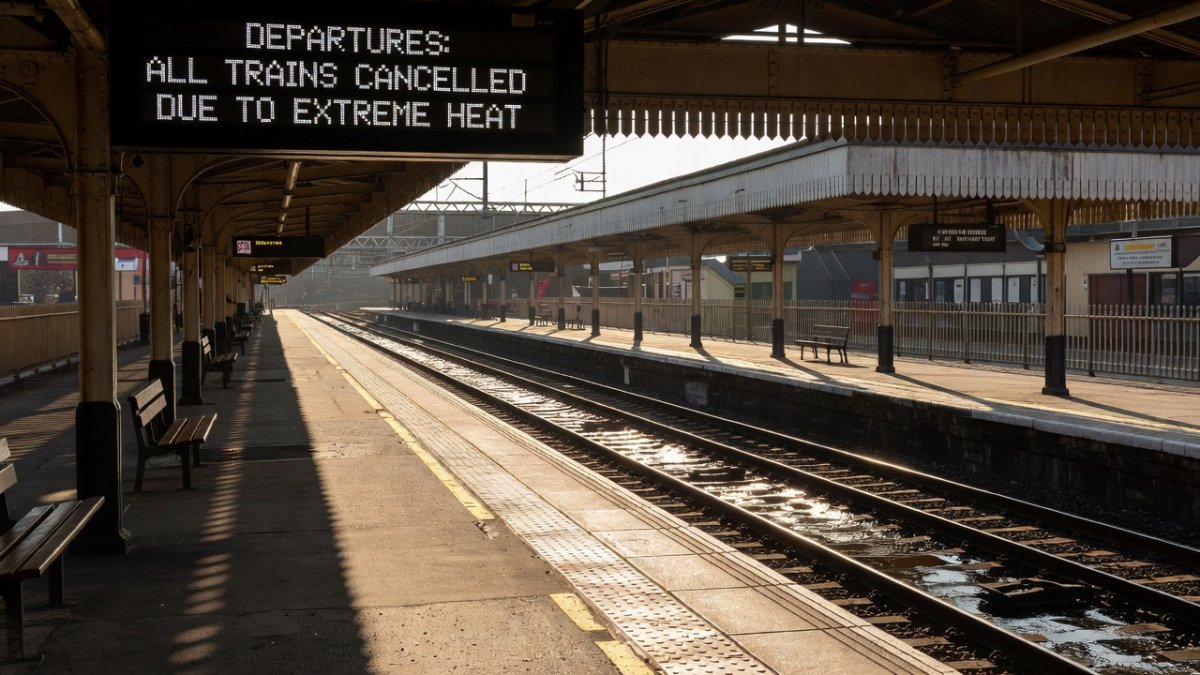
National Rail has issued “do not travel” advice for six major routes across southern England, citing the risk of rails buckling in temperatures approaching 40°C. Engineers have been deployed at key points on lines serving London, Bristol and Cardiff, yet cancellations have already been reported by commuters attempting to reach work on 24 June. Transport for London has similarly warned of widespread disruption on the Tube network, where older rolling stock lacks adequate ventilation for such conditions.
The practical consequences are immediate for daily life. In London, services on the Elizabeth line and several suburban routes have been curtailed, forcing passengers onto already overcrowded buses. Further west, travellers in Bristol and Cardiff have faced similar cancellations, with replacement buses struggling to cope with demand. The disruption highlights how dependent the UK’s just-in-time economy remains on reliable rail links that were never designed for sustained extreme heat.
Highways England has also activated contingency plans, monitoring bridge expansion joints and advising drivers to carry extra water. The cumulative effect is a transport system under visible strain, with the Met Office warning that conditions will remain hazardous through at least 25 June.
Schools Close and the NHS Prepares for Surge
Hundreds of schools in London, Kent, Devon and Swansea have either closed entirely or sent pupils home early after classroom temperatures exceeded safe thresholds. Local authorities acted on advice from the Department for Education, which updated its guidance following previous heat events. Parents in affected areas report children struggling to concentrate and, in some cases, showing early signs of heat exhaustion.
The NHS is on high alert for a rise in heat-related admissions. Trusts across London, the South East and Wales have activated emergency protocols, prioritising outreach to elderly residents and those with pre-existing conditions. Since late May, fifteen deaths across the UK have already been attributed to heat-related causes, according to provisional figures from the Office for National Statistics. General practitioners report a sharp increase in calls concerning dehydration and heatstroke, particularly from care homes and households without air conditioning.
Emergency departments in major cities are preparing for an influx that could stretch staffing levels already under pressure from post-pandemic backlogs. The combination of school closures and health service strain illustrates how a single meteorological event can ripple through multiple public services simultaneously.
European Death Toll and Water Restrictions
Across Europe the picture is grimmer still, with at least 73 deaths recorded so far this summer, including 58 in France where temperatures reached 43.3°C. The UK’s share stands at fifteen, underscoring that even a maritime climate offers limited protection once thresholds are crossed. Researchers at the Met Office Hadley Centre have noted that such events are occurring earlier in the season and with greater intensity, consistent with climate model projections.
Water companies have imposed hosepipe bans across southern and central England, affecting millions of households and prompting renewed debate about long-term resilience. The Environment Agency has issued drowning warnings after several incidents in open water, while swimming clubs have stepped up safety briefings for members. Rural communities in Wales are particularly exposed, with parched farmland raising concerns over livestock welfare and feed supplies.
These restrictions arrive at a time when public trust in water companies remains low following repeated sewage discharge controversies. The heatwave has therefore become another flashpoint in ongoing discussions about infrastructure investment and regulatory oversight by Ofwat.
What This Means for the UK
In London, elderly residents in tower blocks without air conditioning face the most acute risks, with many tower blocks designed for a cooler climate now acting as heat traps. Local councils have opened cooling centres, yet uptake has been uneven, particularly among those wary of leaving their homes during extreme weather. The capital’s dense population amplifies every degree of temperature rise.
Wales presents a different challenge. Rural communities in the Brecon Beacons and Pembrokeshire are contending with parched farmland and stressed livestock, while the Welsh Government coordinates with Natural Resources Wales on emergency water supplies. In the South West, the contrast is stark: flash flooding from the overnight thunderstorms has damaged homes in Somerset and Dorset even as the region prepares for the coming heat.
The South East, meanwhile, is experiencing transport chaos that affects not only commuters but also the movement of fresh produce into London markets. These regional disparities demonstrate that a national heatwave does not impact the country uniformly; instead, it exposes existing inequalities in housing, transport and access to green space.
The Bottom Line — What Comes Next
With the Red warning due to remain in force through 25 June, attention now turns to whether the UK’s preparedness measures are sufficient for a future in which such events become routine. The Met Office has already signalled that further Amber or Red warnings may be required later in the summer. Government departments are reviewing whether current heat-health alerts and infrastructure standards require urgent revision.
Longer term, the episode is likely to intensify calls for accelerated adaptation funding, from retrofitting public buildings to rethinking rail maintenance schedules. For now, the immediate priority remains keeping the most vulnerable safe as the heat dome lingers over western Europe. By Erica Thornton, Staff Writer
This article was produced with AI-assisted research and editorial support. Reporting is based on sources cited in the article.
What's Your Reaction?
 Like
0
Like
0
 Dislike
0
Dislike
0
 Love
0
Love
0
 Funny
0
Funny
0
 Wow
0
Wow
0
 Sad
0
Sad
0
 Angry
0
Angry
0

US Politics and Policy Correspondent at Global1.News. Based in Washington DC, covering American politics, policy, elections, and the courts. Knows how the system works and tells you what it actually means.














Comments (0)