
South Korea's Silicon Collar Workforce at the Center of Global Technology Competition
South Korea's semiconductor and AI sectors now employ a rapidly expanding cohort of highly compensated engineers and technicians whose salaries rival those of physicians and senior legal professionals. This "Silicon Collar" group has emerged as a strategic national asset at the intersection of technology policy and geopolitical competition, directly shaping Korea's capacity to
South Korea's semiconductor and AI sectors now employ a rapidly expanding cohort of highly compensated engineers and technicians whose salaries rival those of physicians and senior legal professionals. This "Silicon Collar" group has emerged as a strategic national asset at the intersection of technology policy and geopolitical competition, directly shaping Korea's capacity to maintain technological sovereignty in an era of export controls and supply-chain realignments.
South Korea's Silicon Collar Workforce at the Center of Global Technology Competition
Seoul, South Korea – 18 June 2026 — South Korea's semiconductor industry, responsible for approximately 20 percent of national exports, increasingly depends on a specialized workforce whose compensation and mobility reflect the intensity of international talent competition. Government ministries and leading chaebol have responded with coordinated initiatives that treat advanced human capital as an instrument of economic security rather than a conventional labor-market outcome.
The Silicon Collar Phenomenon in Korea's Labor Market
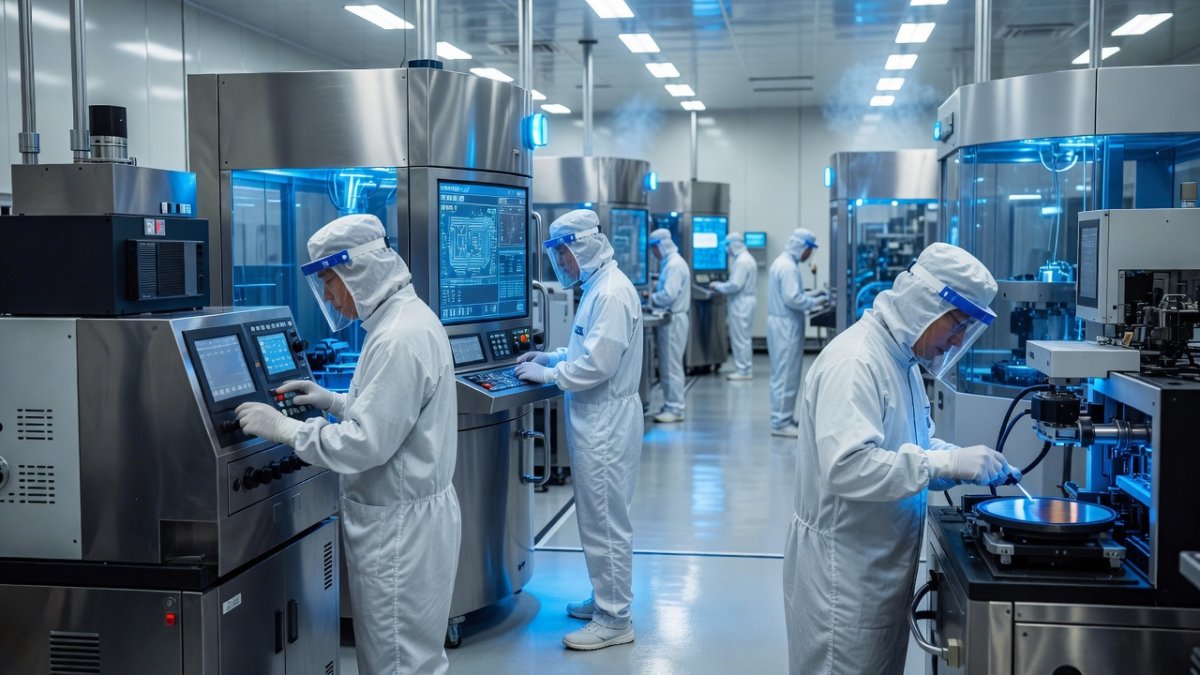
The term Silicon Collar denotes engineers, process technicians, and AI specialists working in semiconductor fabrication, advanced packaging, and machine-learning infrastructure. Recent labor-market data indicate that experienced personnel in these fields receive total compensation packages that frequently exceed those offered to mid-career physicians or corporate lawyers. This inversion of traditional professional hierarchies reflects the scarcity of talent capable of operating extreme-ultraviolet lithography tools and designing sub-3-nanometer nodes.
Universities report that graduates with dual expertise in materials science and software engineering command signing bonuses previously reserved for finance professionals. The shift has prompted secondary effects in domestic migration patterns, with talent concentrating in the Seoul–Gyeonggi and Chungcheong semiconductor corridors. These geographic clusters now function as de facto innovation districts whose productivity metrics are monitored by both the Ministry of Trade, Industry and Energy and the Ministry of Science and ICT.
Strategic Technologies and the Premium on Skilled Talent
Korea has designated twelve strategic technologies, including semiconductors, artificial intelligence, hydrogen energy, next-generation nuclear systems, aerospace, and biotechnology. Each domain requires specialized human capital whose training pipelines extend beyond standard university curricula. The government's K-Semiconductor Strategy and K-Network 2030 initiative explicitly link workforce development targets to export and self-sufficiency benchmarks.
Salary premiums in these fields have risen in tandem with global demand for advanced-node capacity. Analysts at the Korea Development Institute note that the marginal productivity of a senior process-integration engineer now exceeds that of equivalent roles in conventional manufacturing by a factor of three to four. This premium is not merely a market signal but constitutes a policy variable that determines whether Korea can meet its 2030 semiconductor output goals amid intensifying competition from Taiwan's TSMC and emerging U.S. facilities supported by the CHIPS and Science Act.
Demographic Headwinds and the Talent Competition
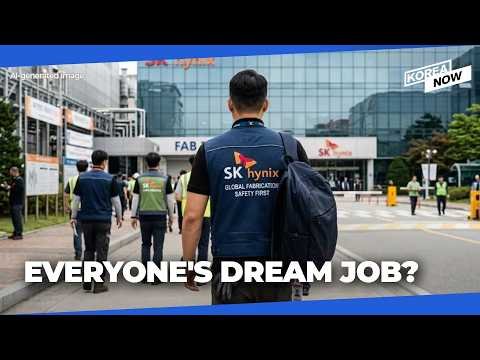
Korea's total fertility rate of 0.72 in 2024 represents the lowest national figure recorded in any developed economy. The resulting contraction of the working-age population directly constrains the domestic supply of engineers and technicians. Projections from the Korea Institute for International Economic Policy indicate that the semiconductor sector alone will face an annual shortfall of several thousand advanced-degree holders by 2030 unless retention and immigration policies are strengthened.
Brain-drain pressures have intensified as U.S. and Japanese firms offer relocation packages that include equity components unavailable under Korean corporate structures. While Korea's education system continues to produce one of the highest proportions of STEM graduates globally, the absolute number of new entrants is declining. Policymakers therefore treat immigration reform and diaspora engagement as integral components of technology sovereignty rather than ancillary labor measures.
Geopolitical Dimensions of Korea's Tech Workforce Strategy
The global semiconductor and AI talent war has elevated workforce policy to the level of national security. Export-control regimes administered by the United States and allied partners restrict the movement of both equipment and personnel with sensitive knowledge. Korean authorities have responded by framing talent retention as a matter of economic security, aligning domestic initiatives with the broader Indo-Pacific technology-cooperation architecture.
Competition with Taiwan, Japan, and China for the same limited pool of specialists creates strategic interdependencies. Taiwanese firms have historically recruited Korean process engineers; Japanese revival efforts under new public–private partnerships now target the same cohort. Chinese state-supported programs offer substantial research budgets that appeal to mid-career researchers. Each of these vectors affects Korea's ability to maintain technological leadership in memory and foundry segments.

Chaebol Competition and Compensation Trends
Samsung Electronics and SK Hynix have institutionalized aggressive talent-acquisition programs that include performance-linked stock options and housing stipends in the Seoul metropolitan area. LG Energy Solution and other affiliates have adopted similar structures for battery and materials engineers. These packages are calibrated against offers from TSMC and leading U.S. design firms, producing a domestic salary escalation that benefits individual workers while raising cost structures for smaller suppliers.
Internal mobility within chaebol groups has also increased, with engineers moving between memory, foundry, and AI accelerator divisions in search of higher compensation and project visibility. The resulting wage dispersion within the broader manufacturing sector has prompted discussions at the Korea Employers Federation about potential spillover effects on inflation and SME competitiveness.
Government Policy and National Competitiveness
Policy instruments deployed by the Ministry of Trade, Industry and Energy and the Ministry of Science and ICT emphasize both supply-side expansion and demand-side incentives. Expanded graduate fellowships, tax credits for corporate R&D personnel, and expedited visa pathways for overseas Korean scientists constitute the core toolkit. Think-tank assessments from the Asan Institute for Policy Studies underscore that these measures must be evaluated not only by enrollment statistics but by retention rates five years after graduation.
National competitiveness metrics increasingly incorporate human-capital indices alongside traditional indicators such as patent filings and capital expenditure. Korea's ranking in global semiconductor talent availability remains high, yet analysts caution that sustained leadership requires continuous policy recalibration in response to U.S. CHIPS Act incentives and Japanese industrial revival programs.
Looking Ahead — Sustaining the Edge
Maintaining the Silicon Collar advantage will require coordinated action across education, immigration, and corporate governance. Without reforms that address housing costs, research autonomy, and spousal employment opportunities, Korea risks accelerated outward migration of its most capable engineers. Conversely, successful integration of targeted immigration and strengthened university–industry linkages could convert demographic constraints into a catalyst for productivity-enhancing innovation.
The trajectory of Korea's Silicon Collar workforce therefore functions as a leading indicator of the country's broader capacity to navigate the intersection of technological change and geopolitical rivalry. Success will be measured not only in export volumes but in the durability of the institutional arrangements that secure advanced human capital for the next decade.
By Prof. David Park, Staff Writer
This article was produced with AI-assisted research and editorial support. Reporting is based on sources cited in the article.
What's Your Reaction?
 Like
0
Like
0
 Dislike
0
Dislike
0
 Love
0
Love
0
 Funny
0
Funny
0
 Wow
0
Wow
0
 Sad
0
Sad
0
 Angry
0
Angry
0

East Asia/Technology Correspondent at Global1.News. Seoul-based voice covering Korean politics, technology, business, and culture. Analyzes how technology and geopolitics intersect across East Asia.















Comments (0)