
South Korean Marines Join KAMANDAG 10, Bolstering Regional Defense Ties
The Republic of Korea Marine Corps has taken part in KAMANDAG 10, the tenth iteration of the Philippine-led multinational exercise running from June 14 to July 1, 2026, across multiple sites on Luzon Island and in Palawan, Tawi-Tawi, Laoag, and Cavite. This participation underscores Seoul's growing role in regional maritime security frameworks that extend beyond the Korean Peni
The Republic of Korea Marine Corps has taken part in KAMANDAG 10, the tenth iteration of the Philippine-led multinational exercise running from June 14 to July 1, 2026, across multiple sites on Luzon Island and in Palawan, Tawi-Tawi, Laoag, and Cavite. This participation underscores Seoul's growing role in regional maritime security frameworks that extend beyond the Korean Peninsula.
South Korean Marines Join KAMANDAG 10, Bolstering Regional Defense Ties
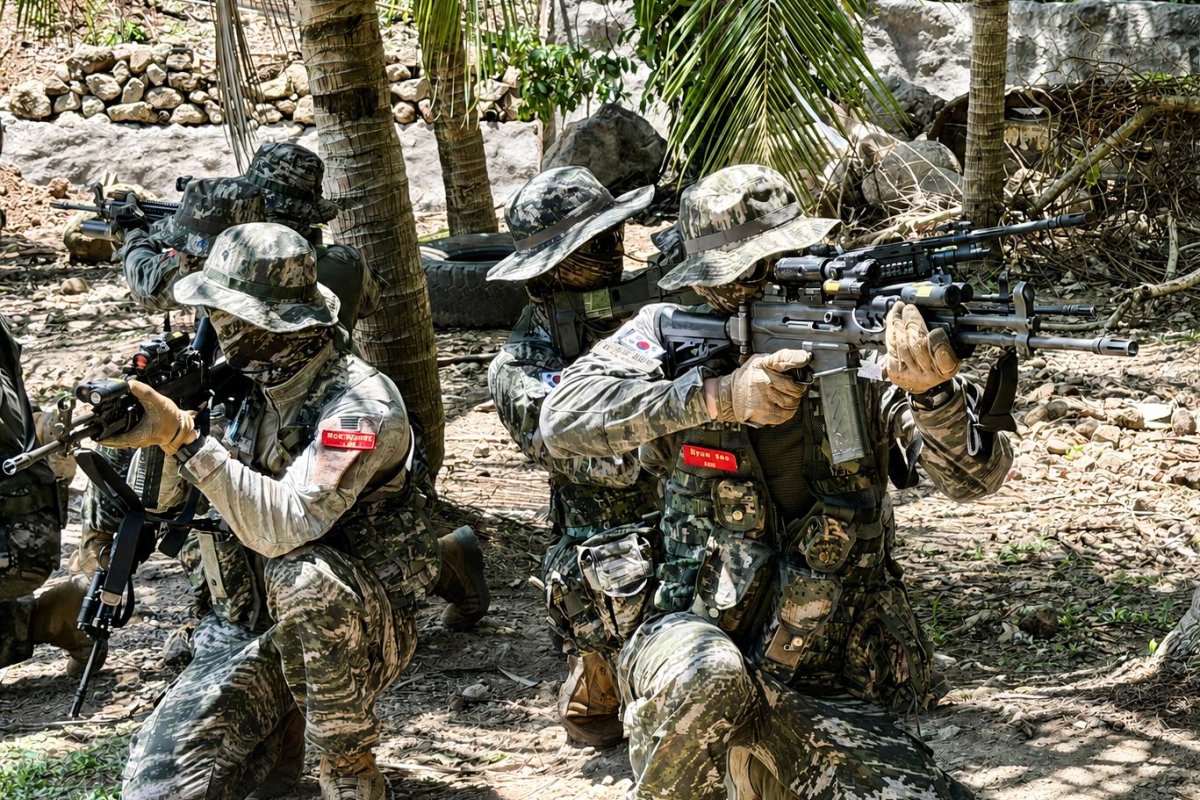
Seoul, South Korea — July 2, 2026 — The Republic of Korea Marine Corps has taken part in KAMANDAG 10, a multinational exercise led by the Philippine Marine Corps and the United States Marine Corps, demonstrating Seoul's deepening commitment to regional security cooperation in the Indo-Pacific. The exercise, which brings together forces from the Philippines, the United States, Japan, and South Korea alongside eight observer nations, represents the most expansive iteration of the annual drill since its inception in 2017.
Understanding KAMANDAG 10 and Its Multinational Scope
KAMANDAG, an acronym derived from the Tagalog phrase "Kaagapay ng mga Mandirigma ng Dagat," translates as "Partnership of the Warriors of the Sea." The exercise has expanded significantly from its origins as a bilateral drill between the United States and the Philippines into a premier multinational platform involving the Philippine Marine Corps as host, the US Marine Corps, the Japan Ground Self-Defense Force, and the Republic of Korea Marine Corps, together with eight additional observer nations.
Training components in the 2026 iteration include amphibious operations, reconnaissance, jungle warfare, live-fire drills, airfield seizure, and humanitarian assistance and disaster response. The schedule places particular emphasis on command-post procedures and interoperability among participating forces, reflecting the growing complexity of multinational coordination in the region.
South Korea's Specific Contributions to the Exercise
The ROK Marine Corps has participated annually since 2022. In 2026, Korean personnel established a joint command-and-control center alongside counterparts from the United States, Japan, and the Philippines to conduct the Command Post Exercise segment. This arrangement allows real-time coordination of multinational forces during simulated amphibious and littoral scenarios, a capability that has direct relevance to the security environment of the Korean Peninsula and beyond.
Korean marines also shared technical expertise on the maintenance and operation of the Korean Amphibious Assault Vehicle (KAAV) with their Filipino counterparts during the exercise. The Philippine Marine Corps received eight KAAVs through a South Korean government donation program in 2016, creating a direct equipment linkage that facilitates knowledge transfer during KAMANDAG. This equipment-level cooperation strengthens the institutional ties between the two marine corps beyond the duration of any single exercise iteration.
The Evolution from Bilateral Drill to Regional Platform
Originally a bilateral event between the United States and the Philippines focused on counterterrorism and coastal defense, KAMANDAG has developed into a broader multinational forum over its decade-long history. The inclusion of Japan beginning in recent years and South Korea's sustained participation since 2022 reflects the Philippines' strategy of diversifying security partnerships while the United States encourages allied contributions to Indo-Pacific stability.
Eight observer nations further widen the exercise's diplomatic reach without requiring full operational integration, creating a tiered participation structure that allows states to gauge their level of engagement over time. This progression mirrors similar trends in other regional exercises where core bilateral ties serve as the foundation for wider multilateral participation.
Geopolitical Context in the South China Sea
KAMANDAG 10 occurs against the backdrop of ongoing territorial disputes between the Philippines and China in the South China Sea. The exercise's focus on amphibious and maritime operations provides participating forces with practical experience relevant to potential contingencies in contested waters, including the South China Sea where the Philippines maintains territorial claims that have been a persistent source of diplomatic friction with Beijing.
The same week as the exercise, Russia and China conducted joint bomber patrols near Japan and South Korea, prompting both nations to scramble fighter aircraft. These parallel developments, reported by the Korea Times on June 30, highlight the interconnected nature of security dynamics across Northeast and Southeast Asia and illustrate how actions in one sub-region can influence threat perceptions and operational planning in another.
Korea's Defense Diplomacy and Strategic Positioning
Seoul's consistent involvement in KAMANDAG since 2022 forms part of a deliberate effort to project defense capabilities beyond the immediate peninsula. By contributing both personnel and equipment knowledge, the ROK Marine Corps demonstrates operational relevance to Southeast Asian partners while reinforcing trilateral coordination among the United States, South Korea, and the Philippines.
This approach aligns with Korea's broader interest in maintaining stable sea lanes and supporting a rules-based maritime order without direct entanglement in territorial claims. For a nation heavily dependent on maritime trade — approximately 99.7 percent of South Korea's international cargo moves by sea — stability in Southeast Asian waters is a strategic imperative that transcends any single bilateral relationship.
Integration with ROK's Broader Military Cooperation Strategy
Participation in KAMANDAG complements existing bilateral arrangements with the United States and growing security dialogues with Japan and Australia. The exercise allows the ROK to test command-and-control procedures in a multinational setting that differs from peninsula-focused drills such as the annual Ulchi Freedom Shield exercises, thereby enhancing operational flexibility across different theaters.
Equipment-level cooperation, particularly the KAAV maintenance program, further embeds South Korea within Philippine defense modernization efforts. This creates sustained institutional linkages that extend beyond single iterations of the exercise and positions Seoul as a reliable partner in Southeast Asian defense capacity-building.
Expert Analysis and Forward-Looking Assessment
From an academic perspective, KAMANDAG 10 illustrates how middle powers like South Korea can leverage niche capabilities — in this case, amphibious vehicle expertise and command-post experience — to gain influence within US-led alliance networks while simultaneously building independent relationships with Southeast Asian partners. The exercise also provides a low-risk environment for testing interoperability that could prove relevant in larger contingencies.
Looking ahead, sustained Korean participation may encourage additional technical exchanges and joint procurement discussions with Southeast Asian partners. At the same time, Seoul must balance these outward engagements with the persistent requirements of deterrence on the Korean Peninsula, ensuring that resources allocated to regional diplomacy do not erode core defensive readiness. The Ministry of National Defense's 2025-2029 Mid-Term Defense Plan, released in late 2024, specifically identifies expanded cooperation with ASEAN member states as a priority, and KAMANDAG participation directly advances that objective.
By Prof. David Park, Staff Writer
This article was produced with AI-assisted research and editorial support. Reporting is based on sources cited in the article.
What's Your Reaction?
 Like
0
Like
0
 Dislike
0
Dislike
0
 Love
0
Love
0
 Funny
0
Funny
0
 Wow
0
Wow
0
 Sad
0
Sad
0
 Angry
0
Angry
0

East Asia/Technology Correspondent at Global1.News. Seoul-based voice covering Korean politics, technology, business, and culture. Analyzes how technology and geopolitics intersect across East Asia.












Comments (0)