
Japan Targets 10 Million AI Robots by 2040
Japan's Ministry of Economy, Trade and Industry has unveiled an ambitious revised AI robotics strategy that calls for the deployment of approximately 10 million AI-equipped robots across 18 industrial and social sectors by 2040. Backed by a 380 billion yen commitment to physical AI development through a consortium of Japan's largest technology companies, the plan represents Tok
Japan's Ministry of Economy, Trade and Industry has unveiled an ambitious revised AI robotics strategy that calls for the deployment of approximately 10 million AI-equipped robots across 18 industrial and social sectors by 2040. Backed by a 380 billion yen commitment to physical AI development through a consortium of Japan's largest technology companies, the plan represents Tokyo's most aggressive bid to establish technological sovereignty in the rapidly evolving field of embodied artificial intelligence.
Japan's AI Robotics Vision
Japan’s Ministry of Economy, Trade and Industry announced its revised AI robotics strategy on June 30, 2026. The plan calls for the deployment of roughly 10 million AI-equipped robots across 18 sectors by 2040. Central to the vision is physical AI, systems capable of autonomous responses to real-world environments rather than scripted tasks.
The strategy aligns with the government’s long-standing Society 5.0 framework, which seeks to integrate digital technologies into every aspect of social infrastructure. METI positions the initiative as a direct response to demographic pressures while strengthening Japan’s position against rapid advances in the United States and China.
The 380 Billion Yen Physical AI Bet
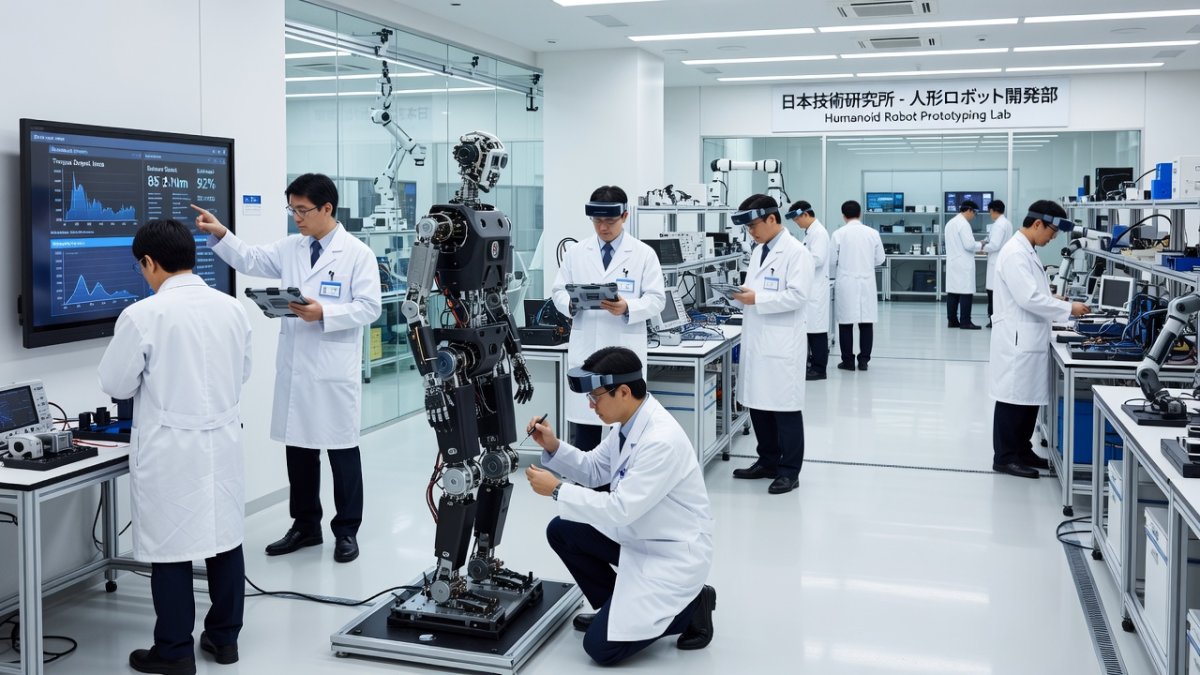
METI has commissioned a 380 billion yen project for fiscal 2026 to Noetra Corp. and the National Institute of Advanced Industrial Science and Technology. Noetra was established by SoftBank Corp., NEC Corp., and Honda Motor Co., with Sony Group Corp. holding a stake. The consortium’s immediate target is a trillion-parameter physical AI foundation model.
Economy, Trade and Industry Minister Akazawa Ryosei stated that accumulated data from elderly healthcare, disaster response, manufacturing, and Fukushima Daiichi decommissioning will give Japan an advantage in training such models. A separate five-year commitment through NEDO totals approximately 1 trillion yen for broader domestic AI development.
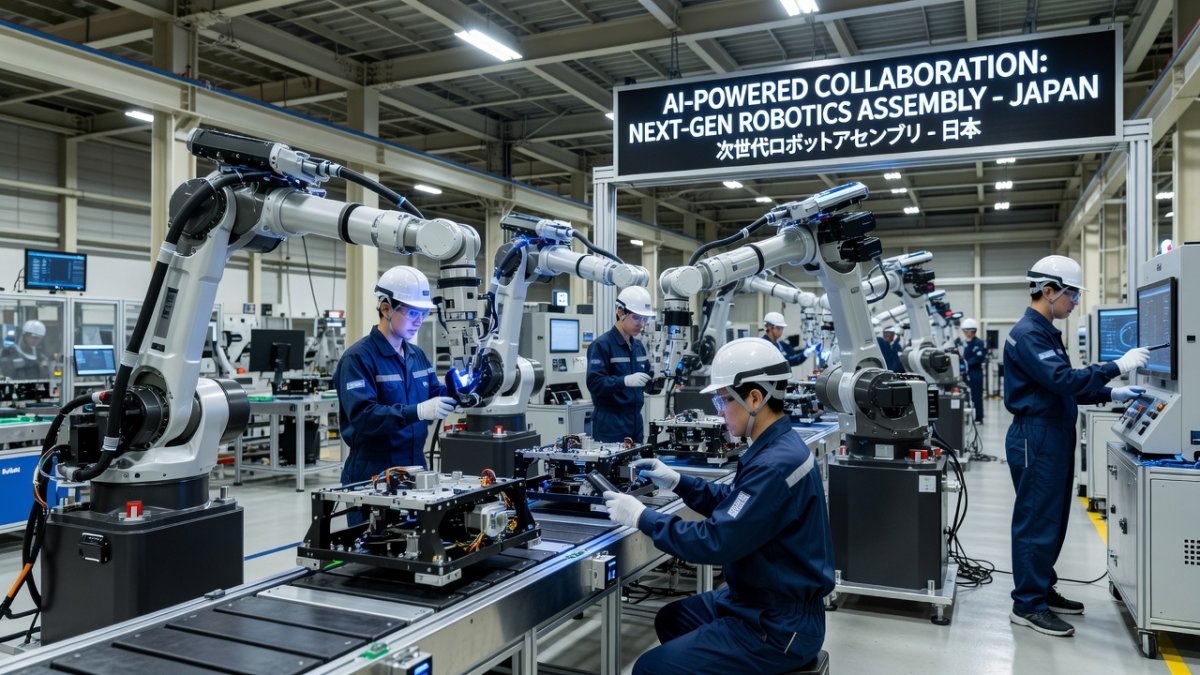
From Data to Deployment: Japan's Industrial Strengths
Five of the world’s ten largest industrial robot manufacturers are Japanese. This installed base provides extensive operational data that foreign competitors lack. METI expects the new physical AI models to leverage these datasets to accelerate deployment in manufacturing, infrastructure maintenance, construction, logistics, and food production.
The approach mirrors earlier national technology programs that combined public research institutes with corporate partners. By channeling data from existing robot fleets into foundation models, Japan aims to shorten the time from laboratory prototype to field application.
Addressing the Labor Crisis Through Automation
Japan’s working-age population continues to shrink due to low birth rates and increased longevity. The strategy explicitly targets sectors facing acute shortages: healthcare, caregiving, defense, and disaster response. Officials argue that physical AI can maintain output levels without requiring large-scale immigration or extended working hours.
Early pilot projects in Fukushima decommissioning have already demonstrated robots performing tasks in high-radiation zones. METI intends to scale similar applications to infrastructure inspection and caregiving facilities nationwide by the early 2030s.
Broader Technology Deployment: AI in Bear Management and Beyond
Japan is already applying AI and robotics to immediate social challenges outside factories. In Showa Village, Fukushima, NTT Docomo’s image analysis system achieves 99.9 percent accuracy in detecting bears. KDDI SmartDrone operates remotely controlled drones in Shintotsukawa, Hokkaido, while Hyke Inc.’s AIBeS system in Gifu Prefecture automatically deploys repellent spray.
The NHK video “New methods as Japan fights bears” (https://www.youtube.com/watch?v=9AO906beJSs) documents these field deployments, illustrating how the same physical AI principles outlined in the METI strategy are being tested in rural environments. These projects supply additional real-world data that can refine models for more complex tasks.
Implications for Asia Pacific
The strategy positions Japan as a standards-setter for physical AI in aging societies across the region. Southeast Asian nations facing similar demographic transitions may adopt Japanese platforms rather than U.S. or Chinese alternatives. METI has signaled openness to international collaboration on safety and interoperability standards.
At the same time, the trillion-parameter target places Japan in direct competition with major U.S. and Chinese foundation-model developers. Success will depend on sustained funding, talent retention, and the ability to convert industrial data into reliable autonomous behavior.
What to Watch For
Key milestones include the first public demonstrations of the trillion-parameter model expected in 2028 and initial commercial deployments in manufacturing and caregiving by 2032. Progress on data-sharing frameworks between Noetra, AIST, and private operators will determine how quickly additional sectors can be integrated.
Market projections show the Japanese physical AI sector growing from approximately $307 million in 2025 to $6.76 billion by 2035. Observers will monitor whether regulatory updates on robot safety and liability keep pace with technical capabilities.
By Kenji Tanaka, Staff Writer
This article was produced with AI-assisted research and editorial support. Reporting is based on sources cited in the article.
What's Your Reaction?
 Like
0
Like
0
 Dislike
0
Dislike
0
 Love
0
Love
0
 Funny
0
Funny
0
 Wow
0
Wow
0
 Sad
0
Sad
0
 Angry
0
Angry
0

Japan Correspondent at Global1.News. Tokyo-based voice covering Japanese politics, technology, economy, and culture. Tracks the intersection of tradition and innovation in one of the world's most dynamic societies.














Comments (0)