
South Korea Commands RIMPAC 2026 Maritime Forces for First Time
The departure of the 8,200-ton Sejong the Great-class Aegis destroyer ROKS Jeongjo the Great from Jeju Naval Base on June 1, 2026, for the Rim of the Pacific exercise represents a notable evolution in South Korea’s participation in multinational maritime training. Commissioned in December 2024, the vessel is undertaking its first RIMPAC deployment while South Korea assumes the
The departure of the 8,200-ton Sejong the Great-class Aegis destroyer ROKS Jeongjo the Great from Jeju Naval Base on June 1, 2026, for the Rim of the Pacific exercise represents a notable evolution in South Korea’s participation in multinational maritime training. Commissioned in December 2024, the vessel is undertaking its first RIMPAC deployment while South Korea assumes the Combined Naval Component Command role for the first time in the exercise’s history. This development occurs against the backdrop of ongoing adjustments in the U.S.-ROK alliance and deepening security linkages across Northeast Asia.
South Korea Assumes Historic Command Role at RIMPAC 2026
SEOUL, South Korea – June 8, 2026 — The ROKS Jeongjo the Great left Jeju Naval Base on June 1, 2026, bound for waters around Hawaii where RIMPAC 2026 will run from June 24 to July 31. The deployment includes the 3,000-ton submarine ROKS Dosan Ahn Chang-ho on its first RIMPAC, a P-8A Poseidon aircraft also making its debut, approximately 700 personnel, AW-159 helicopters, and six KAAVs. South Korea’s 19th appearance since joining in 1990 places the Republic of Korea Navy in the position of Combined Naval Component Command commander, a responsibility elevated from the deputy role it held in 2024.
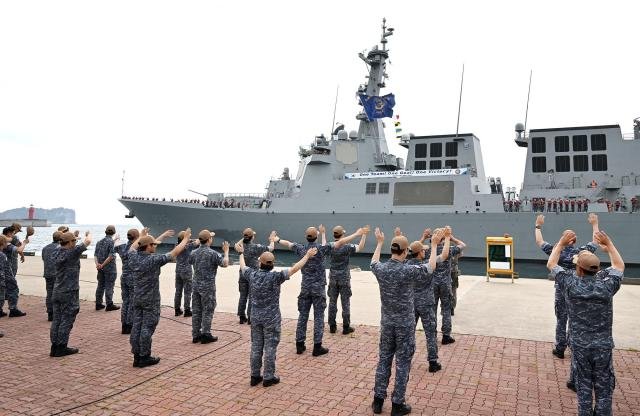
The Deployment of ROKS Jeongjo the Great
The 8,200-ton destroyer forms the centerpiece of South Korea’s contribution. As the newest Sejong the Great-class Aegis platform, it brings advanced air-defense and command capabilities to an exercise that will involve 31 nations, roughly 25,000 personnel, 40 ships, five submarines, and 140 aircraft. The accompanying assets, including the Dosan Ahn Chang-ho submarine and P-8A maritime patrol aircraft, extend South Korea’s reach across multiple domains for the first time in this particular exercise cycle.
These platforms are scheduled to operate within a broader framework focused on securing sea lines of communication and practicing multinational coordination. The Republic of Korea Navy has emphasized that the scale of participation allows crews to rehearse combined operational plans under realistic conditions, directly supporting Seoul’s long-term defense objectives in the region.
A Historic Command Milestone
The U.S. 3rd Fleet announcement on April 29, 2026, confirmed South Korea’s elevation to Combined Naval Component Command commander. This marks the first occasion in 55 years that the Republic of Korea has held this position. Canada will direct air forces while Japan retains its traditional deputy role, reflecting a deliberate distribution of leadership responsibilities among close allies.
USFK Commander Gen. Xavier Brunson described the arrangement as evidence that regional joint exercises have moved beyond symbolism. He noted that South Korea’s command role demonstrates the practical implementation of South Korea-U.S.-Japan security cooperation. The shift also aligns with Washington’s interest in enabling U.S. forces to operate more flexibly across the wider Indo-Pacific while South Korea maintains a robust posture on the peninsula.
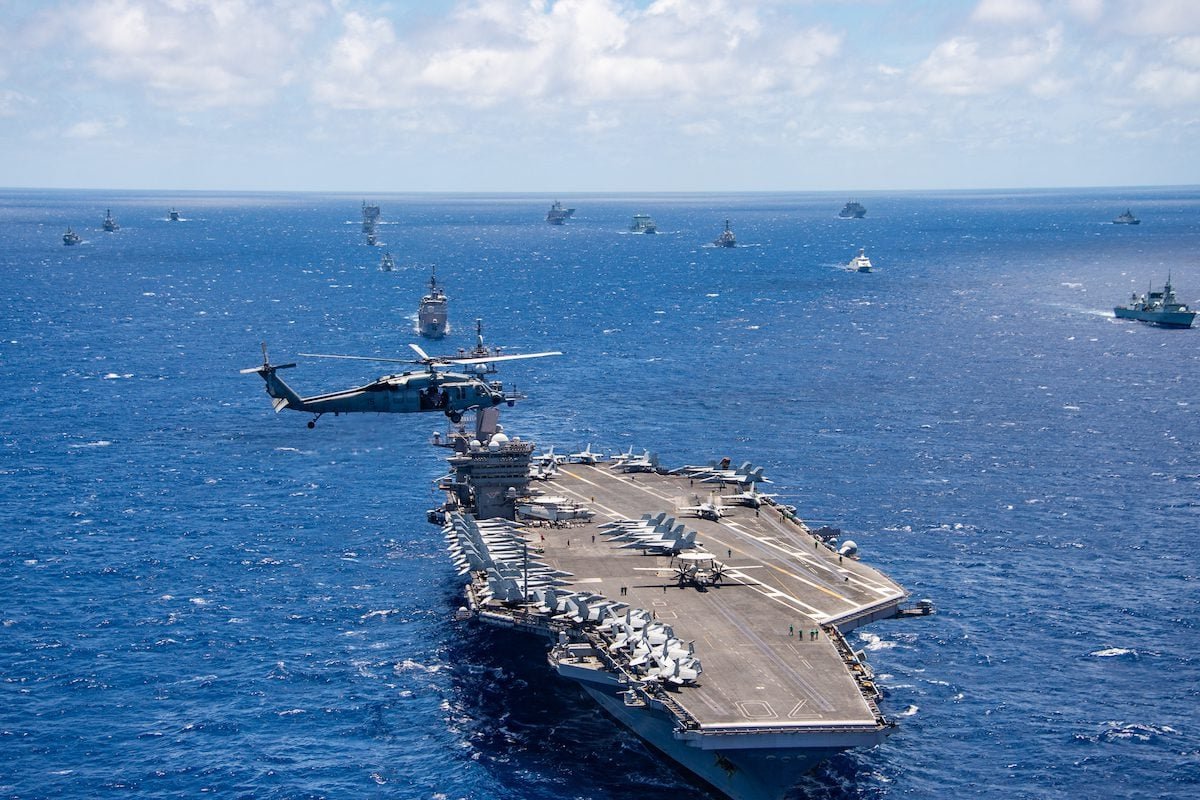
RIMPAC 2026: Scale and Objectives
Launched in 1971, RIMPAC remains the world’s largest multinational maritime exercise. The 2026 iteration will emphasize interoperability among diverse naval forces operating across vast distances. South Korea’s expanded responsibilities this year include coordinating surface and subsurface assets from multiple nations during scenarios centered on sea-lane protection.
Participation at this level provides concrete opportunities to test command-and-control procedures that would be required in any future contingency. The inclusion of new platforms such as the Jeongjo the Great and the Dosan Ahn Chang-ho allows the ROK Navy to validate systems integration under multinational conditions that are difficult to replicate in smaller bilateral drills.
Strengthening Trilateral Security Cooperation
Gen. Brunson’s remarks underscore that the exercise serves as a venue for operationalizing trilateral coordination without requiring South Korean deployments beyond the immediate region. The Republic of Korea’s command responsibilities therefore function as a practical demonstration of alliance burden-sharing while preserving focus on peninsular defense.
Japan’s continued presence in the deputy role alongside South Korea’s new command position illustrates the maturing framework of U.S.-ROK-Japan cooperation. This arrangement allows each participant to exercise leadership functions that complement rather than duplicate existing capabilities, contributing to a more resilient maritime security architecture in Northeast Asia.
Implications for Wartime OPCON Transfer
The ROK Navy has stated that RIMPAC 2026 offers a valuable opportunity to strengthen combined naval operation plans at a moment when Seoul continues to pursue the transfer of wartime operational control from the United States. Command experience gained during the exercise directly supports the development of the planning and execution skills required for OPCON transition.
Policy analysts note that repeated leadership roles in large-scale exercises help build the institutional confidence necessary for eventual OPCON handover. South Korea’s performance as Combined Naval Component Command commander will be closely observed by both alliance partners and regional observers as an indicator of readiness milestones.
Regional Dynamics and North Korea-Russia Ties
The exercise unfolds against a backdrop of deepening North Korea-Russia military cooperation and China’s continued naval expansion across the Indo-Pacific. These developments have prompted Seoul to diversify its maritime engagement while reinforcing core alliance commitments. RIMPAC participation serves as one visible element of that broader strategy.
Yoo Ji-hoon, a research fellow at the Korea Institute for Defense Analyses and former ROK Navy lieutenant commander, observed that South Korea’s assumption of direct command responsibilities signifies its growing role as a responsible contributor to Indo-Pacific maritime security cooperation. This assessment reflects the view that operational leadership in multinational settings carries implications extending beyond the exercise itself.
Looking Ahead
Future iterations of RIMPAC are expected to build on the command arrangements established in 2026. South Korea’s experience this year will inform subsequent planning for both bilateral and trilateral activities, particularly as the OPCON transfer process advances. Continued emphasis on combined operational proficiency remains central to alliance adaptation in a changing regional environment.
By Prof. David Park, Staff Writer
This article was produced with AI-assisted research and editorial support. Reporting is based on sources cited in the article.
What's Your Reaction?
 Like
0
Like
0
 Dislike
0
Dislike
0
 Love
0
Love
0
 Funny
0
Funny
0
 Wow
0
Wow
0
 Sad
0
Sad
0
 Angry
0
Angry
0

East Asia/Technology Correspondent at Global1.News. Seoul-based voice covering Korean politics, technology, business, and culture. Analyzes how technology and geopolitics intersect across East Asia.















Comments (0)