
Ontario Wildfires Devastate Remote Lodges and First Nations Amid Funding Shortfalls
As wildfires tear through northern Ontario this season, remote lodge owners are being forced to battle infernos with little more than buckets of water while entire First Nations communities vanish in the flames, exposing dangerous gaps in provincial emergency response.
As wildfires tear through northern Ontario this season, remote lodge owners are being forced to battle infernos with little more than buckets of water while entire First Nations communities vanish in the flames, exposing dangerous gaps in provincial emergency response.
Ontario Wildfires Devastate Remote Lodges and First Nations Amid Funding Shortfalls
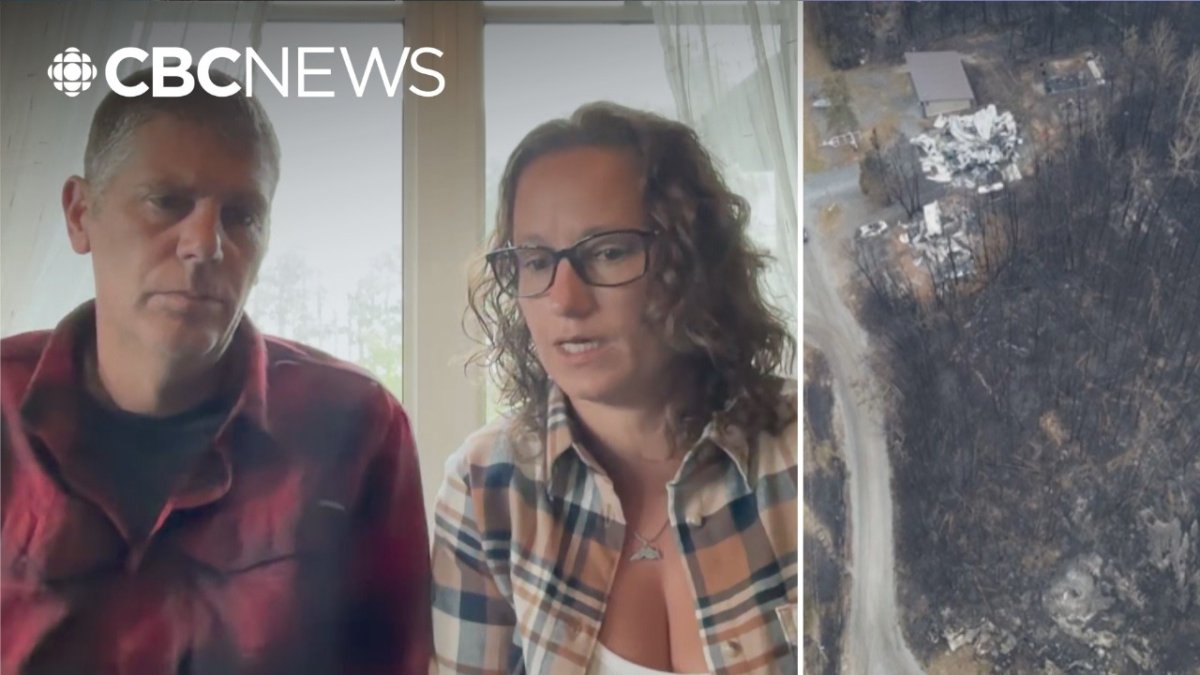
Upsala, Ontario — This week — Kevin and Jenny Vanderhooft, owners of a remote tourist lodge, say they were abandoned to fight for their family business and home with nothing but buckets of water as wildfires raged around them.
Lodge Owners Face Flames Without Assistance
Kevin and Jenny Vanderhooft, owners of Open Bay Lodge located approximately 160 kilometres northwest of Thunder Bay, evacuated their guests before spending hours fighting the advancing wildfire with buckets of water. The couple stated that no emergency personnel reached the site as flames destroyed both their family business and their residence on the property.
The Vanderhoofts' account highlights the isolation of remote tourism operations in northwestern Ontario during the current fire season. Their lodge sat in an area where access roads limited rapid response from provincial firefighting teams based farther south.
Volunteer fire departments in remote northwestern Ontario operate with minimal equipment and rely heavily on local residents who balance firefighting duties with full-time jobs in tourism or resource industries. In areas like Upsala, these teams often lack the specialised training or aerial support available to provincial crews, leaving properties vulnerable when access routes become impassable. The geography compounds these challenges: Upsala sits amid a network of small lakes and winding gravel roads more than 160 kilometres from Thunder Bay, where the nearest permanent fire base is located, forcing any response to navigate narrow corridors prone to rapid fire spread.
The Vanderhoofts lost not only their physical structures but the core of their livelihood, including Open Bay Lodge's capacity to host seasonal anglers and hunters who provided steady summer revenue and employed several local workers each year. This represented a lifetime investment built over decades, now reduced to ash alongside personal belongings accumulated through generations of family operation. Witnesses described the couple standing helplessly as flames engulfed the main lodge building and outbuildings, an emotional devastation that extended beyond financial loss to the erasure of their identity tied to the land and community they had served for years.
Collins First Nation Infrastructure Destroyed
Collins First Nation experienced complete devastation when the wildfire swept through the community. Residents required evacuation by boat after the fire eliminated housing, community buildings, and essential infrastructure.
Sol Mamakwa, the Indigenous MPP for Kiiwetinoong, stated that an entire First Nations community has been erased because of this disaster. The Assembly of First Nations has called on the federal government to provide immediate support to Collins First Nation for recovery efforts.
Wildfire Scale Across Northern Ontario
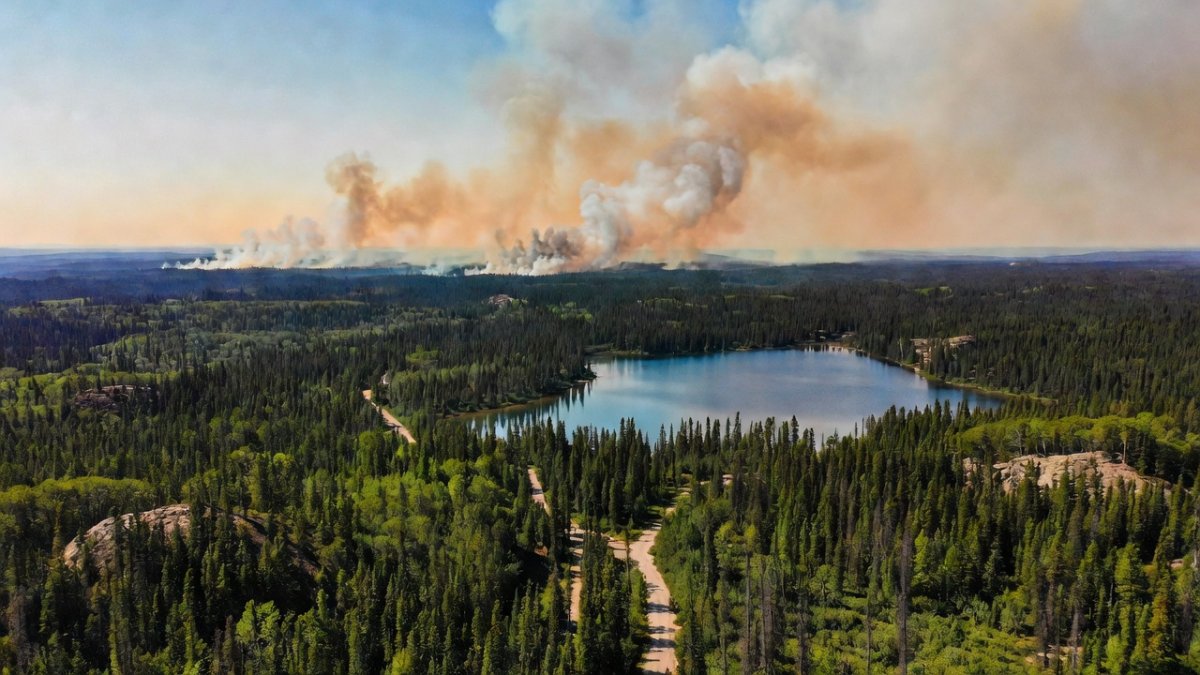
Nearly 200 forest fires burned across northern Ontario as of this week, with approximately 148 active wildfires concentrated in the northwestern region alone. Ontario has recorded 1.9 million hectares burned across Canada since the start of 2026.
Highway closures have restricted travel on multiple northern Ontario routes. Fifteen or more communities have issued evacuation orders, displacing over 1,500 people from their homes and businesses.
Highway 17 between Thunder Bay and Kenora, Highway 11 north of Nipigon, and Highway 599 leading to remote outposts have all faced extended closures due to fire activity and smoke, stranding commercial traffic and isolating supply chains for weeks. These routes serve as critical lifelines for northern economies, and their disruption has halted logging operations and delayed essential goods deliveries to fly-in communities. Weather patterns driving the crisis include prolonged drought conditions combined with lightning strikes and sustained high winds exceeding 40 kilometres per hour, creating ideal conditions for rapid fire growth across tinder-dry boreal forests.
This season echoes the severity of 2023 and 2025, both of which saw record hectares burned and forced similar mass evacuations, yet 2026 has already surpassed early benchmarks with fires exhibiting more erratic behaviour due to climate-driven fuel dryness. In Thunder Bay, the influx of evacuees has strained local hotels and services while grounding numerous flights at the regional airport because of reduced visibility from drifting smoke plumes. Local businesses report sharp declines in tourism bookings as visitors cancel trips amid health concerns and travel restrictions.
Provincial Budget Reductions Draw Criticism
Ontario allocated $150 million for wildfire fighting in 2026, a reduction from the $271 million budgeted in 2025. The Ontario Liberal Party has criticised Premier Doug Ford's government for the decreased funding level during an active fire season.
Premier Doug Ford visited Thunder Bay on Friday to meet with evacuees and defended the province's funding decisions. Natural Resources Minister Mike Harris accompanied Ford during the Thunder Bay meetings.
The Ford government's decision to slash wildfire funding from $271 million in 2025 to $150 million in 2026 has drawn sharp rebukes from opposition parties, with Ontario NDP leader Marit Stiles labelling the cuts "reckless endangerment" of northern communities during peak fire risk. Liberal critics have pointed to data showing that reduced allocations forced the cancellation of planned helicopter contracts and delayed equipment upgrades, arguing these choices directly contributed to slower initial attack times on remote blazes. Historical trends reveal Ontario's firefighting budget has fluctuated significantly, averaging around $220 million annually from 2021 to 2024 before the sharp 2026 drop, reflecting a pattern of reactive rather than sustained investment.
Premier Ford has defended the allocation by insisting the province would "exceed any budget if conditions demand it," citing contingency reserves and interprovincial mutual aid agreements as safeguards. He emphasised during the Thunder Bay visit that past years demonstrated the ability to scale resources dynamically without overcommitting fixed funds upfront. However, analysts note that such flexibility has proven inconsistent, particularly when multiple large fires ignite simultaneously across vast northern territories.
Ontario Requests Federal Support
Ontario has formally requested federal assistance from Ottawa to address the expanding wildfire situation. The request follows the scale of evacuations and the destruction reported in multiple northern communities.
Federal-provincial coordination remains central to the response, particularly as smoke from the fires has reached Toronto and southern Ontario, triggering air quality warnings for residents in those regions.
Ontario's formal request to Ottawa includes deployment of Canadian Armed Forces personnel for ground support, additional water bombers, and specialised heavy equipment such as bulldozers for creating firebreaks in inaccessible terrain. Prime Minister Mark Carney has indicated willingness to assist but stressed the need for coordinated assessments before committing resources, noting that federal assets remain stretched across multiple provinces facing concurrent emergencies. Under existing federal disaster assistance programs, provinces can access cost-sharing for eligible expenses once a formal request is approved, though reimbursement often occurs months or years later and covers only a portion of total damages.
These developments highlight broader implications for Canadian climate adaptation, as repeated reliance on federal intervention underscores gaps in provincial preparedness for intensifying fire regimes. Experts advocate for increased investment in proactive measures like expanded prescribed burns and community-based resilience planning to reduce future dependence on emergency aid. Without systemic changes, remote regions risk ongoing cycles of destruction and costly recovery.
Implications for Remote Tourism and Indigenous Communities
The destruction of Open Bay Lodge illustrates the direct economic pressure on northern Ontario's tourism sector when firefighting resources cannot reach isolated properties in time. Similar risks affect other lodges and outposts that rely on seasonal visitors for revenue.
Indigenous communities such as Collins First Nation face long-term displacement and loss of cultural sites when entire settlements are wiped out. The combination of reduced provincial budgets and stretched federal resources raises questions about preparedness for future fire seasons in remote areas.
Smoke Effects Reach Southern Ontario
Wildfire smoke has travelled south, producing air quality warnings in Toronto and surrounding areas. Residents in southern Ontario have experienced reduced visibility and health advisories tied directly to the northern fires.
These conditions demonstrate how northern disasters affect the broader Canadian population through atmospheric transport of particulates across provincial boundaries.
By Alex Thompson, Staff Writer
This article was produced with AI-assisted research and editorial support. Reporting is based on sources cited in the article.
What's Your Reaction?
 Like
0
Like
0
 Dislike
0
Dislike
0
 Love
0
Love
0
 Funny
0
Funny
0
 Wow
0
Wow
0
 Sad
0
Sad
0
 Angry
0
Angry
0

Canada Correspondent at Global1.News. Based in Toronto, covering Canadian politics, energy, trade, and US-Canada relations. Provides the Canadian perspective on North American and global affairs.















Comments (0)