
Kuwait PM Visits Injured After Iranian Missile Attacks
Kuwait’s Prime Minister Sheikh Ahmad Abdullah al-Ahmad al-Sabah visited injured civilians and military personnel at Al-Adan Hospital following Iranian missile and drone strikes on the emirate. The visits occurred as Kuwaiti forces continued to intercept Iranian projectiles aimed at critical infrastructure. The current crisis echoes Kuwait’s traumatic experience during the 1990 Iraqi invasion, when Saddam Hussein’s forces occupied the emirate for seven months before a U.S.-led
Kuwait’s Air Defenses Engage Iranian Attacks
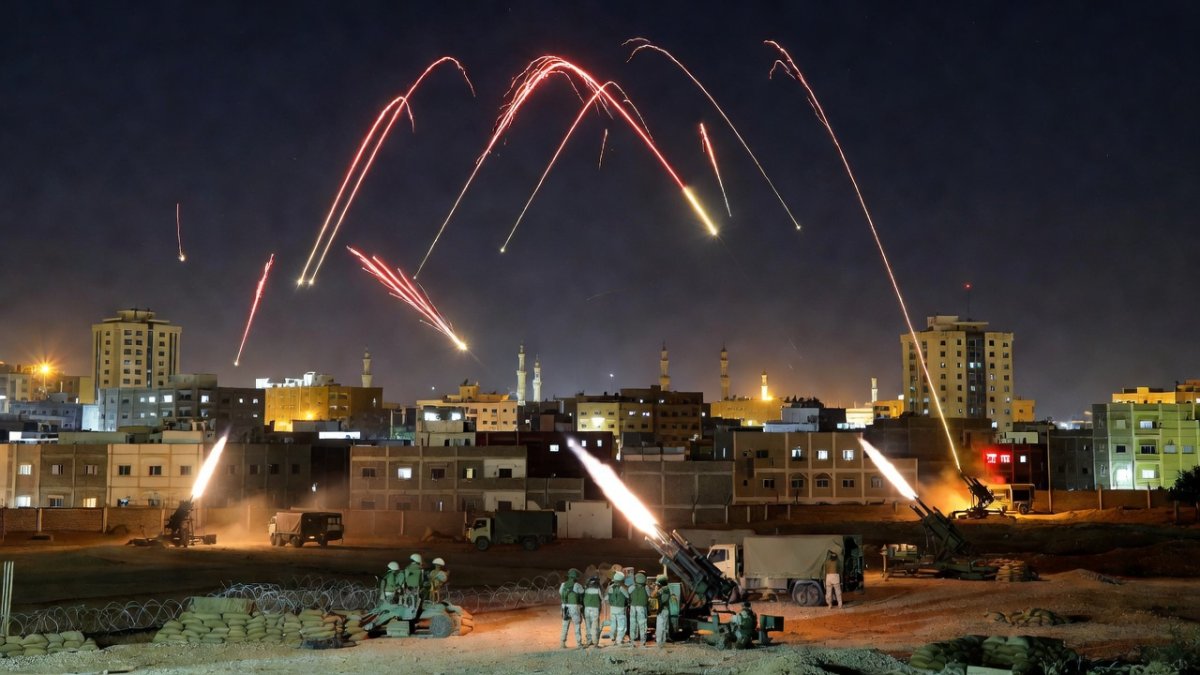
Kuwait intercepted four cruise missiles and 21 drones on July 15, 2026. Two days later, on July 17, Kuwaiti forces shot down 32 additional hostile drones. These interceptions prevented further damage to populated areas and military sites.

The Kuwaiti armed forces remain on high alert following the sustained Iranian barrages. Military facilities sustained hits that wounded Kuwaiti personnel, prompting rapid medical evacuations to Al-Adan Hospital.
Kuwait’s air defense performance draws on lessons from the 1990-1991 Gulf War, when Patriot batteries first demonstrated the value of layered missile defense against Iraqi Scuds. Today’s intercepts reflect decades of incremental upgrades funded by oil revenues and U.S. security assistance. The 2019 Abqaiq attacks on Saudi Arabia, widely attributed to Iran or its proxies, underscored the vulnerability of Gulf energy infrastructure to low-cost drone swarms, prompting accelerated procurement of systems now proving their worth over Kuwaiti skies. The economic stakes extend beyond immediate repair bills. Sustained threats to Kuwaiti territory could raise insurance premiums for energy projects and complicate foreign investment decisions tied to the emirate’s sovereign wealth fund. Energy security analysts note that even temporary outages at power and water facilities ripple through petrochemical supply chains, affecting global pricing at a moment when markets remain jittery over Hormuz transit risks. GCC defense coordination has intensified in response. Joint radar data-sharing and early-warning protocols, long discussed but unevenly implemented, are gaining urgency as Saudi Arabia and the UAE weigh their own exposure to Iranian retaliation. Turkey has positioned itself as a potential interlocutor, offering Ankara’s growing drone and air-defense expertise to interested Gulf capitals wary of over-reliance on Washington. U.S. and Iranian strategic calculations remain tightly coupled to the nuclear file. Washington seeks verifiable limits on Tehran’s enrichment capacity, while Iran views its missile and proxy capabilities as essential leverage to deter strikes on nuclear sites. Each round of direct exchanges raises the threshold for miscalculation, particularly if either side believes the other is approaching a decisive red line.Damage to Power and Water Infrastructure
Iranian strikes hit a power generation plant and a water desalination facility, igniting fires and damaging multiple generators. Kuwait’s government confirmed extensive damage to these sites, which supply electricity and drinking water to large parts of the population.
The Kuwaiti Ministry of Foreign Affairs condemned the attacks on civilian infrastructure. Restoration efforts are underway, though full repairs to the affected generators are expected to take weeks.
The targeting of desalination plants revives memories of the 1990-1991 conflict, when retreating Iraqi forces deliberately sabotaged Kuwait’s water infrastructure, creating a humanitarian emergency that required months to resolve. Iran’s current actions, while less comprehensive, signal a willingness to impose similar civilian costs to raise the political price of alignment with Washington. The 2020 killing of Qasem Soleimani and subsequent Iranian missile response against U.S. bases in Iraq established a precedent for calibrated, infrastructure-focused retaliation that avoids all-out war. Kuwait’s $700 billion-plus sovereign wealth fund provides a financial buffer, yet repeated strikes on energy-adjacent facilities could erode investor confidence and accelerate capital flight toward more stable jurisdictions. Global oil markets price in Hormuz disruption risks almost immediately; any perception that Kuwaiti production or export infrastructure is at risk contributes to volatility that benefits neither producers nor consumers. Within the GCC, the attacks have accelerated quiet discussions on pooled missile-defense procurement and shared early-warning satellites. The UAE’s normalization with Israel has introduced new intelligence and technology channels that some Gulf states privately view as useful supplements to traditional U.S. partnerships, even as Saudi-Iran tensions continue to shape threat perceptions across the peninsula. For Washington, protecting Kuwaiti infrastructure serves both alliance credibility and the broader goal of preventing Iran from normalizing attacks on energy nodes. Tehran, for its part, calculates that demonstrating reach against U.S. partners without crossing into direct confrontation with American forces preserves escalation dominance while nuclear negotiations remain frozen.US Airstrikes and Escalation Timeline
The current round of direct confrontation began after an Iranian attack killed two US service members in Jordan. The United States has since conducted eight consecutive nights of airstrikes against Iranian targets. This marks the most serious direct military exchanges between Washington and Tehran since 2020.
Iran has also struck targets in Bahrain and Jordan during the same period. These coordinated actions have drawn multiple Gulf states into the active conflict zone.
The Jordan incident and subsequent U.S. response parallel the January 2020 Soleimani strike and Iran’s retaliatory missile barrage against Al-Asad airbase. Both episodes illustrate the persistent risk that proxy or militia actions can rapidly escalate into direct state-on-state exchanges. The 2019 Abqaiq precedent further demonstrated Iran’s preference for deniable or calibrated strikes on energy targets when it seeks to impose costs without triggering overwhelming retaliation. Economically, sustained U.S.-Iran exchanges threaten to push oil prices higher at a time when global inventories remain tight. Kuwait’s sovereign wealth fund, heavily exposed to energy-linked assets, faces mark-to-market pressure even if physical production is only modestly affected. The Strait of Hormuz remains the ultimate chokepoint; any Iranian mining, boarding, or missile activity there would immediately affect insurance rates and tanker routing decisions worldwide. Regionally, the involvement of Bahrain and Jordan highlights the expanding geography of the shadow war. Saudi Arabia watches warily, balancing its own de-escalation talks with Iran against the need to maintain credible deterrence. Turkey has offered mediation while quietly expanding defense sales, seeking to capitalize on Gulf states’ desire for diversified security suppliers beyond Washington and Moscow. Both Washington and Tehran understand the nuclear dimension looming over every exchange. The United States seeks to re-establish deterrence without derailing any remaining diplomatic off-ramps, while Iran uses missile and proxy pressure to signal that further nuclear restrictions will carry unacceptable costs for U.S. regional partners.Iran’s Pressure on the Strait of Hormuz
Iran claims to have stopped two ships transiting the Strait of Hormuz. Such interference directly threatens the passage of roughly one-fifth of global oil trade that moves through the narrow waterway daily.
By targeting both Kuwaiti infrastructure and Hormuz shipping, Iran seeks to raise the economic and security costs for US-aligned Gulf states. The strategy aims to complicate American military planning and strain regional energy markets.
Iran’s Hormuz threats revive tactics employed during the 1980s Tanker War, when Tehran mined waters and attacked shipping to internationalize the Iran-Iraq conflict. The 1990 Iraqi occupation of Kuwait similarly demonstrated how control or disruption of Gulf waterways can hold global energy markets hostage. Today’s actions occur against the backdrop of the 2019 Abqaiq attacks, which briefly removed significant Saudi output and reminded markets of the region’s fragility. Kuwait’s sovereign wealth fund managers monitor Hormuz developments closely; even temporary closures or insurance spikes can reduce the value of energy-linked holdings and complicate fiscal planning. Energy security for the entire GCC depends on the continued free flow of hydrocarbons, making any Iranian move against the strait a direct challenge to the economic model that has sustained Gulf monarchies since the 1970s. GCC states have quietly expanded coordination with U.S. naval assets while exploring additional missile-defense acquisitions. The UAE’s normalization with Israel has opened channels for intelligence cooperation that some officials believe could help detect Iranian maritime preparations earlier. Turkey, meanwhile, has floated proposals for regional maritime security arrangements that would give Ankara a seat at the table. Washington’s core interest remains preventing Iran from acquiring nuclear weapons while preserving freedom of navigation. Tehran’s calculus centers on demonstrating that any attempt to constrain its nuclear program will trigger unacceptable economic pain for U.S. partners through the Hormuz chokepoint.Kuwait’s Position as a US Ally Under Pressure
Kuwait maintains longstanding defense ties with the United States, including hosting US forces and participating in joint exercises. Iranian targeting of Kuwaiti territory tests the limits of this alliance and the willingness of Washington to extend protection to Gulf partners.
Second-order effects include heightened coordination among GCC states on air defense and early-warning systems. Kuwait’s experience may accelerate joint procurement of missile interceptors and shared radar coverage across the peninsula.
Kuwait’s security relationship with Washington was forged in the 1990-1991 Gulf War and reinforced after the 2003 Iraq invasion. The current Iranian pressure tests whether that commitment extends to defending critical civilian infrastructure against missile and drone campaigns. The 2020 Soleimani episode already showed the risks of rapid escalation when U.S. and Iranian forces operate in close proximity. Economically, Kuwait’s sovereign wealth fund provides resilience, yet repeated attacks on power and water assets could force difficult choices between reconstruction spending and maintaining fiscal buffers. Energy security concerns now extend beyond oil exports to the domestic electricity and desalination grid that underpins social stability. Within the GCC, Kuwait’s experience is prompting accelerated discussions on collective defense procurement, potentially including systems Israel has tested in its own shadow war with Iran. Saudi Arabia and the UAE remain central players, while Turkey seeks to position itself as an alternative supplier of drones and air-defense technology. U.S. planners must weigh the benefits of robust defense of partners against the risk of being drawn into a wider conflict that could jeopardize nuclear diplomacy. Iran, for its part, calculates that calibrated pressure on Kuwait and other U.S. allies can extract concessions without crossing Washington’s ultimate red lines.Strategic Calculus and Regional Outlook
Iran gains short-term leverage by demonstrating reach against US partners while avoiding direct strikes on American bases. The attacks on desalination and power facilities impose immediate humanitarian and economic burdens that could pressure Kuwaiti decision-makers.
Over the longer term, sustained threats to Hormuz shipping risk drawing additional naval assets from the US Fifth Fleet and allied partners into the waterway. Kuwait’s measured public response, focused on defense and condemnation rather than retaliation, reflects its narrow margin for maneuver between Iranian pressure and American expectations.
The present confrontation revives patterns established during the Iran-Iraq War and reinforced by the 2019 Abqaiq attacks and 2020 Soleimani crisis. Each side seeks to impose costs on the other’s partners while preserving escalation control. Kuwait’s position, geographically exposed yet financially strong thanks to its sovereign wealth fund, illustrates the difficult trade-offs facing smaller Gulf states. Energy markets will continue to price Hormuz risks into every barrel, affecting not only Kuwait but global consumers. Regional dynamics, including Saudi-Iran competition, UAE-Israel ties, and Turkish maneuvering, will shape whether the current round produces lasting shifts in GCC defense architecture or merely another cycle of tension and temporary de-escalation. By Malik Hassan, Staff WriterThis article was produced with AI-assisted research and editorial support. Reporting is based on sources cited in the article.
What's Your Reaction?
 Like
0
Like
0
 Dislike
0
Dislike
0
 Love
0
Love
0
 Funny
0
Funny
0
 Wow
0
Wow
0
 Sad
0
Sad
0
 Angry
0
Angry
0

Middle East Correspondent at Global1.News. Based in Beirut, covering politics, conflict, energy, and society across the Middle East. Brings context and depth to a region often reduced to headlines.













Comments (0)