
Colombia Coca Farmers: Why Substitution Keeps Failing
Colombian coca farmer Perea returned to growing coca after the government's substitution program failed to deliver promised support. With coca cultivation at record levels exceeding 250,000 hectares, the story examines the failed economics of crop substitution, the cartel-controlled processing chain, and broader Latin American drug war dynamics.
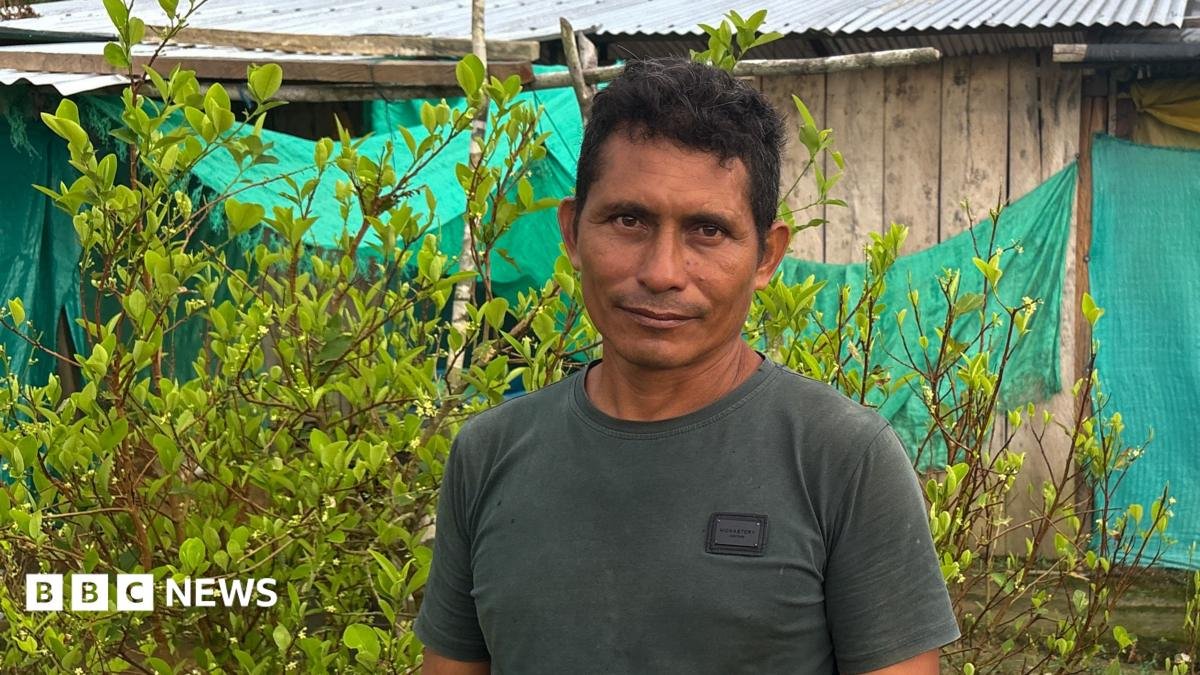
In the remote riverine farms of Colombia's Meta province, farmer Perea once again tends rows of coca after the government's crop substitution program collapsed under floods, missing roads, and unfulfilled promises of support. Two years after ripping out his illicit bushes for cassava and plantain, he returned to the only crop that pays reliably enough to feed his children. His quiet despair now mirrors the lived failure of policies that have allowed coca cultivation to surge past 250,000 hectares nationwide.
Colombia Coca Farmers: Why Substitution Keeps Failing
Meta, Colombia — Article continues, focusing on the human and economic realities of the coca trade in Colombia.
The Quiet Despair in Meta's Riverine Farms
Two years after uprooting his coca bushes, Perea stood once more amid the familiar green rows on his isolated plot in Colombia's Meta province. Reachable only by river, the land had promised a fresh start through the government's crop substitution program. Cassava and plantain replaced the illicit crop, yet floods and absent roads strangled any hope of steady sales. By early this year, the disillusionment proved too heavy. Children needed feeding, and legal alternatives offered nothing reliable. "It's a tragedy," Perea told me during a recent visit, "but when you have children and no work, what choice do you have?" His story captures the lived failure of policies meant to steer farmers away from coca, now at record levels exceeding 250,000 hectares nationwide.
Substitution Programs: Aid That Never Arrived
Thousands joined the official effort to swap coca for legal crops, drawn by pledges of technical support, infrastructure, and market access. In practice, much of that assistance evaporated before reaching remote communities like Perea's. Recurring floods destroyed harvests, while the lack of roads left produce rotting at the river's edge. Researchers tracking these initiatives note that without sustained follow-through, farmers face impossible economics. Perea's return to coca reflects a pattern repeated across Meta and beyond, where initial enthusiasm gives way to necessity. The program, launched with fanfare, has left participants feeling abandoned rather than empowered.
The 2016 peace accord's National Comprehensive Program for the Substitution of Illicit Crops pledged 1.2 trillion pesos in direct payments and infrastructure to 100,000 families, backed by UNODC monitoring and USAID technical grants totaling $300 million over five years. By 2023, only 38 percent of committed funds reached Meta communities, with verified deliveries limited to one-time stipends averaging 1.8 million pesos per hectare instead of the promised multi-year packages. Delays stemmed from bureaucratic verification requirements and local government turnover after the Santos administration, leaving irrigation projects and road contracts unbuilt. UNODC reports documented that 72 percent of enrolled plots received no follow-up extension services, pushing participants back to coca within 18 months.
Economic Realities Favoring the Coca Leaf
Colombian researcher Lucas Marin Llanes highlights coca's structural advantages that legal crops struggle to match. Farmers secure three or four harvests annually, transport proves simpler, and prices remain predictable regardless of distant markets. Studies Marin contributed to show coca cultivation lifting municipal GDP by up to 10 percent in affected areas between 2014 and 2019. These gains ripple through local economies starved of formal investment. While the leaf holds ancestral value for indigenous communities in teas and remedies, industrial demand for cocaine dominates today, with Colombia supplying an estimated 70 percent of global output. The crop's resilience explains why substitution efforts falter when infrastructure lags.
Coca's edge emerges in raw numbers. Farmers in Meta receive roughly 800,000 to 1.2 million Colombian pesos per arroba of dried leaf from intermediary buyers tied to mid-level traffickers, equating to about $200–300 per harvest cycle. In contrast, cassava or plantain fetches under 150,000 pesos per similar volume when roads exist at all, with buyers scarce. Fertilizer and pesticide costs for legal crops run 40–60 percent higher per hectare because they lack the drought resistance and rapid regrowth of coca, which needs minimal inputs beyond basic weeding. Cartels absorb these risks by advancing credit for seeds and chemicals, locking farmers into cycles where default means violence.
The processing chain amplifies the disparity. Fresh leaves are mashed into coca paste using kerosene and sulfuric acid, then oxidized into base with potassium permanganate often sourced from Chinese suppliers via Ecuadorian ports. Base moves to hidden labs where acetone and hydrochloric acid convert it to hydrochloride powder, multiplying value roughly twentyfold before export. UNODC data from 2022 traced over 60 percent of key precursors to Chinese chemical firms, routed through lax Central American free-trade zones. This vertical integration leaves farmers with the smallest slice while shielding higher actors from eradication losses.
Personal Journeys Through the Boom and Bust
Elena Hernandez arrived in Guaviare during the 1990s boom, attracted by wages far exceeding those in traditional agriculture. Like many migrants, she navigated the volatile cycle of planting, eradication, and replanting. Her experience mirrors Perea's recent reversal: legal alternatives collapse under poor connectivity and unfulfilled aid. Across these regions, families weigh the same calculus — short-term survival against long-term risk. The human cost accumulates in missed school fees, health expenses, and eroded trust in state institutions. Voices from these farms reveal not criminal intent but pragmatic adaptation to systemic neglect.
Broadening the Lens Across Latin America
Colombia's struggles echo throughout the region. In Peru and Bolivia, similar substitution campaigns have yielded uneven results amid weak rural infrastructure and fluctuating global demand. Mexico's trafficking corridors absorb much of the northward flow, while Central American transit nations contend with violence tied to the same supply chain. Broader Latin American realities — persistent rural poverty, unequal land distribution, and climate pressures — amplify these dynamics. US consumption patterns sustain the market, yet policy responses often prioritize eradication over development. Regional cooperation remains fragmented, leaving farmers like those in Meta to bear the consequences of mismatched incentives and underfunded transitions.
Plan Colombia's $10 billion U.S. investment from 2000 onward focused aerial fumigation and manual eradication, slashing Colombian coca by half at peak but displacing production eastward into Peru's VRAEM valley and Bolivia's Yungas, where cultivation rose 25 percent between 2015 and 2022. Mexican organizations absorbed the downstream shift: Sinaloa and CJNG now finance Colombian paste labs and control Pacific maritime routes, paying Colombian processors fixed rates per kilo of base while retaining 80 percent of final wholesale margins in U.S. cities.
These dynamics sustain a regional feedback loop. Central American transit states absorb spillover violence from Mexican enforcement pressure, while Peruvian and Bolivian substitution pilots repeat Colombia's infrastructure failures. U.S. demand metrics — roughly 2,000 metric tons of cocaine consumed annually — continue to outpace fragmented interdiction, leaving farmers across the Andes to navigate the same economic trap without coordinated rural investment.
Seeking Viable Alternatives Beyond Rhetoric
Effective change requires more than promises. Investment in roads, irrigation, and direct market linkages could transform legal crops into genuine options. Indigenous knowledge around sustainable coca use offers potential models if decoupled from illicit processing. Without addressing root drivers — economic isolation and climate vulnerability — record cultivation levels will persist. Perea's reluctant return underscores the urgency: policies must deliver tangible livelihoods, not merely prohibit the familiar. As Latin America grapples with these intertwined challenges, the voices from Colombia's riverbanks demand attention that extends past headlines into sustained, practical support.
By Elena Vasquez, Staff WriterThis article was produced with AI-assisted research and editorial support. Reporting is based on sources cited in the article.
What's Your Reaction?
 Like
0
Like
0
 Dislike
0
Dislike
0
 Love
0
Love
0
 Funny
0
Funny
0
 Wow
0
Wow
0
 Sad
0
Sad
0
 Angry
0
Angry
0

Latin America Correspondent at Global1.News. Based in Mexico City, covering politics, economics, energy, and culture across the region. Brings an on-the-ground perspective to stories spanning from the Rio Grande to Patagonia.














Comments (0)