
South America's Extreme Weather Crisis: Rain, Flood and Fire Devastate Brazil and Bolivia
South America is no stranger to nature's fury, but the simultaneous onslaught of record floods in Brazil and looming "extraordinary drought" across Bolivia reveals a continent pushed to its limits. Families in Juiz de Fora watch rivers swallow homes while farmers in Santa Cruz brace for scorched fields, their stories echoing across borders from the Andes to the Amazon. These ex
South America is no stranger to nature's fury, but the simultaneous onslaught of record floods in Brazil and looming "extraordinary drought" across Bolivia reveals a continent pushed to its limits. Families in Juiz de Fora watch rivers swallow homes while farmers in Santa Cruz brace for scorched fields, their stories echoing across borders from the Andes to the Amazon. These extremes are not isolated tragedies; they are the lived reality for millions of Latin Americans whose daily lives, livelihoods, and futures hang in the balance.
South America's Extreme Weather Crisis: Rain, Flood and Fire Devastate Brazil and Bolivia
Rio de Janeiro, Brazil — June 11, 2026 — In February 2026, Juiz de Fora recorded more than 500 mm of rain—double the monthly average—killing at least 42 people there and six more in Ubá, with 19 still missing and over 3,600 displaced. Just months later, Bolivia's SENAMHI warns of an "extraordinary drought" for June while orange hydrological alerts already flag river overflow risks in La Paz, Cochabamba, and Santa Cruz. Between these poles of water and fire, the Pantanal and Cerrado face early arson and deforestation scars even as higher water levels temporarily mask deeper vulnerabilities. President Lula's visit to flooded zones and R$600 million allocated for fire prevention underscore the scale, yet Indigenous communities and small farmers bear the heaviest costs. This is not a future scenario; it is the present crisis reshaping Latin America.
February's Record Floods: A Region Under Water
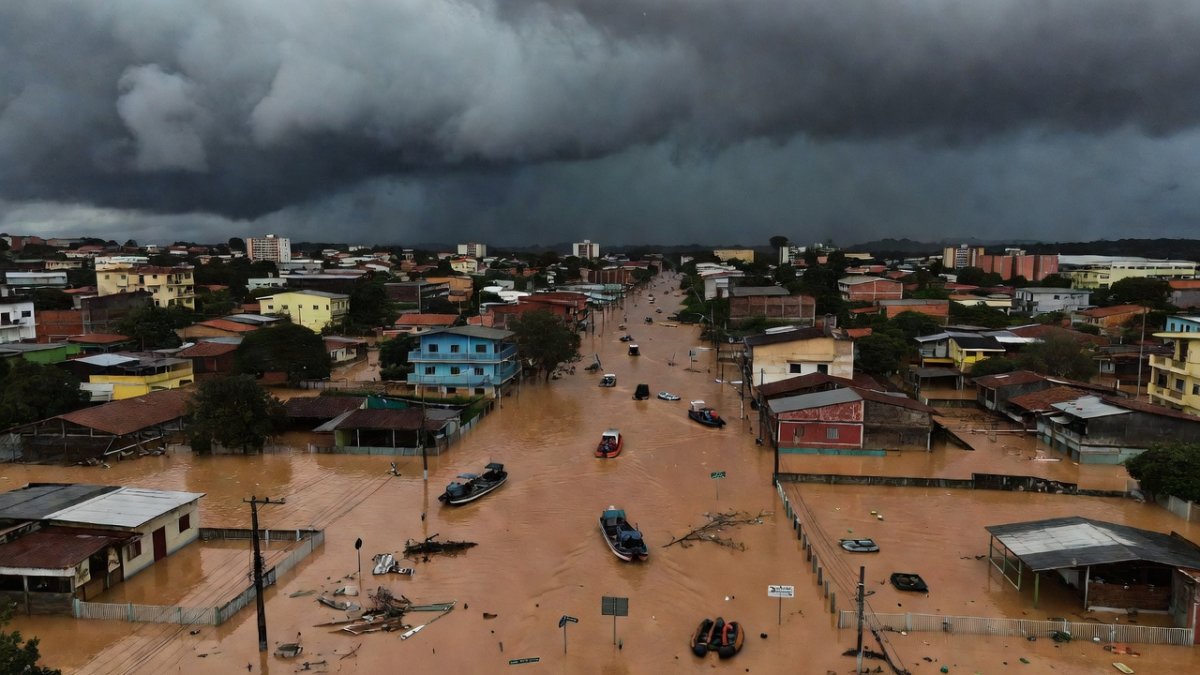
February 2026 delivered a deluge that shattered records across Minas Gerais and beyond. Juiz de Fora endured its rainiest month ever, with over 500 mm falling—twice the average—triggering landslides and river overflows that claimed 42 lives locally. In Ubá, 150 mm arrived in mere hours, sending rivers surging through neighborhoods before warnings could fully reach residents. Across Rio state, an 85-year-old woman died when a wall collapsed in São João de Meriti, adding to the 54-70 total fatalities and leaving 19 people missing. More than 3,600 residents were displaced, many sheltering in temporary centers while rescuers combed debris in Rocinha favela. INMET issued red alerts for multiple states, and emergency declarations multiplied as another wall failure struck a recycling center in Ribeirão Preto. The scars of 2024's Rio Grande do Sul floods, which displaced 600,000, still haunt collective memory. President Lula toured affected areas, offering solidarity but also highlighting how repeated disasters strain national resources. For Latin American readers watching from Colombia to Argentina, these images feel painfully familiar: sudden walls of water erasing years of effort in a single afternoon. The human cost—families separated, businesses destroyed, children missing school—remains the true measure of this watery assault.
Bolivia's Drought Warning: The Dry Side of Extreme Weather
While Brazil drowned, Bolivia confronts the opposite extreme. SENAMHI has forecast an "extraordinary drought" for June 2026, coordinating directly with the Cámara Agropecuaria del Oriente to prepare Santa Cruz farmers for crop failures and livestock losses. Orange hydrological alerts issued in May already flagged overflow risks in La Paz, Cochabamba, and Santa Cruz, yet the greater threat now is prolonged dryness following earlier 2026 heat waves that scorched Bolivia, Paraguay, Brazil, and Argentina together. Cold fronts have swept through up to six departments, and orange wind alert No. 31/26 warned of damaging gusts on June 10. These overlapping shocks arrive against a backdrop of political and economic crisis that leaves rural communities with fewer reserves. Smallholders who once rotated crops now face empty silos and mounting debt. The contrast with Brazil's floods could not be starker, yet both nations share the same underlying atmospheric instability. For Bolivian families, the coming months mean rationing water, watching seedlings wither, and wondering how to feed livestock when pastures turn to dust. This is the dry side of the same extreme weather coin, and it threatens food security across the region.
Pantanal and Cerrado: Fires Before the Flames
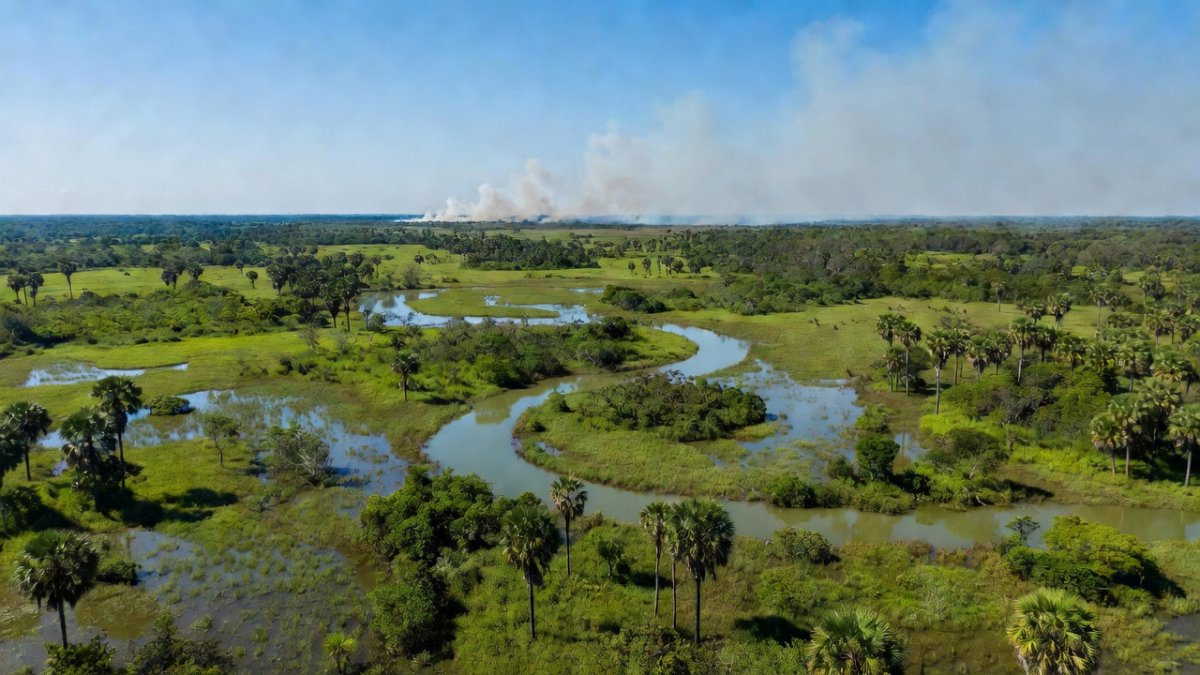
Even as floods recede in some areas, fire risk simmers across the Pantanal and Cerrado. Higher water levels in Pantanal Paiaguás offer temporary relief after years of drought, yet the federal government's R$600 million fire-prevention package for Amazon, Cerrado, and Pantanal signals deep concern. Mato Grosso do Sul has deployed ten brigades under the PSA Pantanal program, while INPE satellite monitoring and INMET forecasts form the backbone of early-warning systems. MapBiomas 2025 data showed deforestation down 20 percent overall, with Pantanal losses falling 48.4 percent and Cerrado 16.9 percent, yet Amazon fires in May 2026 surged 115 percent from April—an ominous early sign. A 2026 arson conviction for burning 12,800 hectares in the Pantanal proves enforcement is possible, but Indigenous communities in the Cerrado continue to suffer direct impacts on their territories and traditional livelihoods. Strong El Niño conditions predicted for the coming season will likely bring drier air and higher ignition risk. These landscapes, vital for biodiversity and water cycles, stand at a tipping point where one spark can undo years of conservation gains. The fires have not yet peaked, but the warning signs are already burning bright.
What This Means for Latin America
The simultaneous crises in Brazil and Bolivia carry direct consequences for every Latin American nation connected by shared rivers, trade routes, and migration patterns. When Brazilian soybean harvests falter or Bolivian beef production drops, prices rise from Mexico City to Buenos Aires. Displaced families may cross borders seeking work, adding pressure to already stretched social services. Indigenous territories spanning multiple countries face compounded threats as both flood and drought erode traditional knowledge systems. The R$600 million prevention fund and cross-border SENAMHI-CAO coordination offer models, yet political fragmentation often delays joint action. Readers in Peru, Ecuador, and Chile recognize the same pattern: extreme events no longer respect national boundaries. The human stories—elders recounting "never-before" rains, young farmers abandoning ancestral lands—mirror struggles across the continent. This is not merely a Brazilian or Bolivian problem; it is a hemispheric challenge demanding regional solidarity and shared resources if Latin America hopes to protect its most vulnerable populations.
The Climate Connection: El Niño Meets a Warming Planet
Behind the immediate disasters lies a clear climate signal. A strong El Niño is forecast to intensify both flooding and drought across South America, layering drier conditions onto already warming landscapes and raising fire risk in the Pantanal and Cerrado. Earlier 2026 heat waves that struck four countries simultaneously demonstrated how these patterns synchronize. INMET red alerts and SENAMHI drought forecasts are no longer anomalies but part of an accelerating rhythm. Deforestation reductions tracked by MapBiomas provide hope, yet the 115 percent jump in Amazon fires shows how quickly gains can reverse under El Niño stress. For grounded observers across Latin America, the science aligns with lived experience: rainy seasons grow more erratic, dry seasons more punishing. The planet's warming amplifies every oscillation, turning what once were once-in-a-generation events into recurring crises. Without deeper emissions cuts and stronger adaptation funding, the cycle will only tighten.
The Bottom Line — What Comes Next
The path forward requires urgent, coordinated investment in early warning, resilient infrastructure, and support for frontline communities. Brazil's R$600 million allocation and Bolivia's SENAMHI-CAO partnership must expand into permanent regional mechanisms rather than reactive spending. Indigenous knowledge in the Cerrado and Pantanal offers proven strategies for living with extremes, yet these voices remain underrepresented in national planning. As June 2026 unfolds, the "extraordinary drought" and lingering flood recovery will test whether governments treat these events as isolated shocks or as the new normal. Latin Americans deserve policies that match the scale of the crisis—protecting lives, securing food systems, and restoring ecosystems before the next El Niño arrives. The rains will return, the winds will rise, and the fires will threaten again; the question is whether we will be ready.
By Elena Vasquez, Staff Writer
This article was produced with AI-assisted research and editorial support. Reporting is based on sources cited in the article.
What's Your Reaction?
 Like
0
Like
0
 Dislike
0
Dislike
0
 Love
0
Love
0
 Funny
0
Funny
0
 Wow
0
Wow
0
 Sad
0
Sad
0
 Angry
0
Angry
0

Latin America Correspondent at Global1.News. Based in Mexico City, covering politics, economics, energy, and culture across the region. Brings an on-the-ground perspective to stories spanning from the Rio Grande to Patagonia.














Comments (0)