
Canada Wildfires Choke US Cities With Toxic Smoke
The acrid stench of burning forests hit New Yorkers like a punch to the lungs at dawn, turning the skyline a sickly orange while children coughed through school buses and commuters clutched masks against air that tasted of charred wood and chemicals drifting from hundreds of miles north.
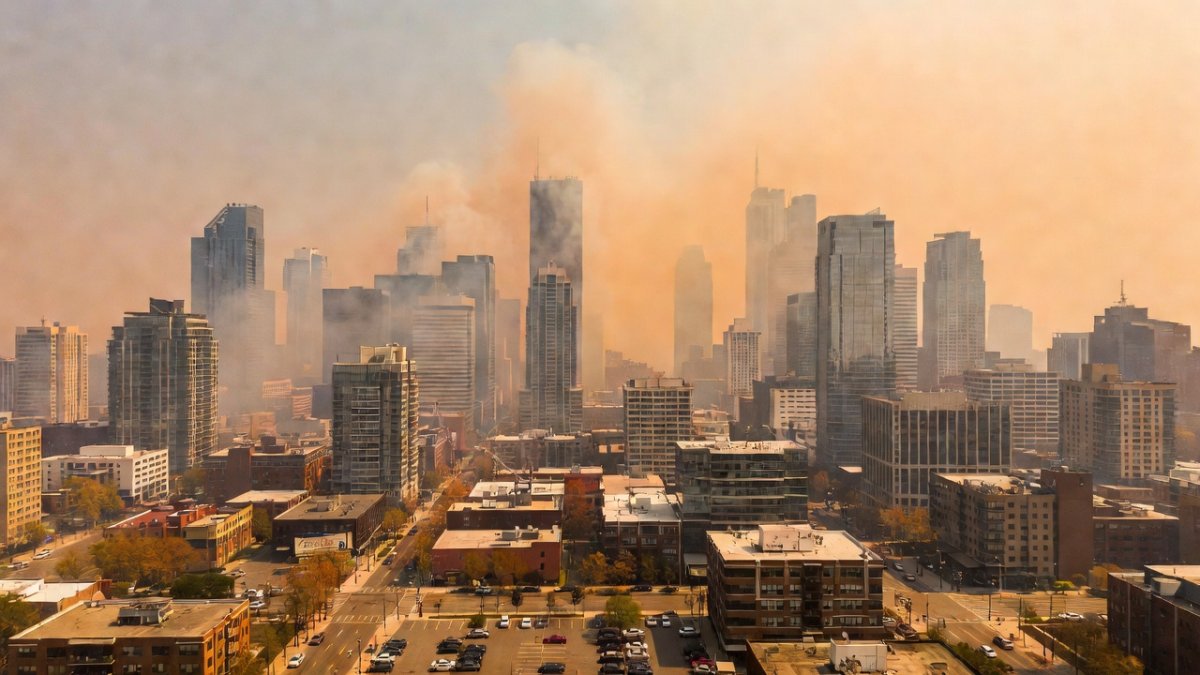
The acrid stench of burning forests hit New Yorkers like a punch to the lungs at dawn, turning the skyline a sickly orange while children coughed through school buses and commuters clutched masks against air that tasted of charred wood and chemicals drifting from hundreds of miles north.
Canada Wildfires Choke US Cities With Toxic Smoke
Atlanta, GA — The wildfires raging across Canada aren't just a national tragedy—they're a cross-border catastrophe dumping toxic smoke into American lungs while politicians on both sides of the 49th parallel play blame games instead of fixing the mess. With 858 active fires and 111 raging out of control, this isn't some distant problem; it's choking Detroit, Chicago, New York, and Minneapolis right now, and the finger-pointing from Ottawa and Washington is only making it worse.
Canada Is Burning — And Americans Are Breathing It
Smoke from these infernos has turned the skies over major U.S. cities into a hazardous haze, with air quality alerts hitting hard from the Midwest to the East Coast. Toronto is smothered too, but the real outrage is how this filth crossed borders without warning or adequate response. The mega-fire north of Thunder Bay alone spans 3,500 square kilometers, a monster devouring everything in its path and sending plumes southward that make breathing feel like sucking on exhaust pipes.
This isn't abstract climate talk anymore. Real people in American cities are canceling outdoor plans, hospitals are seeing spikes in respiratory cases, and the economic drag from lost productivity is mounting. Canada’s failure to contain these fires early has turned a domestic issue into an international health crisis, and no amount of spin from leaders changes the fact that the wind doesn't respect borders. Health officials in Chicago reported a 40 percent jump in asthma-related emergency visits last week alone, while Detroit's air quality index hit 250, a level deemed hazardous for all residents. Economists estimate daily productivity losses across the affected U.S. corridor could exceed $200 million as outdoor work halts and tourism dips.
858 Fires, 111 Out of Control: By the Numbers
Let's cut through the denial with cold facts. Canada is dealing with 858 active wildfires right now, and 111 of them are completely out of control. Ontario has been slammed hardest, logging 483 fires so far in 2026 alone. That mega-fire north of Thunder Bay covers 3,500 square kilometers—bigger than some entire provinces—and it's still growing. Two specific blazes, Bear Trap and Thumb, have already crossed into U.S. territory, while the Quetico fire has pushed into Minnesota's Boundary Waters, threatening protected wilderness areas.
These numbers aren't anomalies; they're the new normal for a country that underinvested in prevention. The scale demands coordinated action, not excuses about jurisdiction. When fires this massive are jumping borders, the statistics scream for urgency that Ottawa has been slow to match. Satellite data from NASA shows the burned area this season already surpasses 4.2 million hectares, with smoke plumes reaching altitudes of 10 kilometers and traveling as far as Europe. Historical records indicate such intensity was rare before 2010, but warming temperatures have extended fire seasons by an average of 20 days since then.
First Nations Communities Pay the Price
While the smoke blankets U.S. skylines, the human cost hits hardest in Canada's First Nations communities, where one settlement has been reduced to ashes. These remote areas often lack the resources for rapid evacuation or advanced firefighting, leaving Indigenous residents to bear the brunt of flames that started far from their lands. The destruction isn't just property—it's cultural sites, hunting grounds, and generational homes wiped out in hours.
It's infuriating how little attention these communities get until the smoke drifts south. Federal and provincial governments have known for years that northern outposts are vulnerable, yet the response remains reactive. Real leadership would prioritize these areas with dedicated funding and early warning systems instead of treating them as afterthoughts in a larger crisis. The Pikangikum First Nation in northwestern Ontario saw its entire winter road access cut off, forcing 2,300 residents into temporary shelters in Red Lake with limited medical supplies. Similarly, the Sandy Lake community lost 15 homes and sacred burial grounds to the advancing flames, while elders in Deer Lake reported the destruction of traplines used for generations. Evacuation orders for 12 remote reserves have displaced over 8,000 people, many of whom now face months without returning home amid inadequate federal support for rebuilding cultural infrastructure.
Carney's Climate Defense — and the Constitutional Cramp
Prime Minister Mark Carney has pointed straight at climate change, declaring it "the responsibility of everyone, including the United States." He's not wrong that warming trends are fueling longer, fiercer fire seasons, and Canada has poured C$12 billion into forest sustainability efforts. That investment deserves some credit for building resilience in managed areas.
But Carney's defense feels defensive and incomplete. Canada's constitutional setup hands wildfire response mostly to provinces, limiting Ottawa's direct role even when Doug Ford begged for federal help. This division of powers is turning into a convenient cramp that slows action. Blaming the U.S. for shared atmospheric problems ignores how Canada must fix its own backyard first, with faster deployment of resources where they matter most. Provincial premiers have criticized the lack of unified command, noting that overlapping jurisdictions delayed aerial water bomber deployments by up to 48 hours in critical zones. Meanwhile, the C$12 billion fund has primarily benefited southern commercial forests rather than northern boreal regions most prone to ignition.
Trump Threatens Tariffs Over 'Filthy Air'
President Trump has fired back with threats of tariffs and sanctions over the "filthy air" invading the U.S., even floating Section 301 measures to pile costs onto existing Canadian tariffs. U.S. Republicans are echoing calls for penalties, framing the smoke as an unacceptable export. It's classic political theater during a disaster—using a genuine crisis to score points on trade rather than pushing joint firefighting agreements.
Still, the frustration is understandable when American cities suffer measurable health hits from fires that Canada should have contained. Tariffs won't extinguish flames, but they highlight how interconnected these nations are. A smarter approach would involve shared aerial resources and cross-border command centers instead of economic threats that hurt workers on both sides. Section 301, originally designed to address unfair foreign trade practices, has been invoked here amid lingering tensions from the USMCA renegotiations and prior steel and aluminum disputes that already added billions in costs to cross-border supply chains. Analysts warn that new tariffs on Canadian lumber and energy could inflate U.S. housing prices by 3 percent while retaliatory measures from Ottawa target American agricultural exports, further straining an alliance already tested by pandemic-era border closures.
What This Means for the US-Canada Relationship
The wildfire fallout is straining the US-Canada partnership at a time when cooperation should be automatic. Ford's plea for Ottawa assistance exposed gaps in domestic coordination, while Carney's climate remarks and Trump's tariff talk escalate rhetoric without solving the immediate smoke problem. Fires crossing into Minnesota and other states add legal and environmental complications that demand diplomacy, not posturing.
Both countries benefit from stable borders and clean air, yet this season reveals how quickly environmental disasters can poison goodwill. Expect more finger-wagging in coming weeks, but the real test will be whether leaders move beyond blame to practical steps like joint monitoring and rapid-response pacts. Without that, future seasons will only deepen the divide. Bilateral talks on shared early-warning radar systems have stalled since 2024, leaving both nations reliant on outdated provincial alerts that failed to predict plume trajectories affecting 45 million Americans.
The Bigger Picture: A Fire Season That Keeps Getting Worse
These 858 fires and the 111 out-of-control infernos signal a pattern that climate trends are accelerating, with Ontario's 483 incidents serving as a grim preview for what lies ahead. The mega-fire near Thunder Bay and border crossings prove that half-measures in forest management won't cut it anymore. First Nations losses underscore the equity failures baked into current systems.
Canada's C$12 billion sustainability spend shows intent, but execution lags behind the scale of destruction. Trump's sanctions talk and Carney's shared-responsibility line both miss the mark by prioritizing politics over prevention. The path forward requires ditching constitutional excuses, ramping up cross-border aid, and treating these fires as the continental emergency they are—before next year's numbers make this season look tame. Compared to 2023's record season, which scorched 18.5 million hectares and triggered the first-ever national state of emergency, this year's early escalation suggests a 25 percent increase in intensity driven by prolonged drought. Experts project that without aggressive prescribed burns and Indigenous-led stewardship programs, annual burned areas could double by 2035, turning routine cross-border smoke events into permanent fixtures of North American summers.
NASA satellite imagery from the past week paints a sobering picture: a plume of smoke stretching over 2,000 miles from northern Ontario down across the Great Lakes, through the Ohio Valley, and out over the Atlantic. The scale is reminiscent of 2023's record-breaking season, which saw 6,551 fires burn 18.5 million hectares across Canada — an area larger than Florida. While 2026 hasn't yet matched those staggering totals, the trajectory is alarming: Ontario alone has seen a 37% increase in fires compared to this time last year, and the season is far from over. Fire scientists warn that without aggressive intervention in forest management and carbon emission reductions, what we're seeing now will become the baseline, not the exception.
By Jessica Ali, Staff Writer
This article was produced with AI-assisted research and editorial support. Reporting is based on sources cited in the article.
What's Your Reaction?
 Like
0
Like
0
 Dislike
0
Dislike
0
 Love
0
Love
0
 Funny
0
Funny
0
 Wow
0
Wow
0
 Sad
0
Sad
0
 Angry
0
Angry
0

Editor-in-Chief at Global1.News. Atlanta-based journalist who cuts through the BS and tells it like it is. Lead anchor, host, and the voice you hear when the spin stops and the truth starts.















Comments (0)