
Sara Duterte Impeachment: Grave Threats Charge Takes Center Stage as Kapunan Defends Prosecution Case
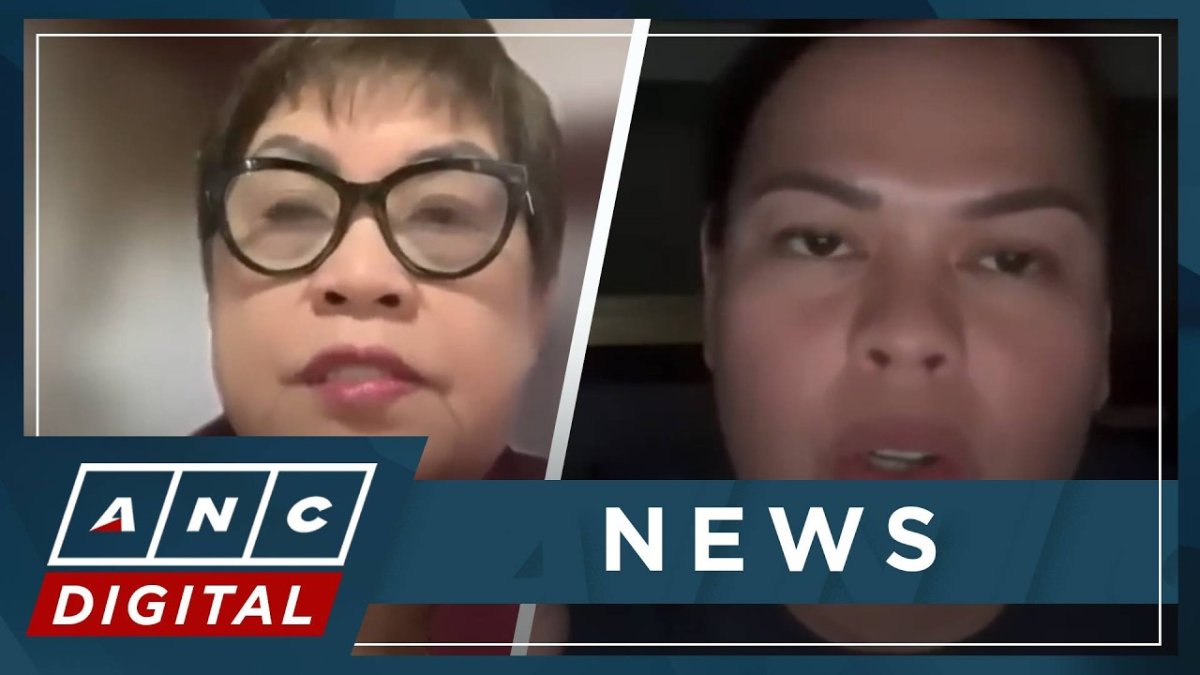
In a recent ANC 24/7 report, Karen Davila sat down with Attorney Lorna Kapunan, one of the counsels for the House prosecutors in the Senate impeachment court now in its second week. Kapunan spoke directly about the grave threats charge against Vice President Sara Duterte. She explained why it will be difficult for the Vice President to claim she was merely joking when she stated she had hired an assassin to kill President Ferdinand Marcos Jr. if she herself were taken down.
In a recent ANC 24/7 report, Karen Davila sat down with Attorney Lorna Kapunan, one of the counsels for the House prosecutors in the Senate impeachment court now in its second week. Kapunan spoke directly about the grave threats charge against Vice President Sara Duterte. She explained why it will be difficult for the Vice President to claim she was merely joking when she stated she had hired an assassin to kill President Ferdinand Marcos Jr. if she herself were taken down.
VP Sara Duterte Impeachment: Grave Threats Charge, NBI Testimony, and Political Fallout Explained
Manila, Philippines — The Senate impeachment trial of Vice President Sara Duterte has entered its second week with the grave threats charge taking center stage, as House prosecutors present evidence that her public statements about hiring an assassin crossed constitutional lines. The proceedings, broadcast live and dissected in homes nationwide, now carry implications far beyond the Senate chamber.
The Grave Threats Charge at the Heart of Week Two
The impeachment trial centers on three main accusations against Vice President Sara Duterte: grave threats, betrayal of public trust, and other constitutional violations. The specific grave threat involves her public statement that she had arranged for someone to assassinate President Marcos Jr. should she be removed from office. This claim emerged during heated political exchanges earlier this year. Rep. Joel Chua of Manila's 3rd District noted during the hearings how such statements normalize killings. He reminded the Senate that under the previous Duterte administration, violence was often treated as routine in communities from Davao to Cebu. This normalization has left lasting scars on families who lost loved ones to extrajudicial actions. Prosecutors argue the hired-assassin remark was not rhetorical flourish but a deliberate signal of intent, backed by the Vice President's own recorded words. Legal analysts note that under the Revised Penal Code, grave threats require only that the statement place the target in reasonable fear; literal follow-through need not be proven. The House team plans to introduce transcripts and video clips showing the statement was repeated across multiple public forums, strengthening the case that it was not a one-off joke.
Legal scholars further observe that the charge intersects with longstanding debates over executive privilege and the limits of political speech in a democracy still healing from decades of authoritarian rule. In provinces where political dynasties dominate, the Vice President's words have been interpreted by some as a warning shot meant to deter rivals, while others see it as an erosion of the rule of law that ordinary citizens have long demanded be upheld. This tension is amplified by the fact that the Senate, as the impeachment court, must balance constitutional accountability against the risk of setting a precedent that could chill legitimate political discourse.
Attorney Lorna Kapunan's Testimony and Its Legal Weight
Attorney Lorna Kapunan told Karen Davila that the Vice President will find it hard to walk back her words. Kapunan pointed out that the statement was made publicly and recorded. She argued that the Senate impeachment court must treat the threat as a serious constitutional violation rather than mere political rhetoric. Kapunan emphasized that the House prosecution team has built its case on clear evidence of intent. She connected this to the experiences of ordinary Filipinos who face real consequences when leaders issue threats. In sari-sari stores from Baguio to Davao, people discuss how such words erode trust in government institutions like the Philippine National Police. Kapunan further explained that impeachment standards differ from criminal court: the Senate need only find the conduct incompatible with continued tenure, not prove every element of a crime beyond reasonable doubt.
Observers note that Kapunan's measured tone during the interview underscored the prosecution's strategy of relying on the Vice President's own public record rather than circumstantial evidence. This approach resonates with voters who recall how past high-profile cases faltered when prosecutors overreached. By focusing on documented statements, the House team aims to keep the narrative centered on accountability rather than partisan score-settling.
Senator Franklin Drilon on the Materiality of the Threat
Former Senator Franklin Drilon stated that it is immaterial whether Vice President Duterte meant the threat literally. What matters, he said, is whether the act itself meets the threshold for conviction in the Senate impeachment court. His remarks came during floor debates this week as the trial moved deeper into witness presentations. Drilon's position resonates with jeepney drivers and OFWs who rely on stable leadership. When threats come from the second-highest office, they create uncertainty that reaches every barangay. The Senate must decide if such statements violate the public trust placed in elected officials by voters in the 2022 elections. Drilon stressed that allowing such language to stand unchallenged would lower the bar for future officials, making accountability harder to enforce.
Drilon's intervention also highlights the institutional memory within the Senate, where veterans like him have witnessed multiple cycles of political upheaval. His emphasis on materiality serves as a reminder that impeachment is ultimately a political process designed to protect the integrity of the office, not merely to punish personal misconduct.
Philippine Political Context: Lessons from Estrada, Corona, and the Road to 2028
Historian Manolo Quezon has described the current trial as the most legalistic compared to the earlier impeachment cases against Joseph Estrada and Renato Corona. Estrada's 2001 trial collapsed amid street protests after the Senate blocked key evidence; Corona's 2012 conviction hinged on unexplained wealth. The Duterte case, by contrast, rests on public statements rather than hidden assets, forcing senators to weigh free speech against official accountability. The deepening Duterte-Marcos rift, once masked by their 2022 alliance, now threatens to redraw coalitions ahead of the 2028 presidential race. Analysts say a conviction could sideline the Vice President while boosting other contenders, while acquittal might embolden her camp to challenge Marcos allies in local races next year.
The comparison with past impeachments also reveals how public expectations have evolved. Where earlier trials were marked by dramatic walkouts and mass mobilizations, today's proceedings unfold under intense social media scrutiny, with every exchange instantly analyzed by millions. This digital dimension adds pressure on senators to appear measured and evidence-based, even as underlying political calculations remain unchanged.
Impact on Filipinos: Eroding Trust, Daily Conversations, and Economic Uncertainty
The impeachment proceedings touch real lives in every region. Sari-sari store owners in Quezon City report customers lingering longer to debate the trial, with many expressing fatigue over repeated political drama. Jeepney drivers along EDSA routes say riders now argue openly about whether leaders should face consequences for threats, reflecting broader disillusionment. Families in Cebu and Davao worry that continued political threats will distract Congress from passing laws that support OFW remittances and local health services through the Department of Health. Students in public schools under DepEd feel the effects when national attention shifts away from classroom needs. Economists warn that prolonged instability could delay infrastructure projects and dampen investor confidence, particularly in Mindanao where Duterte influence remains strong. The Bayanihan spirit in barangays across Quezon City has long helped communities survive crises. Yet when the Vice President faces grave threats charges, it raises questions about accountability at the highest levels. The Senate trial offers a chance to restore faith that leaders answer to the Constitution rather than personal grievances.
Community leaders in rural areas further note that the trial has become a litmus test for whether the justice system can transcend personality-driven politics. For many, the outcome will either reinforce cynicism or signal that even the most powerful officials remain subject to the same standards applied to ordinary citizens.
Upcoming Testimony from NBI Chief Melvin Matibag
The National Bureau of Investigation Chief Melvin Matibag is scheduled to appear as the final witness on the Vice President's claim of hiring an assassin. His testimony is expected to address whether any evidence supports the existence of such a plot. The Senate has already heard from several House prosecutors this week. Matibag's appearance will bring concrete details from the NBI investigation into the alleged hired killer claim. Communities in Manila and beyond wait to see how this evidence affects the broader charges of betrayal of public trust. The outcome will shape how future administrations handle public statements that touch on violence. Prosecutors expect Matibag to clarify whether the NBI found any communications, payments, or intermediaries linked to the alleged plot, even if no actual attempt occurred.
Matibag's role also carries symbolic weight, given the NBI's historical involvement in high-profile political cases. His testimony could either lend institutional credibility to the prosecution or expose gaps that defense lawyers will exploit in closing arguments.
What to Watch For: NBI Timeline, Bank Records Ruling, and Political Realignment
Former Bureau of Internal Revenue chief Kim Henares has called for the Senate to summon Vice President Duterte's bank and tax records. She argued that financial transparency is essential when grave threats are under review. A ruling on those records is expected by July 20. Ex-Senator Nikki Coseteng warned that the next president must not lead the Philippines further into the abyss. Her comments reflect concerns shared by farmers and students who see political instability affecting education budgets and agricultural support programs managed by the Department of Budget and Management. After the Senate decides, attention will shift to possible appeals, snap elections, or realignments within both the Marcos and Duterte camps. The NBI testimony timeline remains fluid, with Matibag's appearance potentially delayed if additional documents surface. Political observers say the coming weeks will determine whether the trial accelerates a broader realignment or simply entrenches existing divisions.
The push for financial records also underscores growing public demand for greater transparency in campaign financing and personal wealth disclosures among top officials. Should the Senate grant the request, it may set a new benchmark for future impeachment proceedings.
Broader Voices Weigh In on Records and Political Future
Former Bureau of Internal Revenue chief Kim Henares has called for the Senate to summon Vice President Duterte's bank and tax records. She argued that financial transparency is essential when grave threats are under review. Historian Manolo Quezon described the current trial as the most legalistic compared to the earlier impeachment cases against Joseph Estrada and Renato Corona. Ex-Senator Nikki Coseteng warned that the next president must not lead the Philippines further into the abyss. Her comments reflect concerns shared by farmers and students who see political instability affecting education budgets and agricultural support programs managed by the Department of Budget and Management. These voices underscore that the trial is not merely about one official but about setting precedents for transparency and restraint at the highest levels of power.
The testimony of Attorney Lorna Kapunan and the expected appearance of NBI Chief Melvin Matibag will guide the Senate's decision. For Filipino workers and families, the result will determine whether threats from public officials remain unchecked or face proper constitutional consequences in the coming weeks. Whatever the outcome, the trial has already reshaped public expectations of accountability and will influence Philippine politics long after the final vote is cast.
 By Bella Reyes, Staff Writer
This article was produced with AI-assisted research and editorial support. Reporting is based on sources cited in the article.
What's Your Reaction?
 Like
0
Like
0
 Dislike
0
Dislike
0
 Love
0
Love
0
 Funny
0
Funny
0
 Wow
0
Wow
0
 Sad
0
Sad
0
 Angry
0
Angry
0

Philippines/Southeast Asia Correspondent at Global1.News. Manila-based journalist covering Philippine politics, environment, maritime security, and social issues. Passionate about marine conservation and the communities protecting the Philippines' natural heritage.















Comments (0)