
China's Sharp Rebuke of British Steel Nationalisation Highlights Deepening Tensions in UK-China Economic Relations
Immediate Diplomatic Fallout from the Nationalisation Decision On Friday, China's Ministry of Commerce (MOFCOM) issued a strongly worded statement expressing firm opposition and "strong dissatisfaction" with the United Kingdom government's decision to nationalise British Steel.
Immediate Diplomatic Fallout from the Nationalisation Decision
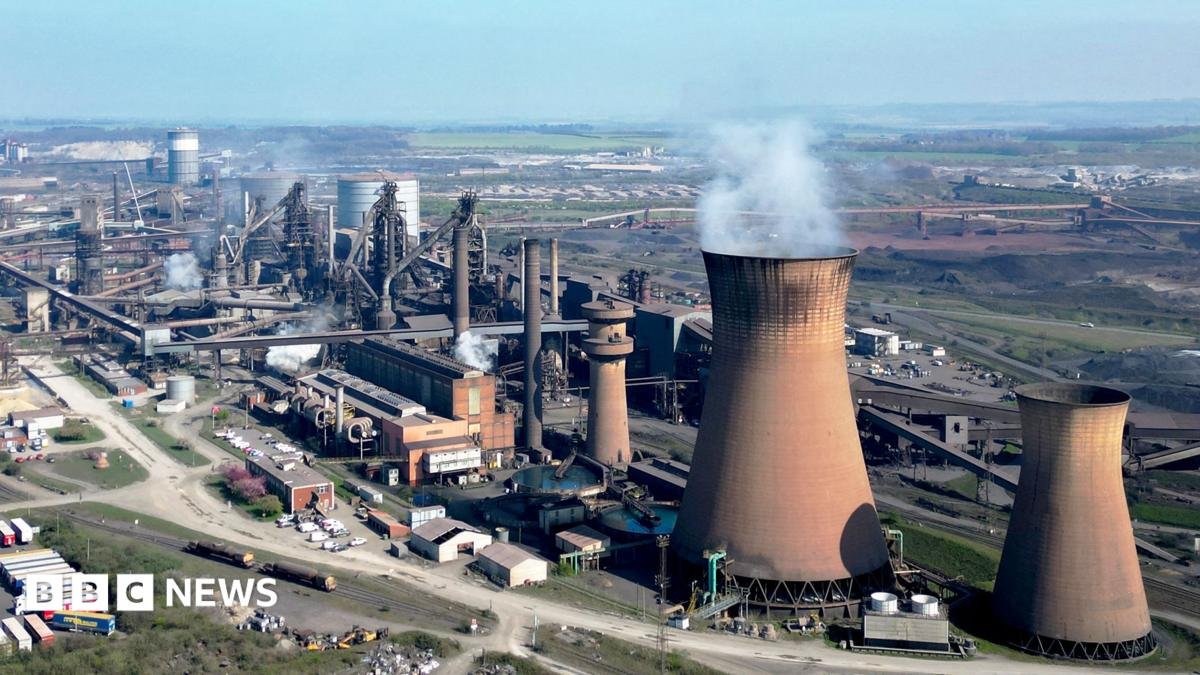
On Friday, China's Ministry of Commerce (MOFCOM) issued a strongly worded statement expressing firm opposition and "strong dissatisfaction" with the United Kingdom government's decision to nationalise British Steel. The move, announced the previous day, sees the UK government taking full public ownership of the loss-making Scunthorpe steelworks, previously controlled by China's Jingye Group. MOFCOM argued that the action "seriously infringed upon Jingye's legitimate rights and interests" and "severely undermined the confidence of Chinese companies investing in the UK." The ministry further urged London to "faithfully fulfil" its obligations under the longstanding China-UK Bilateral Investment Treaty.
This public rebuke marks a significant escalation in rhetoric, reflecting Beijing's growing frustration with what it perceives as discriminatory treatment of Chinese state-linked and private enterprises in Western markets. The timing is particularly sensitive, occurring just days before Andy Burnham is scheduled to enter Downing Street as the new Prime Minister following his Labour Party's electoral victory. The incoming administration will inherit not only this thorny dispute but also the broader challenge of recalibrating Britain's post-Brexit economic strategy toward China.
Background to the British Steel Crisis and Government Intervention
British Steel's Scunthorpe operations have long been a symbol of Britain's industrial heritage and its strategic vulnerabilities. The plant directly employs approximately 2,700 workers, with thousands more jobs supported across the supply chain. Annual losses had reached alarming levels, with Jingye reportedly stating the business was losing £700,000 per day prior to the government's intervention.
The UK had already taken operational control of the facilities last year while Jingye retained formal ownership, a hybrid arrangement that limited Whitehall's ability to make decisive long-term investments. By moving to full nationalisation, the government gains the authority to maintain the blast furnaces, preserve virgin steel production capability, and avoid a scenario in which the UK would become the only G7 nation without domestic primary steelmaking capacity. A government spokesperson emphasised that negotiations with Jingye had failed to produce an agreement representing "value to the taxpayer," while reiterating that Britain "highly value[s] our relationship with China and remain[s] open to Chinese investment."
Small Business Minister Blair McDougall informed the House of Commons that an independent valuer would be appointed in the autumn to determine compensation for Jingye, noting that the sum "could be nil" depending on the assessment of the company's financial position and contributions.
The China-UK Bilateral Investment Treaty of 1986: Legal Framework Under Strain
At the heart of Beijing's objections lies the Agreement between the Government of the United Kingdom of Great Britain and Northern Ireland and the Government of the People's Republic of China concerning the Promotion and Reciprocal Protection of Investments, signed in 1986. This treaty, one of the earliest bilateral investment agreements concluded by the People's Republic of China during its initial opening-up period, provides protections for investors against expropriation, ensures fair and equitable treatment, and includes provisions for the free transfer of funds and compensation in cases of nationalisation.
The treaty reflects the era of Deng Xiaoping's economic reforms, when China actively sought foreign capital and technology while offering reciprocal protections to encourage outbound investment. For decades, it served as a cornerstone of economic engagement between the two countries. However, its enforcement mechanisms, typical of older-generation investment treaties, rely heavily on state-to-state dispute settlement rather than robust investor-state arbitration clauses found in more modern agreements.
MOFCOM's explicit reference to the treaty signals Beijing's intention to pursue formal diplomatic channels and potentially international arbitration if compensation negotiations prove unsatisfactory. This development tests the treaty's durability in an era of heightened geopolitical competition and national security considerations that were scarcely contemplated when the document was drafted nearly four decades ago.
National Security Imperatives Versus Economic Openness: The Central Strategic Tension
The British Steel case exemplifies the intensifying global debate between protecting critical national capabilities and maintaining an open investment environment. For the UK, retaining the ability to produce virgin steel is framed as essential for both economic resilience and national defence. Steel remains fundamental to infrastructure projects, automotive manufacturing, and military hardware. Losing primary steelmaking capacity would represent a significant strategic vulnerability, particularly amid concerns over supply chain security in an increasingly fractious international environment.
From Beijing's perspective, the nationalisation represents a troubling precedent. Chinese officials argue that Jingye made substantial contributions to the UK economy and local community following its acquisition of British Steel in 2020, investing in modernisation efforts despite challenging market conditions. The invocation of national security to justify intervention, without what China considers adequate evidence of specific threats, raises concerns about the arbitrary application of such measures against Chinese investors.
This tension mirrors broader patterns across Western economies. Data from the Rhodium Group and the American Enterprise Institute's China Global Investment Tracker indicate that Chinese outward foreign direct investment (OFDI) in Europe and North America has faced increasing regulatory scrutiny since the mid-2010s. Annual Chinese OFDI flows to the EU peaked at approximately $45 billion in 2016 before declining sharply amid heightened review mechanisms. The UK's National Security and Investment Act 2021, which expanded government powers to block or unwind transactions on security grounds, has been applied to several Chinese-linked deals in technology, infrastructure, and critical materials sectors.
Historical Context of Chinese Investment in the UK Steel Sector
Chinese engagement with the British steel industry dates back to the early 2010s when the sector faced severe structural challenges following the global financial crisis. Jingye Group's acquisition of British Steel from the liquidation of Greybull Capital in 2020 came after earlier involvement by other Chinese entities, including attempts by state-owned enterprises to partner with or acquire assets from Tata Steel and others.
These investments were initially welcomed as they helped preserve jobs in economically disadvantaged regions of northern England. Jingye committed to maintaining operations and investing in electric arc furnace technology, aligning with both parties' stated environmental objectives. However, the energy crisis exacerbated by the Russia-Ukraine conflict, combined with high carbon costs under the UK's Emissions Trading Scheme, severely undermined the financial viability of traditional blast furnace operations.
The current nationalisation must be understood within this longer trajectory of industrial decline, policy inconsistency, and shifting geopolitical calculations. It represents the latest chapter in Britain's struggle to balance its historical role as a champion of free trade with the realities of strategic competition in the 21st century.
Implications for Incoming Prime Minister Andy Burnham's China Policy
Andy Burnham's assumption of office on Monday places him at the centre of a complex strategic recalibration. Having built his political reputation on addressing regional inequalities in northern England, the new Prime Minister faces immediate pressure to demonstrate that nationalisation will protect Scunthorpe jobs while charting a sustainable future for the plant, potentially through substantial public investment in greener steelmaking technologies.
Burnham's approach to China will be closely watched in Beijing. His predecessor had sought to characterise UK-China relations as existing in a "golden era" before gradually adopting a more guarded stance amid concerns over Hong Kong, Xinjiang, technology transfer risks, and strategic dependencies. The new administration must weigh the undeniable economic benefits of engagement with the world's second-largest economy — China remains a major trading partner, with bilateral trade exceeding £100 billion annually — against legitimate security concerns in critical supply chains.
Early signals suggest Burnham may pursue a more pragmatic, interest-based approach, focusing on areas of mutual benefit such as climate cooperation, while maintaining robust safeguards in sensitive sectors. However, the British Steel dispute risks becoming an early test of this balancing act. Failure to reach an equitable resolution with Jingye could further erode Chinese investor confidence, potentially affecting future capital flows into UK infrastructure, renewable energy, and advanced manufacturing.
Broader Trend: Western Scrutiny of Chinese Outward Investment
The British Steel nationalisation fits into a wider pattern of Western economies tightening oversight of Chinese investment. The European Union has strengthened its screening mechanism for foreign direct investment, while the United States has expanded the remit of the Committee on Foreign Investment in the United States (CFIUS). Similar measures have been adopted or enhanced in Australia, Canada, and Japan.
According to the Mercator Institute for China Studies (MERICS), national security reviews of Chinese investments in Europe increased significantly after 2018, with particular focus on dual-use technologies, critical infrastructure, and strategic materials. Steel, while traditionally viewed as a mature industry, has acquired new strategic significance amid efforts to decarbonise heavy industry and secure resilient supply chains for the green transition.
Chinese policymakers have responded by diversifying investment destinations toward the Global South and ASEAN countries, while simultaneously promoting technological self-sufficiency under the 14th Five-Year Plan (2021-2025) and the Dual Circulation strategy. This approach aims to reduce vulnerability to external economic pressure while expanding China's influence through initiatives such as the Belt and Road.
For Chinese enterprises, the message from cases like British Steel is clear: even investments in traditional industrial sectors now face elevated political risk in Western markets. This perception may accelerate the trend toward "de-risking" on both sides, with Chinese capital becoming more selective and Western governments developing more sophisticated frameworks to distinguish between benign commercial investment and activities posing genuine security concerns.
Future Trajectory of UK-China Relations: Strategic Calculus and Second-Order Effects
The dispute carries significant implications for the broader UK-China relationship. Beijing seeks to protect its investors' legitimate interests while maintaining access to advanced Western technologies and markets. London, meanwhile, must safeguard strategic capabilities without unnecessarily isolating itself from the economic dynamism of East Asia.
What each side wants is relatively clear. China desires predictable legal protections, fair treatment, and continued opportunities for mutually beneficial cooperation. The UK seeks to preserve industrial capacity, protect jobs in key regions, and manage strategic dependencies without triggering broader economic decoupling.
Leverage remains asymmetric. China's economic size and centrality to global supply chains give it considerable influence, particularly as many developing economies continue to welcome Chinese investment. The UK, as a medium-sized open economy outside the European single market, must carefully calibrate its policies to avoid becoming an outlier in either direction — overly accommodating or excessively confrontational.
Second-order effects are already visible. Within the European Union, the episode may influence ongoing discussions about critical raw materials and industrial strategy. For ASEAN and the Global South, it reinforces narratives about Western protectionism, potentially strengthening China's appeal as an alternative economic partner. Within the G7, the UK's move highlights shared concerns about industrial resilience but also exposes differences in how individual members balance security with economic openness.
Resolution of the compensation issue will be an important early indicator of the new British government's approach. A transparent, rules-based process that respects the 1986 treaty while addressing legitimate national security concerns could help stabilise relations. Conversely, prolonged acrimony risks further deterioration in trust and investment flows.
Ultimately, the British Steel nationalisation reflects the uncomfortable reality of great power competition in an interdependent world. Both Beijing and London recognise the costs of outright confrontation. The challenge for Andy Burnham's incoming administration lies in navigating these tensions with strategic clarity, protecting core national interests while preserving space for pragmatic cooperation in areas where interests align — from climate change to global health and financial stability.
As the independent valuation process begins this autumn, the eyes of investors, diplomats, and industrial communities on both sides will remain fixed on whether this dispute becomes a precedent for further friction or a manageable disagreement within a complex but necessary economic relationship.
By Prof. Marcus Chen, Staff WriterThis article was produced with AI-assisted research and editorial support. Reporting is based on sources cited in the article.
What's Your Reaction?
 Like
0
Like
0
 Dislike
0
Dislike
0
 Love
0
Love
0
 Funny
0
Funny
0
 Wow
0
Wow
0
 Sad
0
Sad
0
 Angry
0
Angry
0

World Politics Analyst at Global1.News. Based in Beijing, covering US-China relations, global trade, and geopolitical strategy. Brings deep analytical perspective to the power dynamics shaping international affairs.














Comments (0)