
Sheinbaum Defends Madres Buscadoras Dialogue at Mañanera
**Meta Description:** Sheinbaum defends madres buscadoras dialogue, announces record meth bust in Sinaloa, highway C5 security plan, and renewed cross-border weapons crackdown with US. **Keywords:** Claudia Sheinbaum, madres buscadoras, missing persons Mexico, meth seizure Sinaloa, highway security C5, weapons trafficking Mexico, Ayotzinapa, National Guard, Sheinbaum administra
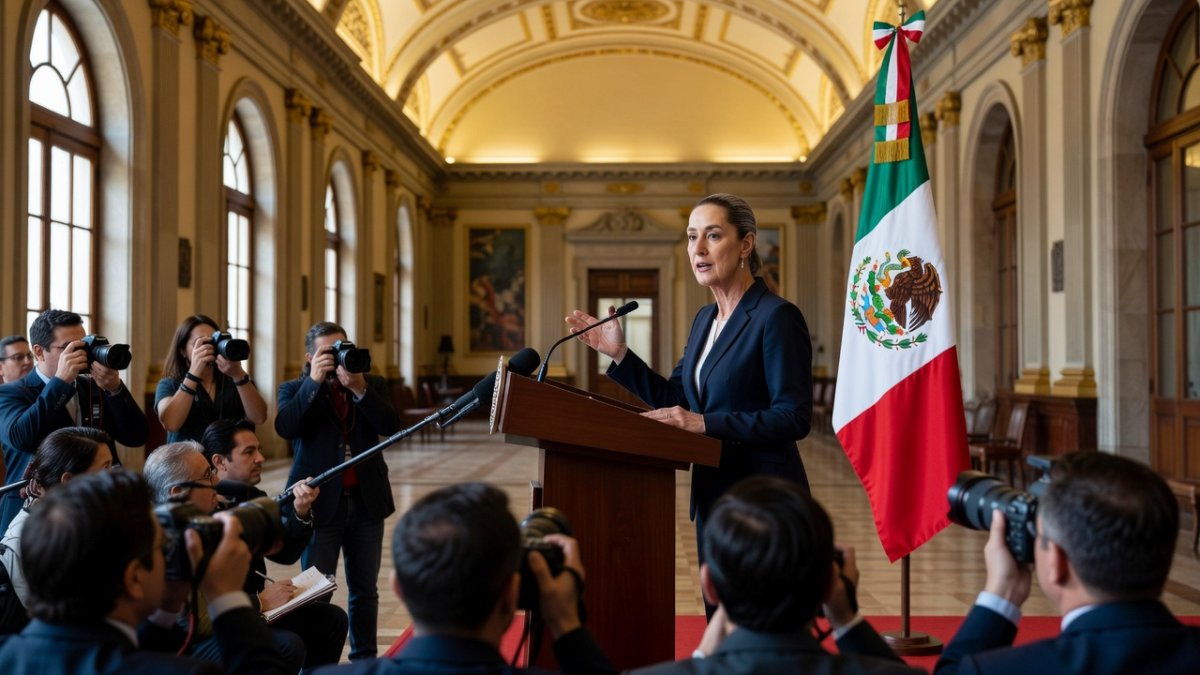
Sheinbaum's Response to the Madres Buscadoras Criticism
President Claudia Sheinbaum used her Tuesday mañanera to directly address questions about her engagement with Mexico's madres buscadoras. A reporter noted that while she had welcomed the World Cup duck Merlin the day before, some questioned whether she had met with mothers searching for their missing children. Sheinbaum responded with the quiet strength familiar to anyone who has watched her speak in the National Palace, making clear that these encounters form a steady part of her work rather than occasional photo opportunities.
She explained that many meetings take place one-on-one during her travels through states like Oaxaca, Chiapas, and Michoacán, or even quietly in the National Palace when families arrive seeking answers. She prefers these private conversations because they allow her to listen without turning pain into spectacle. Interior Minister Rosa Icela Rodríguez, Deputy Interior Minister Arturo Medina, and National Search Commission head Martha Lidia Pérez Gumecindo maintain regular contact with search collectives across the country. Sheinbaum also shared that she personally tracks the Ayotzinapa case and sits with the parents of the 43 students every two to three months, often in the same modest rooms where the families have waited for nearly a decade.
Community voices echo this approach. In the markets of Chilpancingo, Guerrero, vendors who know the Ayotzinapa families say the president’s direct line matters more than public announcements. One mother from a small colonia outside Culiacán recently told local reporters that receiving Sheinbaum’s personal cell number after a meeting gave her the courage to keep searching the hills where her son disappeared two years ago.
INEGI data from 2023 shows that states like Guerrero and Oaxaca report some of the highest rates of unresolved disappearances, with CONEVAL poverty metrics indicating that over 60 percent of households in affected rural areas live below the poverty line, compounding the trauma for indigenous communities who often lack access to formal justice systems. Families in these regions describe how the loss of a breadwinner forces children to drop out of school, echoing patterns seen during the AMLO administration when the National Search Commission was first strengthened through legislative reforms.
SCJN rulings on transparency in missing persons cases have pressured successive governments to release more data, and Sheinbaum’s approach builds directly on AMLO-era policies that prioritized victim-centered dialogues over purely punitive measures. This continuity signals to communities that her administration views these meetings not as optics but as essential governance, fostering trust in regions where historical distrust of federal institutions runs deep.
The Missing Persons Crisis in Mexico
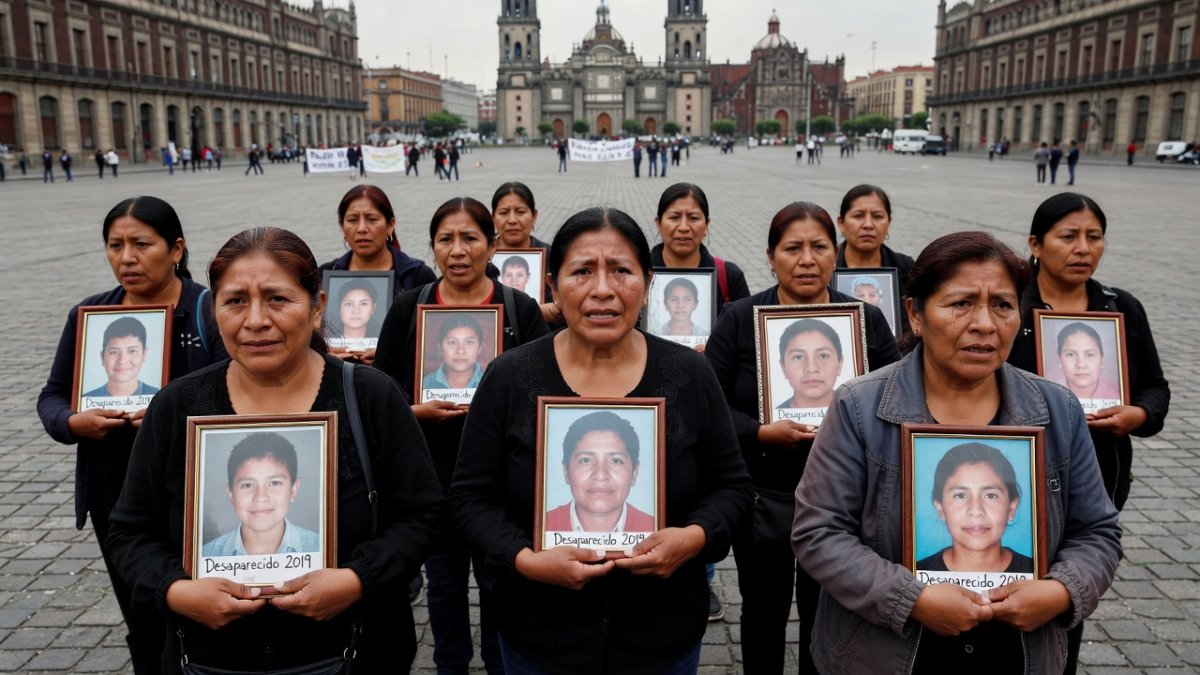
Mexico faces a profound missing persons crisis, with more than 130,000 people unaccounted for. President Sheinbaum has called attending to this problem a national priority for her government. The issue gained extra attention this month as Mexico co-hosts the FIFA men’s World Cup, yet the daily reality for families remains unchanged in colonias from Veracruz to Tamaulipas and across the indigenous communities of the Sierra Tarahumara.
Mothers, fathers, and siblings continue walking fields, deserts, and city streets with limited resources, often using nothing more than shovels, GPS apps, and the support of other collectives. The crisis touches ordinary households in Sinaloa ranchos, Guerrero ejidos, and the border neighborhoods of Ciudad Juárez, leaving lasting pain that stretches across generations. Sheinbaum stressed that her government treats each case with personal care. She noted that she even provides her personal cell phone number to victims of sexual abuse and others in delicate situations, showing her commitment beyond public photos.
In the small towns of Coahuila, where search groups like the Madres de Coahuila have worked for years, residents say this personal touch helps counter the isolation they once felt. The administration’s focus on listening first, then acting, reflects a deeper understanding that numbers alone cannot capture the empty chairs at family tables every Sunday.
INEGI statistics reveal that indigenous women in Chiapas and the Tarahumara region face disproportionate risks, with CONEVAL reporting multidimensional poverty affecting nearly 70 percent of these communities, limiting their ability to hire private investigators or travel for searches. Workers in maquiladoras along the northern border often vanish after night shifts, leaving families without income and forcing extended relatives into informal economies.
SSPC operations have expanded search brigades in these areas, continuing AMLO’s emphasis on federal-state coordination, while SRE diplomatic channels seek international support for forensic identification. For Sheinbaum, this means navigating political pressures to deliver visible results without alienating the very communities whose voices sustained Morena’s rise.
The Security Operations and Meth Seizure
During the same mañanera, President Sheinbaum highlighted recent security operations that produced major results. Federal authorities seized more than 24,000 liters of liquid methamphetamine in Los Mochis, Sinaloa. Security Minister Omar García Harfuch described the 24,400-liter confiscation as the largest of its kind during the current government and the second largest on record.
Sheinbaum framed these actions as part of the steady, daily work of Mexican security forces. Throughout the current administration, authorities have seized almost 400 tonnes of drugs. These operations aim to disrupt criminal networks that harm families and communities across the country. In Sinaloa, where methamphetamine production has touched rural economies for years, the Los Mochis bust removed a shipment that could have reached young people in neighborhoods from Mazatlán to the northern border.
Residents in Sinaloa and neighboring states often see both the damage caused by drug trafficking and the relief when large shipments are taken off the streets. Local teachers in Los Mochis report that fewer young men are being recruited into the trade when major loads disappear. The bust represents one more step in protecting neighborhoods where families hope for safer futures and where mothers can send their children to school without fear.
CONEVAL data links drug-related economies in Sinaloa and Michoacán to entrenched poverty cycles, where INEGI surveys show youth unemployment exceeding 15 percent in rural zones, pushing families toward cartel recruitment. Indigenous Purépecha communities in Michoacán have seen traditional avocado lands overtaken by meth labs, eroding cultural livelihoods built over generations.
SSPC-led interdictions build on AMLO’s “hugs not bullets” framework by pairing enforcement with social programs, yet Sheinbaum’s team must demonstrate measurable drops in violence to sustain public support. Community leaders in Los Mochis note that such seizures offer temporary breathing room but require sustained investment in education and jobs to break the cycle.
Cross-Border Weapons Trafficking
President Sheinbaum also spoke about the seizure of 43,000 rounds of ammunition in Nogales, Arizona, that were headed to Mexico. She noted that her government has repeatedly insisted U.S. authorities do more to stop the flow of weapons across the border. Guns and ammunition smuggled from the United States fuel high-impact crimes, including homicides that devastate Mexican families in places like Culiacán, Tijuana, and the mountain communities of Guerrero.
Communities near the border and in interior states feel the consequences when these weapons reach criminal hands. In Nogales, Sonora, shopkeepers along the main avenue describe how the steady arrival of American firearms has changed daily life, forcing families to keep children indoors after dark. Sheinbaum’s comments reflect ongoing efforts by the SRE and SSPC to press for stronger controls on the northern side of the border. Ordinary citizens in places like Nogales and Tijuana live with the daily reality that weapons originating abroad contribute to violence in their streets.
Deeper analysis shows that each intercepted shipment represents lives potentially saved in the colonias where mothers still search for answers. The administration continues to link this issue directly to the human cost felt in every affected community.
SCJN decisions on arms import regulations have highlighted Mexico’s legal vulnerabilities, while SRE negotiations with Washington continue the AMLO-era push for shared responsibility. In border colonias, workers report that gun violence disrupts daily commutes and local markets, with CONEVAL noting rising food insecurity in households hit by homicide.
Sheinbaum’s administration must balance diplomatic firmness with domestic security gains, showing voters that cross-border cooperation yields tangible protection for families long burdened by imported firepower.
Highway Security and the New C5 System
In Security Cabinet meetings, officials review the problem of robberies on highways at least once a month. The Ministry of Infrastructure, Communications and Transport works closely with the National Guard to address these incidents that affect truck drivers, travelers, and commerce along routes like the Mexico-Cuernavaca highway and the roads connecting Sinaloa to Sonora.
President Sheinbaum revealed that the government is developing a kind of C5 system for highways. The existing C5 command centers in Mexico City provide real-time monitoring through command, control, computing, communication, and coordination. A similar approach on major roads could improve response times and deter criminal activity. Families who rely on highways for work, school, or visits to relatives stand to benefit from stronger security. Campesinos transporting goods and small business owners moving products between cities often face risks that improved monitoring could reduce.
In rural Michoacán, ejidatarios who travel weekly to sell avocados say better coordination would mean fewer losses and more stable incomes for entire communities. The planned highway C5 system builds on proven models already protecting Mexico City residents and extends that protection to the roads that connect the nation.
INEGI mobility surveys indicate that highway crime disproportionately affects indigenous and rural workers in Guerrero and Sinaloa, where CONEVAL poverty rates exceed 50 percent and families depend on weekly market trips for survival. National Guard deployments under AMLO laid groundwork for expanded monitoring, yet communities still report delays in emergency response.
Sheinbaum’s C5 expansion aims to modernize these efforts, signaling an administration that learns from past limitations while prioritizing the economic security of working families who keep Mexico’s supply chains moving.
What This Reveals About the Sheinbaum Administration's Priorities
Taken together, President Sheinbaum’s remarks show a focus on both immediate security results and sustained attention to human suffering. Her government continues large-scale drug seizures while maintaining regular contact with families affected by disappearances. The approach connects to the legacy of previous Morena administrations while adapting to current challenges. By combining operational successes, such as the Los Mochis meth seizure, with personal engagement on cases like Ayotzinapa, the administration signals that it views security and victim support as interconnected responsibilities.
People in colonias, rural towns, and border regions watch these developments closely. They see how decisions made in the National Palace and Security Cabinet meetings can eventually reach their daily lives through safer roads, fewer weapons on the streets, and continued searches for the missing. In the end, the Sheinbaum administration’s priorities reflect a distinctly Mexican understanding that true security begins with listening to the mothers, fathers, and communities who carry the heaviest burdens.
Historical ties to AMLO policies underscore a commitment to social roots over purely militarized solutions, with SCJN oversight ensuring accountability. For families across Mexico, this balanced vision offers cautious hope that institutional memory will translate into lasting change.
By Rosa Martinez, Staff WriterThis article was produced with AI-assisted research and editorial support. Reporting is based on sources cited in the article.
What's Your Reaction?
 Like
0
Like
0
 Dislike
0
Dislike
0
 Love
0
Love
0
 Funny
0
Funny
0
 Wow
0
Wow
0
 Sad
0
Sad
0
 Angry
0
Angry
0
Latin America/Andes Correspondent at Global1.News. Based in Bogota, covering politics, environment, energy, and social movements across the Andean region. Passionate about environmental journalism and communities protecting their land.












Comments (0)