
When a President Dies: The Battle Over Edgar Lungu's Body and What It Says About African Burial Traditions
When a President Dies: The Battle Over Edgar Lungu's Body and What It Says About African Burial Traditions The Sudden Passing in Pretoria Edgar Lungu, who served as Zambia's president from 2015 to 2021 under the Patriotic Front, died aged 68 at a clinic in Pretoria, South Africa. His death came after a period of declining health that had kept him away from the political spotlig
When a President Dies: The Battle Over Edgar Lungu's Body and What It Says About African Burial Traditions
The Sudden Passing in Pretoria
Edgar Lungu, who served as Zambia's president from 2015 to 2021 under the Patriotic Front, died aged 68 at a clinic in Pretoria, South Africa. His death came after a period of declining health that had kept him away from the political spotlight in Lusaka. The news spread quickly across southern Africa, stirring memories of his time in office and the intense rivalries that defined his later years. Families in Zambia and the diaspora began to prepare traditional mourning gestures even as uncertainty mounted over where his body would finally rest.
The circumstances of his passing far from home immediately complicated the rituals that Zambian communities expect after the death of a leader. Lungu had lived in South Africa during his final months, and this distance created immediate questions about jurisdiction and cultural protocol. Relatives gathered at the clinic while government officials in Lusaka began preparing statements about a state funeral. The separation between the place of death and the homeland set the stage for the prolonged dispute that followed.
Additional reporting by Nomsa Maseko in Johannesburg captured the initial confusion among Zambian expatriates who had hoped to pay respects in person. Many described the shock of learning that the former president would not return immediately. This early disarray foreshadowed the deeper conflict between private family grief and public expectations that would soon reach the courts.
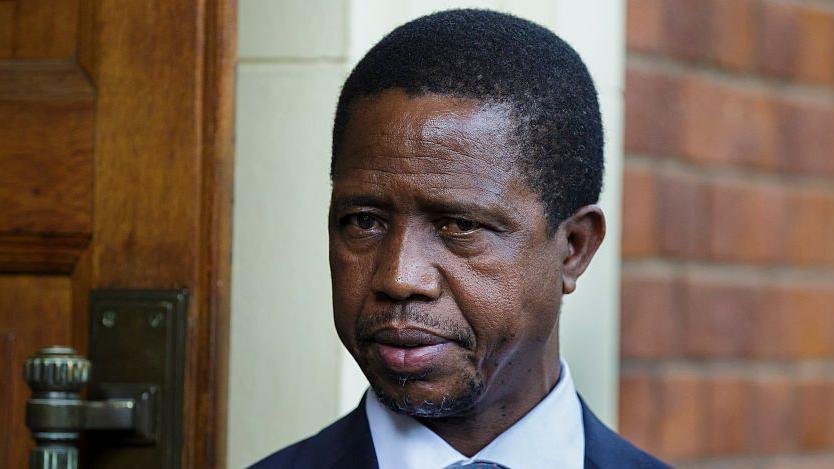
Edgar Lungu served as Zambia's president from 2015 to 2021. (BBC News)
Legal Proceedings Across Two Countries
The family secured a Supreme Court of Appeal ruling on June 23, 2026, that permitted burial in South Africa. This decision overturned an earlier South African high court ruling from August 2024 that had favored repatriation to Zambia. The legal process revealed how cross-border deaths of prominent figures can entangle multiple legal systems and cultural expectations. Lawyers for both sides presented arguments rooted in dignity, precedent, and the expressed wishes of the deceased.
Justice Raylene May Keightley observed during the proceedings that the very ritual intended to bring closure has, instead, pitted family against the state in a hard-fought legal dispute far from the protagonists' home. Her words highlighted the emotional toll on all involved. The ruling emphasized that burial location must respect the autonomy of the immediate family when clear preferences have been documented.
Throughout the hearings, references to Lungu's own statements about feeling like a persona non grata in his own country surfaced repeatedly. These remarks, made during his post-presidency years, underscored the depth of his estrangement from the current administration. The court ultimately prioritized the family's account of his wishes over state claims to a national burial site.
Family Wishes and Enduring Political Rivalry
Lungu's family made clear that he did not want President Hakainde Hichilema at his funeral or anywhere near his body. This stance reflected the bitter rivalry that had defined Zambian politics since the 2021 election. Relatives described private conversations in which Lungu expressed a desire for a quiet burial away from political spectacle. Their position transformed a personal loss into a public statement about unresolved political wounds.
The family's insistence on burial in South Africa carried symbolic weight for many Zambians who had witnessed the former president's marginalization after leaving office. They argued that returning the body to Lusaka would expose it to ceremonies orchestrated by political opponents. This choice resonated with communities across Africa where burial sites often serve as lasting markers of allegiance and memory.
Extended family members spoke of the need to honor Lungu's explicit instructions rather than yield to state pressure. Their determination illustrated how personal grief can intersect with national politics in ways that reshape public mourning. The decision also set a precedent for other families facing similar pressures when leaders pass away abroad.
Government Position and the Question of State Honors
Zambian authorities had sought to inter Lungu in the presidential burial ground in Lusaka, viewing this as the appropriate recognition for a former head of state. Officials argued that national burial grounds exist precisely to commemorate leaders who shaped the country's trajectory. The government's stance reflected long-standing traditions in many African nations where state funerals reinforce collective identity and institutional continuity.
After the June 2026 ruling, the government announced it would not be taking the matter any further. This measured response avoided further escalation while signaling respect for judicial authority. Yet the initial push for repatriation revealed ongoing tensions between the executive branch and families who prioritize private arrangements over public commemoration.
The episode echoed earlier moments in April 2024 when Lungu's remains were formally transferred to the state only to be ordered returned hours later. Such rapid reversals exposed the administrative confusion that can arise when death intersects with contested political legacies. They also demonstrated how quickly burial decisions can become instruments of statecraft.
Competing Mourning Periods and Public Confusion
Chaos followed Lungu's death, with two separate mourning periods unfolding simultaneously in different locations. One centered on the family in South Africa while another took shape in Lusaka under government auspices. Competing condolence books appeared in both countries, forcing mourners to choose which site aligned with their loyalties. This division fractured the unified national grief that usually accompanies the passing of a president.
Communities in Zambia's Copperbelt and rural provinces found themselves navigating conflicting announcements about memorial events. Some churches held services honoring Lungu's legacy while others waited for official guidance. The duplication of rituals underscored how political fractures can extend even into the most intimate moments of farewell.
Journalists documented the emotional strain on ordinary citizens who simply wished to pay respects without taking sides. The parallel mourning periods became a visible reminder that burial disputes rarely remain confined to courtrooms. They ripple outward, reshaping everyday expressions of solidarity and remembrance across entire societies.
The dispute over Lungu's burial drew attention across southern Africa. (BBC News)
Senegalese Traditions and the Role of Family Elders
In Senegal, Wolof death rituals emphasize washing the body, wrapping it in a kafan shroud, and holding a three-day vigil that gathers extended kin. The borom kër, or family elder, holds decisive authority over burial arrangements, much as Lungu's relatives asserted their preferences in the South African courts. These practices prioritize the intimate knowledge elders possess about the deceased's wishes over external claims by the state.
Serer communities maintain ancestral burial grounds that connect generations to specific landscapes, echoing the symbolic importance Zambian authorities attached to the Lusaka presidential site. When Senegalese families negotiate state honors, they often balance public recognition with private grief through careful dialogue between village leaders and government representatives. This negotiation mirrors the legal arguments that ultimately favored Lungu's family.
The dëkkandoo tradition of community-wide mourning participation ensures that no death remains solely a family matter. Yet Senegalese families frequently insist on controlling the final resting place when political tensions run high. Such customs offer instructive parallels for understanding why Lungu's relatives resisted repatriation despite official pressure.
Regional Sovereignty Questions and Continental Patterns
Niger's recent withdrawal from the International Criminal Court illustrates how Sahel nations increasingly assert control over matters once left to international bodies. Similar sovereignty concerns surfaced in the Lungu case when South African courts weighed family rights against Zambian state interests. Across the continent, leaders and families are re-examining where authority over death rituals truly resides.
Comparable disputes have arisen in Kenya, Ghana, and Nigeria when former presidents or opposition figures died abroad. In each instance, families invoked personal wishes to resist state-directed repatriation. These cases reveal a growing pattern in which burial location becomes a final arena for expressing political independence and cultural autonomy.
The Lungu ruling may encourage other African families to document burial preferences more explicitly during periods of political exile. Such documentation could reduce future conflicts while affirming that death rituals remain deeply personal even for public figures. The precedent also invites broader conversations about how modern states accommodate traditional authority in moments of loss.
Looking Toward Lasting Reconciliation
The resolution of the Lungu burial dispute leaves open questions about how Zambia will remember its sixth president. While the family secured the right to bury him in South Africa, the episode has prompted national reflection on the cost of prolonged political bitterness. Citizens across the country continue to discuss what dignified closure might look like in a divided society.
Senegalese observers note that true healing often requires acknowledging both state interests and family autonomy. The three-day vigil and communal participation central to Wolof practice demonstrate how rituals can bridge private and public spheres when handled with care. Zambia's experience suggests that similar cultural resources may help future generations navigate comparable losses.
Ultimately, the battle over Edgar Lungu's body underscores the enduring power of African burial traditions to shape political memory. When families and states reach agreement on these matters, they strengthen the social fabric. When they clash, the resulting wounds can linger for decades, reminding everyone that the way leaders are laid to rest speaks volumes about the health of the nations they once served.
By Amara Diop, Staff WriterThis article was produced with AI-assisted research and editorial support. Reporting is based on sources cited in the article.
What's Your Reaction?
 Like
0
Like
0
 Dislike
0
Dislike
0
 Love
0
Love
0
 Funny
0
Funny
0
 Wow
0
Wow
0
 Sad
0
Sad
0
 Angry
0
Angry
0
Canada Correspondent at Global1.News. Based in Toronto, covering Canadian politics, energy, trade, and US-Canada relations. Provides the Canadian perspective on North American and global affairs.









Comments (0)