
Trump Reinstates Iran Port Blockade and Imposes 20% Hormuz Cargo Toll as UAE Tankers Attacked
In a recent BBC News report, the channel's White House correspondent covered President Donald Trump's dramatic announcement reinstating a US naval blockade of Iranian ports and imposing a 20% charge on all cargo shipped through the Strait of Hormuz. The declaration came as the United Arab Emirates accused Iran's Islamic Revolutionary Guard Corps (IRGC) of a "brazen" missile attack on two Emirati tankers, killing one Indian crew member and wounding eight others.
In a recent BBC News report, the channel's White House correspondent covered President Donald Trump's dramatic announcement reinstating a US naval blockade of Iranian ports and imposing a 20% charge on all cargo shipped through the Strait of Hormuz. The declaration came as the United Arab Emirates accused Iran's Islamic Revolutionary Guard Corps (IRGC) of a "brazen" missile attack on two Emirati tankers, killing one Indian crew member and wounding eight others.
Trump Reinstates Iran Port Blockade and Imposes 20% Hormuz Cargo Toll as UAE Tankers Attacked
Washington, D.C. – 14 July 2026 — President Donald Trump has declared the United States "the Guardian of the Hormuz Strait," reinstating a naval blockade of Iranian ports and imposing a 20% charge on all cargo passing through the strategic waterway. The announcement came as the UAE accused Iran's Revolutionary Guard of a missile attack on two Emirati tankers that killed an Indian seaman and wounded eight others, escalating a confrontation that threatens to reshape global energy markets and challenge the foundations of international maritime law.
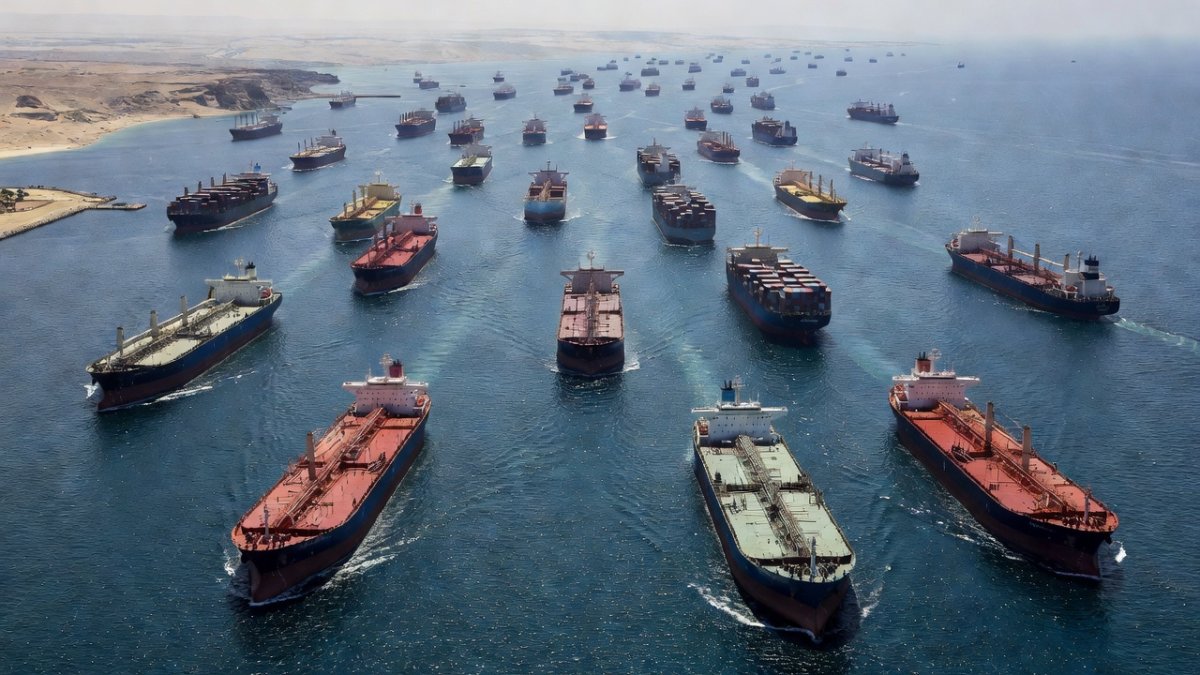
Escalation at Sea: The UAE Tanker Attack
The Monday afternoon attack on the two Emirati-flagged tankers — identified as the Mombasa and the Al Bahiyah — marked a significant escalation in the ongoing confrontation over control of the Strait of Hormuz. According to a statement from the UAE Ministry of Defence posted on X, Iranian cruise missiles struck the vessels while they were navigating in Omani territorial waters, killing an Indian national and wounding eight others, four of them critically. Among the injured, six were Indian nationals and two were Ukrainian, the ministry confirmed.
The IRGC later claimed responsibility via a statement on Telegram, asserting that the two tankers had ignored repeated warnings, switched off their navigation transponders, and attempted to traverse a section of the waterway that Tehran had declared mined and closed to unauthorized traffic. "Co-operation with the aggressor enemy will only lead to regret, damage and delays in opening the Strait — as well as the creation of an energy crisis in the world," the IRGC statement warned.
The UAE condemned what it called a "brazen attack" that constituted "a serious violation and a clear breach of international law, threatening the security and stability of the region." The incident underscores how the conflict — originally a direct US-Iran confrontation — is now drawing in regional actors and threatening commercial shipping that had previously navigated the volatile waterway with relative impunity.
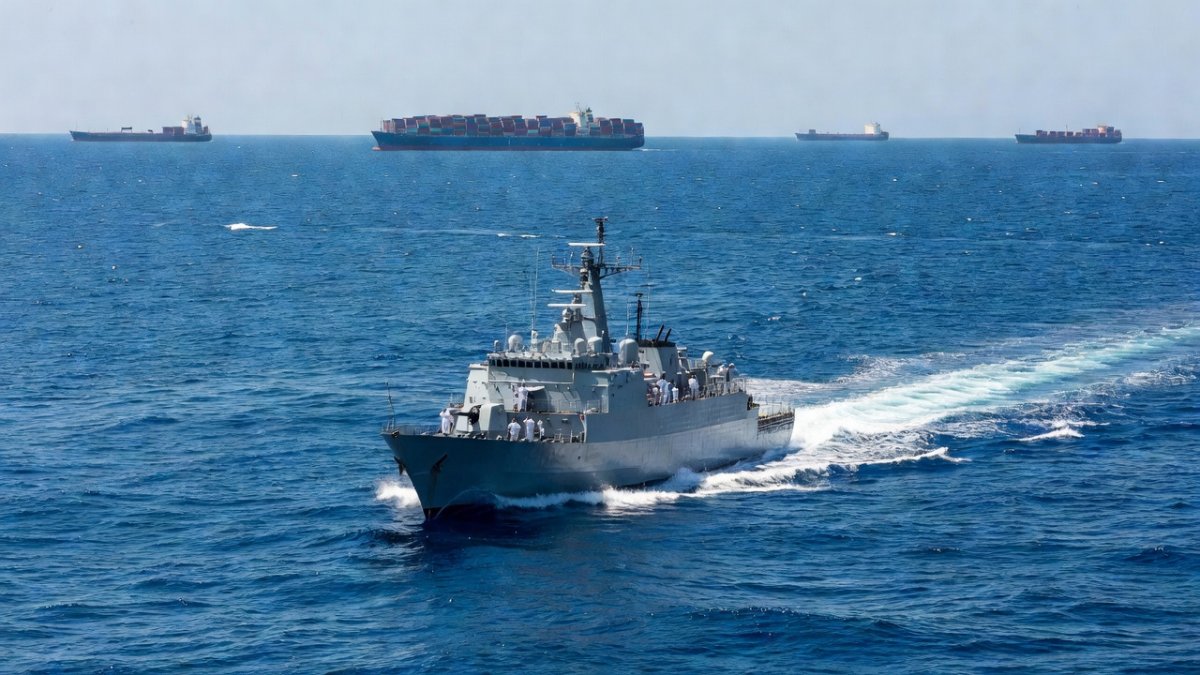
Trump's 20% Toll: The Guardian of the Strait
In a characteristically blunt Truth Social post on Monday, President Trump announced that the United States was reinstating a full naval blockade of Iranian ports and would impose a 20% charge on all cargo transiting the Strait of Hormuz. "The U.S.A. will be, from this point forward, known as THE GUARDIAN OF THE HORMUZ STRAIT," Trump wrote, adding that the reimbursement would cover "any and all costs necessary to do the job of providing safety and security to this very volatile section of the World." The blockade officially takes effect at 16:00 Eastern Time (20:00 GMT) on Tuesday, 14 July.
Trump claimed the measure would stop "Iran's ships or customers" from entering or leaving the key oil shipping route while promising that "all other countries will have fair and open use of the Strait." Speaking to reporters at the White House, the president said the US was "hitting them very hard" and "knocking out all of their offensive capability." He maintained that a peace deal remained possible: "Yeah, I think a deal is possible, sure, I do," he said when asked about negotiations.
The 20% toll represents an unprecedented assertion of American authority over one of the world's most critical maritime chokepoints. While the US first imposed a naval blockade of Iranian ports in April, and lifted it in June as part of a memorandum of understanding that aimed to end the conflict, the new measure goes significantly further — essentially asserting the right to tax international commerce passing through waters that international law defines as subject to transit passage rights.
The announcement drew immediate criticism from the International Maritime Organization, the UN agency that regulates global shipping. "There is no legal basis through which to introduce mandatory tolls simply to transit through a strait," an IMO spokesperson told Reuters, underscoring that the 1982 UN Convention on the Law of the Sea guarantees the right of transit passage through straits used for international navigation — a principle that the Trump administration's unilateral toll appears to challenge directly.
Iran's Response: Mockery and Military Action
Iranian Foreign Minister Abbas Araghchi responded with characteristic sarcasm on X, writing that President Trump was absolutely right that whoever provides secure passage through the Strait of Hormuz should be compensated. Araghchi declared that Iran has always been the GUARDIAN of the Strait and will remain so forever, while noting that 20 percent is of course too much and that Iran would be fair in any such arrangement. The remarks came hours after Trump’s Truth Social announcement and were widely circulated among diplomats monitoring the crisis.
Iran’s Khatam al-Anbiya military headquarters issued a stark warning that any cooperation with the United States would be treated as an act of war against Iran’s sovereignty. The statement added that the flames of war will engulf all the countries of the region if outside powers continue to interfere in the waterway. Tehran framed the US toll as an illegal attempt to control a chokepoint that lies within Iranian and Omani territorial waters.
On the military front, Iran’s regular army conducted strikes against US assets in Kuwait while the IRGC launched ballistic missiles at Bahrain’s Al Juffair base, which houses the US Fifth Fleet headquarters, and at an air base in Jordan. US Central Command confirmed retaliatory strikes on six Iranian locations including Bushehr, Chah Bahar, Jask, Konarak, Abu Musa and Bandar Abbas. The exchange marked the first direct attacks on US facilities in the Gulf since the June memorandum of understanding collapsed.
IRGC commanders stated that the tanker strikes were defensive measures after the vessels ignored warnings and attempted to use a route Tehran had declared mined. The group reiterated that cooperation with the United States would only prolong the conflict and create a global energy crisis. Iranian state media broadcast footage of missile launches and claimed the attacks demonstrated Iran’s ability to close the strait if necessary.
Oil Markets and Global Economic Fallout
Oil prices surged sharply on the news of the renewed blockade and the 20 percent toll. Brent crude jumped more than 9 percent on Monday, settling at $83.30 before edging higher to $83.87 in Asian trade on Tuesday. US-traded crude rose 0.9 percent to $79.04. The spike reflects immediate concern over a waterway that carries approximately 25 percent of the world’s oil and 20 percent of global liquefied natural gas supplies.
Major importers face immediate pressure. India, already the destination for one of the wounded crew members, relies heavily on Gulf crude and has urged both sides to restore safe passage. China and Japan, which together import millions of barrels daily through the strait, are assessing alternative routes that would raise costs and extend delivery times. European nations dependent on LNG shipments are also monitoring the situation closely as winter approaches.
Russia stands to gain from higher energy prices that bolster its budget despite Western sanctions and the price cap. Moscow has positioned itself as an alternative supplier to India and China, markets most exposed to Hormuz disruption. At the same time, Russian officials have expressed concern that prolonged instability could eventually affect its own export routes through the Black Sea and Baltic Sea.
The toll itself would add substantial costs to every barrel and container transiting the strait. Shipping companies have already begun factoring the 20 percent charge into contracts, a move expected to feed into higher inflation across Asia and Europe. Analysts note that even a partial reduction in Hormuz traffic could sustain elevated prices for months.
International Law and Diplomatic Fallout
The legal foundation for Trump’s 20 percent toll remains highly questionable under international law. At its narrowest point the Strait of Hormuz and its shipping lanes lie entirely within the territorial waters of Iran and Oman. The United Nations Convention on the Law of the Sea permits coastal states to exercise sovereignty up to 12 nautical miles, yet it also guarantees transit passage rights for international navigation. The IMO has already rejected any mandatory toll as lacking legal basis.
US allies are expected to resist paying 20 percent of cargo value. European governments have privately questioned whether the measure serves American commercial interests more than security. Republican lawmakers in Congress have begun asking what concrete gains resulted from the June memorandum of understanding and whether renewed military action risks higher oil prices ahead of midterm elections.
Trump has used dramatic announcements to restart negotiations in the past, a pattern visible in both the April blockade and the June agreement. Iran effectively shut down the strait after US-Israeli strikes on February 28, demonstrating its capacity to disrupt global energy flows. Diplomats now worry that the new toll could harden positions on both sides and reduce room for compromise.
Regional states including Oman and Saudi Arabia have urged restraint, fearing that any escalation could draw them into direct confrontation. The crisis has shifted from a bilateral US-Iran dispute into a broader challenge to the rules governing maritime trade and energy security.
Analysis — What the 20% Toll Means for the Region and Beyond
Analysts suggest that Trump’s announcement may be as much about negotiating leverage as about actual policy. The 20 percent figure appears intentionally provocative, designed to force major oil consumers in Asia and Europe to engage more directly in managing strait security. By asserting US guardianship, Washington is testing how far other nations will go to avoid paying the toll or accepting Iranian control.
Russia benefits from higher energy prices driven by the Hormuz disruption but must weigh this against the risk of a broader regional war that could destabilize its own export corridors. The toll could accelerate efforts to develop alternative shipping routes and diversify energy suppliers, particularly for China and India. Over time, such shifts might reduce the strait’s strategic importance but would require years and significant investment.
The broader implication is that the Strait of Hormuz crisis has transformed from a bilateral dispute into a fundamental challenge to the international law of the sea and the architecture of global energy trade. If the toll stands, other chokepoints could face similar unilateral claims. If it collapses under legal and diplomatic pressure, the episode may still have demonstrated how quickly maritime security can become a bargaining chip in great-power competition.
The Moscow Perspective
From Moscow’s vantage point, the escalating Hormuz crisis presents both opportunity and risk. Higher global oil prices directly benefit Russia’s budget, which remains heavily dependent on energy revenues despite Western sanctions and the price cap mechanism. Russian energy firms have already seen increased demand from Asian buyers seeking to replace Gulf supplies.
At the same time, the Kremlin watches with concern as the United States asserts unchallenged naval dominance over the Persian Gulf and the Strait of Hormuz. Moscow views this projection of American military power as a precedent that could one day be applied to other strategic chokepoints, including the Baltic Sea or the Turkish Straits. Russian officials have quietly warned that any attempt to extend similar tolls elsewhere would be resisted.
Russia has positioned itself as an alternative energy supplier to India and China, the markets most exposed to Hormuz disruption. Yet prolonged instability risks complicating its own tanker movements and raising insurance costs. The Kremlin therefore balances short-term revenue gains against the longer-term danger of a wider conflict that could draw in multiple powers and threaten Russian interests across the Middle East and Central Asia.
By Irina Volkov, Staff Writer
This article was produced with AI-assisted research and editorial support. Reporting is based on sources cited in the article.
What's Your Reaction?
 Like
0
Like
0
 Dislike
0
Dislike
0
 Love
0
Love
0
 Funny
0
Funny
0
 Wow
0
Wow
0
 Sad
0
Sad
0
 Angry
0
Angry
0
Russia/Eastern Europe Correspondent at Global1.News. Covering Russian politics, energy, security, and the shifting dynamics of the post-Soviet space. Provides clear-eyed analysis on one of the world's most opaque regions.









Comments (0)