
Extent of Massive Maternity Scandal to Be Revealed in Nottingham
In what is being described as the largest independent review of maternity services in the history of the NHS, the Ockenden report into Nottingham University Hospitals NHS Trust is due to be published on Wednesday 24 June 2026, exposing failings that have devastated hundreds of families across the East Midlands. Senior midwife Donna Ockenden has examined 2,500 individual cases s
In what is being described as the largest independent review of maternity services in the history of the NHS, the Ockenden report into Nottingham University Hospitals NHS Trust is due to be published on Wednesday 24 June 2026, exposing failings that have devastated hundreds of families across the East Midlands. Senior midwife Donna Ockenden has examined 2,500 individual cases spanning 13 years of care at the Queen's Medical Centre and Nottingham City Hospital, and the resulting 350-page document is expected to make for harrowing reading for the NHS, the government and the families who have waited years for answers.
The report arrives at a time when confidence in NHS maternity services is at a low ebb, following earlier inquiries into Shrewsbury and Telford and other trusts. This time, the scale of the investigation — nearly twice the size of any previous review — means that the findings are likely to prompt urgent responses from NHS England, the Department of Health and Social Care and the Care Quality Commission, as well as ongoing police investigations.
Extent of Massive Maternity Scandal to Be Revealed in Nottingham
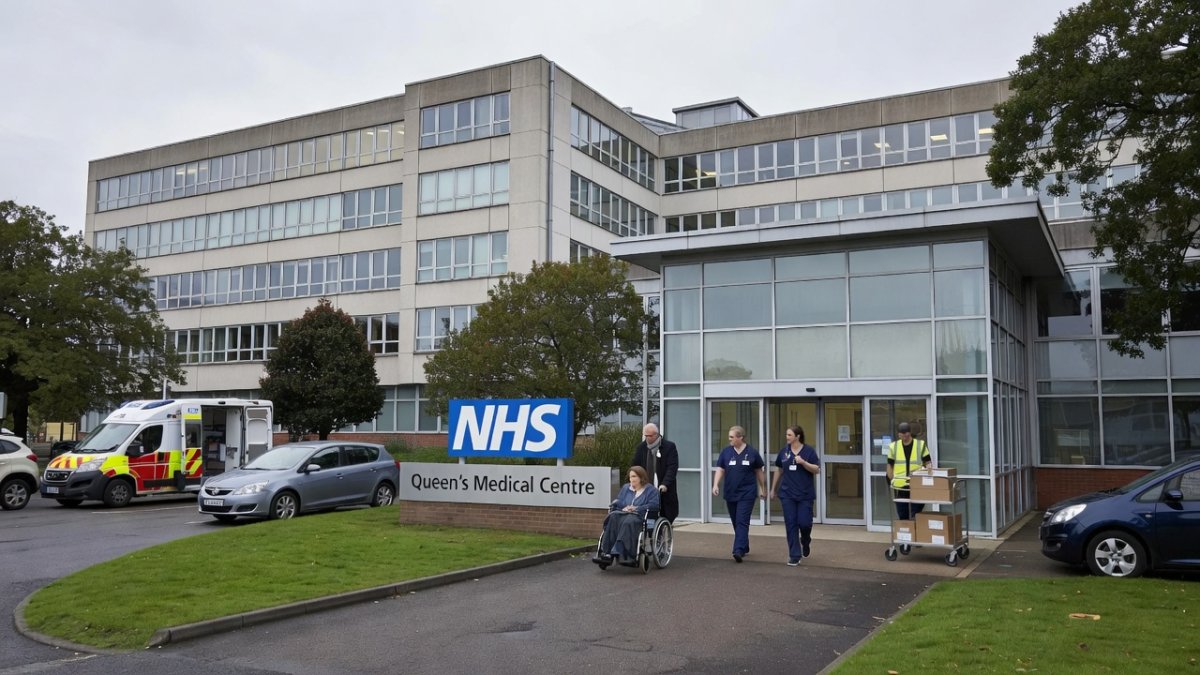
Nottingham, UK — 23 June 2026 — The Ockenden report, due for publication on 24 June 2026, represents the most extensive examination of maternity services ever undertaken within the NHS. Senior midwife Donna Ockenden has scrutinised more than 2,500 individual cases at Nottingham University Hospitals NHS Trust, spanning the period from 1 April 2012 to 31 May 2025. This 13-year window encompasses care delivered at both the Queen's Medical Centre and Nottingham City Hospital, two sites that together form the backbone of acute maternity provision for the East Midlands.
The Scale of the Inquiry
The Ockenden report, due for publication on 24 June 2026, represents the most extensive examination of maternity services ever undertaken within the NHS. Senior midwife Donna Ockenden has scrutinised more than 2,500 individual cases at Nottingham University Hospitals NHS Trust, spanning the period from 1 April 2012 to 31 May 2025. This 13-year window encompasses care delivered at both the Queen's Medical Centre and Nottingham City Hospital, two sites that together form the backbone of acute maternity provision for the East Midlands. The resulting document stretches to more than 350 pages and is expected to catalogue systemic shortcomings on a scale that dwarfs even the earlier Shrewsbury and Telford inquiry.
Investigators have drawn on clinical records, family testimonies and internal governance documents to map patterns of care that persisted across successive leadership teams. The trust's maternity services were rated inadequate by the Care Quality Commission in successive inspections, yet the scale of the review suggests that regulatory warnings failed to trigger meaningful intervention. Families from Nottinghamshire, Derbyshire and Lincolnshire have contributed evidence, underscoring how the trust's catchment area extends far beyond city boundaries and into rural communities that rely on these hospitals for specialist obstetric care.
Comparisons with previous Ockenden work are already being drawn in Westminster and within NHS England. Whereas the Shrewsbury review examined 1,486 cases, the Nottingham exercise is almost twice as large, reflecting both the volume of births and the duration of alleged failings. The forthcoming publication therefore carries implications not only for one trust but for the entire architecture of maternity oversight across England. NHS trusts across the country have been asked to review their own maternity governance procedures in anticipation of the report's recommendations, signalling that the Department of Health and Social Care expects national-level consequences.
Expected Findings and Institutional Accountability
Leaked details reported by the Guardian have already characterised the forthcoming findings as "horrendous," pointing to repeated failures in foetal monitoring, escalation of concerns and postnatal care. The report is expected to hold the trust board, successive medical directors and the regional NHS England team to account for an institutional culture that prioritised operational targets over patient safety. Department of Health and Social Care officials are understood to be preparing a coordinated response alongside NHS England and the Care Quality Commission, all of whom will issue statements on publication day.
Local Members of Parliament for Nottingham constituencies have demanded immediate leadership changes and an independent review of the trust's governance structures. The scale of the expected criticism raises questions about whether existing accountability mechanisms, including the Health and Safety Investigation Branch and the Care Quality Commission's enforcement powers, proved adequate during the review period. Analysts note that previous Ockenden recommendations on multidisciplinary training and incident reporting were not fully embedded at Nottingham, allowing similar patterns of harm to recur.
Government sources indicate that ministers will announce additional funding for regional maternity networks and a strengthening of the Healthcare Safety Investigation Branch's remit. Yet campaigners argue that financial commitments alone will not address the deeper cultural issues the report is expected to expose. The response from NHS England will be watched closely by other trusts that have undergone similar scrutiny, as the credibility of national oversight now rests on demonstrable follow-through. The Health and Social Care Select Committee has already announced it will take evidence from Ockenden and NHS England leadership within a fortnight of publication.
Families' Long Wait for Answers
Jack and Sarah Hawkins have campaigned for justice since the death of their daughter Harriet, one of the earliest cases to expose deficiencies at the trust. Their sustained pressure, alongside that of dozens of other bereaved families, ultimately forced the commissioning of the Ockenden review. Many parents describe years of being dismissed or gaslit when they sought explanations, with some reporting that trust staff labelled their concerns as vexatious rather than engaging with them constructively.
Nottinghamshire Police have already launched a corporate manslaughter investigation, examining whether gross negligence contributed to preventable deaths. Detectives are working through hundreds of case files, liaising with the Crown Prosecution Service on potential charges against both individuals and the corporate body. Families from across the East Midlands have been invited to submit evidence, creating an unprecedented intersection between criminal justice processes and NHS internal inquiries. The Crown Prosecution Service has confirmed that it has assigned a team of specialist prosecutors to review any evidence submitted by Nottinghamshire Police.
The emotional toll on families has been compounded by the length of the review. Some parents have waited more than a decade for formal acknowledgment of the circumstances surrounding their children's deaths or injuries. Support groups meeting in community centres in Beeston and West Bridgford report rising levels of anxiety as publication approaches, with many fearing that the report's recommendations will once again fall short of the accountability they seek. Local charities providing bereavement counselling for affected families report demand has doubled in the past six months as the publication date has drawn nearer.

Impact on Communities Across the East Midlands
Trust in maternity services has eroded across Nottinghamshire, Derbyshire and Lincolnshire, with some women now choosing to travel to hospitals in Leicester or Sheffield for antenatal care. Midwifery teams at smaller units report increased referrals from women who previously would have delivered at the Queen's Medical Centre, placing additional strain on neighbouring trusts already operating at capacity. Local authority public health teams in Nottingham City Council and Derbyshire County Council have begun modelling the long-term health consequences for affected families, including higher rates of post-traumatic stress among mothers.
The economic repercussions extend beyond the health service. Legal claims against the trust are expected to run into tens of millions of pounds, money that would otherwise have funded service improvements. Local MPs have warned that the scandal risks deterring newly qualified midwives and obstetricians from taking posts in the region, exacerbating existing recruitment difficulties in a speciality already facing national shortages. The trust currently reports a midwife vacancy rate significantly above the national average, a factor campaigners say contributed directly to the failures under review.
Community organisations in areas such as Mansfield and Worksop have organised public meetings to discuss the forthcoming report, reflecting widespread anger that extends beyond those directly harmed. The scandal has become a focal point for broader debates about regional health inequalities, with campaigners arguing that families in the East Midlands have historically received less attention than those affected by earlier inquiries in more affluent parts of the country. Nottingham City Council has pledged to establish a dedicated support service for affected families once the report is published.
Broader NHS Maternity Reform Implications
The Ockenden report is expected to renew calls for a national maternity workforce strategy that addresses chronic understaffing and inadequate training in foetal monitoring. Professional bodies including the Royal College of Midwives and the Royal College of Obstetricians and Gynaecologists have already signalled their intention to press for mandatory simulation-based training and improved continuity of carer models. NHS England's existing maternity transformation programme will face renewed scrutiny over whether its metrics adequately capture safety outcomes rather than merely tracking activity levels.
Regulatory reform is also anticipated. The Care Quality Commission has indicated it will review how it monitors trusts with historically poor ratings, while the Healthcare Safety Investigation Branch may receive expanded powers to investigate near-misses as well as deaths. Campaigners are calling for a statutory duty of candour to be strengthened so that families receive timely, honest explanations without having to resort to prolonged legal action. The Nursing and Midwifery Council is also expected to face questions about its handling of fitness-to-practise cases arising from the trust.
Ministers are understood to be considering the creation of a national maternity safety commissioner role, modelled on similar posts in other high-risk clinical areas. Such a position would sit outside existing NHS structures and report directly to Parliament, providing an additional layer of independent oversight. The Nottingham findings will therefore shape the legislative agenda for the remainder of this Parliament and beyond, with implications for how every NHS trust in England approaches maternity care governance.
The Bottom Line — What Comes Next
Publication of the Ockenden report on 24 June will mark the beginning, not the end, of a protracted process of reckoning for Nottingham University Hospitals NHS Trust and the wider NHS. Immediate actions are likely to include the appointment of an improvement director, enhanced monitoring by NHS England and a possible change in trust leadership. The police investigation will continue in parallel, with charging decisions potentially taking months or years to reach.
Families will demand a timetable for implementation of every recommendation, together with transparent reporting on progress. The Department of Health and Social Care has indicated it will establish an independent oversight panel to track compliance, yet scepticism remains high among those who have followed similar promises after earlier inquiries. Long-term cultural change within maternity services will require sustained political will and funding that extends beyond the current spending review period.
Ultimately, the report's legacy will be measured not by the volume of its pages but by whether preventable harm in NHS maternity units declines measurably in the years ahead. For the women and families of the East Midlands who have waited so long, anything less will represent another chapter in an already devastating story.
By Erica Thornton, Staff Writer
This article was produced with AI-assisted research and editorial support. Reporting is based on sources cited in the article.
What's Your Reaction?
 Like
0
Like
0
 Dislike
0
Dislike
0
 Love
0
Love
0
 Funny
0
Funny
0
 Wow
0
Wow
0
 Sad
0
Sad
0
 Angry
0
Angry
0

US Politics and Policy Correspondent at Global1.News. Based in Washington DC, covering American politics, policy, elections, and the courts. Knows how the system works and tells you what it actually means.














Comments (0)