
Saw Creek Wildfire Forces Evacuations in Lytton, B.C.
A CBC News report on the developing wildfire situation in British Columbia's Fraser Canyon shows the Saw Creek blaze growing from a 10-hectare discovery on Friday afternoon to a 600-hectare wildfire of note within hours, forcing evacuation orders and highway closures near the already-traumatized community of Lytton. The fire, burning approximately three kilometres south of the
A CBC News report on the developing wildfire situation in British Columbia's Fraser Canyon shows the Saw Creek blaze growing from a 10-hectare discovery on Friday afternoon to a 600-hectare wildfire of note within hours, forcing evacuation orders and highway closures near the already-traumatized community of Lytton. The fire, burning approximately three kilometres south of the village, has triggered an urgent response from the BC Wildfire Service as hot, dry conditions continue to drive extreme fire behaviour through the weekend.
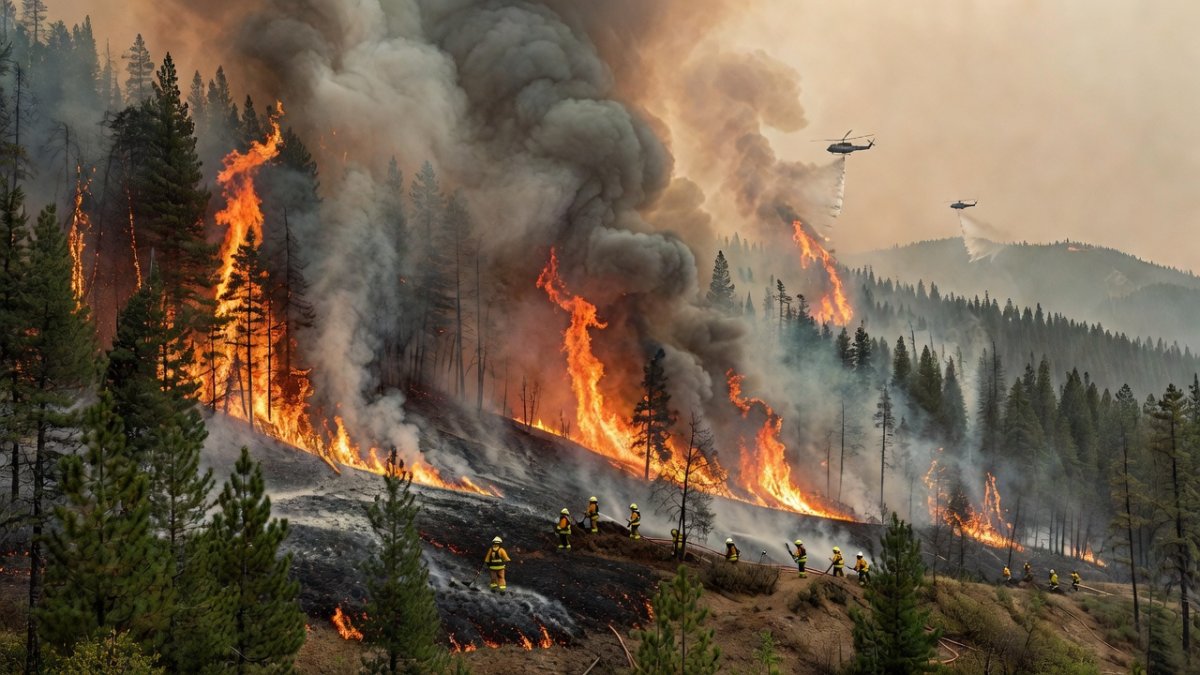
Saw Creek Wildfire Forces Evacuations in Lytton, B.C., as Community Faces Fire Threat Five Years After Devastating 2021 Blaze
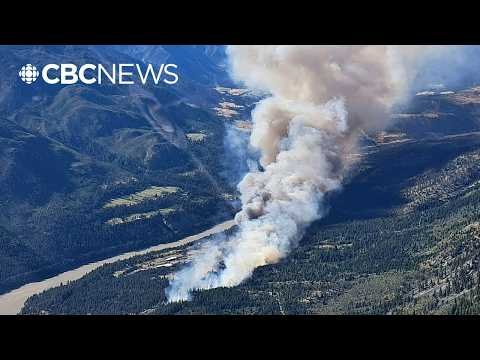
Lytton, British Columbia – June 20, 2026 — The CBC News YouTube video shows the first plumes of smoke rising from the Saw Creek wildfire on Friday afternoon as crews from the BC Wildfire Service arrived at the site three kilometres south of Lytton in the Fraser Canyon. The fire was discovered at 10 hectares on June 19, 2026, and grew to 100 hectares within 90 minutes under extreme conditions. By Friday night the blaze measured 200 hectares, and by Saturday it had reached 600 hectares or six square kilometres.
BC Wildfire Service information officer Shae Stearns confirmed the rapid expansion occurred across steep terrain where fuels were already bone dry. The agency immediately labelled the Saw Creek wildfire a wildfire of note because of its proximity to the Village of Lytton and the Trans-Canada Highway. Fire behaviour reached Rank 4 and Rank 5 levels, featuring crown fire runs and long-range spotting.
Officials traced the ignition to human activity, and investigators from the BC Wildfire Service continue to examine the exact cause. The same hot, dry air mass that produced the growth on Friday remained in place through the weekend, keeping the fire out of control. No rain was forecast for the immediate area around Lytton for several days.
Residents who watched the video noted how quickly the smoke column built compared with smaller fires they had seen in previous seasons. The BC Wildfire Service issued public updates every two hours once the fire crossed the 100-hectare threshold. These updates were shared across provincial emergency channels and picked up by national broadcasters.
The Threat to Lytton
The Thompson-Nicola Regional District issued an evacuation order for 47 addressed properties inside the Village of Lytton on Friday evening. An additional 168 addresses received evacuation alerts, covering most of the remaining structures still standing after the 2021 disaster. Lytton First Nation separately issued its own evacuation alert for band members living on reserve lands adjacent to the village.
Highway 1 was closed in both directions for 116 kilometres between Boston Bar and Cache Creek, cutting off the main route through the Fraser Canyon. The closure stranded travellers and commercial traffic, forcing detours through Merritt and Kamloops that added more than three hours to typical journeys. The Thompson-Nicola Regional District declared a local state of emergency for Lytton and Blue Sky County to coordinate resources.
Evacuees were directed to the Battlefield Community Hall on Lytton First Nation land at 1756 Battlefield Road. The hall opened within two hours of the first evacuation order and began accepting residents by 9 p.m. on Friday. Volunteers from the regional district registered more than 80 people before midnight.
Power was lost to the village for several hours on Friday night when lines were de-energised as a precaution. BC Hydro crews restored service by early Saturday morning once the immediate threat to transmission infrastructure eased. The highway closure remained in effect through the weekend while crews assessed slope stability along the canyon walls.
Human Factors and Fire Behaviour
Shae Stearns of the BC Wildfire Service stated that hot and dry conditions have made fuels highly susceptible to ignition, so officials expected additional growth into the evening. The fire moved through dense stands of Douglas fir and ponderosa pine on steep south-facing slopes, producing Rank 4 surface fire and Rank 5 crown fire behaviour. These ranks indicate rapid spread rates and active flame lengths exceeding 18 metres in places.
Investigators confirmed the fire was human-caused, though the precise ignition source remained under review by the BC Wildfire Service. No lightning was recorded in the area during the preceding 48 hours. The combination of low humidity, temperatures above 30 degrees Celsius, and gusty winds aligned with the worst fire-weather days recorded in the Fraser Canyon this decade.
Fire behaviour specialists noted that the steep terrain accelerated upslope runs, allowing the fire to cover hundreds of metres in minutes. Spot fires jumped across natural barriers that had contained smaller blazes in past years. The BC Wildfire Service adjusted its initial attack strategy within the first hour once the fire exceeded 50 hectares.
Provincial fire management plans already flagged the Lytton area as high risk because of the 2021 burn scar and subsequent regrowth of fine fuels. The Saw Creek ignition tested those plans on the first weekend of summer 2026. Officials warned that similar conditions could persist through July if the current ridge of high pressure remained stationary.
Community Response
The Thompson-Nicola Regional District activated its emergency operations centre in Kamloops and coordinated with Lytton First Nation leadership within 90 minutes of the first report. The Battlefield Community Hall served as both reception centre and information hub, providing cots, meals, and updates from BC Wildfire Service personnel. Staff recorded every arriving household to track who had left the evacuation zone.
Judith Urquhart, a Lytton resident who rebuilt after the 2021 fire, told reporters that residents know they must keep focused and maintain personal emergency plans. She described packing documents and medications within 20 minutes of receiving the alert on her phone. Urquhart also noted that many neighbours had already practised evacuation routes during annual drills organised by the regional district.
BC Hydro crews worked through the night to restore power after lines were shut down for safety. Service returned to most addresses by 6 a.m. Saturday, allowing residents who remained under alert to monitor radio updates. The regional district issued daily bulletins in English and Nlaka'pamux to reach all affected households.
Mutual-aid agreements brought additional support staff from neighbouring districts to manage traffic control points and shelter logistics. The state of emergency gave the Thompson-Nicola Regional District authority to requisition equipment and personnel if required. Local businesses donated water and non-perishable food to the reception centre within the first 12 hours.
The Shadow of 2021
Lytton lost 90 percent of its structures to wildfire on June 30, 2021, two days after Canada’s all-time temperature record of 49.6 degrees Celsius was measured in the village. Two residents died in that fire. More than 140 million dollars in federal and provincial recovery funding was later committed, yet only a few dozen homes have been rebuilt since 2021.
The pre-2021 population of 210 has fallen to roughly 75 permanent residents. Many former homeowners chose not to return after insurance and rebuilding delays stretched into years. The 2026 Saw Creek wildfire therefore threatens a community still visibly marked by empty foundations and temporary housing units.
Federal recovery programs required updated fire-resistant building codes that increased costs for those attempting to rebuild. Some residents told the Thompson-Nicola Regional District they could not secure new financing because banks viewed the area as too high risk. The current evacuation order has renewed calls for faster provincial support for fire-smart retrofits on remaining homes.
National media coverage of the 2021 disaster prompted parliamentary hearings on wildfire preparedness across British Columbia. Those hearings produced new funding streams for regional districts, including the Thompson-Nicola. The Saw Creek event now tests whether those investments have improved outcomes five years later.
Firefighting Resources
More than 130 firefighters were assigned to the Saw Creek wildfire by Saturday morning. Nine helicopters conducted continuous water drops along the fire’s northern flank to protect structures still standing in the village. Ground crews established hose lines and sprinkler systems around the 47 properties under evacuation order.
Structure protection specialists from the BC Wildfire Service worked alongside crews from the Sun Peaks and Barriere Fire Departments, which sent mutual-aid apparatus on Friday night. The additional engines allowed firefighters to defend multiple access points simultaneously. Aerial resources remained active throughout daylight hours, with pilots reporting improved visibility after sunrise on Saturday.
The BC Wildfire Service maintained a Type 1 incident management team on site to coordinate the multi-agency response. Daily briefings included representatives from the Royal Canadian Mounted Police, BC Hydro, and the Ministry of Transportation. Resource orders for additional heavy equipment were placed through the provincial emergency coordination centre in Victoria.
Firefighters faced difficult access on the steep slopes south of Lytton, requiring helicopter support to move personnel and supplies. Crews rotated every 12 hours to maintain safety standards under extreme heat. The BC Wildfire Service reported no serious injuries among responders during the first 48 hours of the incident.
What Happens Next
BC Wildfire Service officials stated they would continue aggressive suppression while weather conditions permitted helicopter operations. The highway closure between Boston Bar and Cache Creek was expected to remain in place until crews confirmed slope stability and removed hazard trees along the right-of-way. Reopening could occur in stages once the fire’s northern perimeter was secured.
Evacuees at the Battlefield Community Hall received daily briefings on shelter options and possible return timelines. The Thompson-Nicola Regional District arranged temporary accommodation in Kamloops for those unable to stay with family. Long-term concerns centre on the limited number of rebuilt homes and the psychological impact of facing another major fire so soon after 2021.
Provincial and federal officials indicated they would review the effectiveness of current recovery funding once the Saw Creek wildfire was contained. Canadian wildfire researchers noted that events like this one underscore the need for continued investment in both prevention and rapid initial attack across British Columbia. The Lytton area remains under heightened scrutiny because of its history and geography.
Residents who spoke with reporters emphasised the importance of maintaining personal preparedness regardless of official timelines. The regional district planned to hold a public debrief within two weeks of the fire being declared under control. Those findings will inform updates to evacuation procedures for other canyon communities facing similar fuel conditions this summer.
By Alex Thompson, Staff WriterThis article was produced with AI-assisted research and editorial support. Reporting is based on sources cited in the article.
What's Your Reaction?
 Like
0
Like
0
 Dislike
0
Dislike
0
 Love
0
Love
0
 Funny
0
Funny
0
 Wow
0
Wow
0
 Sad
0
Sad
0
 Angry
0
Angry
0

Canada Correspondent at Global1.News. Based in Toronto, covering Canadian politics, energy, trade, and US-Canada relations. Provides the Canadian perspective on North American and global affairs.













Comments (0)