
San Andreas Fault at 1,000-Year Stress High: SoCal Risk
Folks, let me be straight with you right up top. The numbers coming out of this new study are the kind that make seismologists pause mid-sentence. Published June 13, 2026 in the Journal of Geophysical Research: Solid Earth, the research is blunt: the San Andreas and San Jacinto fault systems in Southern California have reached their highest stress levels in a thousand years. No
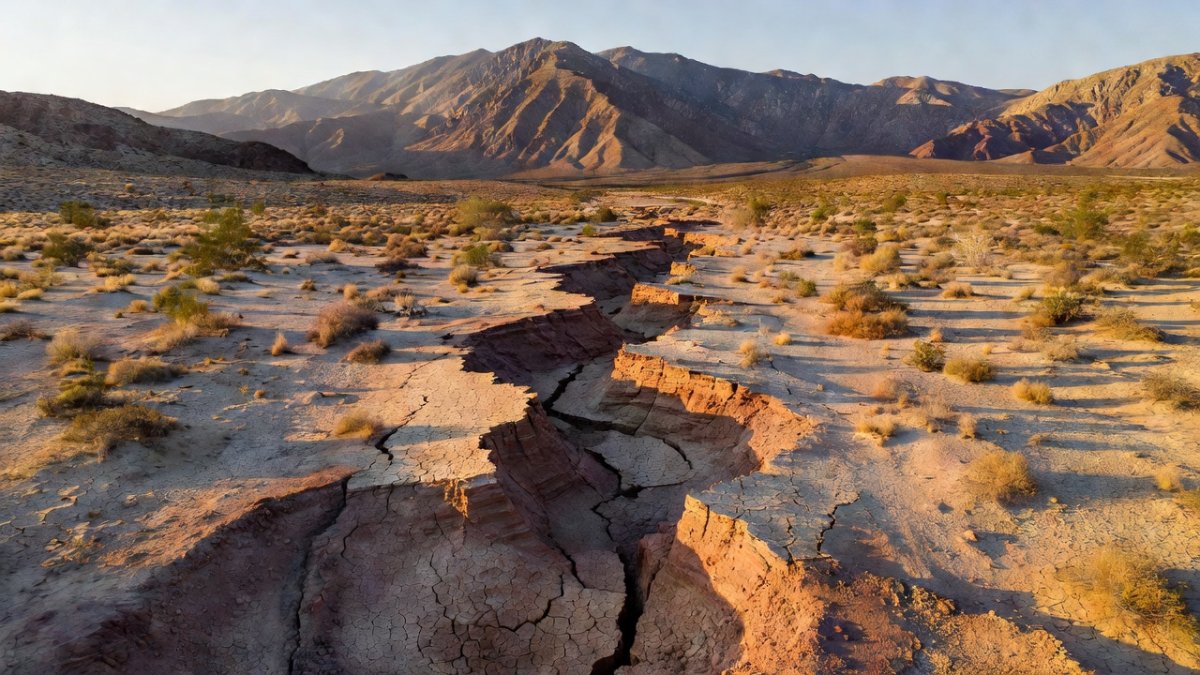
Folks, let me be straight with you right up top. The numbers coming out of this new study are the kind that make seismologists pause mid-sentence. Published June 13, 2026 in the Journal of Geophysical Research: Solid Earth, the research is blunt: the San Andreas and San Jacinto fault systems in Southern California have reached their highest stress levels in a thousand years. Not hundreds. A thousand. Lead author Liliane Burkhard, a research affiliate at the University of Hawai'i's Institute of Geophysics and Planetology and a scientist at the University of Bern, put it this way — the system is in a "critically loaded state" after more than 160 years since the last major rupture. And when scientists use language like "critically loaded," you should pay attention.
The Numbers Don't Lie
The study from the Journal of Geophysical Research: Solid Earth drops hard data on stress accumulation along these major faults. Researchers tracked how pressure has built since the last big event more than 160 years ago. That timeline alone pushes the system into territory not seen in a full millennium. Liliane Burkhard and her team at the University of Hawai'i at Mānoa and University of Bern did not mince words about the implications.
Burkhard stated directly that right now with stress at historically high levels across the region and more than 160 years elapsed since the last major rupture the system is in a critically loaded state. This is not speculation about distant possibilities. It reflects measurable changes in the crust that have been tracked over time. The numbers show the faults are primed in a way that demands attention from emergency planners and residents alike.
California sits on an 800-mile strike-slip fault where the Pacific Plate slides past the North American Plate. That length alone creates multiple segments capable of generating significant energy. The study focuses on the southern sections but reminds everyone that the entire length carries risk. When stress hits these peaks the potential for larger events grows.
What "Critically Loaded" Actually Means
Critically loaded describes a fault system where accumulated stress has reached a tipping point. The crust has stored energy from plate motion over more than 160 years without a major release. Burkhard's quote captures the reality that this state leaves little margin before something gives. Scientists measure this through models of slip rates and historical records.
The San Andreas fault does not operate in isolation. Nearby faults like the San Jacinto add to the overall stress picture. When multiple systems load at once the chance of interaction rises. The study shows this combined loading has not been this intense in a thousand years according to the data analyzed.
Understanding the term means recognizing that earthquakes release built-up strain. Without that release the pressure keeps climbing. Burkhard's team used geological evidence to confirm the current levels exceed anything recorded in the past millennium. This is the science behind the warning.
The Earthquake Gate at Cajon Pass
Cajon Pass functions as an earthquake gate where the San Andreas and San Jacinto faults meet. This junction can either stop a rupture in its tracks or connect the faults into one massive multi-fault event. The study highlights how this single location controls whether shaking stays contained or spreads across a wider area.
A linked rupture would prove significantly more damaging than anything on a single fault. Energy would travel farther and affect more ground. Los Angeles San Bernardino Riverside and the Coachella Valley all sit in the path of potential shaking from such an event. The gate decides the scale.
Researchers note that the pass has historically influenced rupture behavior. With current stress levels the gate could swing either way. Multi-fault scenarios amplify destruction because they combine the power of two major systems at once. This is why the location receives special focus in the new research.
A Reminder: California's Seismic Reality
California contains more than 500 active faults spread across the state. The San Andreas represents just one major player in this crowded field. Other notable systems include the Hayward Fault in the Bay Area the Calaveras Fault in Central California and the Elsinore Fault in Southern California. Each adds its own layer of risk.
The Mendocino Triple Junction offshore stands out as one of the most seismically active regions along the coast. Plate interactions there generate frequent activity that can influence the broader network. The new study on the southern faults fits into this larger picture of constant motion.
Residents often focus on the big names but the full count of 500-plus faults means surprises can come from smaller systems too. The data from Burkhard's team underscores that no single fault tells the whole story. Preparation must account for the entire active landscape.
What a Major Rupture Would Look Like
Strong shaking from a major event could last from tens of seconds to more than a minute depending on location and magnitude. Most earthquakes do not produce surface rupture so visible cracks are not the main concern. Instead the ground motion itself causes the bulk of damage through building stress and infrastructure strain.
Soft or water-saturated soils amplify shaking and raise liquefaction risks where ground turns fluid-like. Areas in Los Angeles San Bernardino Riverside and the Coachella Valley include zones with these soil conditions. A multi-fault rupture through Cajon Pass would extend the reach of intense motion across these population centers.
The 800-mile San Andreas system means energy can propagate long distances. Combined with the San Jacinto the total impact grows. The study makes clear that such an event would exceed single-fault scenarios in both duration and affected area. This is the physical reality residents need to understand.
Can We Predict This? No. Can We Prepare? Yes.
USGS scientists and researchers cannot predict earthquakes. No reliable method exists to forecast exact timing or location despite the stress data now available. The critically loaded state described by Burkhard signals elevated risk but offers no timeline for when movement might occur.
Preparation instead centers on early warning systems already in place. Android Earthquake Alerts Wireless Emergency Alerts and the MyShake app from UC Berkeley deliver seconds of notice before strong shaking arrives. MyShake is free and activates for quakes of magnitude 4.5 and above with both audio and visual warnings on iPhone and Android devices.
These tools provide critical time to take protective action even if they cannot forecast events days or weeks ahead. The systems work by detecting initial waves and issuing rapid alerts. California has invested in this network precisely because prediction remains impossible while readiness saves lives.
What You Need to Do Right Now
Start by downloading the free MyShake app today and enable all alert settings on your phone. Test your Wireless Emergency Alerts and confirm Android Earthquake Alerts are active. These steps take minutes but deliver seconds that matter when shaking begins.
Practice Drop Cover and Hold On until it becomes automatic. Get under sturdy furniture cover your head and neck and hold on until the motion stops. Identify safe spots in every room at home and work before the next event.
Secure heavy furniture and water heaters to prevent tipping. Check your location for soft soil risks and know evacuation routes if liquefaction becomes a concern. Talk with family members about meeting points and communication plans after an event.
Stay informed through official sources and update your emergency kit with water food and medical supplies. The data from this study shows the faults are loaded but action today reduces the impact tomorrow. Do these things now while the ground is still quiet.
Building a proper earthquake emergency kit means gathering supplies that can sustain your household for at least 72 hours without outside help. Stock at least one gallon of water per person per day, along with non-perishable foods like canned goods, energy bars, and dried fruit that require no cooking. Include prescription medications, a first-aid kit with bandages and antiseptics, flashlights with extra batteries, a battery-powered radio, cash in small denominations, and copies of important documents sealed in waterproof bags. A manual can opener is another small addition that makes a massive difference when the power is out.
Your home itself needs attention before the shaking starts. Walk through every room and identify anything tall or heavy that could tip over. Bookshelves, dressers, televisions, and water heaters should all be secured with straps or brackets bolted into wall studs. Flexible gas connections on water heaters reduce the risk of gas leaks that can ignite after a quake. Kitchen cabinets need childproof latches to keep dishes and glassware from exploding across the floor. These are the kinds of steps that sound like overkill until the moment they save you from injury.
The MyShake app from UC Berkeley is available for free on iPhone and Android and it does not need to be open to work. Once downloaded and installed with location permissions enabled, it automatically receives alerts when the Earthquake Early Warning system detects a quake of magnitude 4.5 or greater. The alert arrives as an audio and visual warning, giving you those precious seconds to get under a sturdy table or brace yourself. You can test the app to confirm notifications are working and check your phone's Wireless Emergency Alert settings to make sure those are turned on as well. Android devices also have a built-in earthquake detection feature that can be enabled in settings.
The Drop, Cover and Hold On drill looks different depending on where you are. If you are in bed, stay there and cover your head with a pillow. If you are driving, pull over to a clear area away from overpasses and stay in the vehicle. If you are outdoors, move away from buildings, streetlights, and utility wires. If you are in a store or public building, drop near an interior wall away from windows and shelves. The principle is the same everywhere — get low, protect your head and neck, and hold on until the shaking stops. Do not run outside during the shaking. Do not stand in doorways. The science is settled on this one.
By Jessica Ali, Global 1 News
This article was produced with AI-assisted research and editorial support. Reporting is based on sources cited in the article.
What's Your Reaction?
 Like
0
Like
0
 Dislike
0
Dislike
0
 Love
0
Love
0
 Funny
0
Funny
0
 Wow
0
Wow
0
 Sad
0
Sad
0
 Angry
0
Angry
0

Editor-in-Chief at Global1.News. Atlanta-based journalist who cuts through the BS and tells it like it is. Lead anchor, host, and the voice you hear when the spin stops and the truth starts.













Comments (0)