
Russia Fuel Crisis: Kremlin Confirms Gasoline Import Talks
Russia's Fuel Crisis Deepens Russia now confronts a severe fuel shortage that has disrupted daily life and economic activity across the nation. President Putin has openly acknowledged the crisis stems directly from Ukrainian strikes on energy infrastructure. Official reserves stand at just 1.7 million metric tons, reflecting a 4 percent decline compared with the same period las
Russia's Fuel Crisis Deepens
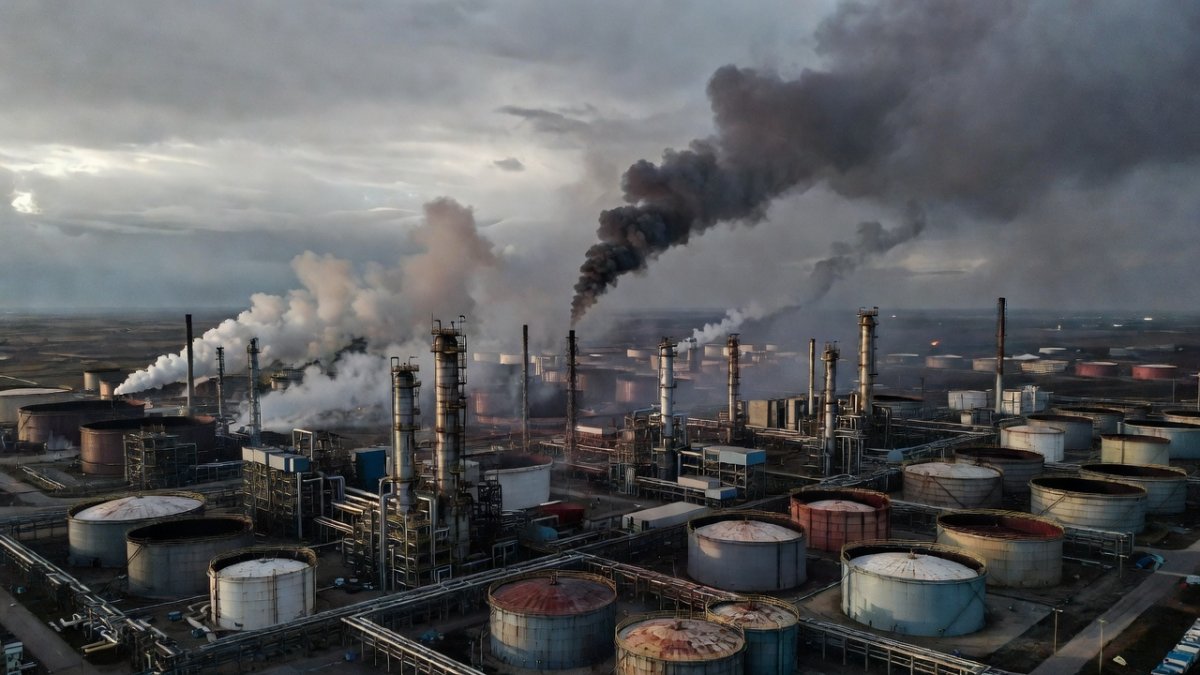
Russia now confronts a severe fuel shortage that has disrupted daily life and economic activity across the nation. President Putin has openly acknowledged the crisis stems directly from Ukrainian strikes on energy infrastructure. Official reserves stand at just 1.7 million metric tons, reflecting a 4 percent decline compared with the same period last year. Production capacity has been severely curtailed, leaving the market vulnerable to further shocks.
The sudden drop in domestic output has forced authorities to confront supply gaps that were previously unimaginable. Gasoline production fell sharply after multiple large refineries were compelled to halt operations. This contraction has rippled through supply chains, affecting both civilian motorists and industrial users. Government officials now describe the situation as requiring urgent external intervention to prevent deeper instability.
Long queues at filling stations have become commonplace in many regions as drivers scramble to secure limited supplies. The shortfall has also prompted emergency planning at the highest levels of government. Deputy Prime Minister Alexander Novak has emphasized that stabilizing the market demands immediate measures beyond traditional domestic adjustments. These developments mark a notable shift in Russia's energy posture after years of self-sufficiency.
Kremlin Confirms Import Negotiations
Kremlin spokesman Dmitry Peskov confirmed on Tuesday that Russia is actively negotiating gasoline imports from foreign suppliers for the first time in years. He stated that discussions are proceeding and that imports will advance if agreements can be reached at acceptable price points. This marks a significant policy reversal given Russia's historical role as a major energy exporter. Officials are now prioritizing external sourcing to address the immediate shortfall.
Reuters reported that talks involve up to 50,000 metric tons of AI-92 gasoline from Kazakhstan. Kazakhstan's energy minister clarified that Moscow has not yet made a formal approach to Astana. Despite this detail, the Kremlin continues to explore multiple potential partners to secure additional volumes. The urgency reflects the scale of the domestic production deficit now facing the country.
State Duma lawmakers have already passed amendments to the tax code that enable government subsidies specifically earmarked for gasoline imports. Deputy Prime Minister Novak described these imports as a central tool for restoring market balance. The legislative changes provide the financial framework needed to make foreign purchases viable. Together these steps illustrate how rapidly Russian policy has adapted to the unfolding shortage.
Ukrainian Drone Campaign Against Refineries
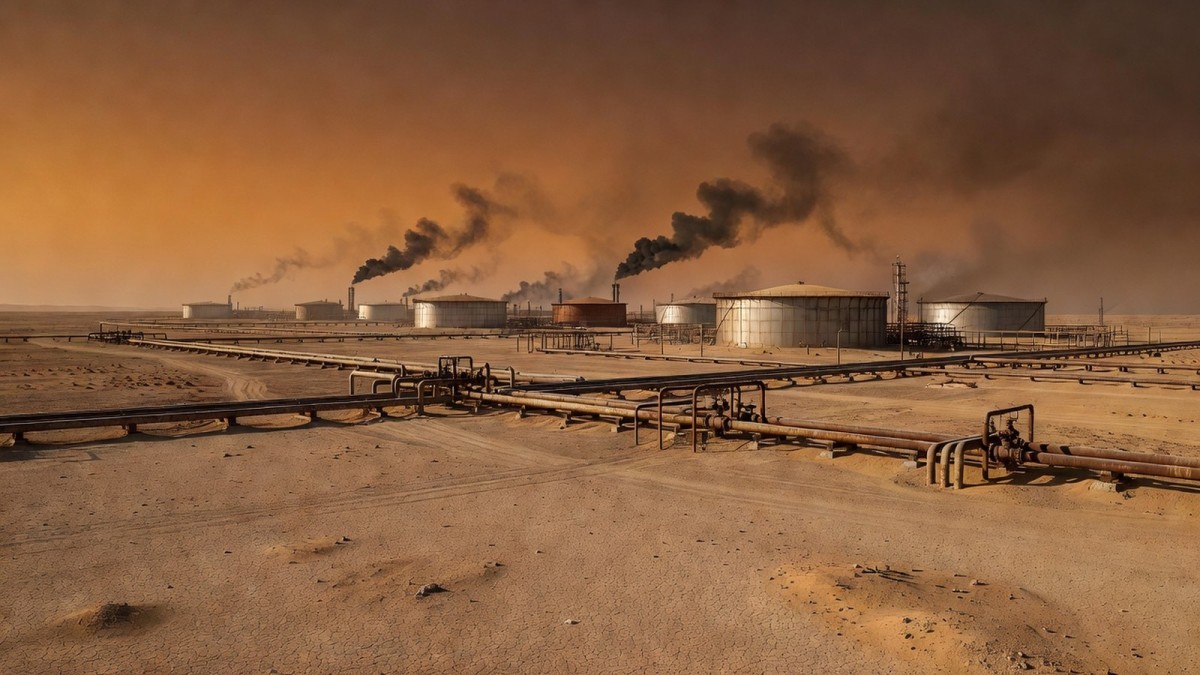
Ukrainian drone attacks have targeted several major Russian refineries, forcing widespread shutdowns and triggering the 25 percent decline in gasoline production. These strikes have damaged critical processing units and halted output at facilities that normally supply large portions of the domestic market. The resulting loss of capacity has left regional distribution networks struggling to meet demand. Government assessments now link the production collapse directly to these repeated aerial operations.
The scale of the damage has exceeded initial expectations, with multiple sites remaining offline for extended periods. Refinery operators have reported extensive repairs that will take months to complete. In the interim, the country must draw down existing reserves at an accelerated rate. This situation has exposed vulnerabilities in Russia's energy infrastructure that were previously considered secure.
Authorities have attributed the current fuel deficit primarily to the cumulative impact of these drone campaigns. The loss of refining capacity has created a gap that domestic sources alone cannot fill in the short term. Strategic planners are therefore accelerating efforts to secure alternative supplies from abroad. The attacks have fundamentally altered the operational landscape for Russia's downstream oil sector.
Rationing Across Russia and Crimea
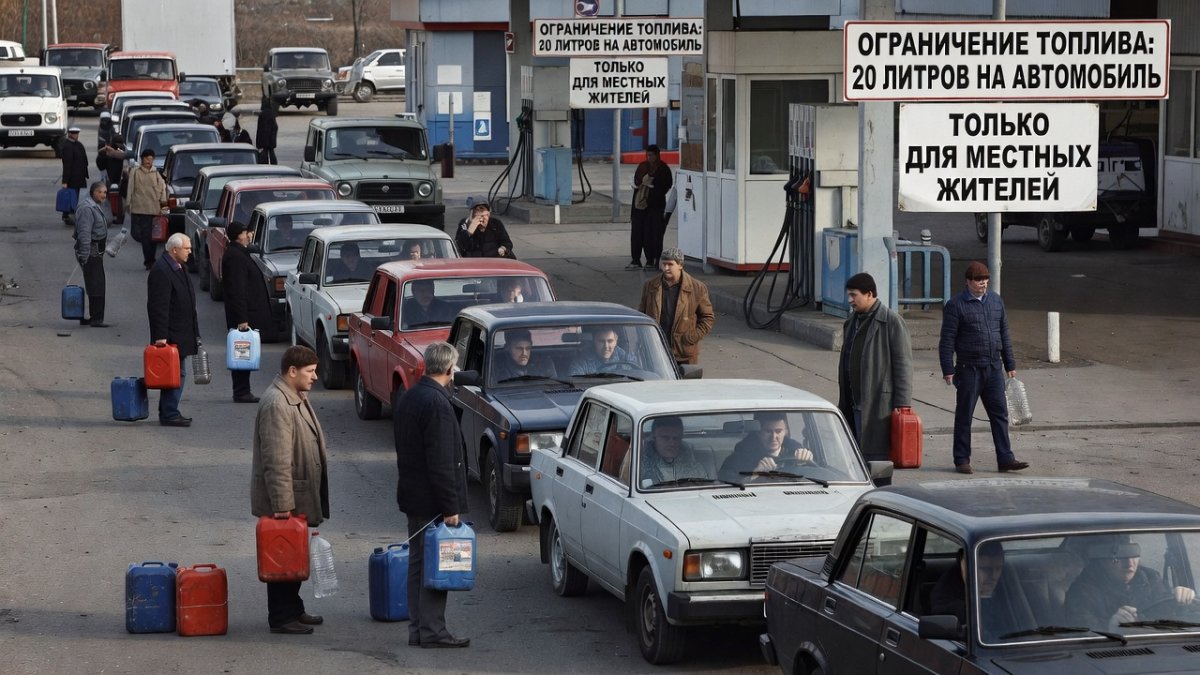
Fuel rationing has been introduced nationwide, including in Crimea, to manage dwindling supplies and prevent hoarding. In Crimea, motorists are limited to 20 liters per week, accessible only through a QR code system on the Max app. This measure aims to stretch available stocks while authorities seek longer-term solutions. Implementation has varied by region but reflects a coordinated federal response to the shortage.
The rationing regime has created new administrative burdens for both consumers and local officials. Verification processes and allocation tracking have slowed distribution at many stations. Residents in affected areas report spending additional time navigating the new requirements. These controls underscore the severity of the supply constraints now in place.
A parallel black market has emerged in Crimea, where gasoline trades at 350 rubles per liter compared with roughly 80 rubles before the shortages began. This sharp premium illustrates the intense demand pressure and limited legal availability. Enforcement efforts have struggled to curb the illegal trade amid widespread need. The contrast between official and unofficial prices highlights the depth of the ongoing crisis.
Price Surge and Data Suppression
Average gasoline prices have risen 9.8 percent since January 1, with a record single-week surge of 3 percent pushing the national average to 71.20 rubles per liter. This rapid increase has added immediate financial strain on households and businesses already coping with broader economic pressures. Regional variations have been pronounced, with some areas experiencing even steeper jumps. The upward trajectory shows no sign of easing without additional supply inflows.
Prime Minister Mishustin directed Rosstat to suspend weekly public fuel price reports, limiting transparency around the full extent of the increases. The decision has drawn criticism from analysts seeking timely data to assess market conditions. Official justification centers on preventing panic, yet the move reduces visibility into price dynamics. Observers note that such restrictions complicate efforts to track the crisis accurately.
The combination of visible price hikes and reduced statistical reporting has fueled public uncertainty. Motorists and commercial operators alike face higher operating costs that affect everything from commuting to logistics. Government messaging continues to emphasize temporary measures while import negotiations advance. The suppression of routine data releases represents a notable departure from previous practice.
Economic Shockwaves
Q1 2026 GDP growth forecasts have been downgraded to 0.4 percent from the earlier projection of 1.3 percent, reflecting the drag from fuel shortages and related disruptions. Sberbank CEO Herman Gref described the use of monetary policy to address one-off refinery attack inflation as completely irrational. He also noted that investments have fallen more than 14 percent amid the uncertainty. These indicators point to broader economic consequences extending well beyond the energy sector.
Wildberries announced it would remove liability for goods lost in airstrikes effective July 7, signaling heightened risk perceptions among major retailers. The policy shift acknowledges the growing threat to supply chains from ongoing attacks. Businesses are adjusting contracts and insurance arrangements accordingly. Such changes illustrate how the fuel crisis intersects with wider security concerns.
Russia closed all railway crossings with Finland effective July 1, further complicating cross-border trade and logistics. The closure adds friction to already strained commercial routes at a time when fuel availability is limited. Combined with the production shortfall, these measures compound operational challenges for exporters and importers. Economic actors are reassessing plans in light of the new constraints.
Analysis: Strategic Implications
The decision to pursue gasoline imports represents a strategic pivot that carries both immediate relief and longer-term signaling implications. By turning to foreign suppliers, Russia acknowledges that domestic refining capacity cannot be restored quickly enough to meet demand. This shift may influence future energy policy and infrastructure investment priorities. It also highlights the tangible effects of sustained pressure on critical facilities.
Market interventions such as subsidies, rationing, and data controls demonstrate the Kremlin's willingness to deploy extraordinary measures during the crisis. These steps aim to maintain social stability while negotiations continue. However, they also risk distorting price signals and delaying necessary structural adjustments. Observers will watch closely to see how long such policies remain in place.
The convergence of production losses, price volatility, and economic downgrades suggests the fuel crisis could influence Russia's broader strategic calculations. Import dependence introduces new vulnerabilities even as it addresses the current gap. Continued monitoring of reserve levels and refinery repair timelines will be essential. Ultimately, the episode underscores the interconnected nature of energy security and geopolitical developments.
By Irina Volkov, Staff Writer
This article was produced with AI-assisted research and editorial support. Reporting is based on sources cited in the article.
What's Your Reaction?
 Like
0
Like
0
 Dislike
0
Dislike
0
 Love
0
Love
0
 Funny
0
Funny
0
 Wow
0
Wow
0
 Sad
0
Sad
0
 Angry
0
Angry
0
Russia/Eastern Europe Correspondent at Global1.News. Covering Russian politics, energy, security, and the shifting dynamics of the post-Soviet space. Provides clear-eyed analysis on one of the world's most opaque regions.










Comments (0)