
Princess of Wales Returns to Royal Ascot After Cancer Treatment
A Triumphant Return to the Berkshire Track The Princess of Wales returned to Royal Ascot in a carriage procession that drew sustained applause from spectators lining the course. Accompanied by the Prince of Wales, she travelled behind the King and Queen in the traditional open landau, passing stands filled with racegoers on the opening day of the meeting. Her appearance marked
A Triumphant Return to the Berkshire Track
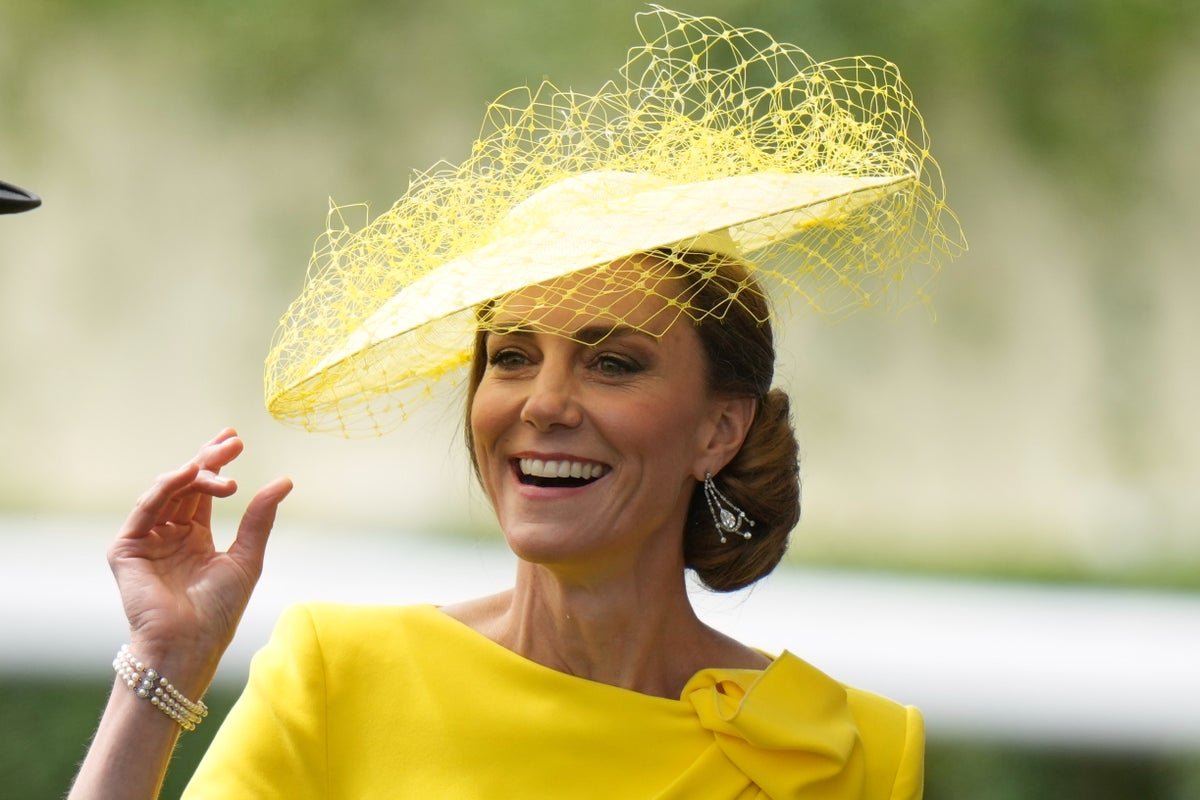
The Princess of Wales returned to Royal Ascot in a carriage procession that drew sustained applause from spectators lining the course. Accompanied by the Prince of Wales, she travelled behind the King and Queen in the traditional open landau, passing stands filled with racegoers on the opening day of the meeting. Her appearance marked the first time she had attended the Berkshire fixture since her cancer diagnosis earlier in 2024 and the subsequent chemotherapy treatment that kept her away from many public events.
Observers noted the measured pace of the procession and the visible warmth of the reception as the carriages moved along the straight. Kate, wearing a vibrant yellow dress by Roksanda paired with a matching hat, acknowledged the crowd with a composed smile. The moment carried particular weight because last year she had been listed among the guests in the royal box yet withdrew at short notice, leaving Prince William to represent the couple alone.
This carefully staged return underscored the continuing public interest in her recovery and the royal family’s decision to reintroduce her gradually to high-profile occasions. The cheers that greeted the Waleses as they reached the parade ring suggested that many racegoers viewed the appearance as a reassuring sign of continuity within the monarchy during a period of health-related adjustments.
A Measured Return to Public Duties
Since completing chemotherapy, the Princess of Wales has approached her schedule with deliberate restraint, seeking to balance recovery with the expectations attached to her role. Last year’s late withdrawal from Royal Ascot illustrated the fine calibration required, as she assessed which engagements could be sustained without compromising her health. Officials close to the household have emphasised that each appearance is weighed against medical advice rather than a fixed timetable.
The decision to join the carriage procession this year followed a series of lower-key outings that allowed her to test stamina in controlled settings. Those around her have described the process as one of incremental reintroduction, avoiding any sudden return to a full diary. The Ascot outing therefore represented both a personal milestone and a public signal that she is regaining ground at a sustainable pace.
Such caution reflects broader lessons drawn from previous periods when senior royals managed health concerns while maintaining visibility. By choosing an event steeped in tradition yet limited in duration, the Princess has demonstrated how phased participation can preserve both personal wellbeing and institutional presence without overstatement.
The Carriage Procession — A Tradition Spanning Centuries
The carriage procession at Royal Ascot dates back two centuries to the reign of George IV, who first travelled the course with the Duke of Wellington. That initial journey established a ritual still observed today, in which the monarch and immediate family proceed in open carriages before the afternoon’s racing begins. The route along the straight allows spectators an unobstructed view and reinforces the meeting’s historic link to the crown.
Successive generations have preserved the custom, adapting carriages and protocol while retaining the essential format. On this occasion the King and Queen led, followed by the Prince and Princess of Wales, maintaining the established order of precedence. The slow progress past packed stands serves both ceremonial and practical purposes, signalling the formal opening of the day’s sport.
Historians of royal pageantry note that the procession survived periods of social change precisely because it blends accessibility with formality. Racegoers witness the family at close range yet within a structured setting that underscores continuity rather than spectacle. The 200-year lineage therefore provides a stable framework within which contemporary members of the family can reappear after absences of any kind.
Prince George's Eton Announcement and the Weekend's Events
The weekend surrounding Royal Ascot included several family commitments that placed the Waleses in the public eye. On Saturday they joined the King and Queen at Trooping the Colour, where Prince George appeared alongside his siblings for the King’s official birthday parade. The following day brought Garter Day observances at Windsor Castle, another fixture that draws the extended family together in formal dress.
Against this backdrop, the Prince and Princess of Wales confirmed on Monday that Prince George will begin at Eton College in the autumn. The announcement follows the well-established educational path taken by his father and maintains the family’s longstanding connection with the Berkshire school. It arrives at a moment when the young prince’s public profile is gradually increasing through selected appearances.
These consecutive events illustrate how royal diaries often cluster significant occasions within a short period. The combination of ceremonial duties and the school announcement provided a natural sequence leading into Ascot itself, allowing the family to project cohesion while managing the Princess’s return to carriage processions and racecourse hospitality.
The Significance of Royal Ascot in the British Social Season
Royal Ascot occupies a fixed place in the British social calendar, falling in mid-June and attracting visitors who observe strict dress codes alongside the racing. Morning suits for men and elaborate hats for women remain the expected standard in the royal enclosure, preserving a visual formality that distinguishes the meeting from other fixtures. The event therefore functions as both sporting contest and seasonal marker.
Beyond the fashion requirements, Ascot draws corporate hospitality, charitable fundraising and longstanding family traditions among regular racegoers. The five-day programme mixes Group 1 contests with more accessible races, ensuring broad appeal while the royal presence adds a layer of pageantry. Many attendees treat the week as an annual gathering point that blends leisure with social ritual.
The Princess’s return this year reinforced Ascot’s role as a stage where the monarchy intersects with wider society. Her choice of a Roksanda dress and a Jane Taylor hat aligned with the expected codes yet introduced a personal note through earrings once belonging to the late Queen. Such details are observed closely by those who follow both fashion and royal movements, confirming the meeting’s continued cultural resonance.
The King's Thoroughbreds and Royal Racing Ambitions
King Charles and Queen Camilla have maintained an active interest in the royal racing stable inherited from the late Queen. Their horse Point of Law was entered for the Queen’s Vase later in the week, while Reaching High competed on the opening day in the Ascot Stakes. Although the latter finished well beaten, the presence of royal runners continues a tradition of ownership that spans generations.
The couple recorded their first Royal Ascot victory in 2023 when Desert Hero won the King George V Stakes. That success encouraged further commitment to the stable and demonstrated that their enthusiasm extends beyond ceremonial attendance. Trainers and bloodstock advisers have noted the King’s detailed engagement with pedigrees and race planning.
This ongoing involvement links the present reign to the late Queen’s well-documented passion for breeding and racing. By fielding horses at Ascot, the King and Queen sustain a visible connection to an activity that has long provided both recreation and a means of supporting British racing infrastructure. Their participation offers continuity at a time when other aspects of royal life are undergoing measured adjustment.
Enduring Appeal of Royal Pageantry in Modern Britain
Events such as Royal Ascot continue to attract substantial public interest even as the monarchy adapts to contemporary expectations. The carriage procession and the presence of senior family members provide a visible thread of institutional continuity that many still value. Spectators respond to the combination of heritage, colour and ritual that these occasions supply.
Analysts of public attitudes suggest that support for such pageantry rests less on deference than on a shared sense of national theatre. The careful reintroduction of the Princess of Wales after her treatment has been met with quiet approval rather than intrusive scrutiny, indicating that audiences recognise the balance between personal circumstance and public role. The measured tone of coverage reflects this understanding.
In an era of rapid media cycles, the predictable rhythm of the social season offers a counterpoint. Royal Ascot’s fixed place in June allows the family to appear in settings that feel both historic and current, sustaining interest without requiring constant innovation. The Princess’s return therefore fits within a wider pattern of selective visibility that preserves relevance while respecting private recovery.
What This Signals for the Princess's Future Engagements
The Ascot appearance offers a template for forthcoming engagements: high-profile yet bounded, allowing the Princess to contribute without overextending. Household sources have indicated that future outings will follow similar principles of calibration, prioritising events where her presence adds distinct value and where logistical support can be assured. This approach avoids any abrupt acceleration of duties.
Attention now turns to how the summer programme might incorporate further joint appearances with the Prince of Wales. The recent cluster of Trooping the Colour, Garter Day and Ascot suggests a deliberate grouping of commitments around established dates, reducing the need for additional travel or preparation. Such clustering can ease the transition back to fuller activity.
Observers will watch whether the Princess resumes overseas tours or longer domestic visits later in the year, or whether the emphasis remains on shorter, home-based occasions. The strategy appears designed to protect health while steadily rebuilding her public schedule, ensuring that each step is sustainable and consistent with medical guidance rather than external pressure.
By Erica Thornton, Staff WriterThis article was produced with AI-assisted research and editorial support. Reporting is based on sources cited in the article.
What's Your Reaction?
 Like
0
Like
0
 Dislike
0
Dislike
0
 Love
0
Love
0
 Funny
0
Funny
0
 Wow
0
Wow
0
 Sad
0
Sad
0
 Angry
0
Angry
0

US Politics and Policy Correspondent at Global1.News. Based in Washington DC, covering American politics, policy, elections, and the courts. Knows how the system works and tells you what it actually means.













Comments (0)