
Opinion: Why President Sheinbaum’s ‘Don’t watch TV Azteca’ comment is such a big deal
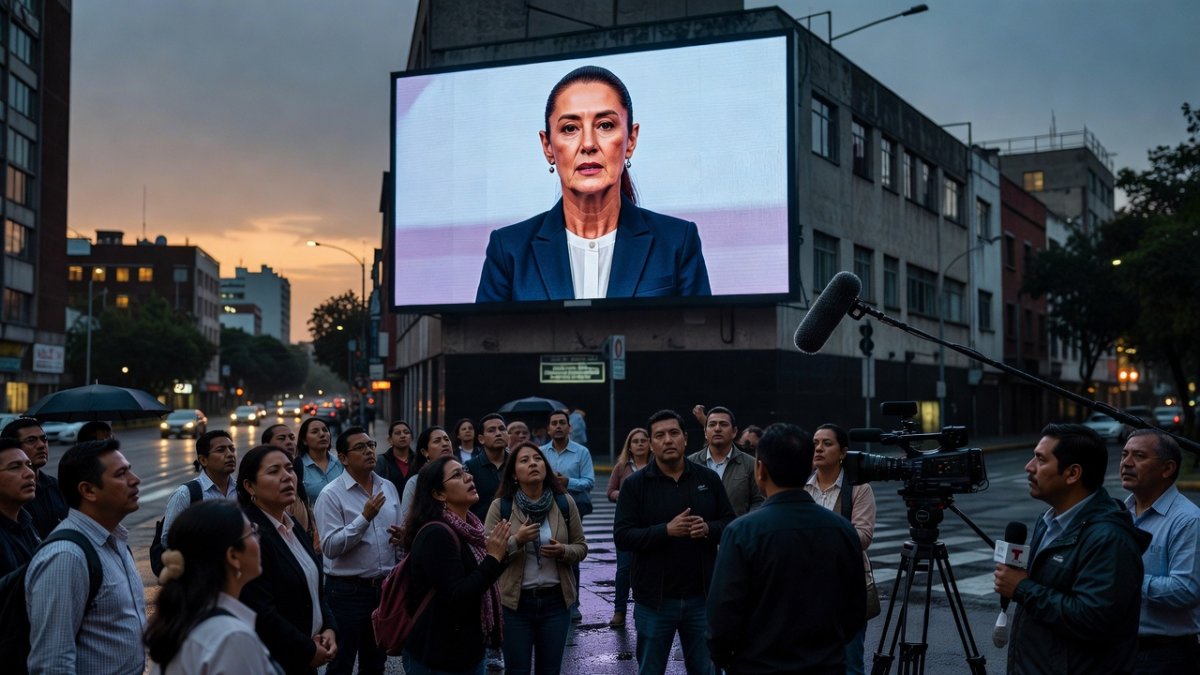
President Sheinbaum’s Direct Warning Against TV Azteca Ignites National Debate on Media Trust and Power
A Rare Presidential Intervention
On Monday, May 25, 2026, President Claudia Sheinbaum stood before cameras in the National Palace and delivered a message that cut through the usual diplomatic language of Mexican politics. “Don’t watch TV Azteca,” she said plainly, her tone measured but firm. For many Mexicans watching the morning briefing, the comment landed like a stone in still water. No modern Mexican president had singled out a private broadcaster with such bluntness in recent memory.
The remark came during a segment addressing ongoing coverage of federal infrastructure projects in the State of Mexico. Sheinbaum cited what she described as repeated factual inaccuracies about water management contracts. Within minutes, clips spread across social platforms, and the phrase “No veas TV Azteca” began trending in Mexico City, Guadalajara, and Monterrey.
Historical Context of Media-Government Relations
Mexico’s media landscape has long been shaped by close ties between broadcasters and political power. TV Azteca, founded in 1993 after the breakup of the state-owned Imevisión, positioned itself as an alternative to Televisa’s long dominance. Throughout the 1990s and 2000s, both networks maintained significant influence over public opinion, often through editorial choices that aligned with or challenged sitting administrations.
During the administrations of Vicente Fox and Felipe Calderón, tensions with TV Azteca surfaced over drug-war coverage. Under Andrés Manuel López Obrador, public criticism of “the media oligopoly” became routine, yet direct calls to boycott specific channels remained rare. Sheinbaum’s comment therefore marks a shift in tone from her predecessor’s more generalized critiques.
Public Reaction Across Communities
In the working-class neighborhoods of Iztapalapa and Ecatepec, residents interviewed Tuesday morning expressed a mix of surprise and resignation. “We already know which channels push certain stories,” said María Elena Ruiz, a 48-year-old teacher who has followed both networks for decades. “But hearing the president say it out loud feels different.”
Business owners in the Televisa-friendly corridors of Polanco offered a contrasting view. “This risks turning legitimate journalistic scrutiny into a loyalty test,” said Carlos Hernández, director of a small advertising firm that places spots on multiple outlets. Data from INEGI’s 2025 National Survey on Media Consumption shows TV Azteca still reaches approximately 28 percent of households in central Mexico on weekday evenings, though streaming platforms have eroded that share among viewers under 35.
Expert Perspectives on Press Freedom
Media analysts caution that presidential calls to avoid specific outlets can chill independent reporting even when factual disputes exist. Dr. Lucía Paredes, a researcher at the Universidad Nacional Autónoma de México’s Center for Media Studies, noted that Mexico ranks 121st out of 180 countries in the latest Reporters Without Borders index. “When the head of state names one network, it can embolden supporters to harass journalists from that outlet,” Paredes said. “At the same time, repeated errors by any news organization erode public confidence.”
TV Azteca’s news director, in a statement released Tuesday afternoon, defended the network’s record and invited the presidency to submit corrections through established channels rather than public appeals. The network pointed to its coverage of last year’s flooding in Tabasco, which included on-the-ground reporting later cited by state authorities.
Implications for Democratic Discourse
The episode highlights a deeper tension in Mexico’s young democracy: how citizens should navigate competing narratives from powerful media companies and a popular executive. Sheinbaum’s approval ratings remain above 60 percent in most recent polls, giving her words significant weight among her base. Yet the comment also risks reinforcing perceptions that criticism of government policy is inherently partisan.
Community radio stations in Oaxaca and Chiapas, many of which have long distrusted commercial television, reported increased listener calls asking for verification of stories that originated on TV Azteca. This grassroots fact-checking reflects a broader trend documented by the civic organization Artículo 19, which recorded a 17 percent rise in public requests for source verification between 2024 and 2025.
Looking Ahead
Whether the president’s remark leads to regulatory scrutiny, advertiser pullback, or simply heightened viewer skepticism remains unclear. What is certain is that Mexican audiences now confront an unusually direct question from their leader: which sources deserve their attention. As the summer legislative session approaches, both the government and private broadcasters will be watched closely for signs that this public clash evolves into lasting institutional friction or remains a singular moment of candor.
This is Rosa Martinez for Global1 News, reporting from Mexico City. 🇲🇽
This article was produced with AI-assisted research and editorial support. Reporting is based on sources cited in the article.
What's Your Reaction?
 Like
0
Like
0
 Dislike
0
Dislike
0
 Love
0
Love
0
 Funny
0
Funny
0
 Wow
0
Wow
0
 Sad
0
Sad
0
 Angry
0
Angry
0
Latin America/Andes Correspondent at Global1.News. Based in Bogota, covering politics, environment, energy, and social movements across the Andean region. Passionate about environmental journalism and communities protecting their land.












Comments (0)