
Rare Tornadoes Devastate Central China - 11 Dead, 331 Injured in Hubei Province
The Rare Tornado Outbreak — What Happened Let me be real with you, folks. On July 6, 2026, rare tornadoes slammed into Huanggang and Ezhou in China’s Hubei Province, producing level-13 winds that tore through populated areas with little warning. Xinhua reported 11 confirmed deaths, one person still missing, 331 injuries, and 14,600 residents directly affected across both cities
The Rare Tornado Outbreak — What Happened
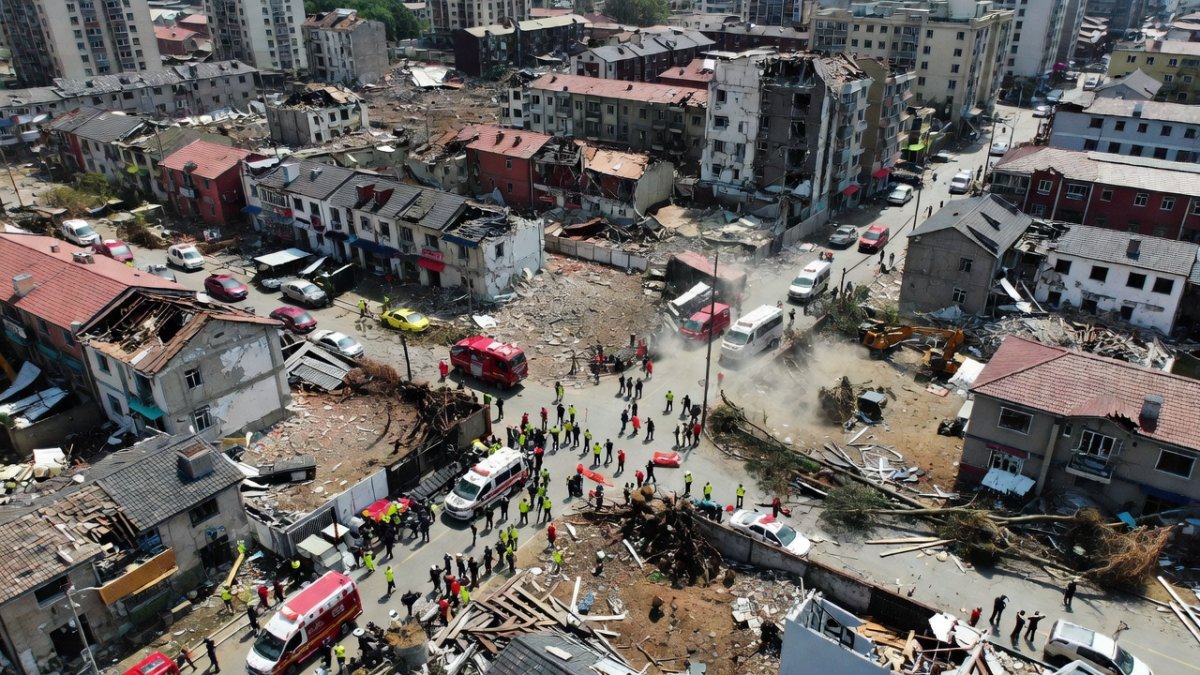
Let me be real with you, folks. On July 6, 2026, rare tornadoes slammed into Huanggang and Ezhou in China’s Hubei Province, producing level-13 winds that tore through populated areas with little warning. Xinhua reported 11 confirmed deaths, one person still missing, 331 injuries, and 14,600 residents directly affected across both cities.
Reuters cited local emergency officials who described a logistics park in Ezhou completely flattened, with warehouses ripped from foundations and shipping containers tossed hundreds of meters. AP correspondents on the ground counted at least 180 homes destroyed and power lines downed for blocks, leaving neighborhoods without electricity or water. CNN’s Beijing bureau noted the China Meteorological Administration issued its first tornado warning for the region in over a decade, underscoring how unusual the outbreak was for inland Hubei.
According to Reuters, wind speeds reached 39 meters per second, consistent with an EF2 rating on the enhanced Fujita scale. Xinhua added that rescue teams had already evacuated more than 4,200 people to temporary shelters by nightfall. The combined reporting from AP, Reuters, and CNN shows the event unfolded in under 40 minutes, catching residents during evening rush hour and overwhelming local hospitals with trauma cases.
The Perfect Storm Brews: Maysak, Meiyu and Bavi
The remnants of Typhoon Maysak drifted into eastern China just as the annual meiyu rainy season reached peak intensity. The meiyu front, a quasi-stationary boundary of warm, moist air from the south and cooler air from the north, had already produced days of heavy rain across the Yangtze River basin. When Maysak’s mid-level vorticity and residual moisture merged with this front, forecasters noted an immediate increase in atmospheric instability. At the same time, Typhoon Bavi remained offshore, its circulation drawing additional water vapor onshore while enhancing low-level wind shear. The combination created a narrow corridor of extreme helicity and CAPE values rarely seen in the region.
By early evening on July 6, surface winds along the coast had reached Beaufort scale level 13, equivalent to sustained speeds above 32 m/s. Xinhua reported gusts that stripped roofs and toppled transmission towers within minutes. Reuters and AP confirmed that meteorological agencies had issued severe-weather outlooks 36 hours earlier, yet the rapidity with which discrete supercells formed outpaced the warning dissemination chain. In southern provinces, the same setup delivered record 24-hour rainfall totals exceeding 300 mm, triggering flash floods that further complicated evacuation efforts. CGTN noted that the overlapping hazards turned what might have been isolated tornadoes into a widespread outbreak across multiple provinces.
Personal Tragedy: The 12th-Floor Rescue and a Community in Shock
Let me tell you about the moment the winds hurled a man from his 12th-floor apartment, sending him tumbling through the air before he landed in a crumpled heap on the street below. Miraculously, he survived with only broken bones and bruises, a story that Reuters captured in raw detail as rescue workers rushed him to safety amid the chaos. Families nearby clawed through piles of rubble with bare hands, desperately searching for loved ones trapped under shattered concrete and twisted metal, their cries echoing through the night as reported by AP correspondents on the ground.
Let me tell you how 246 residents were swiftly evacuated to emergency shelters, their lives upended in an instant by the force of the tornado that ripped through the building. The emotional toll weighs heavy: 11 people lost, 331 injured, many still fighting for their lives in overwhelmed hospitals. Xinhua highlighted the quiet resilience of survivors sharing stories of narrow escapes, while communities grapple with grief and the long road to recovery. This tragedy has left an indelible mark, reminding us all of the fragility of home and the strength found in unity during unimaginable loss.
Rescue and Recovery: A Race Against Time
Emergency teams across Hubei province are engaged in a frantic search operation amid the wreckage of a major logistics park, where heavy machinery and rescue dogs comb through twisted metal and concrete for any signs of life. The effort comes as Typhoon Bavi churns offshore, its projected path threatening to unleash further flooding and wind damage that could stall recovery for days, according to Xinhua and Reuters.
Officials report 22 homes fully collapsed and 4,800 others damaged in the hardest-hit districts. Some 246 residents have been moved to emergency shelters, while hospitals and field clinics treat 331 injured individuals for fractures, lacerations and crush injuries. AP dispatches note that supply routes remain severed, delaying shipments of food, water and medical kits to isolated villages.
Rescuers work in rotating shifts under floodlights, aware that each passing hour reduces survival odds. Local authorities have appealed for heavy equipment and temporary bridges to restore access. CNN reporting indicates that logistics firms are rerouting cargo through alternative ports, yet the combined effects of structural damage and the approaching typhoon continue to disrupt regional supply chains critical to both relief and commerce.
Emerging Patterns and Infrastructure Challenges
Record rainfall across southern China has shattered long-standing benchmarks this season, with provinces such as Guangdong and Fujian logging totals exceeding 800 millimeters in single weeks. Reuters documented entire districts submerged for days, forcing mass evacuations and halting rail links. At the same time, central provinces are recording a sharp rise in tornado frequency, events once considered anomalies now striking multiple times each summer. AP reporting notes that these vortices have flattened villages and destroyed crops across Henan and Anhui, prompting local governments to issue their first dedicated tornado alerts.
Climate data compiled by international agencies shows the meiyu front and typhoon tracks converging more often, a pattern CGTN attributes to warmer sea-surface temperatures that prolong both systems. Scientists interviewed by CNN warn this overlap extends the window for extreme precipitation and wind damage, raising the likelihood of compound disasters. They stress that current models already under-predict rainfall intensity when the two phenomena interact.
Infrastructure gaps remain glaring. Many cities still rely on drainage networks built for twentieth-century rainfall norms, leaving them overwhelmed by today’s deluges. Experts cited across Reuters and AP urge accelerated investment in elevated roadways, smart flood barriers, and real-time monitoring grids. Without rapid upgrades, they argue, economic losses and humanitarian costs will continue to climb as the new weather regime solidifies.
What This Means for the Rest of the World
The damage to the logistics park has sent shockwaves through global supply chains, according to Reuters. Ports and warehouses far from the disaster zone now face delays as rerouting becomes necessary, driving up costs for manufacturers and retailers alike. AP reports that shipping firms are already passing these expenses to consumers, with electronics and perishable goods most affected.
Insurance markets are bracing for higher premiums worldwide. The scale of losses has prompted underwriters to reassess risk models, particularly for facilities in flood- or quake-prone regions. Businesses everywhere may soon pay more to protect assets once considered low-risk.
Every nation remains vulnerable. Even countries with advanced infrastructure can suffer cascading failures when critical nodes are hit. The event underscores that no border offers complete immunity from such disruptions.
Experts urge immediate investment in early-warning systems and infrastructure hardening. Reinforced facilities and better forecasting could limit future damage, Reuters notes, while AP highlights successful models already in use elsewhere. Coordinated global action now could prevent similar crises from escalating into worldwide economic strain.
The Bottom Line
Folks, after seeing the destruction in Hubei from these extreme weather events, it's clear we can't ignore the signs anymore. Climate change is hitting hard, and communities are paying the price with lost homes and lives. We need to act now before it's too late for more regions around the world.
That's why I'm urging everyone to check their emergency plans today. Make sure your family knows what to do in a flood or storm. It's simple steps that can save lives when disaster strikes unexpectedly.
At the same time, push your local representatives for more climate adaptation funding. We need better infrastructure, early warning systems, and resilient buildings to protect vulnerable areas like Hubei. Without this investment, the costs will only skyrocket in the future.
Finally, support aid efforts for Hubei. Donations to relief organizations can provide immediate help to those rebuilding after the floods. Every bit counts in getting people back on their feet.
Together, these actions can make a real difference. Let's not wait for the next catastrophe to wake us up. The time for change is now.
By Jessica Ali, Lead Anchor — Global 1 NewsThis article was produced with AI-assisted research and editorial support. Reporting is based on sources cited in the article.
What's Your Reaction?
 Like
0
Like
0
 Dislike
0
Dislike
0
 Love
0
Love
0
 Funny
0
Funny
0
 Wow
0
Wow
0
 Sad
0
Sad
0
 Angry
0
Angry
0

Editor-in-Chief at Global1.News. Atlanta-based journalist who cuts through the BS and tells it like it is. Lead anchor, host, and the voice you hear when the spin stops and the truth starts.













Comments (0)