
Freedom Fuel at $3.47: Political Win or Pumped-Up Spin?
The Big Announcement: 25 Stations, One Price Folks, the White House dropped this bombshell on July 7, 2026, rolling out 25 so-called Freedom Fuel stations across the greater Philadelphia area with gas priced at a eye-catching $3.47 a gallon. President Trump, the 47th, is getting the full credit in every press release and that slick video they posted on X where everyday drivers
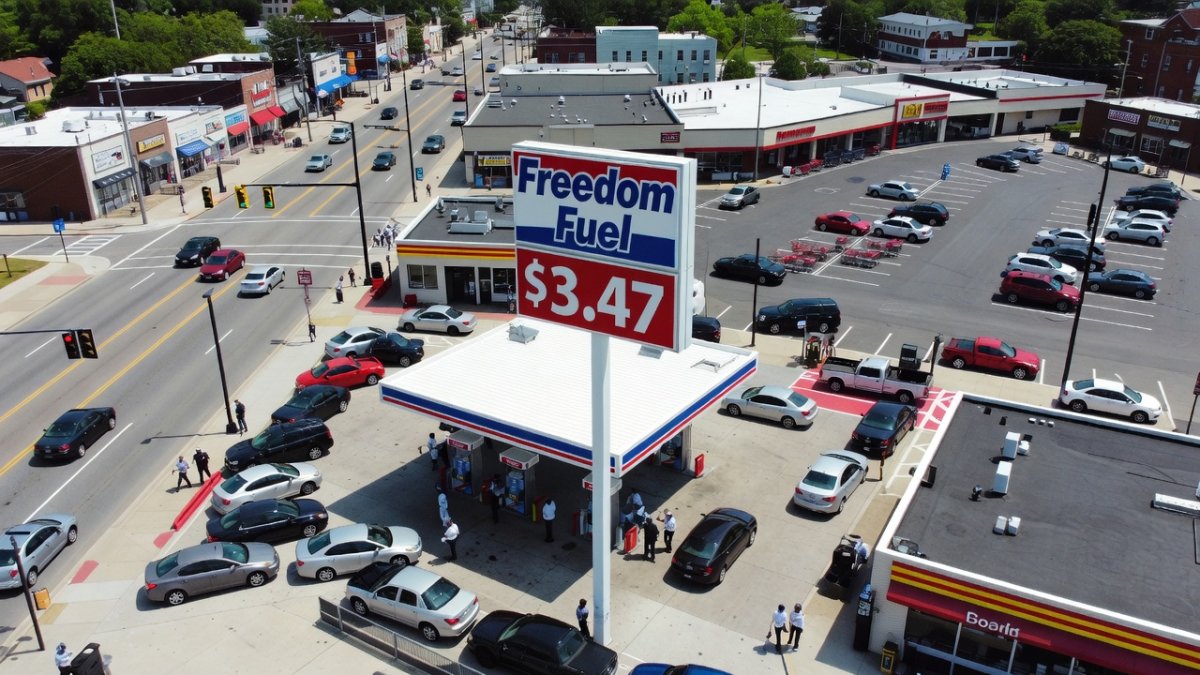
The Big Announcement: 25 Stations, One Price
Folks, the White House dropped this bombshell on July 7, 2026, rolling out 25 so-called Freedom Fuel stations across the greater Philadelphia area with gas priced at a eye-catching $3.47 a gallon. President Trump, the 47th, is getting the full credit in every press release and that slick video they posted on X where everyday drivers are filmed gushing thanks right at the pump. It looks like a straight-up win for the working class until you zoom out and realize this is happening in one of the most fiercely contested political battlegrounds in the country. Philadelphia and the surrounding South Jersey metro area are not random choices here.
These stations did not spring up overnight as some shiny new federal chain. They appear to be nothing more than rebranded independent retailers that suddenly slapped the Freedom Fuel label on their signs. The optics are loud and proud, with the price explicitly tied to Trump’s leadership and his ongoing pressure campaign on gas retailers nationwide. Yet the moment you start asking how this magic price appeared, the answers dry up faster than a drought in Texas. The White House wants you to see savings and feel grateful, but the mechanics remain buried under layers of political theater.
Let me be clear: this is not a nationwide rollout that touches every state or even every major city. It is laser-focused on a swing region where every vote counts in the next cycle. The announcement timing, the video testimonials, and the branding all scream election-year playbook rather than a serious energy policy shift. When the federal government starts playing retailer in one metro area while the rest of the country watches from the sidelines, you have to ask who is really winning here.
$3.47 vs. $3.79: Crunching the Numbers
Let’s do the math the White House hopes you skip. On July 7, 2026, the national average sat at $3.79 per gallon according to AAA data, while these Freedom Fuel spots were selling at $3.47. That 32-cent spread means a driver filling a 15-gallon tank saves exactly $4.80. Sounds decent until you remember the national average itself had already fallen 16 cents from $3.95 on June 25 to $3.79 just two weeks later. The broader market was moving, and these 25 stations simply moved a little farther and faster.
Oil prices have been swinging wildly because of ongoing tensions with Iran, which usually pushes pump prices higher, not lower. So the fact that the national number dipped at all is noteworthy, yet the Freedom Fuel stations are being sold as proof of presidential magic. The 32-cent advantage looks impressive in a single fill-up tweet, but it is still only available inside one limited metro footprint. Outside greater Philadelphia and South Jersey, you are still paying the full $3.79 or whatever your local station demands.
Four dollars and eighty cents is real money for a lot of families, no question. But when the White House parades this number as evidence of sweeping success while the rest of America sees only a modest two-week decline, the spin starts to show. The savings are narrow, geographically confined, and conveniently timed for maximum political impact in a battleground region. That is not energy independence; that is targeted optics.
The Fine Print Nobody Published
Here is where the story gets murky fast. The Philadelphia Inquirer flat-out stated that a lot remains unclear about how these stations are offering cheaper fuel in the first place. There is zero public information on whether the federal government is quietly subsidizing the 32-cent gap or if some backroom deal with suppliers is keeping the price artificially low. Without that transparency, every gallon sold at $3.47 carries an asterisk the size of a billboard.
Analysts are already questioning whether this price can hold or if it is simply a short-term political stunt designed to generate headlines and grateful customer videos. Rebranding existing independent stations does not create new supply or lower global oil costs. It just moves the same fuel under a new patriotic-sounding sign while the underlying economics stay hidden. If taxpayers are footing the bill for that discount, we deserve to know the exact figure and the duration of the subsidy.
Trump has been leaning hard on retailers across the country to bring prices down, and maybe that pressure helped nudge the national average lower. But when the only concrete result is 25 stations in one swing-state metro area, the policy looks more like a photo opportunity than a structural fix. The fine print is missing because the fine print would probably spoil the narrative they are pushing on X and in campaign stops.
Political Branding at the Pump
Calling it Freedom Fuel and tying the price directly to the 47th president is not subtle. The White House video shows customers thanking Trump by name, turning every fill-up into a campaign moment. Philadelphia is a key battleground, and placing the only discounted stations right there tells you everything about the intended audience. This is not about lowering costs for truckers in Ohio or commuters in Arizona; it is about locking in votes where they matter most.
The branding works because gas prices sting everyone. When people see $3.47 instead of $3.79, they feel relief first and ask questions later. That relief gets credited to the president who slapped his number on the sign. Yet the stations are not a new national chain built on American energy dominance; they are existing retailers that got a fresh coat of paint and a political price tag. The message is louder than the mechanism.
Political branding at the pump cheapens the very idea of energy independence. Real independence would mean stable, lower prices everywhere through increased domestic production and smart policy, not a handful of stations in one metro area offering a temporary discount. The 47th president wants the credit, but the limited scope reveals the play for what it is: a targeted effort to look strong on pocketbook issues in the exact places that decide elections.
What the Experts Are Saying
Energy analysts are not buying the victory lap. They point out that without details on subsidies or supplier agreements, the $3.47 price could vanish the moment the political spotlight moves elsewhere. The Philadelphia Inquirer’s reporting highlights the lack of clarity, and that silence from the White House only fuels skepticism. If this were a sustainable model, the administration would be shouting the how from every rooftop instead of just showing happy customers on X.
Market watchers note that the 16-cent national drop over two weeks already reflected softening demand and shifting oil dynamics, not presidential jawboning alone. Adding another 32 cents off in one region looks impressive on paper but raises red flags about artificial pricing. Short-term stunts can generate good press, yet they rarely survive contact with real market forces once the cameras leave.
Even supporters of lower prices are asking the hard questions about longevity. Is the federal government backstopping these stations with taxpayer dollars? Are independent retailers being pressured or incentivized in ways that distort competition? Until those answers surface, the Freedom Fuel rollout reads more like a campaign tactic than a durable energy win. Experts see the gaps; the public should too.
The Bigger Picture: Energy Independence or Photo Op?
Energy independence is not measured by 25 stations in greater Philadelphia. It is measured by consistent national prices, reduced reliance on volatile foreign oil, and policies that actually expand domestic supply. The current situation shows oil prices still swinging because of Iran tensions, which means the underlying vulnerabilities remain untouched. A localized discount does nothing to fix that structural problem.
The White House is selling Freedom Fuel as proof of concept, but the concept only works inside one battleground media market. Outside that bubble, drivers are still facing the national average and whatever their local stations charge. That geographic restriction exposes the effort as narrow and political rather than broad and policy-driven. Real independence would not require a map to find the savings.
Photo ops at the pump may generate likes and thankful videos, yet they leave the rest of the country wondering why their fill-ups did not get the same treatment. When the only visible result is a 32-cent edge in swing-state territory, the bigger picture looks like election-year stagecraft dressed up as economic relief. Voters deserve more than a rebranded sign and a temporary price tag.
The Bottom Line
Bottom line, $3.47 at 25 Freedom Fuel stations is a headline, not a solution. The 32-cent spread delivers real savings for those lucky enough to live nearby, but the lack of transparency on subsidies, the limited footprint, and the heavy political branding all point to a stunt timed for maximum impact in a key battleground. The national average was already falling, and oil volatility tied to Iran shows the deeper issues persist.
Trump’s pressure on retailers may have helped move the needle a bit, yet rebranding independents in Philadelphia and South Jersey does not equal nationwide energy dominance. Until the White House explains exactly how the price is sustained and whether taxpayers are covering the gap, the Freedom Fuel rollout deserves every ounce of skepticism it is receiving. Drivers want lower prices everywhere, not just where the cameras are rolling.
This is the kind of story that rewards digging past the video on X and the celebratory press release. The numbers look good in isolation, but the fine print, the geography, and the timing tell a more complicated story. Stay skeptical, stay informed, and remember that real energy wins do not require a battleground zip code to show up on your receipt.
By Jessica Ali, Global 1 News
This article was produced with AI-assisted research and editorial support. Reporting is based on sources cited in the article.
What's Your Reaction?
 Like
0
Like
0
 Dislike
0
Dislike
0
 Love
0
Love
0
 Funny
0
Funny
0
 Wow
0
Wow
0
 Sad
0
Sad
0
 Angry
0
Angry
0

Editor-in-Chief at Global1.News. Atlanta-based journalist who cuts through the BS and tells it like it is. Lead anchor, host, and the voice you hear when the spin stops and the truth starts.











Comments (0)