
ICC Announces November 30 as Start Date for Trial of Former Philippine President

ICC Sets November 30 Trial Date for Former Philippine President Duterte on Crimes Against Humanity Charges
The International Criminal Court has formally scheduled the commencement of proceedings against Rodrigo Duterte for November 30, marking a significant escalation in the pursuit of accountability for the former Philippine president's role in the country's brutal anti-drug campaign. Duterte faces three counts of crimes against humanity related to the deaths of at least 76 individuals, though broader investigations reference thousands more victims across the archipelago. This development arrives amid ongoing tensions between Manila and The Hague, underscoring the persistent friction between national sovereignty claims and international justice mechanisms.
Background on the Philippine Drug War and Its Human Toll
Duterte's administration launched its signature war on drugs immediately after he assumed office in June 2016. Official Philippine National Police statistics initially recorded approximately 6,252 deaths in anti-drug operations through 2022, yet independent monitoring groups such as Human Rights Watch and the Philippine Commission on Human Rights have documented figures exceeding 30,000 when including vigilante-style killings and unexplained disappearances. The ICC's charging documents focus on a representative sample of 76 cases to establish patterns of systematic targeting of suspected drug users and dealers, predominantly from low-income urban communities in Manila, Cebu, and Davao.
These operations often involved nighttime raids, planted evidence allegations, and a climate of impunity fostered by public statements from Duterte encouraging law enforcement to act decisively. Data from the United Nations Office on Drugs and Crime indicates that the Philippines saw a sharp rise in extrajudicial violence during this period, with little corresponding reduction in actual narcotics trafficking volumes according to seizure metrics released by regional customs authorities.
Legal Framework and the ICC's Jurisdiction
The ICC's Pre-Trial Chamber authorized the investigation in 2021, relying on the principle of complementarity after determining that Philippine domestic courts had failed to pursue meaningful prosecutions. Although the Philippines formally withdrew from the Rome Statute in March 2019, the Court retains jurisdiction over alleged crimes committed between 2016 and the withdrawal date. This legal nuance has been central to diplomatic exchanges, with Manila arguing that the probe constitutes an infringement on sovereign authority.
Prosecutors allege that Duterte exercised effective command responsibility over police units and encouraged a policy that amounted to a widespread and systematic attack on the civilian population. Three distinct counts—murder as a crime against humanity—have been confirmed, supported by forensic evidence, witness testimonies, and internal police communications obtained through cooperation with European law enforcement agencies.
Expert Perspectives on the Case's Significance
Professor Maria Santos of the Ateneo de Manila University School of Law notes that the trial will test the ICC's ability to secure cooperation from non-state parties in Southeast Asia. "The Duterte case represents a critical precedent for how international institutions can address state-sponsored violence when national mechanisms are compromised," she stated in a recent interview. Similarly, Dr. Kenji Yamamoto, a Tokyo-based specialist in international criminal law, emphasizes the evidentiary challenges ahead, including the authentication of thousands of digital records and the protection of witnesses who remain in the Philippines.
Regional analysts observe parallels with earlier ICC proceedings involving African leaders, where questions of selective prosecution and enforcement gaps frequently arose. South Korean diplomatic sources, speaking on condition of anonymity, have indicated that Seoul continues to support the ICC's mandate while advocating for constructive engagement with ASEAN partners to strengthen domestic accountability frameworks.
Implications for Philippine Politics and Regional Diplomacy
Current President Ferdinand Marcos Jr. has maintained a cautious distance from the ICC proceedings, focusing instead on economic cooperation with China and the United States. Duterte retains substantial political influence through his daughter, Vice President Sara Duterte, and allied legislators in Congress. Public opinion surveys conducted by Pulse Asia in mid-2024 show that approximately 48 percent of Filipinos still view the former president favorably, complicating any domestic reckoning with the drug war legacy.
Diplomatically, the November 30 start date coincides with heightened ASEAN discussions on human rights mechanisms. The case may influence ongoing negotiations over a regional human rights court and could affect bilateral aid discussions with European Union members who condition portions of development assistance on rule-of-law indicators. For South Korea, which maintains growing economic ties with Manila through infrastructure projects and defense cooperation, the trial underscores the importance of consistent advocacy for international norms without alienating key trading partners.
Anticipated Proceedings and Potential Challenges
The trial is expected to feature extensive presentation of digital evidence, including body-worn camera footage and social media posts attributed to Duterte. Defense counsel has signaled plans to challenge jurisdiction and argue that operations constituted legitimate law enforcement rather than crimes against humanity. Logistical hurdles include the absence of an extradition treaty and Duterte's stated refusal to appear voluntarily, raising questions about trial in absentia procedures under the Rome Statute.
Observers anticipate that the prosecution will call survivors, former police officers who have turned state witness, and forensic experts to establish command structures. The defense, meanwhile, is likely to present data on drug-related crime reductions in certain provinces and highlight the socioeconomic context of narcotics distribution networks.
This is Prof. David Park for Global1 News, reporting from Seoul. 🇰🇷
This is Prof. David Park for Global1 News, reporting from Seoul. 🇰🇷
This article was produced with AI-assisted research and editorial support. Reporting is based on sources cited in the article.
What's Your Reaction?
 Like
0
Like
0
 Dislike
0
Dislike
0
 Love
0
Love
0
 Funny
0
Funny
0
 Wow
0
Wow
0
 Sad
0
Sad
0
 Angry
0
Angry
0
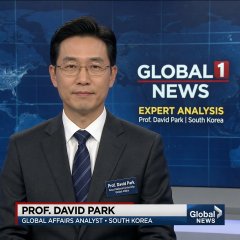
East Asia/Technology Correspondent at Global1.News. Seoul-based voice covering Korean politics, technology, business, and culture. Analyzes how technology and geopolitics intersect across East Asia.










Comments (0)